
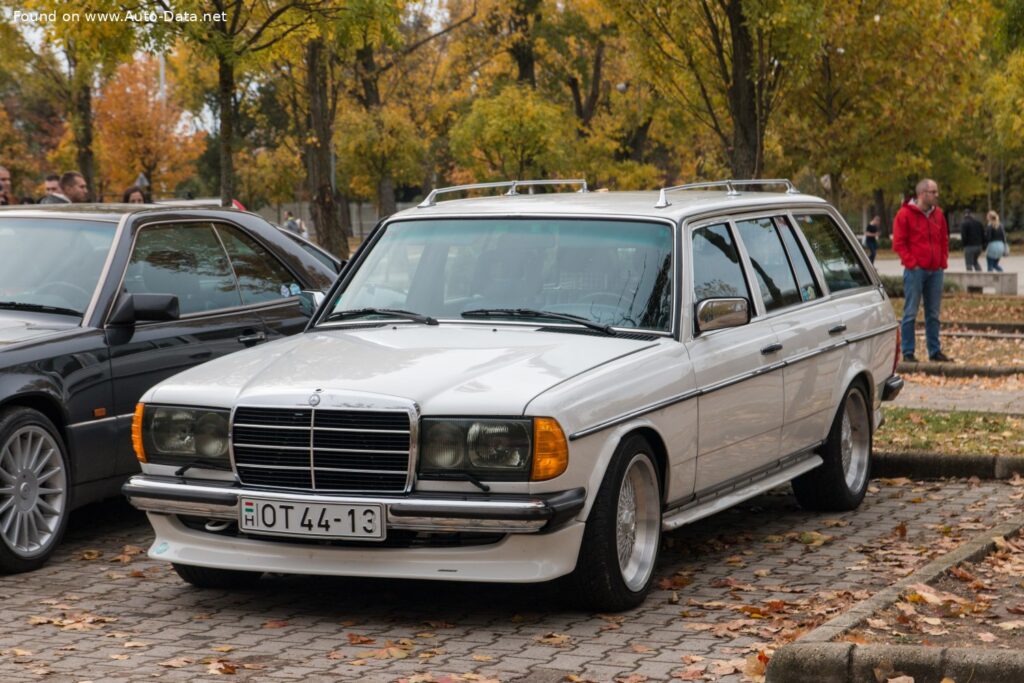
The Mercedes-Benz S123 300 TD, producing 80 horsepower, was a variant of the W123 series produced between September 1977 and September 1979. This model represented the entry-level diesel offering within the S123 (estate/station wagon) body style, part of the broader W123 platform which spanned saloons, coupes, and the estate. The S123 300 TD aimed to provide the practicality of a wagon with the fuel efficiency and durability associated with Mercedes-Benz diesel engines, appealing to families and those requiring substantial cargo space. It occupied a unique position, being the only diesel estate available during its production run, and served as a precursor to later, more powerful diesel S123 models.
The 300 TD: Positioning within the W123 Lineup
The W123 series, launched in 1976, was a significant model for Mercedes-Benz, known for its robust engineering and build quality. The 300 TD specifically targeted buyers seeking a practical, economical vehicle. Within the S123 range, it sat below the later 300 TD Turbo Diesel, which offered considerably more power. Compared to the petrol-powered S123 models (like the 230E or 280E), the 300 TD prioritized fuel economy and longevity over outright performance. It was positioned as a sensible, long-term transportation solution, rather than a driver’s car. The 300 TD also differed from the saloon versions of the 300D, offering the added versatility of the estate body style.
Powertrain & Engine Architecture
The heart of the S123 300 TD was the OM 617 D 30 engine, a 3.0-liter inline-five cylinder diesel. This engine, designated with the code 617.912, was a cornerstone of Mercedes-Benz diesel technology during the 1970s and 80s. It featured precombustion chamber injection, a system where fuel is injected into a small precombustion chamber connected to the main cylinder, promoting more complete combustion and reducing engine noise. The engine produced 80 hp at 4000 rpm and 172 Nm (126.86 lb-ft) of torque at 2400 rpm. The bore and stroke were 91 mm (3.58 in) and 92.4 mm (3.64 in) respectively, resulting in a displacement of 3005 cm³ (183.38 cu. in). The engine utilized a single overhead camshaft (SOHC) valvetrain with two valves per cylinder.
The 300 TD was equipped with a 4-speed manual transmission. While an automatic transmission was available on other W123 models, it was not offered with the 80 hp diesel engine during this specific production period. This pairing was a deliberate choice, as the automatic transmission would have further diminished the already modest acceleration of the vehicle. Engine oil capacity was 8 liters (8.45 US qt | 7.04 UK qt) and coolant capacity was 11 liters (11.62 US qt | 9.68 UK qt).
Fuel Injection System
The precombustion chamber injection system was a key feature of the OM 617 engine. This system involved injecting fuel into a small chamber connected to the main cylinder. The fuel would partially combust in the precombustion chamber, creating a highly combustible mixture that then ignited the main charge in the cylinder. This design helped to improve cold-starting performance and reduce engine noise compared to direct injection systems of the time. The system was mechanically controlled, relying on a Bosch inline fuel pump and carefully calibrated injectors.
Driving Characteristics
The S123 300 TD, with its 80 hp and manual transmission, offered a driving experience focused on practicality and economy rather than performance. Acceleration was leisurely, taking approximately 20.9 seconds to reach 100 km/h (62 mph) and around 19.9 seconds to reach 60 mph. The engine’s torque, however, provided reasonable pulling power, making it suitable for hauling loads and navigating hilly terrain. The manual transmission allowed drivers to maintain control over the engine’s power band, maximizing fuel efficiency. The gear ratios were optimized for cruising, with a relatively tall final drive ratio. Compared to the later 300 TD Turbo Diesel, the non-turbocharged version felt significantly slower, particularly when fully loaded. However, the simpler engine design and lack of a turbocharger contributed to its renowned reliability.
Equipment & Trim Levels
The S123 300 TD was generally equipped with a fairly basic level of trim, reflecting its position as the entry-level diesel estate. Standard features typically included cloth upholstery, vinyl flooring in the cargo area, and basic instrumentation. The dashboard layout was functional and straightforward, prioritizing usability over luxury. Options available included upgraded cloth or leather upholstery, power windows, a sunroof, and a more sophisticated audio system. Air conditioning was a popular option, particularly in warmer climates. The exterior trim was relatively understated, with chrome bumpers and simple steel wheels being common features. The focus was on providing a durable and practical vehicle, rather than a lavishly appointed one.
Chassis & Braking
The S123 300 TD utilized a robust chassis designed to handle the weight of passengers and cargo. The front suspension featured a double wishbone design, providing a comfortable ride and good handling characteristics. The rear suspension employed a trailing arm setup, which was well-suited for carrying loads. Braking was initially equipped with disc brakes on all four wheels, providing adequate stopping power for the vehicle’s weight and performance. Steering was via a cone worm and recirculation balls system, offering a relatively direct feel. The standard tire size was 195/70 R14, mounted on 6J x 14 inch steel wheels. The vehicle’s curb weight was 1570 kg (3461.26 lbs), with a maximum permissible weight of 2190 kg (4828.12 lbs).
Market Reception & Comparison
The S123 300 TD was generally well-received by critics and buyers alike. It was praised for its fuel efficiency, durability, and practicality. However, its modest performance was often noted as a drawback. Compared to the petrol-powered W123 models, the 300 TD offered significantly better fuel economy, making it an attractive option for those covering long distances. Compared to the later 300 TD Turbo Diesel, the non-turbocharged version was less powerful but also less complex and potentially more reliable. Fuel consumption was rated at 10.3 l/100 km (22.8 US mpg / 27.4 UK mpg / 9.7 km/l) in urban conditions and 8 l/100 km (29.4 US mpg / 35.3 UK mpg / 12.5 km/l) on the open road.
Technical Specifications
| Brand | Mercedes-Benz |
| Model | W123 S123 300 TD |
| Production Years | 1977-1979 |
| Body Type | Station Wagon (Estate) |
| Engine Model | OM 617 D 30 / 617.912 |
| Engine Displacement | 3005 cm³ (183.38 cu. in.) |
| Number of Cylinders | 5 (Inline) |
| Power Output | 80 hp @ 4000 rpm |
| Torque Output | 172 Nm (126.86 lb-ft) @ 2400 rpm |
| Fuel Injection | Precombustion Chamber Injection |
| Transmission | 4-speed Manual |
| Curb Weight | 1570 kg (3461.26 lbs) |
| Maximum Weight | 2190 kg (4828.12 lbs) |
| Fuel Consumption (Urban) | 10.3 l/100 km (22.8 US mpg) |
| Fuel Consumption (Extra Urban) | 8 l/100 km (29.4 US mpg) |
| Acceleration 0-100 km/h | 20.9 sec |
| Maximum Speed | 148 km/h (91.96 mph) |
Legacy
The S123 300 TD, while not the most powerful or fastest W123 variant, has earned a reputation for exceptional reliability and longevity. The OM 617 engine is renowned for its durability, and many examples have exceeded 300,000 miles with proper maintenance. In the used car market today, these vehicles are sought after by enthusiasts and those seeking a classic Mercedes-Benz with a reputation for dependability. While parts availability can be a concern, the robust construction of the vehicle and the widespread use of the OM 617 engine in other Mercedes-Benz models mean that many components are still readily available. The S123 300 TD represents a bygone era of automotive engineering, where durability and practicality were prioritized over outright performance.
