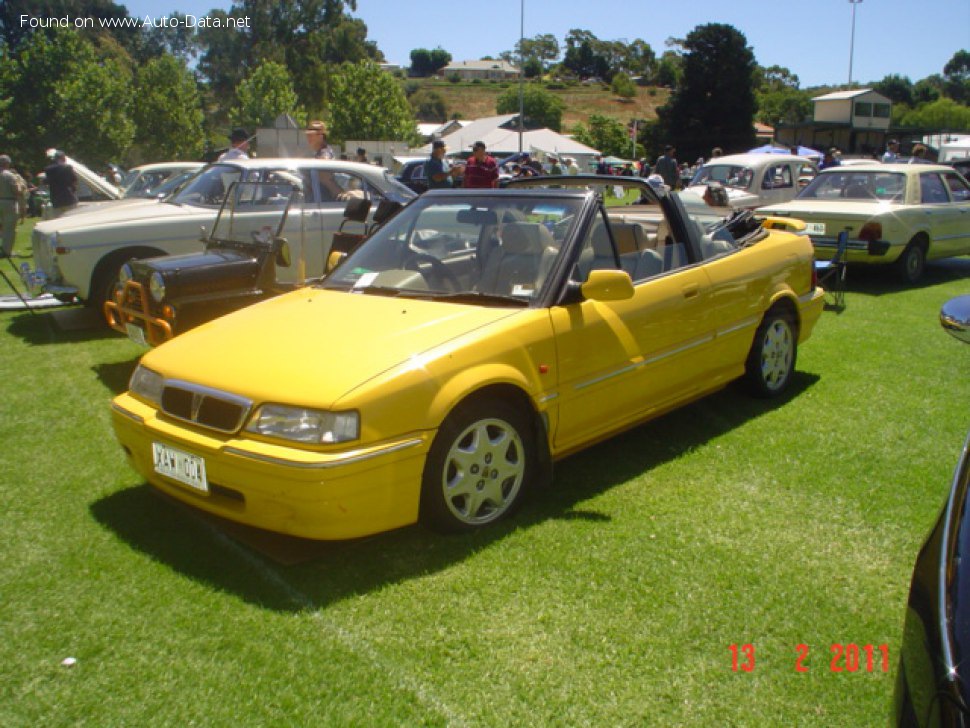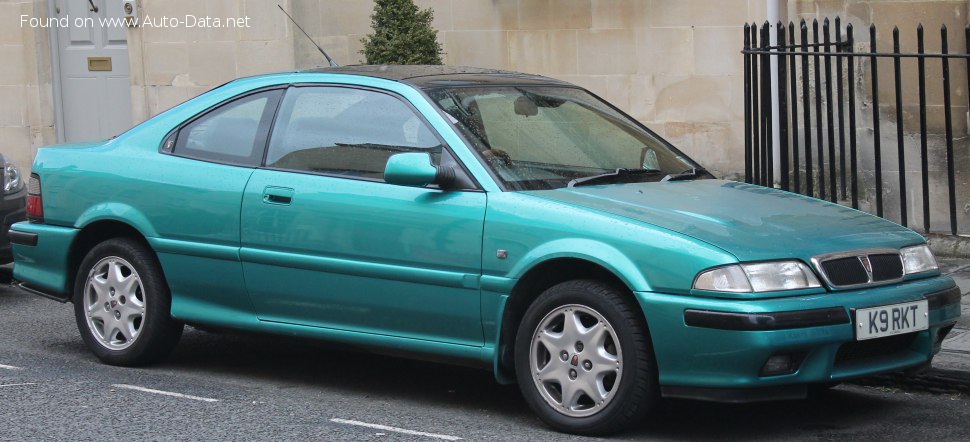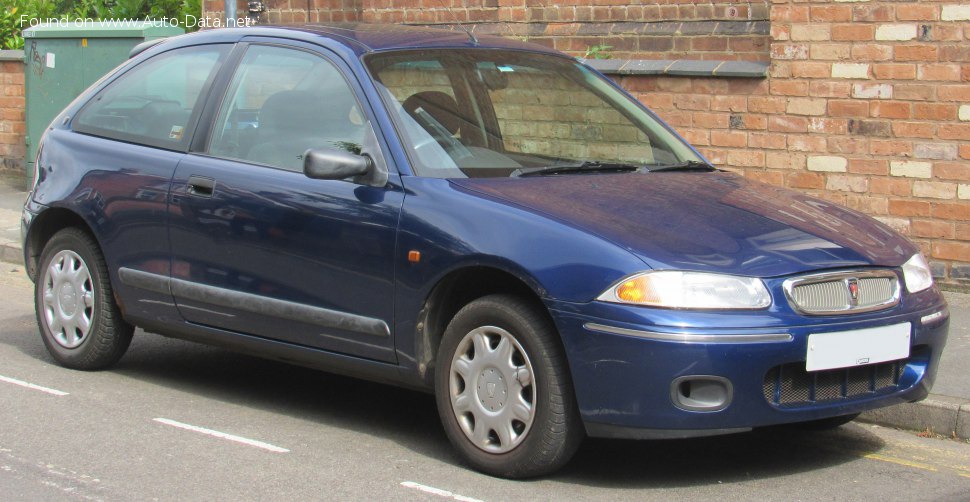
The Rover 200 (RF) 214 Si, produced between 1995 and 2000, represented a mid-range offering within the Rover 200 lineup, which itself was based on the Honda Concerto platform – a result of British Rover’s collaboration with Honda, known as the 1HX0/A3 platform. Positioned above the base 114 models and below the more powerful 214 VVC, the 214 Si aimed to provide a balance of affordability, reasonable performance, and equipment for the family car market. It was available in both 3-door and 5-door hatchback body styles, catering to a variety of buyer preferences. The ‘Si’ designation denoted a slightly more sporting trim level compared to the standard 214, though it remained focused on practicality and value.
Rover 200 (RF) 214 Si: Powertrain & Engine Architecture
The heart of the 214 Si was the K16 series 1.4-liter inline-four cylinder gasoline engine. This engine, while developed by Rover, owed much to Honda’s engineering expertise. The K16 engine produced 103 horsepower (hp) at 6000 rpm and 93.67 lb-ft of torque at 3000 rpm. It featured a naturally aspirated configuration with multi-port fuel injection and a double overhead camshaft (DOHC) valvetrain operating four valves per cylinder. The compression ratio was set at 10:1. Engine oil capacity was 4.5 liters (4.76 US quarts), and coolant capacity was 5 liters (5.28 US quarts).
Crucially, the 214 Si was typically equipped with a 5-speed automatic transmission. This transmission, while offering convenience, was a key differentiator from the more common manual gearbox found in other 214 variants. The automatic transmission was designed to provide smooth shifts and ease of driving, particularly in urban environments. However, it did come at the cost of some performance and fuel efficiency compared to the manual version. The transmission’s gear ratios were tuned for economy and drivability rather than outright acceleration.
Engine Code & Fuel System
The engine code for the 1.4L 103hp engine was generally identified as K16. The fuel system utilized multi-point fuel injection, delivering fuel directly to each intake port. This system, while not as advanced as some contemporary setups, provided reliable and efficient fuel delivery. The engine’s design prioritized simplicity and ease of maintenance, reflecting Rover’s focus on affordability.
Driving Characteristics
The Rover 200 214 Si with the automatic transmission offered a comfortable, if not particularly exhilarating, driving experience. Acceleration from 0 to 60 mph took approximately 10.2 seconds, and 0-100 km/h was achieved in 10.7 seconds. Top speed was rated at 114.95 mph (185 km/h). The automatic transmission, while convenient, resulted in noticeable power loss compared to the manual transmission versions of the 214. The engine felt relatively strained during hard acceleration, and overtaking maneuvers required careful planning.
The gear ratios in the automatic transmission were spaced to prioritize fuel economy and smooth cruising. This meant that the engine often operated at higher rpm during acceleration, contributing to a somewhat noisy driving experience. The automatic transmission lacked the responsiveness of more modern units, and occasional hesitation could be felt during gear changes. However, for everyday driving, the 214 Si automatic provided a relaxed and user-friendly experience.
Equipment & Trim Levels
The 214 Si trim level offered a step up in equipment compared to the base 200 models. Standard features typically included central locking, power steering, an adjustable steering column, and a basic stereo system. Interior upholstery was generally cloth, with a relatively simple dashboard layout. The 214 Si often featured body-colored bumpers and door handles, adding a touch of visual appeal.
Optional extras available for the 214 Si included alloy wheels, electric windows, a sunroof, and upgraded audio systems. Air conditioning was also available as an option, though it wasn’t a standard feature. The interior trim quality was generally considered adequate for the price point, but it didn’t match the refinement of more premium competitors.
Chassis & Braking
The Rover 200 214 Si utilized a front-wheel-drive layout with independent wishbone suspension at the front and a spring strut rear suspension. This suspension setup provided a reasonably comfortable ride, although it wasn’t particularly sporty. The front brakes were disc brakes, while the rear brakes were drum brakes – a cost-saving measure common in this class of vehicle. Anti-lock braking system (ABS) was often included as standard equipment, enhancing safety.
The steering was rack and pinion with hydraulic power assistance, providing light and easy steering feel. Tire size was typically 175/65 R14 H. The chassis was relatively lightweight, contributing to the car’s decent fuel economy. However, the suspension setup wasn’t designed for aggressive cornering, and body roll was noticeable during spirited driving.
Market Reception & Comparison
The Rover 200 214 Si automatic was generally well-received as a practical and affordable family car. Critics praised its comfortable ride, spacious interior, and reasonable fuel economy. However, the automatic transmission was often criticized for its lack of responsiveness and its impact on performance. Compared to the manual transmission versions of the 214, the automatic offered less engaging driving experience.
Fuel economy figures were approximately 36.2 US mpg (43.5 UK mpg) combined, 28.7 US mpg (34.4 UK mpg) urban, and 46.1 US mpg (55.4 UK mpg) extra urban. Reliability was generally considered average for a British car of the era. While the K16 engine was relatively robust, other components, such as the electrical system, could be prone to issues. Compared to the more powerful 214 VVC, the 214 Si offered a more affordable entry point into the Rover 200 range, but it lacked the VVC’s performance and refinement.
Technical Specifications
| Brand | Rover |
| Model | 200 |
| Generation | 200 (RF) |
| Type (Engine) | 214 Si (103 Hp) |
| Start of production | 1995 |
| End of production | 2000 |
| Powertrain Architecture | Internal Combustion engine |
| Body type | Hatchback |
| Seats | 5 |
| Doors | 3-5 |
| Fuel consumption (urban) | 8.2 l/100 km (28.7 US mpg) |
| Fuel consumption (extra urban) | 5.1 l/100 km (46.1 US mpg) |
| Fuel consumption (combined) | 6.5 l/100 km (36.2 US mpg) |
| Fuel Type | Petrol (Gasoline) |
| Acceleration 0 – 100 km/h | 10.7 sec |
| Acceleration 0 – 62 mph | 10.7 sec |
| Acceleration 0 – 60 mph | 10.2 sec |
| Maximum speed | 185 km/h (114.95 mph) |
| Weight-to-power ratio | 10.4 kg/Hp |
| Power | 103 Hp @ 6000 rpm |
| Torque | 127 Nm @ 3000 rpm (93.67 lb.-ft. @ 3000 rpm) |
| Engine layout | Front, Transverse |
| Engine Model/Code | K16 |
| Engine displacement | 1396 cm3 (85.19 cu. in.) |
| Number of cylinders | 4 |
| Engine configuration | Inline |
| Cylinder Bore | 75 mm (2.95 in.) |
| Piston Stroke | 79 mm (3.11 in.) |
| Compression ratio | 10:1 |
| Number of valves per cylinder | 4 |
| Fuel injection system | Multi-port manifold injection |
| Engine aspiration | Naturally aspirated |
| Valvetrain | DOHC |
| Engine oil capacity | 4.5 l (4.76 US qt | 3.96 UK qt) |
| Coolant capacity | 5 l (5.28 US qt | 4.4 UK qt) |
| Kerb Weight | 1075 kg (2369.97 lbs.) |
| Max. weight | 1480 kg (3262.84 lbs.) |
| Max load | 405 kg (892.87 lbs.) |
| Trunk (boot) space – minimum | 304 l (10.74 cu. ft.) |
| Trunk (boot) space – maximum | 1086 l (38.35 cu. ft.) |
| Fuel tank capacity | 55 l (14.53 US gal | 12.1 UK gal) |
| Length | 3973 mm (156.42 in.) |
| Width | 1688 mm (66.46 in.) |
| Height | 1419 mm (55.87 in.) |
| Wheelbase | 2502 mm (98.5 in.) |
| Front track | 1472 mm (57.95 in.) |
| Rear track | 1466 mm (57.72 in.) |
| Drivetrain Architecture | Front wheel drive |
| Number of gears | 5 |
| Gearbox type | Automatic |
| Front suspension | Wishbone |
| Rear suspension | Spring Strut |
| Front brakes | Disc |
| Rear brakes | Drum |
| Assisting systems | ABS |
Legacy
The Rover 200 214 Si automatic, while not a particularly groundbreaking vehicle, remains a fondly remembered car for many owners. Its affordability, practicality, and comfortable ride made it a popular choice for families and commuters. Today, surviving examples are relatively scarce, and well-maintained cars are becoming increasingly collectible. The K16 engine, while prone to occasional issues, is generally considered reliable if properly maintained. The automatic transmission, however, remains a potential weak point, and finding a car with a functioning transmission can be challenging. The 214 Si represents a snapshot of British automotive engineering during a period of collaboration and change, and it continues to hold a place in the hearts of Rover enthusiasts.