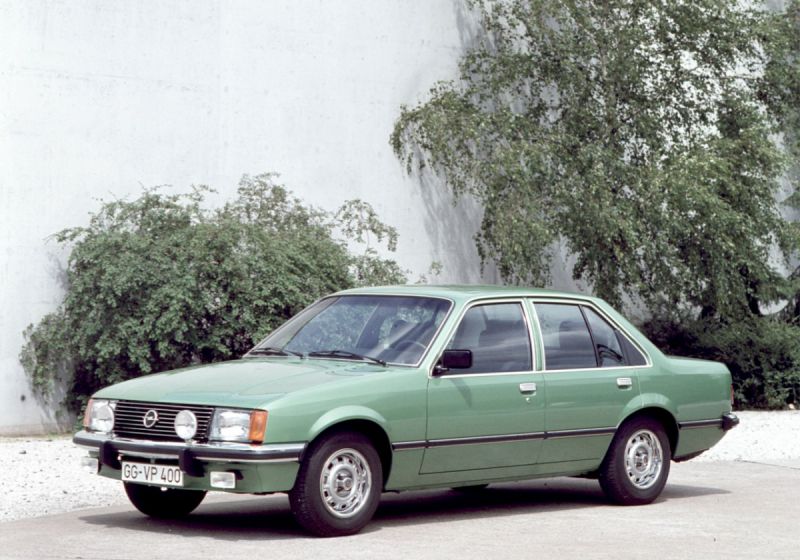
The Opel Rekord E 2.1 D, producing 60 horsepower, was a variant of the Rekord E model manufactured between 1977 and 1978. This diesel-powered sedan occupied the entry-level position within the Rekord E range, offering a fuel-efficient, albeit modestly powered, option for buyers. The Rekord E itself was a significant model for Opel, built on the H-platform (internally designated as 1HX0/A3) and representing a substantial redesign over its predecessor, the Rekord D. The 2.1 D aimed to provide practical transportation with an emphasis on economy, appealing to a different segment of the market than the gasoline-powered Rekord models.
The 2.1 D: Positioning and Market Context
The Rekord E range offered a variety of engine and trim options, including larger gasoline engines and more luxurious appointments. The 2.1 D, with its relatively low horsepower output, was positioned as the base model. It was intended for buyers prioritizing fuel efficiency and durability over outright performance. Compared to the gasoline-powered Rekords, such as the 1.7 and 2.0 liter versions, the 2.1 D offered significantly lower running costs but at the expense of acceleration and top speed. It also differed substantially from higher-trim Rekords, which featured more comfortable interiors, additional features, and more powerful engines.
Powertrain & Engine Architecture
The heart of the Rekord E 2.1 D was the 21D engine, a 2068 cc (126.2 cubic inches) inline-four cylinder diesel engine. This engine utilized precombustion chamber injection, a common diesel technology of the era. This system involved injecting fuel into a precombustion chamber connected to the main cylinder, where it was partially ignited before entering the main combustion chamber. This design aided in smoother combustion and reduced engine noise compared to direct injection systems. The engine featured a single overhead camshaft (SOHC) valvetrain with two valves per cylinder.
The 21D engine produced 60 hp at 4400 rpm and 118 Nm (87.03 lb-ft) of torque at 2500 rpm. The compression ratio was a high 22:1, typical for diesel engines. While the engine’s power output was modest, its torque characteristics provided reasonable drivability, particularly at lower speeds. The Rekord E 2.1 D was exclusively offered with a 4-speed manual transmission, designed to efficiently transfer the engine’s power to the rear wheels.
Transmission Details
The 4-speed manual transmission used in the Rekord E 2.1 D was a conventional design, chosen for its simplicity and durability. Gear ratios were optimized for fuel economy and low-speed torque, reflecting the engine’s characteristics. The transmission lacked the sophistication of more modern gearboxes, but it proved to be reliable and well-suited to the engine’s power output.
Driving Characteristics
The driving experience in the Rekord E 2.1 D was characterized by its relaxed pace and focus on fuel efficiency. Acceleration was slow, with a 0-100 km/h (0-62 mph) time of 23.5 seconds. The top speed was 138 km/h (85.75 mph). The engine’s torque, however, provided adequate pulling power for everyday driving, making it suitable for city commuting and highway cruising. The manual transmission required deliberate shifting, and the engine’s relatively narrow power band meant that frequent gear changes were necessary to maintain momentum, especially when climbing hills. Compared to the more powerful Rekord variants, the 2.1 D felt significantly slower and less responsive.
Equipment & Trim Levels
The Rekord E 2.1 D was typically equipped with basic features, reflecting its entry-level positioning. Standard equipment included cloth upholstery, a simple dashboard layout, and basic instrumentation. Power steering and air conditioning were generally not standard, but could be ordered as optional extras. The interior was functional and durable, prioritizing practicality over luxury. The exterior trim was also relatively understated, with minimal chrome accents. The Rekord E 2.1 D was available in both two-door and four-door sedan body styles.
Chassis & Braking
The Rekord E 2.1 D utilized a conventional chassis design with independent front suspension and a rigid rear axle. The front suspension featured coil springs and wishbones, while the rear suspension employed leaf springs. The braking system consisted of ventilated disc brakes at the front and drum brakes at the rear. The braking performance was adequate for the vehicle’s weight and power, but lacked the stopping power of more modern braking systems. The steering was a recirculating ball system, providing a relatively heavy but precise feel. Stabilizer bars were typically fitted to improve handling and reduce body roll.
Market Reception & Comparison
The Opel Rekord E 2.1 D received mixed reviews. Critics acknowledged its fuel efficiency and durability but criticized its lack of performance. It was seen as a practical and economical choice for buyers who prioritized these qualities over driving excitement. Compared to other diesel-powered sedans of the era, the Rekord E 2.1 D offered a competitive combination of fuel economy and reliability. However, it faced competition from other European manufacturers, such as Volkswagen and Peugeot, who also offered diesel-powered models in the same segment. Fuel consumption was rated at 7.9 l/100 km (29.8 US mpg, 35.8 UK mpg).
Technical Specifications
| Brand | Opel |
| Model | Rekord |
| Generation | Rekord E |
| Type (Engine) | 2.1 D (60 Hp) |
| Start of production | 1977 year |
| End of production | 1978 year |
| Fuel consumption (combined) | 7.9 l/100 km |
| Fuel Type | Diesel |
| Acceleration 0 – 100 km/h | 23.5 sec |
| Acceleration 0 – 62 mph | 23.5 sec |
| Acceleration 0 – 60 mph | 22.3 sec |
| Maximum speed | 138 km/h |
| Weight-to-power ratio | 20.6 kg/Hp |
| Engine Model/Code | 21D |
| Engine displacement | 2068 cm3 |
| Number of cylinders | 4 |
| Engine configuration | Inline |
| Cylinder Bore | 88 mm |
| Piston Stroke | 85 mm |
| Compression ratio | 22:1 |
| Number of valves per cylinder | 2 |
| Fuel injection system | Precombustion chamber injection |
| Kerb Weight | 1235 kg |
| Max. weight | 1735 kg |
| Trunk (boot) space – minimum | 540 l |
| Fuel tank capacity | 65 l |
| Length | 4593 mm |
| Width | 1726 mm |
| Height | 1420 mm |
| Wheelbase | 2668 mm |
| Number of gears and type of gearbox | 4 gears, manual transmission |
| Front brakes | Ventilated discs |
| Rear brakes | Drum |
Legacy
The Opel Rekord E 2.1 D, while not a performance icon, remains a notable example of 1970s diesel technology. The 21D engine proved to be relatively durable and reliable, and many examples are still in operation today. In the used car market, the Rekord E 2.1 D is sought after by enthusiasts and collectors who appreciate its simplicity, fuel efficiency, and classic styling. However, finding well-maintained examples can be challenging, as many have succumbed to rust or neglect. The 2.1 D represents a significant chapter in Opel’s history, demonstrating the company’s commitment to providing practical and economical transportation options to a wide range of buyers.