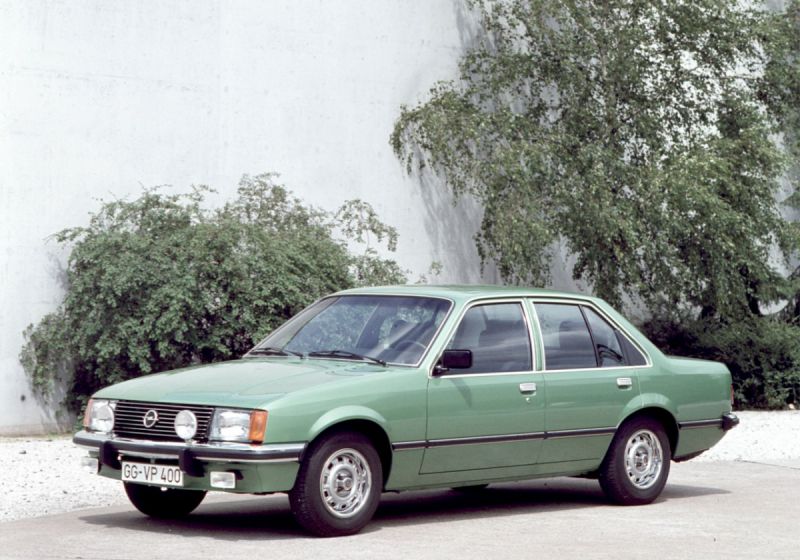
The Opel Rekord E 2.3 D Automatic, produced between 1978 and 1981, represented a unique offering within the Rekord E range. Positioned as a fuel-efficient, though modestly powered, variant, it catered to buyers prioritizing economy and comfortable cruising over outright performance. This model utilized a 2.3-liter diesel engine paired with a three-speed automatic transmission, a relatively uncommon combination in the late 1970s. The Rekord E itself was a significant model for Opel, built on the 1HX0/A3 platform, and served as the company’s mainstay in the mid-size segment, competing with vehicles like the Ford Taunus and Volkswagen Passat.
The 2.3 D Automatic: A Niche Offering
The 2.3 D Automatic occupied a specific niche within the Rekord E lineup. While the gasoline-powered versions, particularly the 1.8 and 2.0-liter engines, offered more spirited driving experiences, the diesel variant prioritized fuel economy. The addition of the automatic transmission further refined the driving experience, making it appealing to drivers seeking convenience. It wasn’t marketed as a sporty model; instead, it was aimed at those needing a reliable, comfortable, and economical family sedan for long distances or daily commuting. Compared to the more popular gasoline Rekord Es, the 2.3 D Automatic was a lower-volume seller, appealing to a more pragmatic customer base.
Powertrain & Engine Architecture
The heart of the Rekord E 2.3 D Automatic was the 23D engine, a 2.3-liter (2260 cc) inline-four cylinder diesel. This engine featured precombustion chamber injection, a common diesel technology of the era. This system involved a small precombustion chamber connected to the main cylinder, where fuel was initially ignited before being transferred to the main chamber for complete combustion. This design aided in cold starting and reduced engine noise compared to direct injection systems. The engine produced 65 horsepower at 4200 rpm and 127 Nm (93.67 lb-ft) of torque at 2500 rpm. The compression ratio was a high 22:1, typical for diesel engines. The engine utilized a single overhead camshaft (SOHC) valvetrain with two valves per cylinder.
The three-speed automatic transmission was a crucial component of this variant. While not known for its responsiveness or shift speed by modern standards, it provided a smooth and effortless driving experience. The transmission’s gear ratios were optimized for fuel efficiency and relaxed cruising, rather than rapid acceleration. Specific details regarding the transmission’s internal construction and torque converter characteristics are limited, but it was a conventional hydraulic automatic of its time.
Driving Characteristics
The driving experience in the Rekord E 2.3 D Automatic was defined by its relaxed nature. Acceleration was decidedly slow, with a 0-100 km/h (0-62 mph) time of 22.5 seconds. The engine’s torque, while modest, was available at relatively low engine speeds, making it suitable for maintaining highway speeds. The automatic transmission contributed to a smooth ride, but also resulted in a noticeable delay in response when accelerating. Compared to the manual transmission versions of the Rekord E, or the higher-output gasoline models, the 2.3 D Automatic felt significantly less responsive. However, its fuel economy – 9.2 l/100 km (25.6 US mpg) combined – was a major selling point. The longitudinal engine layout and rear-wheel drive configuration provided a balanced feel, though handling was not particularly sporty.
Equipment & Trim Levels
The Rekord E 2.3 D Automatic typically came with a reasonable level of standard equipment for the late 1970s. This included cloth upholstery, basic instrumentation (speedometer, fuel gauge, temperature gauge), and a four-spoke steering wheel. The interior design was functional and straightforward, prioritizing practicality over luxury. Optional extras included a radio, upgraded upholstery, and power windows. The trim level was generally considered to be mid-range, falling between the more basic models and the fully equipped luxury versions. The exterior featured chrome trim, though the amount varied depending on the specific market and optional packages.
Chassis & Braking
The Rekord E 2.3 D Automatic utilized a conventional chassis design for a rear-wheel-drive sedan. The suspension consisted of independent front suspension with coil springs and a rigid axle rear suspension with leaf springs. The front suspension provided a comfortable ride, while the rear suspension was designed to handle the vehicle’s weight and provide stability. Braking was accomplished via ventilated discs on the front wheels and drum brakes on the rear wheels. This configuration was typical for vehicles in this class at the time. The steering was a recirculating ball system, providing adequate, though not particularly precise, control. Stabilizer bars were fitted to both the front and rear axles to reduce body roll during cornering.
Market Reception & Comparison
The Opel Rekord E 2.3 D Automatic received mixed reviews. Critics acknowledged its fuel efficiency and comfortable ride, but often criticized its lack of performance. It was generally seen as a sensible and practical choice, but not an exciting one. Compared to other trims in the Rekord E lineup, the 2.3 D Automatic offered significantly lower running costs, but at the expense of driving enjoyment. Its reliability was generally considered to be good, though diesel engines of this era required regular maintenance to prevent issues with the fuel injection system and precombustion chambers. In terms of fuel economy, it outperformed the gasoline-powered Rekord Es, but its acceleration and top speed were considerably lower.
Technical Specifications
| Brand | Opel |
| Model | Rekord |
| Generation | Rekord E |
| Type (Engine) | 2.3 D (65 Hp) Automatic |
| Start of production | 1978 |
| End of production | 1981 |
| Body type | Sedan |
| Seats | 5 |
| Doors | 2-4 |
| Fuel consumption (combined) | 9.2 l/100 km |
| Fuel consumption (US mpg) | 25.6 |
| Fuel consumption (UK mpg) | 30.7 |
| Fuel Type | Diesel |
| Acceleration 0-100 km/h | 22.5 sec |
| Acceleration 0-62 mph | 22.5 sec |
| Acceleration 0-60 mph | 21.4 sec |
| Maximum speed | 135 km/h (83.89 mph) |
| Weight-to-power ratio | 19.3 kg/Hp |
| Weight-to-torque ratio | 9.9 kg/Nm |
| Power | 65 Hp @ 4200 rpm |
| Torque | 127 Nm @ 2500 rpm (93.67 lb.-ft. @ 2500 rpm) |
| Engine layout | Front, Longitudinal |
| Engine Model/Code | 23D |
| Engine displacement | 2260 cm3 (137.91 cu. in.) |
| Number of cylinders | 4 |
| Engine configuration | Inline |
| Cylinder Bore | 92 mm (3.62 in.) |
| Piston Stroke | 85 mm (3.35 in.) |
| Compression ratio | 22:1 |
| Number of valves per cylinder | 2 |
| Fuel injection system | Precombustion chamber injection |
| Engine aspiration | Naturally aspirated |
| Valvetrain | SOHC |
| Kerb Weight | 1255 kg (2766.8 lbs.) |
| Max. weight | 1735 kg (3825.02 lbs.) |
| Trunk (boot) space | 540 l (19.07 cu. ft.) |
| Fuel tank capacity | 65 l (17.17 US gal | 14.3 UK gal) |
| Length | 4593 mm (180.83 in.) |
| Width | 1726 mm (67.95 in.) |
| Height | 1420 mm (55.91 in.) |
| Wheelbase | 2668 mm (105.04 in.) |
| Number of gears | 3 |
| Gearbox type | Automatic transmission |
Legacy
The Opel Rekord E 2.3 D Automatic, while not a particularly sought-after model today, holds a place in automotive history as a representative of the fuel-conscious vehicles of the late 1970s. The 23D engine, while not known for its longevity in some applications, proved to be reasonably durable with proper maintenance. Surviving examples are relatively rare, and those that remain are often valued by enthusiasts for their simplicity and classic styling. In the used car market, these vehicles are typically affordable, but require careful inspection due to their age and potential for deferred maintenance. The combination of a diesel engine and automatic transmission, while unusual for the time, offered a unique driving experience that appeals to a niche group of collectors and enthusiasts.