
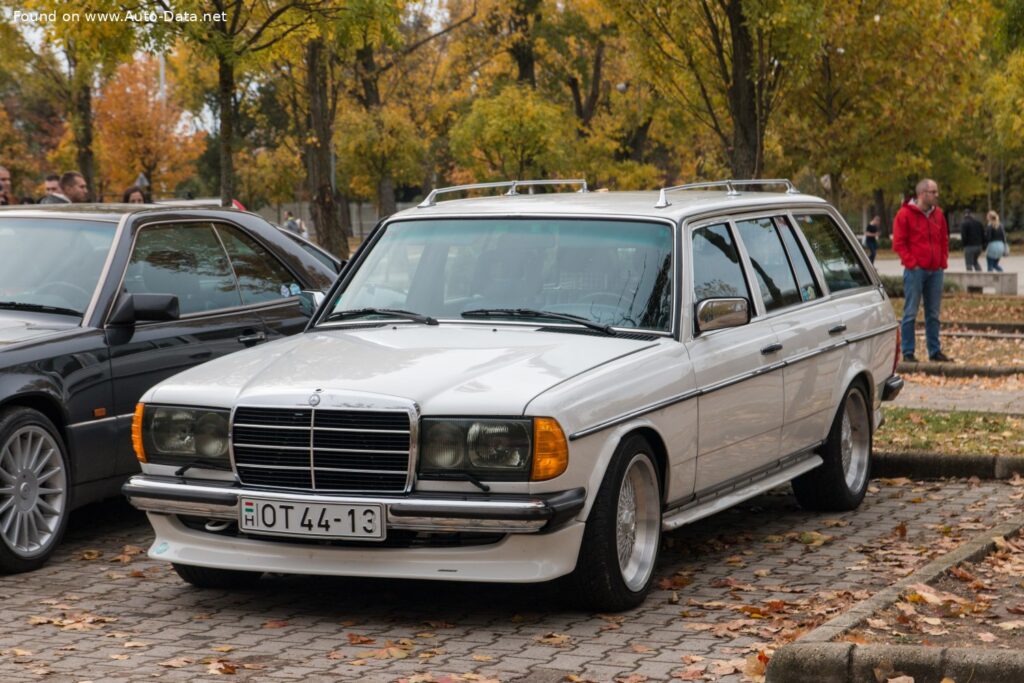
The Mercedes-Benz S123 300 TD, produced from September 1979 to January 1986, represents a significant iteration of the W123 series, specifically the T-Modell (estate/station wagon) body style. This variant was powered by the OM617 diesel engine, producing 88 horsepower, and was paired with a five-speed manual transmission. Within the W123 lineup, the 300 TD occupied a middle ground, offering a balance between fuel efficiency, practicality, and a more refined driving experience compared to the base 240D models. It served as a popular choice for families and those requiring a versatile vehicle capable of both passenger and cargo transport.
The 300 TD: A Versatile Estate
The S123 designation refers to the T-Modell (estate) version of the W123 series. Introduced later in the W123 production run, the T-Modell offered the same robust engineering and build quality as the sedan and coupe versions, but with significantly increased cargo capacity. The 300 TD, with its 3.0-liter five-cylinder diesel engine, was positioned as a step up from the smaller-engined 240D T-Modell, providing improved performance and a more relaxed cruising experience. It was generally considered a more premium offering than the 240D, but remained more economical and practical than the gasoline-powered models.
Powertrain & Engine Architecture
The heart of the 300 TD is the OM617 D 30 engine, a 2,998 cc (182.95 cu. in.) inline five-cylinder diesel. This engine, a hallmark of Mercedes-Benz diesel technology of the era, is renowned for its durability and longevity. The OM617 features a cast iron block and head, a robust crankshaft, and a single overhead camshaft (SOHC) operating two valves per cylinder. Fuel is delivered via a multi-port manifold injection system, a relatively advanced system for its time, contributing to improved combustion efficiency and reduced emissions. The engine produces 88 hp at 4,400 rpm and 172 Nm (126.86 lb-ft) of torque at 2,400 rpm.
The five-speed manual transmission, a Getrag unit, was specifically chosen to complement the engine’s torque characteristics. The gear ratios were designed to provide both reasonable acceleration and efficient highway cruising. First gear was relatively low for starting from a standstill, while fifth gear was geared for comfortable long-distance travel. This transmission was a significant upgrade over the four-speed automatic option available, offering more driver control and improved fuel economy.
Driving Characteristics
The 300 TD, equipped with the five-speed manual transmission, offered a driving experience markedly different from its automatic counterparts. While not a sports car by any means, the manual gearbox allowed drivers to fully utilize the engine’s torque, resulting in more responsive acceleration. The 0-100 km/h (0-62 mph) time of 18.9 seconds reflects the engine’s modest horsepower output, but the 172 Nm of torque provided ample pulling power for everyday driving and hauling loads. The gear ratios were well-matched to the engine’s powerband, making it relatively easy to keep the engine in its optimal operating range. Compared to the 240D, the 300 TD felt noticeably more relaxed at highway speeds, with less need for frequent downshifts. The manual transmission also contributed to improved fuel economy compared to the automatic version.
Equipment & Trim Levels
The S123 300 TD typically came with a fairly comprehensive list of standard features, reflecting Mercedes-Benz’s commitment to comfort and safety. Standard equipment included cloth upholstery, power-assisted steering, and front disc brakes. The interior was characterized by its functional design and durable materials. Optional extras included leather upholstery, air conditioning, a sunroof, and upgraded audio systems. Trim levels were relatively limited, with most variations stemming from the addition of optional packages. The T-Modell also featured a self-leveling rear suspension system to maintain ride height when carrying heavy loads. The rear cargo area was spacious and versatile, with folding rear seats to accommodate larger items.
Chassis & Braking
The S123 300 TD utilized a robust chassis designed to handle the demands of carrying passengers and cargo. The front suspension featured a double wishbone design, providing a comfortable ride and good handling characteristics. The rear suspension employed a trailing arm setup, which was well-suited for carrying loads. Braking was provided by disc brakes on all four wheels, offering reliable stopping power. The steering system was a cone worm with recirculation balls, providing a relatively direct steering feel. Tire size was typically 195/70 R14 for both front and rear wheels, mounted on 6J x 14 inch rims. The kerb weight of 1,570 kg (3,461.26 lbs) contributed to the vehicle’s stable and planted feel on the road.
Market Reception & Comparison
The Mercedes-Benz S123 300 TD was generally well-received by automotive critics and buyers alike. It was praised for its practicality, durability, and fuel efficiency. While its acceleration was not particularly brisk, its torque and comfortable ride made it a pleasant vehicle for long-distance travel. Compared to the 240D T-Modell, the 300 TD offered a noticeable improvement in performance, making it a more appealing option for those who frequently drove on highways or carried heavy loads. Compared to the gasoline-powered W123 models, the 300 TD offered significantly better fuel economy, although at the expense of outright performance. The manual transmission version was favored by enthusiasts for its improved driving experience and fuel efficiency compared to the automatic.
Technical Specifications
| Engine Model/Code | OM 617 D 30 / 617.912 |
| Engine Displacement | 2998 cm3 (182.95 cu. in.) |
| Number of Cylinders | 5 |
| Engine Configuration | Inline |
| Cylinder Bore | 90.91 mm (3.58 in.) |
| Piston Stroke | 92.4 mm (3.64 in.) |
| Compression Ratio | 21.5:1 |
| Number of Valves per Cylinder | 2 |
| Fuel Injection System | Multi-port manifold injection |
| Engine Aspiration | Naturally aspirated |
| Power | 88 Hp @ 4400 rpm |
| Torque | 172 Nm @ 2400 rpm (126.86 lb.-ft. @ 2400 rpm) |
| Fuel Consumption (Urban) | 9.7 l/100 km (24.2 US mpg / 29.1 UK mpg / 10.3 km/l) |
| Fuel Consumption (Extra Urban) | 7 l/100 km (33.6 US mpg / 40.4 UK mpg / 14.3 km/l) |
| Acceleration 0-100 km/h | 18.9 sec |
| Acceleration 0-62 mph | 18.9 sec |
| Maximum Speed | 155 km/h (96.31 mph) |
| Kerb Weight | 1570 kg (3461.26 lbs) |
| Max. Weight | 2190 kg (4828.12 lbs) |
| Fuel Tank Capacity | 70 l (18.49 US gal / 15.4 UK gal) |
| Length | 4725 mm (186.02 in.) |
| Width | 1786 mm (70.31 in.) |
| Height | 1470 mm (57.87 in.) |
| Wheelbase | 2795 mm (110.04 in.) |
| Gearbox | 5 gears, manual transmission |
Legacy
The Mercedes-Benz S123 300 TD with the five-speed manual transmission has earned a reputation as a remarkably durable and reliable vehicle. The OM617 engine is known to withstand extremely high mileage with proper maintenance. Today, these vehicles are sought after by enthusiasts and collectors, particularly those who appreciate their classic styling, robust engineering, and fuel efficiency. While finding well-maintained examples can be challenging, the 300 TD remains a testament to Mercedes-Benz’s commitment to building long-lasting vehicles. The manual transmission variant is particularly prized for its engaging driving experience and relative rarity. Parts availability is generally good, although some specific trim pieces may be difficult to source. The S123 300 TD continues to be a practical and enjoyable classic car for those seeking a versatile and reliable estate vehicle.
