
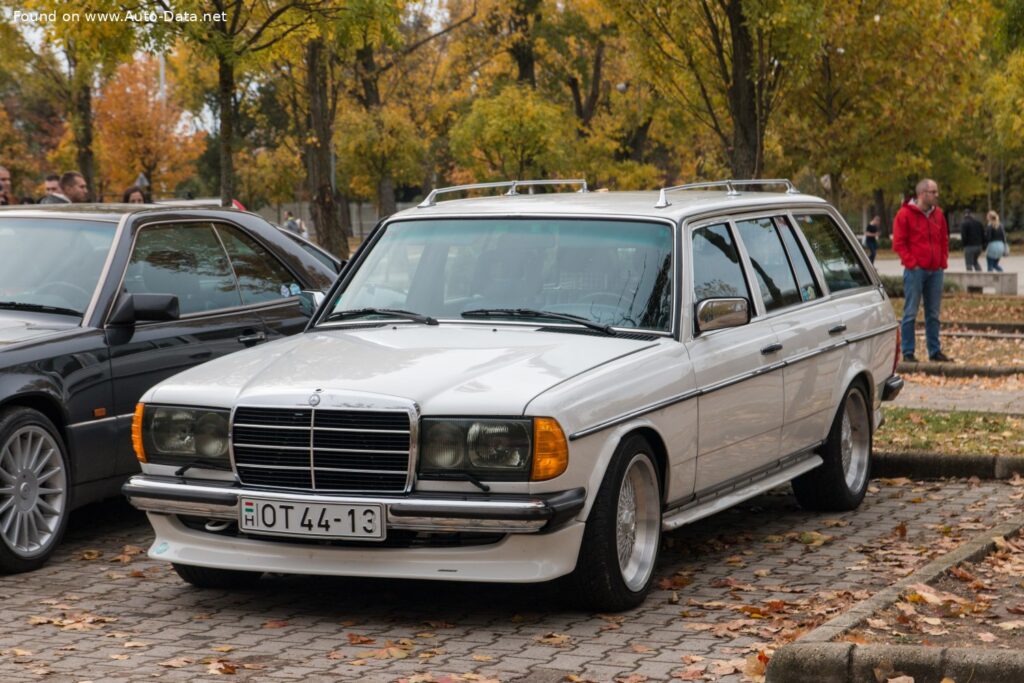
The Mercedes-Benz S123 300 TD Turbodiesel Automatic, produced from November 1979 to January 1986, represents a significant iteration within the W123 series, specifically the S123 estate (station wagon) body style. This variant occupied a premium position in the W123 lineup, offering a blend of practicality, luxury, and fuel efficiency that appealed to buyers seeking a capable and comfortable family vehicle. It was positioned above the naturally aspirated diesel models and below the more expensive and performance-oriented gasoline-powered variants. The S123 chassis, part of the larger W123 platform (also encompassing sedan and coupe models), was renowned for its robust build quality and longevity, establishing a benchmark for automotive engineering of its era.
The 300 TD Turbodiesel: A Detailed Overview
The 300 TD Turbodiesel was a key component of the W123’s success, particularly in European markets where diesel engines were favored for their economy. The “TD” designation signifies “Turbodiesel,” indicating the presence of a turbocharger enhancing the engine’s power output. The automatic transmission option further broadened its appeal, providing a more relaxed driving experience compared to the available manual gearbox. This combination aimed to deliver a refined and practical vehicle suitable for long-distance travel and everyday use.
Powertrain & Engine Architecture
At the heart of the S123 300 TD Turbodiesel lies the OM617 D 30 A engine, a 3.0-liter inline-five cylinder diesel engine (engine code 617.952). This engine is celebrated for its durability and over-engineered design. The OM617 featured precombustion chamber injection, a system where fuel is injected into a small precombustion chamber within the cylinder head, promoting more complete combustion and reducing engine noise. The turbocharger, a Garrett unit in most applications, forces more air into the cylinders, increasing power output to 125 horsepower at 4350 rpm and 250 Nm (184.39 lb-ft) of torque at 2400 rpm. This torque delivery provided strong pulling power, especially useful for towing or carrying heavy loads.
The automatic transmission paired with the OM617 was typically a four-speed unit, designed to handle the engine’s substantial torque. While not known for rapid acceleration, the transmission offered smooth shifts and contributed to the vehicle’s overall comfort. The transmission’s gear ratios were optimized for fuel efficiency and relaxed cruising, rather than outright performance. The engine’s single overhead camshaft (SOHC) valvetrain, while relatively simple, proved exceptionally reliable.
Driving Characteristics
The driving experience in the S123 300 TD Turbodiesel Automatic is characterized by its relaxed and composed nature. Acceleration from a standstill to 60 mph takes approximately 14.3 seconds, and it reaches a top speed of around 102.53 mph (165 km/h). While these figures aren’t particularly impressive by modern standards, they were adequate for the time and the vehicle’s intended purpose. The engine’s strong low-end torque makes it well-suited for highway driving and overtaking maneuvers. The automatic transmission contributes to a smooth and effortless driving experience, particularly in city traffic. Compared to the manual transmission version, the automatic offers greater convenience, but at the expense of some fuel economy and driver engagement. Compared to the gasoline-powered 280E, the 300 TD offered significantly better fuel economy but lacked the 280E’s higher top speed and quicker acceleration.
Equipment & Trim Levels
The S123 300 TD Turbodiesel Automatic was generally well-equipped, reflecting its premium positioning within the W123 range. Standard features typically included power steering, front disc brakes, and comfortable seating for five passengers. Interior upholstery was often a durable cloth or optional leather. The dashboard layout was functional and straightforward, with clearly marked gauges and controls. Optional extras included air conditioning, a sunroof, power windows, and upgraded audio systems. The estate body style itself added to the practicality, offering a large cargo area accessible through a rear tailgate. The level of trim could vary depending on the market, with some regions offering more standard features than others.
Chassis & Braking
The S123 chassis featured a robust suspension system designed to provide a comfortable ride and stable handling. The front suspension utilized double wishbones, while the rear employed a trailing arm setup. This configuration effectively absorbed bumps and maintained good control. Braking was initially equipped with front disc brakes and rear drum brakes, although later models often featured disc brakes all around. The hydraulic steering provided a relatively light and precise steering feel. Tire size was typically 195/70 R14 for both front and rear wheels, mounted on 6J x 14 inch rims. The weight distribution was carefully balanced to enhance stability and handling characteristics.
Market Reception & Comparison
The S123 300 TD Turbodiesel Automatic was generally well-received by automotive critics and buyers alike. It was praised for its fuel efficiency, durability, and comfortable ride. However, some critics noted its relatively slow acceleration and the inherent noise associated with diesel engines. Compared to other W123 variants, the 300 TD offered a compelling combination of practicality and economy. It was particularly popular with families and individuals who frequently traveled long distances. Fuel consumption figures were around 10.5 l/100 km (22.4 US mpg) in urban conditions and 8 l/100 km (29.4 US mpg) on the open road. Reliability was a major selling point, with many examples exceeding 300,000 miles with proper maintenance.
Technical Specifications
| Engine Model/Code | OM 617 D 30 A / 617.952 |
| Engine Displacement | 2998 cm3 (182.95 cu. in.) |
| Number of Cylinders | 5 |
| Engine Configuration | Inline |
| Cylinder Bore | 90.9 mm (3.58 in.) |
| Piston Stroke | 92.4 mm (3.64 in.) |
| Compression Ratio | 21.5:1 |
| Number of Valves per Cylinder | 2 |
| Fuel Injection System | Precombustion chamber injection |
| Engine Aspiration | Turbocharger |
| Power | 125 Hp @ 4350 rpm |
| Torque | 250 Nm @ 2400 rpm (184.39 lb.-ft. @ 2400 rpm) |
| Engine Oil Capacity | 9.5 l (10.04 US qt | 8.36 UK qt) |
| Coolant Capacity | 11 l (11.62 US qt | 9.68 UK qt) |
| Kerb Weight | 1620 kg (3571.49 lbs.) |
| Max. Weight | 2230 kg (4916.31 lbs.) |
| Max Load | 610 kg (1344.82 lbs.) |
| Fuel Tank Capacity | 70 l (18.49 US gal | 15.4 UK gal) |
| Length | 4725 mm (186.02 in.) |
| Width | 1786 mm (70.31 in.) |
| Height | 1470 mm (57.87 in.) |
| Wheelbase | 2795 mm (110.04 in.) |
| Drivetrain | Rear wheel drive, 4-speed automatic transmission |
| Acceleration 0-100 km/h | 15 sec |
| Acceleration 0-60 mph | 14.3 sec |
| Maximum Speed | 165 km/h (102.53 mph) |
Legacy
The Mercedes-Benz S123 300 TD Turbodiesel Automatic has earned a reputation as a remarkably durable and reliable vehicle. Many examples remain on the road today, a testament to the quality of its engineering and construction. The OM617 engine is particularly well-regarded for its longevity and relatively simple maintenance requirements. In the used car market, these vehicles are sought after by enthusiasts and collectors who appreciate their classic styling, robust build quality, and fuel efficiency. While finding well-maintained examples can be challenging, the S123 300 TD Turbodiesel Automatic continues to offer a unique and rewarding driving experience, embodying the enduring legacy of Mercedes-Benz engineering.
