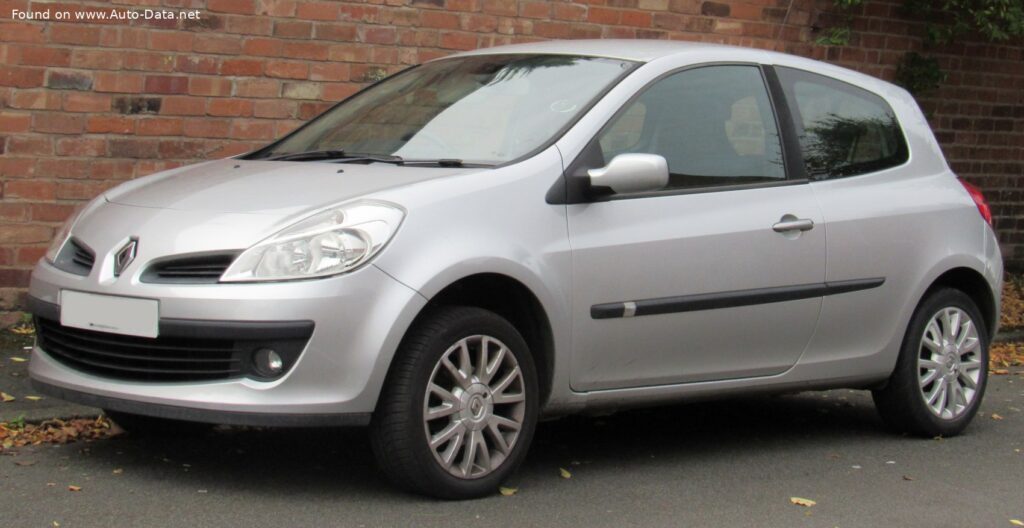
The Renault Clio III (Phase I) 3-door 1.5 dCi 68 hp model, produced between 2005 and 2009, represented the entry point into the third generation of Renault’s popular supermini. Part of the X85 series, and built on the B platform (shared with the second-generation Mégane), this variant was specifically designed for economy-minded buyers and those seeking a low-cost, practical city car. It occupied the base trim level within the Clio III range, sitting below higher-powered diesel and petrol options, as well as more generously equipped trim levels like the Dynamique and Privilège.
Powertrain & Engine Architecture
The heart of the Clio III 1.5 dCi 68 hp is the K9K 714 or K9K 768 engine, a 1.5-liter inline four-cylinder diesel engine. This engine is a common rail direct injection (CDI) unit, utilizing Delphi technology for fuel delivery. The common rail system allows for precise control of fuel injection timing and pressure, optimizing combustion efficiency and reducing emissions. The engine features a single overhead camshaft (SOHC) valvetrain operating two valves per cylinder. A turbocharger with an intercooler is employed to boost power output and improve torque across the rev range. The turbocharger helps to overcome the inherent limitations of a small-displacement diesel engine, providing a more responsive driving experience.
The engine’s specifications include a bore of 76mm and a stroke of 80.5mm, resulting in a displacement of 1461 cc (89.16 cubic inches). It boasts a relatively high compression ratio of 17.9:1, typical for diesel engines, which contributes to its fuel efficiency. The engine produces 68 horsepower at 4000 rpm and 160 Nm (118.01 lb-ft) of torque at 1700 rpm. The engine oil capacity is 4.5 liters (4.76 US quarts / 3.96 UK quarts), and the coolant capacity is 6.5 liters (6.87 US quarts / 5.72 UK quarts).
The 1.5 dCi engine was typically paired with a five-speed manual transmission. While an automated manual transmission (Quickshift 5) was available on some Clio III models, it was less common on the base 68 hp variant. The five-speed manual transmission provides a straightforward and reliable gear-changing experience, prioritizing fuel economy over sporty performance.
Driving Characteristics
The Clio III 1.5 dCi 68 hp offers modest performance, geared towards urban driving and fuel efficiency. Acceleration from 0 to 100 km/h (0-62 mph) takes approximately 15.2 seconds, and the top speed is around 162 km/h (100.66 mph). The engine’s torque peak at 1700 rpm provides adequate pulling power for everyday driving situations, but overtaking maneuvers require careful planning. The gear ratios are optimized for fuel economy, with taller gearing in higher gears to reduce engine speed at cruising speeds. Compared to the more powerful 1.6 16V petrol engine or the 1.5 dCi 88 hp variant, the 68 hp diesel feels noticeably slower, particularly when accelerating from low speeds or climbing hills. However, the lower-powered engine offers superior fuel economy and reduced running costs.
The steering is light and precise, making it easy to maneuver in tight city streets. The suspension provides a comfortable ride, absorbing bumps and imperfections in the road surface reasonably well. However, the suspension setup is not particularly sporty, and the car exhibits some body roll in corners. Overall, the driving experience is best described as practical and undemanding, prioritizing comfort and economy over outright performance.
Equipment & Trim Levels
The base-level Clio III 1.5 dCi 68 hp typically came equipped with a relatively basic specification. Standard features generally included power steering, central locking, an immobilizer, and front airbags. Interior upholstery was typically cloth, and the dashboard featured a simple, functional design. Air conditioning was often an optional extra, as were electric front windows and a radio/CD player. The 3-door configuration meant rear passenger access was less convenient than the 5-door model.
Optional extras available for this trim level included alloy wheels, metallic paint, and a trip computer. Higher trim levels, such as the Dynamique and Privilège, offered more comprehensive equipment lists, including features like automatic headlights and rain sensors, upgraded interior trim, and a more sophisticated audio system. The base model was aimed at buyers prioritizing affordability and practicality, and therefore omitted many of the comfort and convenience features found on more expensive trims.
Chassis & Braking
The Clio III 1.5 dCi 68 hp utilizes a McPherson strut front suspension with a coil spring and anti-roll bar. The rear suspension employs a torsion beam setup, which is a cost-effective and space-efficient solution. The front brakes are ventilated discs measuring 260mm in diameter, while the rear brakes are drum brakes measuring 203mm. The use of drum brakes on the rear was a cost-saving measure common on base-model variants.
The car is equipped with an Anti-lock Braking System (ABS) as standard, enhancing braking performance and stability, particularly on slippery surfaces. The steering is a rack and pinion type with electric power assistance, providing a light and responsive steering feel. Tire sizes typically ranged from 185/60 R15 to 195/50 R16, depending on the wheel size. The kerb weight of the vehicle is approximately 1155 kg (2546.34 lbs).
Market Reception & Comparison
The Renault Clio III 1.5 dCi 68 hp was generally well-received by critics as a practical and economical city car. Its low fuel consumption – around 4.5 l/100 km (52.3 US mpg / 62.8 UK mpg) – was a major selling point. However, its modest performance was often criticized, particularly when compared to higher-powered variants or competitors. Compared to the 1.6 16V petrol engine, the 1.5 dCi offered significantly better fuel economy but lacked the petrol engine’s responsiveness. The 1.5 dCi 88 hp variant provided a better balance of performance and economy, but at a higher price point.
In terms of reliability, the K9K engine is generally considered to be robust and reliable, although issues with the turbocharger and fuel injectors have been reported. The Clio III as a whole has a generally good reputation for reliability, but regular maintenance is essential to prevent problems. The Clio III 1.5 dCi 68 hp offered a compelling value proposition for buyers seeking a low-cost, fuel-efficient supermini.
Technical Specifications
| Brand | Renault |
| Model | Clio |
| Generation | Clio III (Phase I) 3-door |
| Type (Engine) | 1.5 dCi (68 Hp) |
| Start of production | 2005 |
| End of production | 2009 |
| Engine Model/Code | K9K 714, K9K 768 |
| Engine displacement | 1461 cm3 (89.16 cu. in.) |
| Number of cylinders | 4 |
| Power | 68 Hp @ 4000 rpm |
| Torque | 160 Nm @ 1700 rpm (118.01 lb.-ft. @ 1700 rpm) |
| Fuel consumption (urban) | 5.3 l/100 km (44.4 US mpg / 53.3 UK mpg) |
| Fuel consumption (extra urban) | 4.1 l/100 km (57.4 US mpg / 68.9 UK mpg) |
| Fuel consumption (combined) | 4.5 l/100 km (52.3 US mpg / 62.8 UK mpg) |
| CO2 emissions | 120 g/km |
| Acceleration 0-100 km/h | 15.2 sec |
| Maximum speed | 162 km/h (100.66 mph) |
| Kerb Weight | 1155 kg (2546.34 lbs) |
| Fuel tank capacity | 55 l (14.53 US gal / 12.1 UK gal) |
Legacy
The Renault Clio III 1.5 dCi 68 hp remains a common sight on European roads today, testament to its reliability and affordability. The K9K engine has proven to be durable and long-lasting, and many examples have exceeded 200,000 kilometers (124,000 miles) without major mechanical issues. On the used car market, these Clios are typically very affordable, making them an attractive option for first-time buyers or those seeking a cheap and economical runaround. However, potential buyers should be aware of the possibility of turbocharger or fuel injector problems, and a thorough inspection is recommended before purchase. The Clio III 1.5 dCi 68 hp cemented the Clio’s reputation as a practical, reliable, and affordable supermini, and continues to be a popular choice in the used car market.