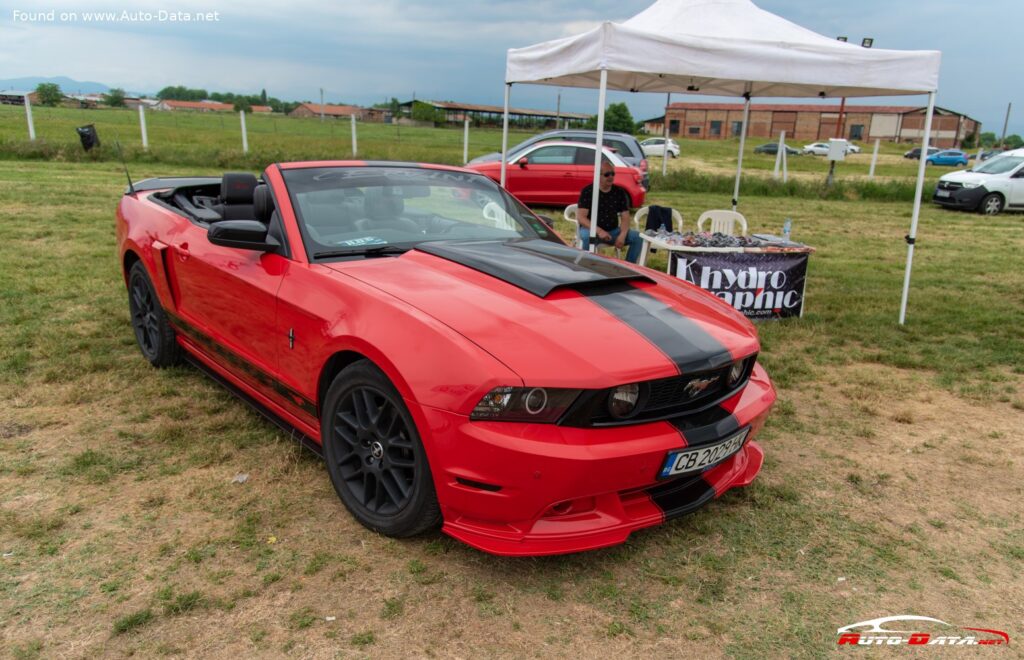
The Ford Mustang Convertible V, specifically the facelifted version produced from 2010 to 2012, represented a significant evolution of the iconic American pony car. This iteration, equipped with the 3.7-liter Duratec V6 engine paired with a six-speed automatic transmission, occupied a middle ground in the Mustang lineup, offering a balance of performance, comfort, and affordability. It sat above the base 3.7L manual transmission models and below the more powerful Mustang GT with its 5.0L V8 engine. The 2009 facelift brought revised styling cues, including a bolder grille, updated headlights, and redesigned taillights, enhancing the Mustang’s modern appeal. This variant was built on the D2C platform, a modified version of the original D2C platform used for the fifth-generation Mustang.
Powertrain & Engine Architecture
The heart of the 2010-2012 Mustang Convertible V was the Ford Duratec 37 engine, a 3.7-liter (3727 cc / 227.44 cu. in.) naturally aspirated V6. This engine, designated as the 305 horsepower variant, utilized a 60-degree V-angle configuration. Key features included a cast aluminum engine block with cast iron cylinder liners, a dual overhead camshaft (DOHC) valvetrain with variable valve timing (Ti-VCT) on both intake and exhaust camshafts, and multi-port fuel injection. The Ti-VCT system allowed for optimized engine performance across a wider RPM range, improving both power and fuel efficiency. The engine produced 305 hp at 6500 rpm and 280.27 lb-ft of torque at 4250 rpm. The compression ratio was set at 10.5:1.
The engine was mated to a six-speed 6F55 automatic transmission. This transmission featured a torque converter and offered selectable shift modes, including a “Sport” mode for more aggressive shifting. The automatic transmission was chosen to appeal to buyers prioritizing ease of use and comfort over the more engaging experience of a manual gearbox. The transmission’s gear ratios were tuned to provide a balance between acceleration and fuel economy. First gear was geared for quick off-the-line acceleration, while higher gears were optimized for highway cruising.
Engine Specifications
The Duratec 37 engine boasted a cylinder bore of 95.5 mm (3.76 in.) and a piston stroke of 86.7 mm (3.41 in.). Engine oil capacity was 5.7 liters (6.02 US qt / 5.02 UK qt), and the recommended oil specification was determined by Ford’s current standards for the period. The cooling system held 11.7 liters (12.36 US qt / 10.29 UK qt) of coolant.
Driving Characteristics
The 3.7L V6 automatic Mustang Convertible offered a comfortable and capable driving experience. While not as overtly sporty as the V8-powered GT, it provided ample power for everyday driving and enjoyable cruising. Acceleration from 0 to 60 mph was typically achieved in around 6.0-6.5 seconds, depending on testing conditions and vehicle weight. The automatic transmission shifted smoothly, although some reviewers noted a slight hesitation during downshifts. The power delivery was linear, with a broad torque curve making it easy to navigate traffic and execute passing maneuvers. The convertible top added weight, slightly impacting handling compared to the coupe, but the suspension was tuned to minimize body roll and provide a reasonably controlled ride. The steering was light and responsive, making the car easy to maneuver in urban environments.
Compared to the manual transmission version of the 3.7L, the automatic offered a more relaxed driving experience, particularly in stop-and-go traffic. However, the manual transmission provided more driver control and slightly quicker acceleration due to the elimination of torque converter losses. The V6 automatic was significantly less expensive and offered better fuel economy than the Mustang GT, making it an attractive option for buyers seeking a stylish and affordable convertible.
Equipment & Trim Levels
The 2010-2012 Mustang Convertible V came standard with a respectable array of features. Standard interior appointments included cloth upholstery, air conditioning, a basic audio system with an auxiliary input, power windows and locks, and keyless entry. Safety features included anti-lock brakes (ABS) and a driver and passenger airbag system. Optional extras included leather upholstery, a premium audio system (often a Shaker system with multiple speakers and a subwoofer), automatic climate control, a power-adjustable driver’s seat, and a navigation system. Appearance packages were also available, offering features such as unique wheels, body-colored side mirrors, and upgraded interior trim.
The Mustang Convertible V was often offered in various appearance packages, such as the California Special package, which added unique styling elements inspired by the original 1968 California Special Mustang. These packages allowed buyers to personalize their vehicles and enhance their visual appeal.
Chassis & Braking
The Mustang Convertible V utilized an independent McPherson strut front suspension with a transverse stabilizer bar. The rear suspension employed a rigid axle setup with coil springs and a transverse stabilizer bar. This suspension configuration provided a reasonable balance between ride comfort and handling. The front brakes consisted of ventilated discs measuring 316×30 mm, while the rear brakes were also ventilated discs measuring 300×19 mm. The braking system was assisted by ABS, providing enhanced stopping power and stability. The steering system was a rack-and-pinion setup with electric power steering, offering light and responsive steering feel.
Standard tire size was 225/60 R17 or 235/50 R18, depending on the wheel size. Wheel rims were typically 7J x 17 or 8J x 18. The chassis was reinforced to compensate for the lack of a fixed roof, ensuring structural rigidity and minimizing body flex.
Market Reception & Comparison
The 2010-2012 Mustang Convertible V was generally well-received by automotive critics. It was praised for its stylish design, comfortable ride, and affordable price point. The 3.7L V6 engine was considered a capable performer, providing sufficient power for most drivers. However, some reviewers noted that the engine lacked the visceral excitement of the V8. Fuel economy was a strong point, with combined fuel consumption averaging around 23.1 US mpg (27.7 UK mpg / 9.8 km/l).
Compared to the Mustang GT, the V6 Convertible was significantly more fuel-efficient and less expensive to insure. However, the GT offered substantially more power and a more engaging driving experience. Compared to other convertibles in its price range, such as the Chevrolet Camaro Convertible, the Mustang offered a more refined interior and a more comfortable ride. Reliability was generally good, with the Duratec 37 engine proving to be a durable and dependable powerplant.
Technical Specifications
| Body Type | Cabriolet, 2 Doors, 4 Seats |
| Engine Type | Petrol (Gasoline) |
| Fuel Economy (Combined) | 10.2 l/100 km / 23.1 US mpg / 27.7 UK mpg / 9.8 km/l |
| Power | 305 Hp @ 6500 rpm |
| Torque | 380 Nm @ 4250 rpm / 280.27 lb.-ft. @ 4250 rpm |
| Engine Size | 3.7 l / 3727 cm3 / 227.44 cu. in. |
| Number of Cylinders | 6, V-engine |
| Drivetrain | Rear wheel drive. Internal Combustion engine. |
| Length | 4778 mm / 188.11 in. |
| Width | 1877 mm / 73.9 in. |
| Curb Weight | 1635 kg / 3604.56 lbs. |
| Trunk Space | 272 l / 9.61 cu. ft. |
| Gearbox | 6 gears, automatic transmission |
Legacy
The 2010-2012 Ford Mustang Convertible V with the 3.7L V6 automatic powertrain has proven to be a relatively reliable and affordable option in the used car market. The Duratec 37 engine is known for its durability, and the six-speed automatic transmission has also demonstrated good longevity. These Mustangs are often sought after by buyers looking for a stylish and comfortable convertible without the higher price tag of the V8-powered GT. While not a collector’s item, this variant represents a sweet spot in the fifth-generation Mustang lineup, offering a compelling combination of performance, features, and value. Regular maintenance, including oil changes and fluid checks, is crucial for ensuring the continued reliability of these vehicles.