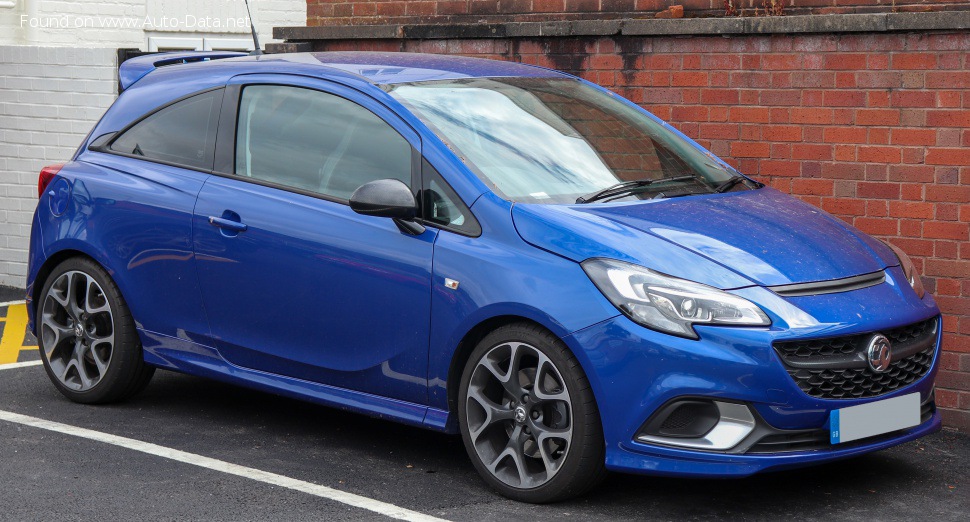
The Vauxhall Corsa E 1.3 CDTi ecoFLEX (75 hp) start/stop, produced from November 2014 to June 2018, represented an entry-level diesel option within the fifth generation of the Corsa (Corsa E). Positioned as a fuel-efficient and economical choice, this variant targeted buyers prioritizing low running costs over outright performance. It occupied the lower end of the Corsa E lineup, sitting below higher-powered diesel and petrol versions, and served as a direct competitor to similar small-displacement diesel hatchbacks offered by Ford, Renault, and Peugeot. The Corsa E itself was built on the General Motors Gamma II platform, shared with other Opel/Vauxhall and Chevrolet models.
Powertrain & Engine Architecture
The heart of the Corsa E 1.3 CDTi ecoFLEX is the B13DTC engine, a 1.3-liter inline-four cylinder diesel engine. This engine is part of the Fiat-sourced Small Diesel Engine (SDE) family, utilized by General Motors following a collaborative agreement. It features a turbocharged common rail diesel injection system, delivering 75 horsepower at 3750 rpm and 190 Nm (140.14 lb-ft) of torque between 1500 and 2500 rpm. The engine utilizes a 16.25:1 compression ratio and four valves per cylinder. The turbocharger, coupled with an intercooler, helps to improve efficiency and power output.
The “ecoFLEX” designation indicates the inclusion of fuel-saving technologies, most notably a Start & Stop system which automatically shuts off the engine when the vehicle is stationary (e.g., at traffic lights) to reduce fuel consumption and emissions. The engine also incorporates a diesel particulate filter (DPF) to minimize harmful emissions, meeting Euro 6 emission standards. The engine is transversely mounted in the front of the vehicle.
The 1.3 CDTi engine was typically paired with a five-speed manual transmission. While an automatic transmission was offered on other Corsa E models, it was not available with the 75 hp 1.3 CDTi engine. This pairing was specifically chosen to maximize fuel economy and minimize cost for the entry-level diesel variant.
Engine Specifications
Key engine specifications include a cylinder bore of 69.6 mm (2.74 in) and a piston stroke of 82 mm (3.23 in), resulting in a total displacement of 1248 cm³ (76.16 cu. in). Engine oil capacity is 4 liters (4.23 US qt | 3.52 UK qt), and the coolant capacity is 6 liters (6.34 US qt | 5.28 UK qt).
Driving Characteristics
The Corsa E 1.3 CDTi ecoFLEX (75 hp) offered modest performance, prioritizing fuel efficiency over acceleration. The 0-100 km/h (0-62 mph) sprint took approximately 14.8 seconds, and the top speed was limited to 182 km/h (113.09 mph). The engine’s torque peak at 1500-2500 rpm provided adequate pulling power for everyday driving, but overtaking maneuvers required careful planning. Compared to the more powerful 1.0-liter Turbo petrol or the 1.7-liter CDTi diesel variants, the 1.3 CDTi felt noticeably slower.
The five-speed manual transmission was geared for economy, with relatively long gear ratios. This contributed to the car’s fuel efficiency but meant the engine often needed to be worked harder, especially when climbing hills or carrying a full load. The clutch was light and easy to operate, making it suitable for novice drivers. The overall driving experience was characterized by its refinement and quietness, typical of modern diesel engines, although some engine noise was noticeable under hard acceleration.
Equipment & Trim Levels
The Corsa E 1.3 CDTi ecoFLEX typically came with a basic level of equipment, reflecting its position as an entry-level model. Standard features generally included power steering, ABS (Anti-lock Braking System), electronic stability control, a driver’s airbag, and basic audio system with USB connectivity. Interior upholstery was typically cloth, and the dashboard featured a simple, functional design.
Optional extras included air conditioning, alloy wheels, electric windows, a CD/MP3 player, and upgraded trim levels with more luxurious interior materials. Higher trim levels, such as “Energy” or “Design,” added features like cruise control, a touchscreen infotainment system, and parking sensors. However, these options increased the vehicle’s price, moving it closer to the more powerful and better-equipped Corsa variants.
Chassis & Braking
The Corsa E 1.3 CDTi ecoFLEX utilized an independent McPherson strut suspension at the front and a semi-independent coil spring suspension at the rear. This setup provided a comfortable ride quality, absorbing bumps and imperfections in the road surface effectively. The suspension was tuned for comfort rather than sporty handling. Stabilizer bars were present, contributing to reduced body roll during cornering.
The braking system consisted of ventilated discs at the front and discs at the rear. ABS (Anti-lock Braking System) was standard, enhancing braking performance and stability, particularly on slippery surfaces. The steering was rack and pinion, providing precise and responsive control. Standard tire size was 185/70 R14 or 185/65 R15, mounted on 5.5J x 14 or 6.0J x 15 steel or alloy wheels.
Market Reception & Comparison
The Corsa E 1.3 CDTi ecoFLEX was generally well-received by critics for its fuel efficiency and low running costs. It achieved combined fuel economy figures of around 3.6 l/100 km (65.3 US mpg / 78.5 UK mpg), making it one of the most economical cars in its class. However, its performance was often criticized as being underwhelming, particularly when compared to the more powerful petrol and diesel alternatives.
Compared to other trims in the Corsa E lineup, the 1.3 CDTi offered the lowest purchase price but also the least amount of power and equipment. The 1.0-liter Turbo petrol engine provided a more engaging driving experience, while the 1.7-liter CDTi diesel offered superior performance and refinement. In terms of reliability, the 1.3 CDTi engine proved to be generally reliable, although the diesel particulate filter (DPF) could be prone to clogging if the vehicle was primarily used for short journeys.
Technical Specifications
| Brand | Vauxhall |
| Model | Corsa |
| Generation | Corsa E |
| Type (Engine) | 1.3 CDTi ecoFLEX (75 Hp) start/stop |
| Start of production | November, 2014 |
| End of production | June, 2018 |
| Powertrain Architecture | Internal Combustion engine |
| Body type | Hatchback |
| Seats | 5 |
| Doors | 5 |
| Fuel consumption (urban) | 4.4 l/100 km (53.5 US mpg / 64.2 UK mpg) |
| Fuel consumption (extra urban) | 3.3 l/100 km (71.3 US mpg / 85.6 UK mpg) |
| Fuel consumption (combined) | 3.6 l/100 km (65.3 US mpg / 78.5 UK mpg) |
| CO2 emissions | 96 g/km |
| Fuel Type | Diesel |
| Acceleration 0 – 100 km/h | 14.8 sec |
| Acceleration 0 – 62 mph | 14.8 sec |
| Acceleration 0 – 60 mph | 14.1 sec |
| Maximum speed | 182 km/h (113.09 mph) |
| Emission standard | Euro 6 |
| Weight-to-power ratio | 14.9 kg/Hp |
| Weight-to-torque ratio | 5.9 kg/Nm |
| Power | 75 Hp @ 3750 rpm |
| Torque | 190 Nm @ 1500-2500 rpm (140.14 lb.-ft.) |
| Engine layout | Front, Transverse |
| Engine Model/Code | B13DTC |
| Engine displacement | 1248 cm3 (76.16 cu. in.) |
| Number of cylinders | 4 |
| Engine configuration | Inline |
| Cylinder Bore | 69.6 mm (2.74 in.) |
| Piston Stroke | 82 mm (3.23 in.) |
| Compression ratio | 16.25:1 |
| Number of valves per cylinder | 4 |
| Fuel injection system | Diesel Commonrail |
| Engine aspiration | Turbocharger, Intercooler |
| Engine oil capacity | 4 l (4.23 US qt | 3.52 UK qt) |
| Coolant | 6 l (6.34 US qt | 5.28 UK qt) |
| Kerb Weight | 1120-1199 kg (2469.18 – 2643.34 lbs.) |
| Max. weight | 1605-1665 kg (3538.42 – 3670.7 lbs.) |
| Trunk (boot) space – minimum | 280 l (9.89 cu. ft.) |
| Trunk (boot) space – maximum | 1090 l (38.49 cu. ft.) |
| Fuel tank capacity | 45 l (11.89 US gal | 9.9 UK gal) |
| Length | 4021 mm (158.31 in.) |
| Width | 1736 mm (68.35 in.) |
| Height | 1481 mm (58.31 in.) |
| Wheelbase | 2510 mm (98.82 in.) |
| Drivetrain Architecture | Front wheel drive |
| Number of gears and type of gearbox | 5 gears, manual transmission |
Legacy
The Corsa E 1.3 CDTi ecoFLEX (75 hp) remains a relatively common sight on used car markets. Its reputation for fuel efficiency and low running costs continues to appeal to budget-conscious buyers. While the engine itself is generally reliable, potential buyers should be aware of the possibility of DPF issues, particularly if the vehicle has not been regularly serviced or has primarily been used for short journeys. The availability of spare parts is good, and maintenance costs are relatively low. Overall, the Corsa E 1.3 CDTi ecoFLEX represents a practical and economical choice for those seeking a small, fuel-efficient hatchback.