
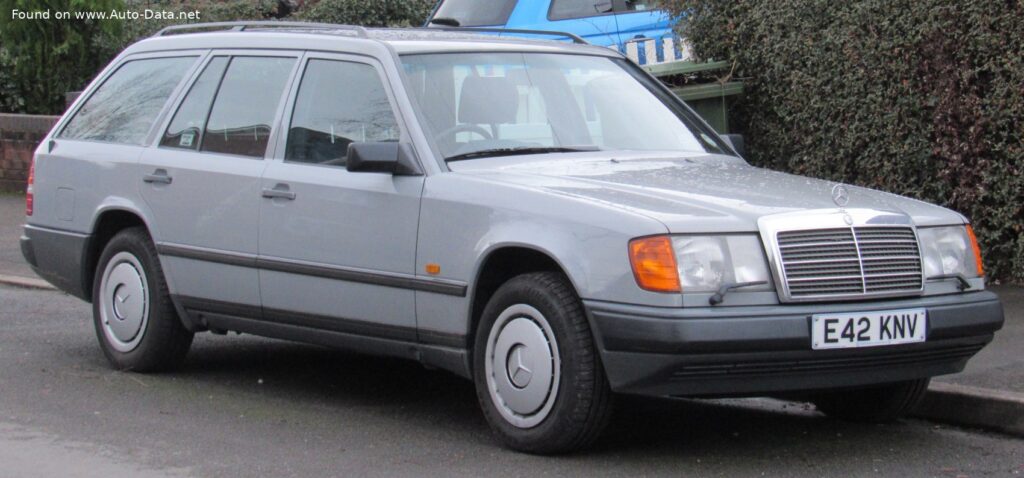
The Mercedes-Benz W124 200 T, produced between March 1985 and September 1986, represents the entry-level variant of the S124 series (T-Modell – the Mercedes designation for station wagon/estate) powered by the M102 engine family. Positioned as a practical and relatively affordable option within the broader W124 lineup, the 200 T offered the spaciousness of a wagon combined with a fuel-efficient, albeit modestly powered, four-cylinder engine. It served as a gateway into the W124 range, appealing to families and those needing a versatile vehicle without the expense of the larger six-cylinder or diesel options. The W124 series itself was a significant model for Mercedes-Benz, representing a substantial leap forward in safety, build quality, and design compared to its predecessor, the W123.
Powertrain & Engine Architecture
The heart of the 200 T is the Mercedes-Benz M102.922 engine, a 1,997 cc (121.86 cubic inches) inline-four cylinder gasoline engine. This engine produced 109 horsepower at 5,200 rpm and 170 Nm (125.39 lb-ft) of torque at 2,500 rpm. The M102 engine family was known for its durability and relatively simple design. The 200 T utilized a single overhead camshaft (SOHC) valvetrain with two valves per cylinder. Fuel delivery was managed by a Solex carburetor, a technology that was becoming less common in the mid-1980s as fuel injection gained prominence. The engine featured a compression ratio of 9.1:1. Engine oil capacity was 5 liters (5.28 US quarts / 4.4 UK quarts), and the cooling system held 8.5 liters (8.98 US quarts / 7.48 UK quarts).
The 200 T was exclusively offered with a 4-speed manual transmission. While an automatic transmission was available on other W124 models, it was not paired with the 200 T’s engine due to the transmission’s torque capacity limitations. The manual gearbox was designed to provide smooth shifts and contribute to the vehicle’s fuel efficiency. The engine is longitudinally mounted, driving the rear wheels.
Driving Characteristics
The 200 T’s driving experience was characterized by its practicality and comfort rather than outright performance. Acceleration from 0 to 100 km/h (0-62 mph) took approximately 13.6 seconds, while 0 to 60 mph was achieved in around 12.9 seconds. The top speed was rated at 175 km/h (108.74 mph). Compared to the more powerful W124 variants, such as the 230E or 260E, the 200 T felt noticeably slower, particularly when fully loaded or climbing hills. However, the engine’s torque delivery at lower rpm made it reasonably drivable in everyday traffic. The manual transmission allowed for greater driver control and helped to maximize the engine’s limited power output. The gear ratios were optimized for fuel economy and relaxed cruising, rather than spirited acceleration. The 200 T’s performance was adequate for its intended purpose – providing a reliable and spacious vehicle for families and those prioritizing practicality over speed.
Equipment & Trim Levels
The 200 T, as the entry-level T-Modell, came with a relatively basic level of standard equipment. Interior upholstery was typically cloth, although optional leather upholstery was available. The dashboard featured a straightforward layout with analog gauges for speed, tachometer, fuel level, and coolant temperature. Standard features included power steering, front disc brakes, and rear drum brakes. Optional extras included a sunroof, air conditioning, upgraded audio systems, and power windows. The 200 T’s trim level was generally consistent across the production run, with limited customization options available beyond the aforementioned accessories. The focus was on providing a functional and durable vehicle at an accessible price point.
Chassis & Braking
The W124 chassis was a significant advancement in automotive engineering, featuring a robust and well-engineered suspension system. The 200 T utilized a wishbone front suspension and an independent multi-link rear suspension. This setup provided a comfortable ride and good handling characteristics. The rear suspension design was particularly noteworthy for its ability to maintain stability and control even when the vehicle was heavily loaded. Braking duties were handled by disc brakes at the front and drum brakes at the rear. Hydraulic power steering was standard, providing assistance at lower speeds and improving maneuverability. Tire size was 195/65 R15 for both front and rear wheels, mounted on 6.5J x 15 inch steel rims. The chassis was designed to provide a balance between comfort, handling, and safety.
Market Reception & Comparison
The Mercedes-Benz 200 T received generally positive reviews for its practicality, build quality, and fuel efficiency. Critics acknowledged that its performance was modest compared to other W124 models, but they also recognized that it offered a compelling value proposition for buyers seeking a spacious and reliable wagon. Compared to the 230T or 260T, the 200 T offered significantly better fuel economy – approximately 12.1 l/100 km (19.4 US mpg) in urban driving and 7.3 l/100 km (32.2 US mpg) on the highway. However, the higher-powered models provided a more refined driving experience and greater versatility for towing or carrying heavy loads. The 200 T’s target audience was primarily families and individuals who prioritized practicality and fuel economy over performance. Its relatively low price point made it an attractive option for those entering the Mercedes-Benz brand.
Technical Specifications
| Brand | Mercedes-Benz |
| Model | W124 200 T |
| Body Type | Station Wagon (Estate) |
| Engine Type | Inline-Four Cylinder Gasoline |
| Engine Displacement | 1,997 cc (121.86 cu. in.) |
| Engine Code | M 102.922 |
| Power Output | 109 hp @ 5,200 rpm |
| Torque Output | 170 Nm (125.39 lb-ft) @ 2,500 rpm |
| Compression Ratio | 9.1:1 |
| Fuel Injection | Carburetor |
| Transmission | 4-Speed Manual |
| Drive Type | Rear-Wheel Drive |
| Kerb Weight | 1,390 kg (3,064.43 lbs) |
| Maximum Weight | 2,010 kg (4,431.29 lbs) |
| Fuel Tank Capacity | 72 liters (19.02 US gal / 15.84 UK gal) |
| 0-100 km/h | 13.6 seconds |
| Top Speed | 175 km/h (108.74 mph) |
Legacy
The Mercedes-Benz W124 200 T, while not the most sought-after variant of the W124 series, has proven to be a remarkably durable and reliable vehicle. The M102 engine, when properly maintained, is known for its longevity. Today, the 200 T is a relatively affordable entry point into the world of classic Mercedes-Benz ownership. Its simplicity and robust construction make it easier to maintain than some of the more complex W124 models. However, finding well-preserved examples can be challenging, as many were used as workhorses and subjected to heavy use. Rust can be a concern, particularly in areas with harsh winters. Despite its age, the 200 T remains a practical and comfortable vehicle, offering a unique blend of classic Mercedes-Benz styling and functionality. Its enduring appeal lies in its ability to provide reliable transportation without the expense and complexity of more modern vehicles. The 200 T represents a solid, dependable, and increasingly collectible piece of automotive history.
