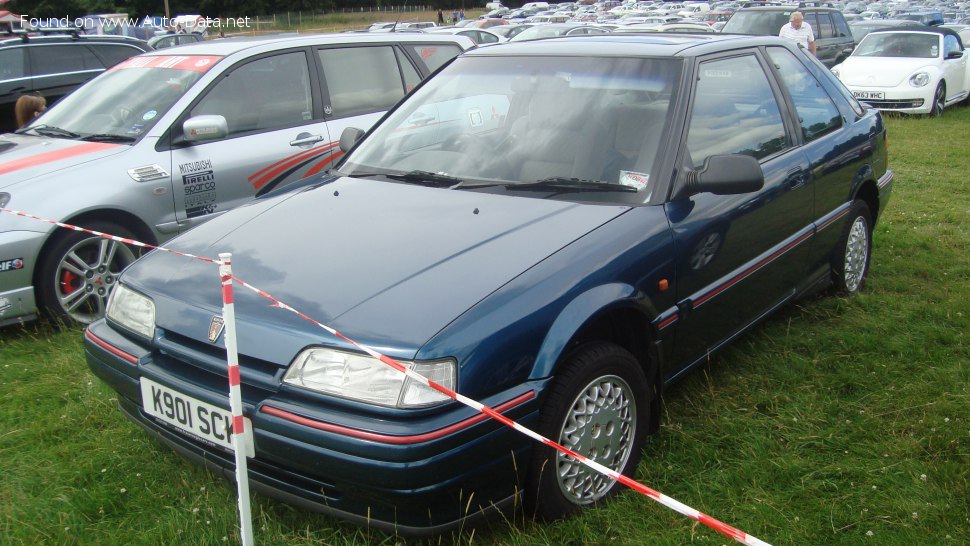
The Rover 200 (XW), produced between 1990 and 1995, represented a significant step forward for Rover in the small family car segment. Within the 200 range, the 214 GSi/Si model, powered by a 1.4-liter, 103 horsepower engine, occupied a middle ground, offering a balance between affordability and performance. It was positioned above the base 114 models and below the more powerful 216 variants. The XW series was based on the Honda Concerto platform, a result of the British Leyland/Rover-Honda partnership of the 1980s, and was available in both 3-door and 5-door hatchback configurations.
Rover 200 (XW) 214 GSi/Si: An Overview
The 214 GSi/Si was designed to appeal to buyers seeking a stylish and relatively sporty hatchback. The “GSi” and “Si” designations denoted trim levels, with the “Si” generally offering a slightly more comprehensive equipment list. This variant aimed to provide a more engaging driving experience than the entry-level models, while remaining practical and economical for everyday use. It was a popular choice in the UK and European markets, competing with vehicles like the Ford Escort, Vauxhall/Opel Astra, and Volkswagen Golf.
Powertrain & Engine Architecture
At the heart of the 214 GSi/Si was the Rover K-Series engine, specifically the 1.4-liter (1396 cc) inline-four cylinder unit. This engine, designated with various codes depending on the specific year and market, was a key feature of the XW Rover 200. The engine utilized a multi-port fuel injection system, contributing to improved fuel efficiency and smoother power delivery. The K-Series engine was known for its relatively lightweight construction and its double overhead camshaft (DOHC) valvetrain, which allowed for efficient cylinder filling and improved high-rpm performance. The compression ratio was set at 10:1. While the K-Series engine would later become known for head gasket issues in some of its larger configurations, the 1.4-liter version generally proved to be more reliable.
The 214 GSi/Si was exclusively offered with a 5-speed manual transmission. This transmission was designed to complement the engine’s power characteristics, providing crisp gear changes and a reasonably engaging driving experience. The gearbox was front-wheel drive, as was standard for vehicles in this class at the time. The gear ratios were tuned to prioritize acceleration in the lower gears and maintain reasonable fuel economy at cruising speeds.
Driving Characteristics
The 103 horsepower and 93.67 lb-ft of torque produced by the 1.4-liter engine provided adequate performance for everyday driving. Acceleration from 0 to 60 mph took approximately 10.9 seconds, and the top speed was around 113 mph. While not particularly quick by modern standards, the 214 GSi/Si offered a lively and enjoyable driving experience, especially when compared to the lower-powered 114 models. The relatively light weight of the vehicle (approximately 2348 lbs) contributed to its nimble handling. The manual transmission allowed drivers to fully exploit the engine’s power band, and the steering provided a decent level of feedback. Compared to the 216 variants, the 214 GSi/Si felt less stressed at higher speeds and offered better fuel economy.
Equipment & Trim Levels
The 214 GSi/Si came reasonably well-equipped for its price point. Standard features typically included power steering, central locking, electric front windows, and a basic stereo system. The “Si” trim level generally added features such as alloy wheels, upgraded interior trim, and sometimes a sunroof. Interior upholstery was typically cloth, with a choice of colors available. The dashboard layout was functional and straightforward, with clearly labeled controls. Optional extras included air conditioning, a more advanced stereo system, and metallic paint finishes.
Chassis & Braking
The Rover 200 (XW) utilized a front-wheel-drive chassis with independent wishbone suspension at the front and a coil spring suspension at the rear. This suspension setup provided a comfortable ride quality, while also offering reasonable handling characteristics. The front brakes were ventilated discs, providing good stopping power, while the rear brakes were drums. Anti-lock braking system (ABS) was available as an option, enhancing safety. The vehicle rode on 175/65 R14 tires, mounted on 7.5J x 14 inch wheels. The front and rear track widths were 58.07 inches and 57.87 inches respectively, contributing to the vehicle’s stability.
Market Reception & Comparison
The Rover 200 (XW) 214 GSi/Si was generally well-received by automotive critics. It was praised for its stylish design, comfortable ride, and relatively affordable price. However, some critics noted that the engine could feel a little underpowered, particularly when carrying a full load of passengers or luggage. Fuel economy was considered to be good for its class, with combined fuel consumption figures around 32.7 US mpg. Compared to the 216 models, the 214 GSi/Si offered a better balance between performance and fuel economy, making it a more practical choice for many buyers. Reliability was generally considered to be average, with some owners reporting minor electrical issues.
Technical Specifications
| Body Type | Hatchback, 3/5 Doors |
| Engine Displacement | 1396 cm3 (85.19 cu. in.) |
| Number of Cylinders | 4, Inline |
| Fuel Type | Petrol (Gasoline) |
| Power Output | 103 Hp @ 6000 rpm |
| Torque | 127 Nm @ 3000 rpm (93.67 lb.-ft. @ 3000 rpm) |
| Compression Ratio | 10:1 |
| Fuel Injection | Multi-port manifold injection |
| Valvetrain | DOHC |
| Transmission | 5-speed Manual |
| Drive Wheels | Front Wheel Drive |
| Kerb Weight | 1065 kg (2347.92 lbs.) |
| Maximum Weight | 1550 kg (3417.17 lbs.) |
| Fuel Tank Capacity | 55 l (14.53 US gal | 12.1 UK gal) |
| Trunk (Boot) Space | 352 l (12.43 cu. ft.) |
| 0-60 mph | 10.9 sec |
| 0-100 km/h | 11.5 sec |
| Maximum Speed | 182 km/h (113.09 mph) |
| Fuel Consumption (Urban) | 8.9 l/100 km (26.4 US mpg) |
| Fuel Consumption (Extra Urban) | 5.5 l/100 km (42.8 US mpg) |
| Fuel Consumption (Combined) | 7.2 l/100 km (32.7 US mpg) |
Legacy
The Rover 200 (XW) 214 GSi/Si remains a popular choice among classic car enthusiasts. The 1.4-liter K-Series engine, when properly maintained, has proven to be relatively durable. However, as with any older vehicle, regular maintenance is essential to prevent issues. Parts availability can be a challenge, but a dedicated network of Rover specialists and online suppliers exists. Today, the 214 GSi/Si is often seen as a stylish and affordable entry point into classic Rover ownership, offering a nostalgic driving experience and a connection to a bygone era of British automotive engineering. The car’s relatively simple mechanicals make it a good candidate for DIY maintenance and restoration projects.