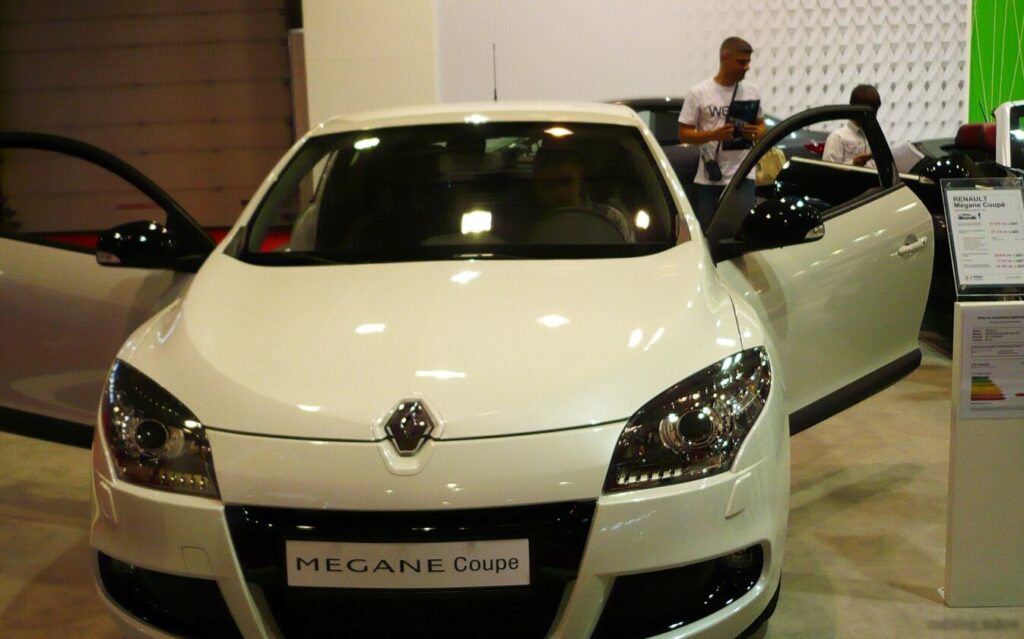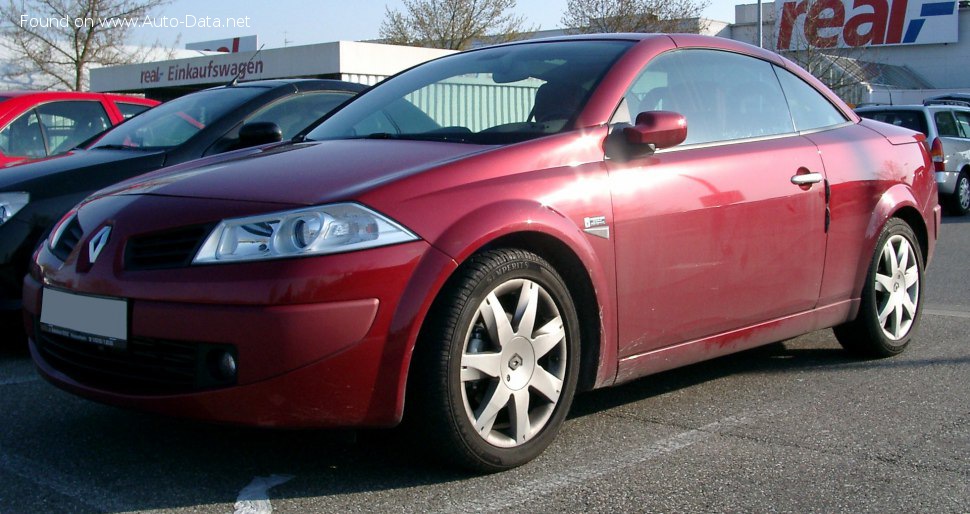
The Renault Megane II Coupe-Cabriolet (CC) Phase II, produced from 2006 to 2009, represented a significant evolution of Renault’s popular compact offering. This variant, specifically the 2.0 Turbo 16V model generating 163 horsepower, occupied the upper-mid range of the Megane CC lineup, positioned above the naturally aspirated 1.6L and 2.0L models but below potential performance-focused trims if offered in specific markets. It combined open-air motoring with a more potent engine, appealing to buyers seeking a blend of style, comfort, and performance. The Megane II CC was built on the Renault-Nissan C platform (also known as the 1HX0 platform), shared with other models like the Renault Scenic and Nissan Tiida.
Powertrain & Engine Architecture
The heart of the 2006-2009 Renault Megane II CC 2.0 Turbo is the F4R engine, a 1998cc (121.93 cu. in.) inline-four cylinder gasoline engine. This engine, a mainstay in Renault’s lineup for many years, was significantly enhanced with the addition of a turbocharger and intercooler. The F4R is a DOHC (Dual Overhead Camshaft) design with four valves per cylinder, contributing to its relatively high power output for its displacement. Fuel delivery is managed by a multi-port fuel injection system. The turbocharger, a Garrett unit in many applications, provides a substantial boost in power and torque compared to naturally aspirated versions of the F4R.
The engine’s compression ratio is 9.5:1. Lubrication is provided by a 5.4-liter (5.71 US qt, 4.75 UK qt) oil supply, requiring specification compliant with Renault standards. Cooling is handled by a 6.5-liter (6.87 US qt, 5.72 UK qt) coolant capacity. The engine produces 163 hp at 5000 rpm and 270 Nm (199.14 lb-ft) of torque at 3250 rpm. This torque figure is a key advantage over the naturally aspirated engines, providing stronger acceleration and more relaxed cruising.
Transmission
The 2.0 Turbo 16V Megane CC was primarily equipped with a 6-speed manual transmission. However, a 6-speed automatic transmission was also available, and is the focus of this article. This automatic transmission, sourced from Aisin, is a conventional torque converter type, offering smooth shifts and ease of use. While the manual transmission provided a more engaging driving experience, the automatic catered to drivers prioritizing convenience. The automatic transmission’s gear ratios are tuned to balance acceleration and fuel efficiency, though it does slightly diminish the overall performance compared to the manual version.
Driving Characteristics
The 2.0 Turbo 16V automatic Megane CC delivers a noticeably more spirited driving experience than the lower-powered variants. Acceleration from 0-60 mph is approximately 8.3 seconds, and 0-100 km/h takes around 8.7 seconds. The turbocharger provides a surge of power in the mid-range, making overtaking maneuvers easier and more confident. The automatic transmission, while smooth, can sometimes feel slightly hesitant during quick downshifts. The steering is precise and well-weighted, providing good feedback to the driver. The convertible top mechanism, while adding weight to the vehicle, does not significantly detract from the handling. The car feels stable and composed on most road surfaces, though the relatively soft suspension setup prioritizes comfort over outright sportiness.
Compared to the manual transmission version, the automatic sacrifices a small degree of responsiveness. The manual allows for more precise control over gear selection, maximizing the engine’s power potential. However, the automatic’s convenience and ease of use make it a more appealing option for many drivers, particularly in urban environments.
Equipment & Trim Levels
The 2.0 Turbo 16V Megane CC typically came well-equipped, reflecting its position as a mid-to-upper trim level. Standard features generally included air conditioning, power windows and mirrors, central locking, an integrated audio system (often with CD player and steering wheel-mounted controls), and alloy wheels. Safety features such as ABS (Anti-lock Braking System) and front airbags were also standard. Upholstery was typically cloth, though leather options were available as an upgrade.
Optional extras could include a panoramic sunroof, automatic climate control, rain-sensing wipers, parking sensors, and a more advanced audio system with navigation. The interior dashboard configuration was generally consistent across the range, featuring a modern and functional design. The convertible top was electrically operated and featured a relatively quick opening and closing time.
Chassis & Braking
The Megane II CC utilizes an independent McPherson strut suspension setup at the front, providing good ride quality and handling. The rear suspension employs a torsion beam setup, which is a cost-effective and space-saving solution. The front brakes are ventilated discs, offering strong stopping power, while the rear brakes are typically solid discs. The steering system is a rack and pinion type with electric power assistance, providing a light and responsive feel. Tire size is typically 205/55 R16, mounted on 6.5J x 16 alloy wheels. The car’s kerb weight is approximately 1415 kg (3119.54 lbs), and its maximum load capacity is 455 kg (1003.1 lbs).
Market Reception & Comparison
The Renault Megane II CC 2.0 Turbo 16V was generally well-received by automotive critics. It was praised for its stylish design, comfortable interior, and strong performance. The turbo engine was a particular highlight, providing a significant improvement in power and torque compared to the naturally aspirated models. Fuel economy was considered reasonable for a car of its type, with combined fuel consumption around 8 l/100 km (29.4 US mpg, 35.3 UK mpg). However, some critics noted that the automatic transmission could be slightly sluggish at times.
Compared to other coupes and convertibles in its class, such as the Peugeot 308 CC and Ford Focus CC, the Megane CC offered a competitive package in terms of price, performance, and features. The Peugeot 308 CC was often seen as a more refined option, while the Ford Focus CC offered a more sporty driving experience. The Megane CC struck a balance between these two, appealing to a wider range of buyers.
Technical Specifications
| Brand | Renault |
| Model | Megane |
| Generation | Megane II CC (Phase II, 2006) |
| Type (Engine) | 2.0 Turbo 16V (163 Hp) |
| Start of production | 2006 |
| End of production | 2009 |
| Powertrain Architecture | Internal Combustion engine |
| Body type | Coupe – Cabriolet |
| Seats | 4 |
| Doors | 2 |
| Fuel consumption (urban) | 11 l/100 km (21.4 US mpg, 25.7 UK mpg) |
| Fuel consumption (extra urban) | 6.3 l/100 km (37.3 US mpg, 44.8 UK mpg) |
| Fuel consumption (combined) | 8 l/100 km (29.4 US mpg, 35.3 UK mpg) |
| CO2 emissions | 191 g/km |
| Fuel Type | Petrol (Gasoline) |
| Acceleration 0 – 100 km/h | 8.7 sec |
| Acceleration 0 – 62 mph | 8.7 sec |
| Acceleration 0 – 60 mph | 8.3 sec |
| Maximum speed | 220 km/h (136.7 mph) |
| Emission standard | Euro 4 |
| Weight-to-power ratio | 8.7 kg/Hp |
| Weight-to-torque ratio | 5.2 kg/Nm |
| Power | 163 Hp @ 5000 rpm |
| Torque | 270 Nm @ 3250 rpm (199.14 lb.-ft. @ 3250 rpm) |
| Engine layout | Front, Transverse |
| Engine Model/Code | F4R Turbo |
| Engine displacement | 1998 cm3 (121.93 cu. in.) |
| Number of cylinders | 4 |
| Engine configuration | Inline |
| Cylinder Bore | 82.7 mm (3.26 in.) |
| Piston Stroke | 93 mm (3.66 in.) |
| Compression ratio | 9.5:1 |
| Number of valves per cylinder | 4 |
| Fuel injection system | Multi-port manifold injection |
| Engine aspiration | Turbocharger, Intercooler |
| Valvetrain | DOHC |
| Engine oil capacity | 5.4 l (5.71 US qt, 4.75 UK qt) |
| Coolant | 6.5 l (6.87 US qt, 5.72 UK qt) |
| Kerb Weight | 1415 kg (3119.54 lbs.) |
| Max. weight | 1870 kg (4122.64 lbs.) |
| Max load | 455 kg (1003.1 lbs.) |
| Trunk (boot) space – minimum | 190 l (6.71 cu. ft.) |
| Trunk (boot) space – maximum | 490 l (17.3 cu. ft.) |
| Fuel tank capacity | 60 l (15.85 US gal, 13.2 UK gal) |
| Length | 4355 mm (171.46 in.) |
| Width | 1777 mm (69.96 in.) |
| Height | 1404 mm (55.28 in.) |
| Wheelbase | 2522 mm (99.29 in.) |
Legacy
The Renault Megane II CC 2.0 Turbo 16V, while not without its minor flaws, remains a popular choice in the used car market. The F4R engine, when properly maintained, is known for its durability and reliability. However, like all turbocharged engines, it requires regular oil changes and careful monitoring of the turbocharger. The automatic transmission, while generally reliable, may require servicing at higher mileages. Overall, the Megane II CC 2.0 Turbo offers a compelling combination of style, performance, and affordability, making it a desirable option for buyers seeking a fun and practical convertible.