
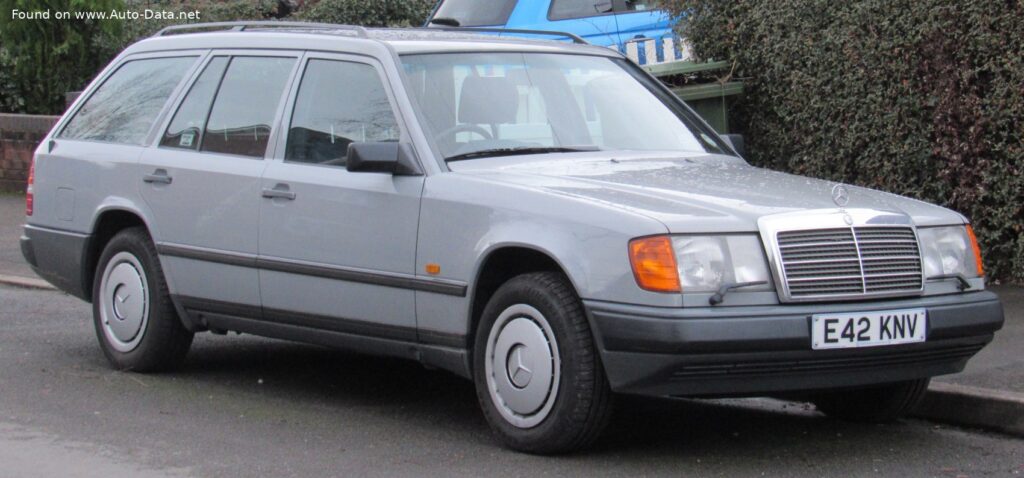
The Mercedes-Benz W124 200 T CAT, produced between September 1986 and August 1989, was a variant of the popular W124 series, specifically the T-Modell (estate/station wagon) body style. Positioned as an entry-level offering within the W124 range, it provided a more affordable and fuel-efficient alternative to the higher-specification 230 TE, 260 TE, and 300 TE models. The “200 T CAT” designation refers to the 2.0-liter engine, the “T” indicating the station wagon body, and “CAT” denoting the catalytic converter equipped for emissions control. This model was built on the 124 platform, known for its robust engineering and build quality, and represented a significant step forward in safety and comfort for Mercedes-Benz.
Powertrain & Engine Architecture
The 200 T CAT was powered by the M102 V 20 engine, a 1,997 cc (121.86 cu. in.) inline-four cylinder gasoline engine. This engine, internally designated as 102.922, produced 105 horsepower (hp) at 5,500 rpm and 160 Newton-meters (118.01 lb-ft) of torque at 3,000 rpm. The M102 engine family was known for its durability and relatively simple design. It featured a single overhead camshaft (SOHC) valvetrain with two valves per cylinder. Fuel delivery was managed by a carburetor, a feature that distinguished it from the later fuel-injected versions of the W124. The compression ratio was 9.1:1. Engine oil capacity was 5 liters (5.28 US qt | 4.4 UK qt), and the engine required 8.5 liters (8.98 US qt | 7.48 UK qt) of coolant.
Transmission
The 200 T CAT was primarily equipped with a 4-speed manual transmission. While an automatic transmission was available as an option, it was less common. The manual gearbox provided a direct and engaging driving experience, while the optional automatic offered increased convenience, albeit at the expense of some performance and fuel economy. The automatic transmission was a traditional hydraulic unit, offering smooth but not particularly quick shifts.
Driving Characteristics
The 200 T CAT offered a comfortable and refined driving experience, typical of Mercedes-Benz vehicles of the era. However, its 105 hp output meant that performance was modest. Acceleration from 0 to 100 km/h (0-62 mph) took approximately 14 seconds, and 0 to 60 mph was achieved in around 13.3 seconds. Top speed was rated at 173 km/h (107.5 mph). The engine delivered its peak torque at 3,000 rpm, providing adequate pulling power for everyday driving, but required downshifts for quicker overtaking maneuvers. Compared to the more powerful 230 TE or 260 TE models, the 200 T CAT felt noticeably slower, particularly when fully loaded. The weight-to-power ratio of 13.3 kg/hp and weight-to-torque ratio of 8.8 kg/Nm reflected this.
Equipment & Trim Levels
The 200 T CAT was generally equipped with a relatively basic level of standard features, reflecting its position as the entry-level model. Standard equipment typically included cloth upholstery, power steering, and front disc brakes. Optional extras included power windows, central locking, a sunroof, and upgraded audio systems. Interior trim was typically functional and durable, prioritizing practicality over luxury. The dashboard layout was consistent across the W124 range, featuring a clear and concise instrument cluster. The availability of options varied depending on the market.
Chassis & Braking
The W124 chassis was renowned for its robust construction and excellent ride quality. The 200 T CAT featured independent suspension all around, with wishbone suspension at the front and a multi-link independent suspension at the rear. This setup provided a comfortable and controlled ride, even on uneven surfaces. Braking was initially equipped with disc brakes on all four wheels, providing adequate stopping power. Tire size was typically 195/65 R15 for both front and rear wheels, mounted on 6.5J x 15 inch rims. The steering system was a cone worm with recirculation balls, offering precise and predictable handling.
Market Reception & Comparison
The 200 T CAT was generally well-received by critics as a practical and reliable family vehicle. It was praised for its build quality, comfortable ride, and relatively low running costs. However, its modest performance was often cited as a drawback, particularly when compared to the more powerful W124 variants. Fuel consumption was a strong point, with figures of 12.2 l/100 km (19.3 US mpg) in urban driving and 7.7 l/100 km (30.5 US mpg) on the open road. Compared to the 230 TE, the 200 T CAT offered a lower purchase price but sacrificed performance and refinement. The 230 TE, with its fuel injection and higher output, was considered a more desirable option for those seeking a more engaging driving experience. The 200 T CAT appealed to buyers prioritizing practicality, fuel efficiency, and the Mercedes-Benz brand reputation.
Technical Specifications
| Engine Model/Code | M 102 V 20 / 102.922 |
| Engine Displacement | 1997 cm3 (121.86 cu. in.) |
| Number of Cylinders | 4 |
| Engine Configuration | Inline |
| Cylinder Bore | 89 mm (3.5 in.) |
| Piston Stroke | 80.25 mm (3.16 in.) |
| Compression Ratio | 9.1:1 |
| Number of Valves per Cylinder | 2 |
| Fuel Injection System | Carburettor |
| Engine Aspiration | Naturally Aspirated |
| Power | 105 Hp @ 5500 rpm |
| Torque | 160 Nm @ 3000 rpm (118.01 lb.-ft. @ 3000 rpm) |
| Kerb Weight | 1400 kg (3086.47 lbs.) |
| Max. Weight | 2020 kg (4453.34 lbs.) |
| Max Load | 620 kg (1366.87 lbs.) |
| Fuel Tank Capacity | 72 l (19.02 US gal | 15.84 UK gal) |
| Length | 4765 mm (187.6 in.) |
| Width | 1740 mm (68.5 in.) |
| Height | 1490 mm (58.66 in.) |
| Wheelbase | 2800 mm (110.24 in.) |
| Front Track | 1497 mm (58.94 in.) |
| Rear Track | 1488 mm (58.58 in.) |
| Drivetrain | Rear wheel drive |
| Number of Gears | 4 (manual) |
Legacy
The M102 engine, as found in the 200 T CAT, is known for its longevity and relative simplicity, making it a relatively easy engine to maintain. While not a high-performance unit, it proved to be remarkably durable. Today, the W124 200 T CAT is a sought-after classic car, particularly among enthusiasts who appreciate its understated elegance and robust engineering. Well-maintained examples command reasonable prices in the used car market. The carburetor can require periodic adjustment and rebuilding, but parts availability remains good. Rust is the primary concern for these vehicles, particularly in regions with harsh winters. The 200 T CAT represents a solid entry point into W124 ownership, offering a taste of Mercedes-Benz luxury and reliability without the higher price tag of the more powerful models.
