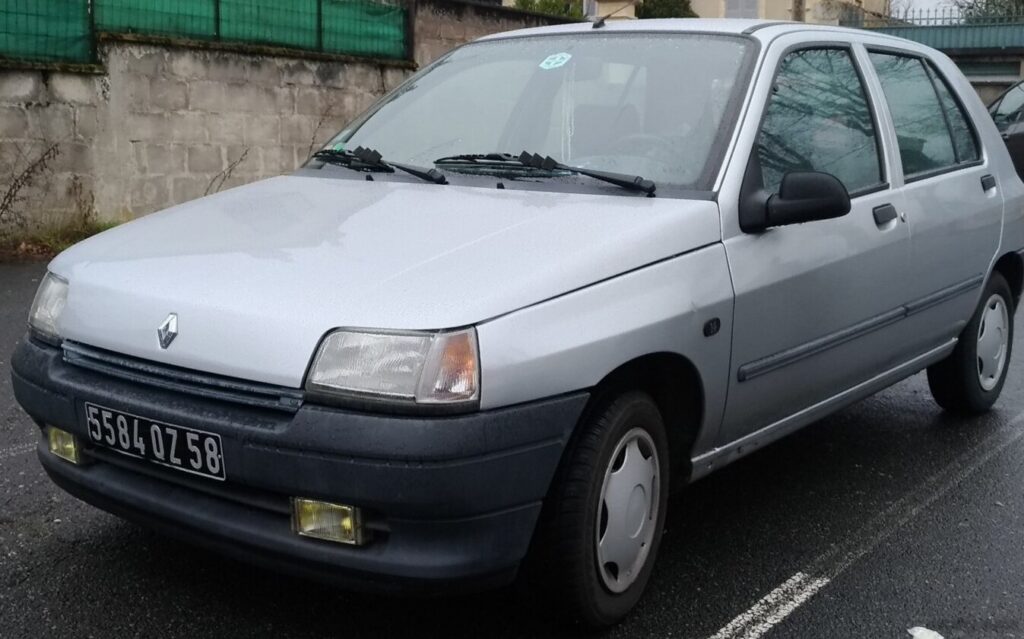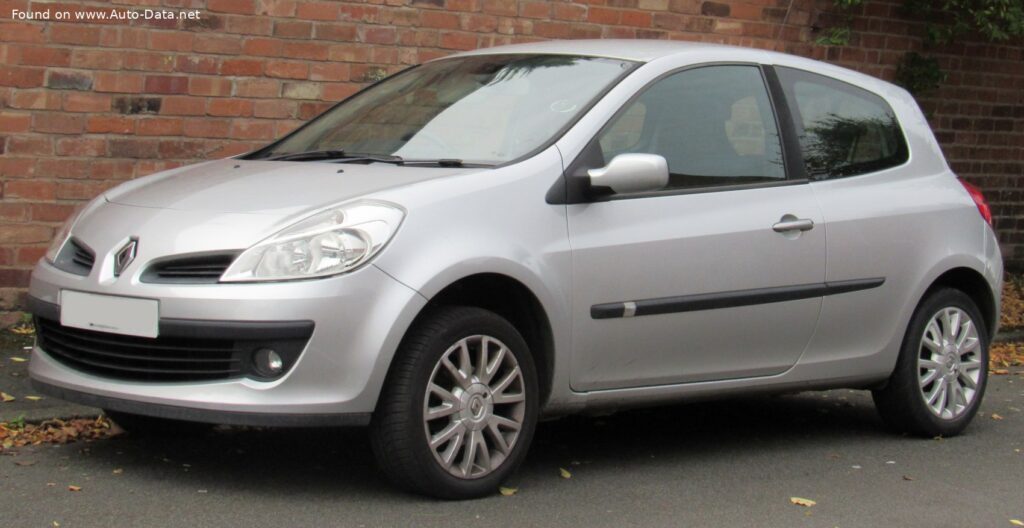
The Renault Clio III Phase I 3-door 1.6 16V, produced from 2005 to 2009, represented a significant step forward for Renault’s popular supermini. This variant occupied a mid-range position within the Phase I Clio III lineup, offering a balance between performance, fuel economy, and affordability. It was positioned above the base 1.2 and 1.4 liter models, and below the sportier versions like the Renaultsport models and the later 1.6 16V with different tuning. The Clio III, built on the B platform (also known as the 1HX0/A3 platform shared with the second-generation Mégane), aimed to provide a more refined and spacious interior compared to its predecessor, while maintaining the Clio’s reputation for nimble handling and practicality.
Powertrain & Engine Architecture
The heart of the Clio III 1.6 16V is the K4M 800 engine, a 1.6-liter (1598 cm3 or 97.52 cu. in.) inline-four cylinder gasoline engine. This engine is a naturally aspirated design, meaning it does not utilize a turbocharger or supercharger. It features a double overhead camshaft (DOHC) valvetrain with four valves per cylinder, contributing to its relatively high power output for its displacement. The engine’s bore and stroke are 79.5 mm (3.13 in) and 80.5 mm (3.17 in) respectively, resulting in a compression ratio of 9.8:1. Fuel delivery is managed by a multi-port manifold injection system. The K4M engine family is known for its robustness and relatively simple design, making it a popular choice for Renault across various models.
While a five-speed manual transmission was the most common pairing for this engine, an optional four-speed automatic transmission was also available. This automatic transmission, a Renault-sourced unit, was designed for smooth operation and ease of use, catering to drivers prioritizing convenience over outright performance. The automatic transmission utilizes a traditional torque converter design. The engine oil capacity is 5 liters (5.28 US qt | 4.4 UK qt), and the coolant capacity is 6.5 liters (6.87 US qt | 5.72 UK qt).
Driving Characteristics
The 1.6 16V engine produces 112 horsepower (hp) at 6000 rpm and 151 Newton-meters (111.37 lb-ft) of torque at 4250 rpm. This output provides a noticeable step up in performance compared to the lower-displacement engines in the Clio III range. The 0-100 km/h (0-62 mph) acceleration time is approximately 10.2 seconds, and 0-60 mph takes around 9.7 seconds. Top speed is rated at 190 km/h (118.06 mph). The automatic transmission, while offering convenience, does slightly diminish the acceleration figures compared to the manual version due to inherent transmission losses and slower shift times.
In real-world driving, the 1.6 16V automatic offers adequate performance for everyday commuting and highway cruising. The engine feels responsive at lower speeds, and the automatic transmission generally selects appropriate gears for the driving conditions. However, it lacks the sporty feel and precise control of the manual transmission. The gear ratios are tuned for a balance between fuel efficiency and drivability, rather than outright acceleration. The automatic transmission’s shift points are programmed for comfort, meaning it won’t hold gears as long as a sport-tuned automatic, resulting in a less engaging driving experience.
Equipment & Trim Levels
The Clio III 1.6 16V typically came equipped with a reasonable level of standard features. These included power steering, central locking, electric front windows, and an audio system. Air conditioning was often included as standard or available as an option, depending on the specific market and trim level. Safety features such as ABS (Anti-lock Braking System) and driver and passenger airbags were also standard. Interior upholstery was typically cloth, with options for upgraded materials and designs. The dashboard layout was modern for its time, with a clear instrument cluster and logically arranged controls.
Optional extras included alloy wheels, rear electric windows, a sunroof, and upgraded audio systems. Higher trim levels, such as the “Expression” or “Dynamique” variants, often bundled these options together. The 3-door configuration prioritized a sportier aesthetic and slightly easier access to the rear seats compared to the 5-door model, though at the expense of rear passenger convenience.
Chassis & Braking
The Clio III 1.6 16V utilizes an independent McPherson strut suspension system at the front, providing good handling and ride comfort. The rear suspension employs a torsion beam setup, which is a cost-effective and space-efficient solution. The front brakes are ventilated discs measuring 260 mm, while the rear brakes are solid discs measuring 240 mm. This braking configuration provides adequate stopping power for the vehicle’s weight and performance. Electric power steering is standard, offering a lighter and more responsive steering feel compared to traditional hydraulic systems.
The kerb weight of the Clio III 1.6 16V is approximately 1140 kg (2513.27 lbs). The weight distribution is fairly balanced, contributing to the car’s nimble handling characteristics. Tire sizes typically ranged from 185/60 R15 to 195/50 R16, depending on the trim level and wheel size.
Market Reception & Comparison
The Renault Clio III 1.6 16V was generally well-received by automotive critics. It was praised for its stylish design, comfortable interior, and responsive engine. The automatic transmission, however, was often criticized for being somewhat sluggish and lacking the refinement of some competitors. Fuel economy was considered respectable, with combined fuel consumption figures of around 6.7 l/100 km (35.1 US mpg or 42.2 UK mpg). CO2 emissions were rated at 157 g/km, placing it within the Euro 4 emission standard.
Compared to other trims in the Clio III lineup, the 1.6 16V offered a significant performance advantage over the 1.2 and 1.4 liter models. However, it was less fuel-efficient and more expensive to purchase. The Renaultsport models offered even higher performance, but at a considerably higher price point. Compared to competitors like the Ford Fiesta and Volkswagen Polo, the Clio III 1.6 16V offered a competitive package in terms of price, features, and driving experience.
Technical Specifications
| Engine Type | 1.6L Inline-4 Gasoline |
| Engine Code | K4M 800 |
| Displacement | 1598 cm3 (97.52 cu. in.) |
| Power | 112 hp @ 6000 rpm |
| Torque | 151 Nm (111.37 lb-ft) @ 4250 rpm |
| Fuel Injection | Multi-port Fuel Injection |
| Valvetrain | DOHC (Double Overhead Camshaft) |
| Compression Ratio | 9.8:1 |
| Transmission | 4-speed Automatic (Optional) |
| Drive Wheels | Front Wheel Drive |
| Acceleration 0-100 km/h | 10.2 seconds |
| Top Speed | 190 km/h (118.06 mph) |
| Fuel Consumption (Combined) | 6.7 l/100 km (35.1 US mpg, 42.2 UK mpg) |
| CO2 Emissions | 157 g/km |
| Kerb Weight | 1140 kg (2513.27 lbs) |
| Fuel Tank Capacity | 55 liters (14.53 US gal, 12.1 UK gal) |
| Length | 3986 mm (156.93 in) |
| Width | 1719 mm (67.68 in) |
| Height | 1495 mm (58.86 in) |
Legacy
The K4M engine, found in the Clio III 1.6 16V, has proven to be a relatively reliable powertrain. While not without its potential issues (such as occasional coil pack failures and oil leaks), it is generally considered durable and capable of high mileage with proper maintenance. The automatic transmission, however, is sometimes reported to have issues with long-term durability, particularly if not serviced regularly. On the used car market, the Clio III 1.6 16V automatic represents a reasonably affordable and practical option for buyers seeking a small, comfortable hatchback. Its relatively simple mechanicals and readily available parts contribute to its ongoing appeal. However, potential buyers should be aware of the potential transmission issues and ensure a thorough inspection before purchase. The Clio III, in general, remains a popular choice for city driving and as a first car due to its affordability and ease of use.