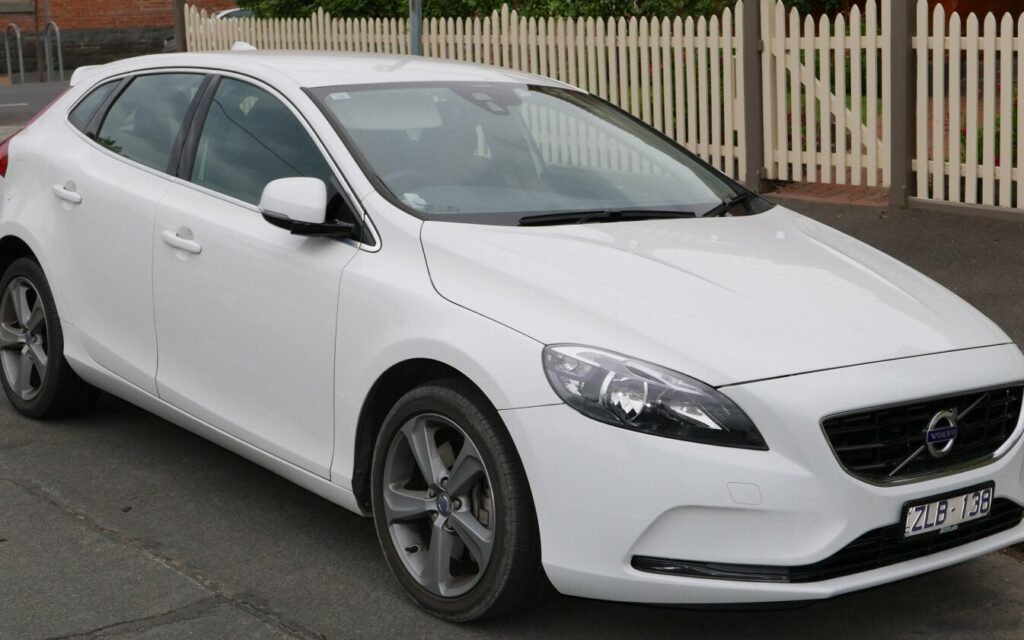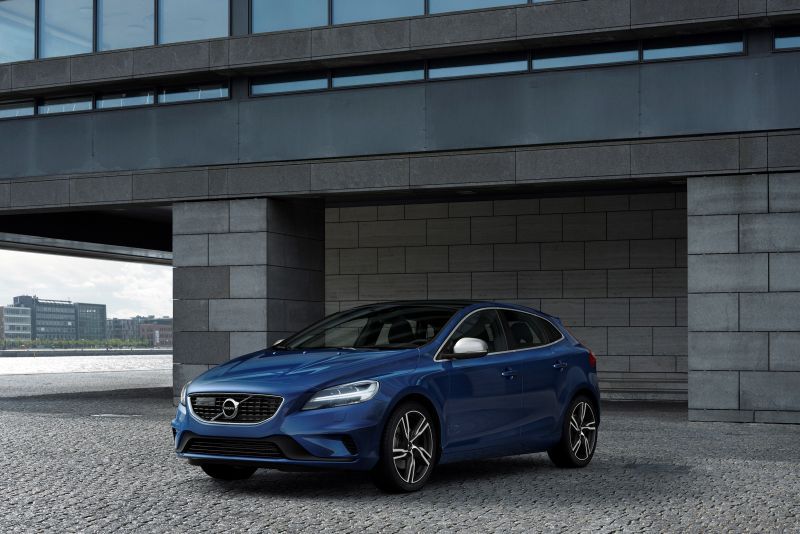
The Volvo V40, in its post-2016 facelift iteration, represents Volvo’s refined entry into the competitive premium compact hatchback segment. Produced from 2018 to 2020, this specific generation (V40, facelift 2016) continued to uphold Volvo’s reputation for safety, sophisticated design, and understated luxury, primarily targeting the discerning European market. While not widely available in the United States, the Volvo V40 (facelift 2016) served as a crucial model in Volvo’s global portfolio, embodying the brand’s contemporary design language and commitment to efficient powertrain solutions. This article focuses on the 2.0 D2 (120 Hp) Automatic variant, a diesel-powered option that highlighted the V40’s blend of performance, economy, and environmental responsibility under the stringent Euro 6d-Temp emission standards.
Powertrain & Engine Architecture
At the heart of this particular Volvo V40 lies a robust and efficient 2.0-liter (1969 cm3 or 120.16 cu. in.) inline four-cylinder diesel engine, designated with the model code D4204T13. This powerplant delivers a respectable 120 horsepower at 3750 rpm, providing a balanced blend of daily usability and highway cruising capability. More notably, the engine generates a substantial 206.52 lb.-ft. of torque, available across a broad rev range from 1200 to 2280 rpm. This low-end torque is characteristic of modern diesel engines, contributing to effortless acceleration and strong pulling power, particularly beneficial for urban driving and overtaking maneuvers.
The D2 engine features a state-of-the-art Diesel Commonrail fuel injection system, ensuring precise fuel delivery and optimal combustion efficiency. Further enhancing its performance and economy is a turbocharger coupled with an intercooler, which boosts air intake for increased power output. The valvetrain utilizes a Double Overhead Camshaft (DOHC) configuration with four valves per cylinder, optimizing airflow and engine breathing. With a compression ratio of 16:1, the engine is designed for the inherent efficiency of diesel combustion.
Power is delivered to the front wheels via a smooth-shifting 6-speed automatic transmission. This transmission, while not a dual-clutch unit like some competitors, was chosen for its smoothness and reliability. It features a conventional torque converter and electronically controlled gear changes, prioritizing comfort over outright performance. The gear ratios are tuned to maximize fuel efficiency and provide adequate acceleration in everyday driving situations.
Driving Characteristics
The 2.0 D2 Automatic powertrain in the Volvo V40 delivers a driving experience geared towards comfort and efficiency rather than outright sportiness. The 120 hp output, while sufficient for most driving scenarios, doesn’t provide the brisk acceleration of higher-powered variants. Acceleration from 0 to 60 mph takes approximately 10 seconds, and 0 to 62 mph (100 km/h) in 10.5 seconds, with a maximum speed of 118.06 mph (190 km/h). The broad torque band, however, makes the engine feel responsive in everyday driving, particularly when overtaking or merging onto highways.
Compared to a manual transmission version of the same engine, the automatic offers a more relaxed driving experience, especially in congested urban environments. However, it does come at the cost of some driver engagement and potentially slightly lower fuel economy. Compared to the more powerful D4 or petrol-powered T3/T5 variants, the D2 Automatic is noticeably slower, but it compensates with significantly better fuel efficiency and lower emissions. The automatic transmission’s gear ratios are optimized for fuel economy, meaning it doesn’t hold gears as long as a sportier transmission would, prioritizing efficiency over maximizing acceleration.
Equipment & Trim Levels
The Volvo V40 (facelift 2016) 2.0 D2 Automatic typically came equipped with a solid base level of standard features, reflecting its position as a premium compact hatchback. Standard equipment generally included climate control, power windows and mirrors, a multi-function steering wheel, and an infotainment system with Bluetooth connectivity. Safety features were, as with all Volvos, a priority, with ABS (Anti-lock Braking System), Electronic Stability Control (ESC), and multiple airbags as standard.
Interior upholstery was typically cloth, although leather options were available as upgrades. The dashboard configuration featured a clean, Scandinavian design with intuitive controls. Optional extras included a sunroof, upgraded infotainment system with navigation, parking sensors, heated seats, and a premium sound system. Higher trim levels, such as Momentum or Inscription, added more luxurious features like leather upholstery, wood trim, and advanced driver-assistance systems.
Chassis & Braking
The Volvo V40’s chassis was designed to provide a comfortable and controlled ride. The front suspension utilizes independent McPherson struts with coil springs and an anti-roll bar, while the rear suspension employs an independent coil spring setup with a transverse stabilizer. This configuration provides a good balance between ride comfort and handling precision.
Braking duties are handled by disc brakes on all four wheels, providing ample stopping power. The front brakes are typically larger than the rear brakes to account for the weight transfer during braking. ABS (Anti-lock Braking System) is standard, preventing wheel lockup and maintaining steering control during emergency braking. The V40’s braking distance from 62 mph (100 km/h) is approximately 37 meters (121.39 ft).
Market Reception & Comparison
Critics generally praised the Volvo V40 (facelift 2016) for its stylish design, comfortable interior, and strong safety credentials. The 2.0 D2 Automatic variant was particularly well-regarded for its fuel economy and low emissions, making it an attractive option for drivers prioritizing efficiency. However, some reviewers noted that the engine lacked the punch of its competitors and that the automatic transmission wasn’t as responsive as some dual-clutch alternatives.
In terms of fuel economy, the D2 Automatic typically achieved between 50 to 52.3 US mpg (4.5-4.7 l/100 km) in combined driving, making it one of the most fuel-efficient options in its class. Reliability was generally good, although some owners reported minor issues with the electronic systems. Compared to the more powerful D4 or petrol-powered T3/T5 variants, the D2 Automatic offered a lower purchase price and lower running costs, but at the expense of performance.
Technical Specifications
| Category | Specification |
| General Information | |
| Brand | Volvo |
| Model | V40 |
| Generation | V40 (facelift 2016) |
| Type (Engine) | 2.0 D2 (120 Hp) Automatic |
| Start of production | 2018 year |
| End of production | 2020 year |
| Powertrain Architecture | Internal Combustion engine |
| Body type | Hatchback |
| Seats | 5 |
| Doors | 5 |
| Performance Specifications | |
| Fuel consumption (economy) – urban | 5.2-5.5 l/100 km |
| Fuel consumption (economy) – extra urban | 4.0-4.3 l/100 km |
| Fuel consumption (economy) – combined | 4.5-4.7 l/100 km |
| CO2 emissions | 118-124 g/km |
| Fuel Type | Diesel |
| Acceleration 0 – 60 mph | 10 sec |
| Acceleration 0 – 100 km/h | 10.5 sec |
| Maximum speed | 190 km/h (118.06 mph) |
| 100 km/h – 0 (Braking distance) | 37 m (121.39 ft) |
| Emission standard | Euro 6d-Temp |
| Weight-to-power ratio | 13.1 kg/Hp |
| Weight-to-torque ratio | 5.6 kg/Nm |
| Engine Specifications | |
| Power | 120 Hp @ 3750 rpm |
| Power per liter | 60.9 Hp/l |
| Torque | 280 Nm @ 1200-2280 rpm (206.52 lb.-ft. @ 1200-2280 rpm) |
| Maximum engine speed | 4500 rpm |
| Engine layout | Front, Transverse |
| Engine Model/Code | D4204T13 |
| Engine displacement | 1969 cm3 (120.16 cu. in.) |
| Number of cylinders | 4 |
| Engine configuration | Inline |
| Cylinder Bore | 82 mm (3.23 in.) |
| Piston Stroke | 93.2 mm (3.67 in.) |
| Compression ratio | 16:1 |
| Number of valves per cylinder | 4 |
| Fuel injection system | Diesel Commonrail |
| Engine aspiration | Turbocharger, Intercooler |
| Valvetrain | DOHC |
| Engine oil capacity | 5.2 l (5.49 US qt) |
| Coolant | 8 l (8.45 US qt) |
| Engine systems | Particulate filter |
| Space, Volume and Weights | |
| Kerb Weight | 1577 kg (3476.69 lbs.) |
| Trunk (boot) space – minimum | 236 l (8.33 cu. ft.) |
| Fuel tank capacity | 62 l (16.38 US gal) |
| AdBlue tank | 16.5 l (4.36 US gal) |
| Permitted trailer load with brakes (12%) | 1500 kg (3306.93 lbs.) |
| Permitted trailer load without brakes | 700 kg (1543.24 lbs.) |
| Dimensions | |
| Length | 4370 mm (172.05 in.) |
| Width | 1783 mm (70.2 in.) |
| Height | 1439 mm (56.65 in.) |
| Wheelbase | 2647 mm (104.21 in.) |
| Drivetrain, Brakes and Suspension Specifications | |
| Drivetrain Architecture | The Internal combustion engine (ICE) drives the front wheels of the vehicle. |
| Drive wheel | Front wheel drive |
| Number of gears and type of gearbox | 6 gears, automatic transmission |
| Front suspension | Independent, type McPherson with coil spring and anti-roll bar |
| Rear suspension | Independent coil spring, Transverse stabilizer |
| Front brakes | Disc |
| Rear brakes | Disc (280 mm) |
| Assisting systems | ABS (Anti-lock braking system) |
| Steering type | Steering rack and pinion |
| Power steering | Electric Steering |
Legacy
The Volvo V40 (facelift 2016) 2.0 D2 Automatic, while not a high-performance variant, has proven to be a reliable and economical choice in the used car market. The D4204T13 engine, when properly maintained, is known for its durability and longevity. The automatic transmission, while not the most sophisticated, is generally robust and requires minimal maintenance.
Today, these vehicles represent a good value proposition for buyers seeking a comfortable, safe, and fuel-efficient compact hatchback. The availability of spare parts is generally good, and the relatively simple mechanical design makes them relatively easy to maintain. While newer Volvo models have moved towards electrification and larger SUVs, the V40 remains a popular choice for those who appreciate its classic Volvo qualities: understated elegance, unwavering safety, and a focus on practicality.