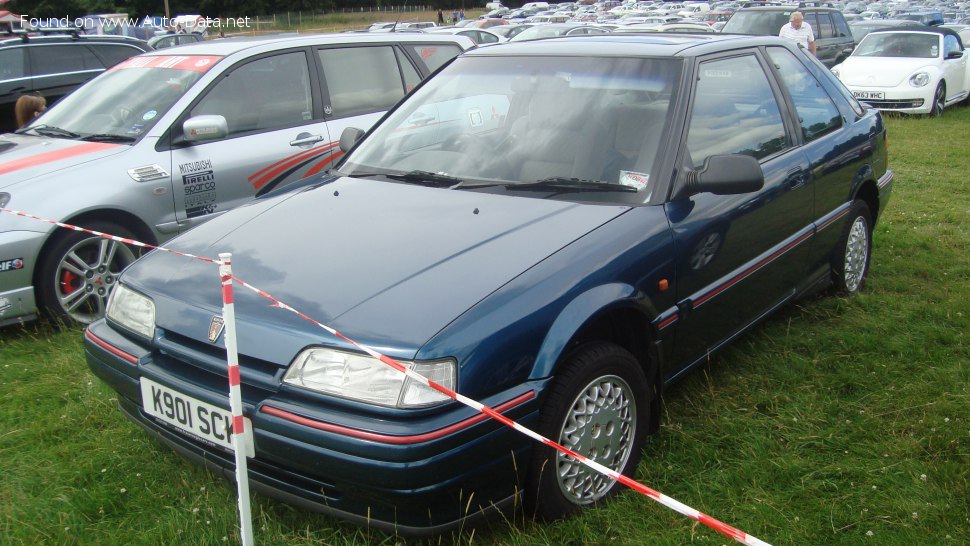
The Rover 200 (XW) 216 GTi (122 Hp) represents a significant chapter in the history of the British automotive industry, emerging in 1990 as part of the second generation of Rover’s popular compact car series. This particular variant, the 216 GTi, was a performance-oriented hatchback designed to inject a dose of sportiness into Rover’s lineup and compete in the highly contested European hot hatch segment. Produced from 1990 to 1995, the XW generation of the Rover 200, also known as the R8, was a crucial model for the brand, leveraging a strategic partnership with Honda to combine British styling and comfort with Japanese engineering prowess and reliability. While never officially sold in the United States, the Rover 200 (XW) 216 GTi carved out a notable niche in its primary European markets, offering a compelling blend of spirited performance, practical hatchback utility, and a distinctly British character.
Development and Market Positioning of the Rover 200 (XW)
A Product of Anglo-Japanese Collaboration
The Rover 200 (XW) series was a direct result of the long-standing collaboration between Rover Group and Honda. Sharing its platform, chassis, and many mechanical components with the Honda Concerto, the XW generation marked a substantial leap forward for Rover in terms of build quality, engineering sophistication, and dynamic capabilities compared to its predecessors. This partnership allowed Rover to develop a modern, competitive vehicle without the immense costs of a completely new platform. The Rover 200 (XW) was designed to appeal to a broader, more youthful demographic, moving away from Rover’s traditional, somewhat conservative image. It was positioned as a premium compact car, offering a more refined experience than many of its direct competitors.
The GTi Badge: Rover’s Performance Aspirations
Within the diverse Rover 200 (XW) lineup, the 216 GTi stood out as the performance flagship. The “GTi” designation, popularized by Volkswagen, signaled a focus on driving engagement and sportiness. For Rover, the 216 GTi was an attempt to capture a share of the burgeoning hot hatch market, competing with established players and offering a blend of accessible performance and everyday usability. It was available in both 3-door and 5-door hatchback configurations, providing options for varying levels of practicality without compromising its sporting intent. The 216 GTi occupied the upper-mid range of the 200 lineup, sitting above the base 1.4 and 1.6 models, but below any potential future high-performance variants that never materialized.
Powertrain & Engine Architecture: The 1.6-Liter Heart
At the core of the Rover 200 (XW) 216 GTi (122 Hp) was a vibrant 1.6-liter (1590 cm³ or 97.03 cu. in.) naturally aspirated inline-four gasoline engine. This powerplant was a testament to the engineering synergies of the Rover-Honda collaboration, featuring a sophisticated DOHC (Double Overhead Camshaft) valvetrain with four valves per cylinder, a setup that was still considered advanced for a compact car in the early 1990s. This configuration allowed for excellent breathing and higher rev capabilities, contributing significantly to the car’s sporty character. The engine was typically identified by the code M16, a designation reflecting its 1.6-liter displacement and multi-point fuel injection.
The engine produced a healthy 122 horsepower at a high 6800 rpm, showcasing its free-revving nature. Torque output stood at 102.52 lb.-ft. (139 Nm) delivered at 5700 rpm. The engine utilized a Bosch Motronic fuel injection system, managing fuel delivery and ignition timing for optimal performance and emissions control. The cylinder head featured a carefully designed combustion chamber and port layout to maximize volumetric efficiency. The engine’s block was constructed from cast iron, providing durability, while the cylinder head was made from aluminum alloy to reduce weight. The 216 GTi was exclusively offered with a 5-speed manual transmission, providing drivers with full control over the engine’s power delivery. This transmission was known for its precise shift action and robust construction.
Driving Characteristics
The Rover 200 (XW) 216 GTi offered a driving experience that prioritized engagement and responsiveness. While not a fire-breathing performance car, the 1.6-liter engine provided ample power for spirited driving on both city streets and winding country roads. The 5-speed manual transmission allowed drivers to keep the engine in its optimal power band, maximizing acceleration and responsiveness. The gear ratios were well-matched to the engine’s characteristics, providing strong acceleration in each gear. Compared to the lower-powered 1.4 and 1.6 models, the 216 GTi offered a noticeable improvement in acceleration and overall performance. However, it lacked the outright speed and torque of larger-engined rivals like the Volkswagen Golf GTI or Ford Escort RS2000. The suspension setup, while comfortable, provided adequate body control and minimized understeer, contributing to a balanced and predictable handling experience. The steering was light and precise, making the car easy to maneuver in tight spaces.
Equipment & Trim Levels
The 216 GTi typically came equipped with a range of features designed to enhance both comfort and driving enjoyment. Standard equipment included power steering, central locking, electric front windows, and a basic stereo system. The interior featured sport seats with enhanced bolstering to provide additional support during cornering. The dashboard was typically finished in a dark color scheme, with a sporty instrument cluster featuring a tachometer. Optional extras included a sunroof, alloy wheels, and upgraded audio systems. The 216 GTi was often distinguished by its unique badging, including a GTi emblem on the rear hatch and side moldings. Interior trim levels varied, with some models featuring upgraded upholstery and trim materials.
Chassis & Braking
The Rover 200 (XW) 216 GTi utilized a MacPherson strut front suspension and a trailing arm rear suspension. This setup provided a good balance between ride comfort and handling performance. The front suspension featured a stabilizer bar to reduce body roll during cornering. The braking system consisted of disc brakes at the front and drum brakes at the rear. While adequate for most driving conditions, the rear drum brakes were a point of criticism compared to the all-disc setups found on some rivals. The car’s relatively light weight helped to compensate for the rear drum brakes, providing reasonable stopping power. The steering system was a rack-and-pinion setup, providing precise and responsive steering feel.
Market Reception & Comparison
The Rover 200 (XW) 216 GTi received generally positive reviews from automotive critics. It was praised for its stylish design, comfortable interior, and engaging driving experience. However, some critics noted that its performance was not quite as competitive as some of its rivals, and the rear drum brakes were a drawback. Compared to the base 1.4 and 1.6 models, the 216 GTi offered a significant improvement in performance and driving enjoyment, making it a popular choice for drivers who wanted a more sporty and engaging compact car. In terms of fuel economy, the 216 GTi was reasonably efficient, achieving around 28 mpg in combined driving. Reliability was generally good, benefiting from the Rover-Honda collaboration. However, like many British cars of the era, the 216 GTi was susceptible to rust, particularly in areas exposed to harsh weather conditions.
Technical Specifications
| Brand | Rover |
| Model | 200 |
| Generation | 200 (XW) |
| Type (Engine) | 216 GTi (122 Hp) |
| Start of Production | 1990 year |
| End of Production | 1995 year |
| Powertrain Architecture | Internal Combustion engine |
| Body Type | Hatchback |
| Seats | 5 |
| Doors | 3/5 |
| Fuel Consumption (Urban) | 23.5 US mpg (10 L/100 km) |
| Fuel Consumption (Extra Urban) | 36.8 US mpg (6.4 L/100 km) |
| Fuel Consumption (Combined) | 28 US mpg (8.4 L/100 km) |
| Fuel Type | Petrol (Gasoline) |
| Acceleration 0-60 mph | 8.5 sec |
| Acceleration 0-62 mph (0-100 km/h) | 8.9 sec |
| Maximum Speed | 121.79 mph (196 km/h) |
| Weight-to-Power Ratio | 9 kg/Hp, 111.4 Hp/tonne |
| Weight-to-Torque Ratio | 7.9 kg/Nm, 126.9 Nm/tonne |
| Power | 122 Hp @ 6800 rpm |
| Power per Liter | 76.7 Hp/l |
| Torque | 102.52 lb.-ft. (139 Nm) @ 5700 rpm |
| Engine Layout | Front, Transverse |
| Engine Displacement | 1.6 Liters (1590 cm³ / 97.03 cu. in.) |
| Number of Cylinders | 4 |
| Engine Configuration | Inline |
| Cylinder Bore | 2.95 in. (75 mm) |
| Piston Stroke | 3.54 in. (90 mm) |
| Compression Ratio | 9.5:1 |
| Number of Valves per Cylinder | 4 |
| Fuel Injection System | Multi-port manifold injection |
| Engine Aspiration | Naturally aspirated engine |
| Valvetrain | DOHC |
Legacy
The Rover 200 (XW) 216 GTi, while not a groundbreaking performance car, remains a fondly remembered example of 1990s British motoring. Its blend of style, comfort, and engaging driving dynamics made it a popular choice for enthusiasts. Today, surviving examples are becoming increasingly rare and sought after by collectors. The 1.6-liter engine, while not known for exceptional longevity, is generally reliable if properly maintained. Common issues include oil leaks and corrosion. The car’s relatively simple mechanical design makes it relatively easy to repair and maintain, appealing to DIY enthusiasts. In the used car market, the 216 GTi represents an affordable entry point into classic hot hatch ownership, offering a unique and enjoyable driving experience.