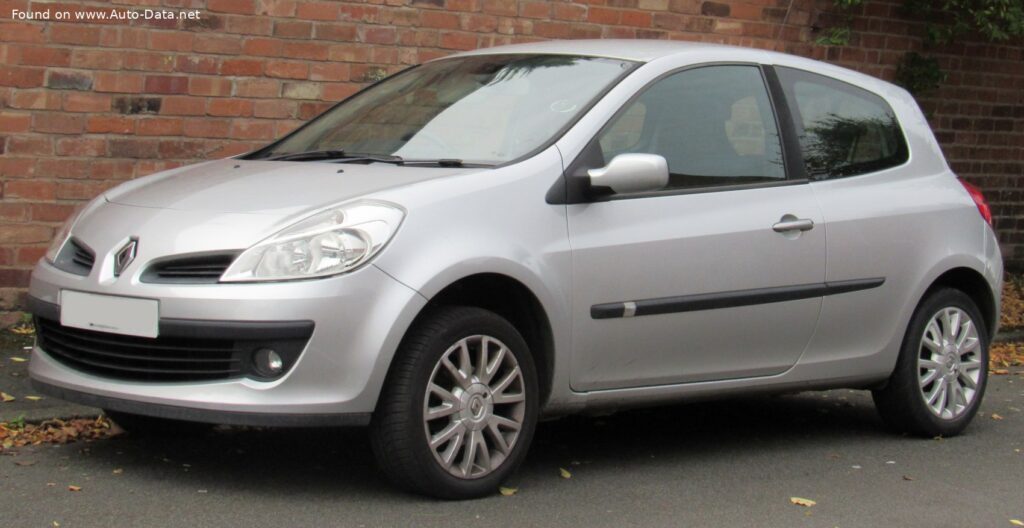
The Renault Clio, a nameplate synonymous with compact automotive excellence in Europe, introduced its third generation (Clio III) in 2005. This particular variant, the Renault Clio III (Phase I) 3-door 1.6 16V (88 Hp), represented a significant evolution for the popular French supermini. Launched as a 2005 model and produced until 2009, this iteration of the Clio aimed to build upon its predecessors’ successes, offering enhanced safety, improved ride quality, and a more sophisticated design language. While never officially sold in the United States, the Clio III was a cornerstone of Renault’s lineup, competing fiercely in the highly competitive European B-segment. It quickly garnered acclaim, including winning the prestigious European Car of the Year award in 2006, a testament to its compelling blend of practicality, style, and driving dynamics for the European market. This 3-door hatchback, powered by a 1.6-liter 16-valve gasoline engine, was positioned as an accessible yet capable option for urban commuters and small families seeking an efficient and enjoyable driving experience.
Powertrain & Engine Architecture
Under the hood of the Renault Clio III (Phase I) 3-door 1.6 16V (88 Hp) lies the K4M 804 engine, a naturally aspirated, inline four-cylinder gasoline (petrol) unit. This 1.6-liter (1598 cm³ or 97.52 cu. in.) powerplant was a well-regarded and widely used engine within the Renault-Nissan alliance, known for its reliability and smooth power delivery. Featuring a DOHC (Double Overhead Camshaft) valvetrain with four valves per cylinder, the engine produced a modest but adequate 88 horsepower (hp) at 5000 revolutions per minute (rpm). Torque output stood at 140 Nm, which translates to approximately 103.26 lb.-ft., peaking at a relatively low 3000 rpm. This characteristic torque curve made the Clio feel responsive in city driving and at lower speeds, contributing to its urban agility.
The K4M engine utilizes a multi-port fuel injection system, delivering fuel directly into the intake ports just before the intake valves. This system, common for its time, provided a good balance between fuel efficiency and performance. The engine’s block is constructed from cast iron, known for its durability, while the cylinder head is made of aluminum alloy, contributing to weight reduction. The engine’s design prioritized ease of maintenance and relatively low running costs, making it a popular choice for fleet operators and private buyers alike.
Power was sent to the front wheels via a standard 5-speed manual transmission, a common setup for vehicles in this segment at the time. This drivetrain architecture, combined with the engine’s output, allowed the Clio III to accelerate from 0 to 60 mph in a respectable 11.3 seconds (0-100 km/h in 11.9 seconds). Its top speed was rated at 177 km/h, or just shy of 110 mph (109.98 mph). Fuel efficiency, a critical factor in the European market, was a strong point for this Clio variant. According to NEDC (New European Driving Cycle) standards, it achieved a combined fuel consumption of 6.7 liters per 100 kilometers, which translates to an impressive 35.1 US miles per gallon. Urban driving yielded 9.0 l/100 km (26.1 US mpg), while extra-urban conditions saw it achieve 5.4 l/100 km (43.6 US mpg). With CO2 emissions of 157 g/km, the vehicle complied with Euro 4 emission standards, which were in effect during its production run, underscoring its commitment to environmental performance for its era. The engine’s layout was front, transverse, contributing to efficient packaging and a favorable weight distribution for a front-wheel-drive vehicle.
Driving Characteristics
The Renault Clio III (Phase I) 3-door 1.6 16V (88 Hp) offered a driving experience geared towards practicality and ease of use rather than outright performance. The 88 hp engine, while adequate for everyday driving, didn’t provide particularly brisk acceleration. Compared to higher-output versions of the Clio III, such as the 1.6 16V with 106 hp or the sportier Renaultsport models, this variant felt noticeably slower. However, the engine’s torque curve, peaking at 3000 rpm, provided sufficient pull for navigating city streets and merging onto highways. The 5-speed manual transmission was well-matched to the engine’s characteristics, offering smooth gear changes and a reasonable spread of ratios.
The Clio’s suspension setup, featuring McPherson struts at the front and a torsion beam at the rear, prioritized ride comfort over sporty handling. While it wasn’t as engaging to drive as some of its rivals, it provided a comfortable and stable ride, even on uneven road surfaces. The electric power steering offered light and precise steering feedback, making it easy to maneuver in tight spaces. Overall, the driving experience was refined and predictable, making it an ideal choice for drivers seeking a comfortable and reliable daily commuter.
Equipment & Trim Levels
The Renault Clio III (Phase I) 3-door 1.6 16V (88 Hp) was typically offered in several trim levels, each with varying levels of standard equipment. Base models generally included features such as power steering, central locking, electric front windows, and an adjustable steering column. Higher trim levels added features like air conditioning, alloy wheels, a CD player, and remote central locking. Interior upholstery was typically cloth, with options for upgraded materials and designs on higher trims. The dashboard layout was functional and ergonomic, with easy-to-read gauges and intuitive controls.
Optional extras available for this trim included a panoramic sunroof, rear parking sensors, and a trip computer. Safety features, such as ABS brakes and airbags, were often standard or available as options, depending on the trim level and market. The Clio III’s interior was designed to be practical and durable, with a focus on providing a comfortable and user-friendly environment for both driver and passengers.
Chassis & Braking
The Renault Clio III (Phase I) 3-door 1.6 16V (88 Hp) featured a robust chassis and braking system designed to provide safe and reliable performance. The front suspension utilized independent McPherson struts with coil springs and an anti-roll bar, while the rear suspension employed a torsion beam setup. This combination provided a good balance between ride comfort and handling stability. Braking duties were handled by ventilated discs at the front (260 mm) and drum brakes at the rear (203 mm). ABS (Anti-lock Braking System) was available as a standard or optional feature, depending on the trim level, enhancing braking performance and control, particularly in emergency situations.
The Clio’s chassis was designed to provide a stable and predictable driving experience, even when fully loaded. The torsion beam rear suspension, while not as sophisticated as a fully independent setup, offered a cost-effective and space-efficient solution that provided adequate handling characteristics for everyday driving. The steering system was a rack-and-pinion type with electric power assistance, offering light and precise steering feedback.
Market Reception & Comparison
The Renault Clio III (Phase I) 3-door 1.6 16V (88 Hp) received generally positive reviews from automotive critics. It was praised for its comfortable ride, refined interior, and good fuel economy. However, some critics noted that the 88 hp engine felt underpowered, particularly when compared to more powerful versions of the Clio III or its rivals. In terms of fuel economy, the Clio III 1.6 16V offered competitive figures, achieving around 35.1 US mpg on the combined cycle. Its reliability was also generally considered to be good, with the K4M engine proving to be a durable and long-lasting unit.
Compared to other trims in the Clio III lineup, the 1.6 16V (88 Hp) represented an entry-level option that prioritized affordability and fuel efficiency. The 1.6 16V with 106 hp offered more performance, while the Renaultsport models provided a significantly more engaging driving experience. The 1.5 dCi diesel variants offered even better fuel economy but at the expense of performance. The 1.6 16V (88 Hp) appealed to buyers who prioritized practicality and value over outright performance.
Technical Specifications
| General Information | |
| Brand | Renault |
| Model | Clio |
| Generation | Clio III (Phase I) 3-door |
| Engine Type | 1.6 16V (88 Hp) |
| Production Start | 2005 |
| Production End | 2009 |
| Powertrain Architecture | Internal Combustion Engine |
| Body Type | Hatchback |
| Seats | 5 |
| Doors | 3 |
| Performance Specifications | |
| Fuel Consumption (Urban NEDC) | 9.0 l/100 km (26.1 US mpg) |
| Fuel Consumption (Extra Urban NEDC) | 5.4 l/100 km (43.6 US mpg) |
| Fuel Consumption (Combined NEDC) | 6.7 l/100 km (35.1 US mpg) |
| CO2 Emissions (NEDC) | 157 g/km |
| Fuel Type | Petrol (Gasoline) |
| Acceleration 0-60 mph | 11.3 sec |
| Acceleration 0-100 km/h | 11.9 sec |
| Maximum Speed | 177 km/h (109.98 mph) |
| Emission Standard | Euro 4 |
| Weight-to-Power Ratio | 13 kg/Hp (77.2 Hp/tonne) |
| Weight-to-Torque Ratio | 8.1 kg/Nm (122.8 Nm/tonne) |
| Engine Specifications | |
| Power | 88 Hp @ 5000 rpm |
| Power per liter | 55.1 Hp/l |
| Torque | 140 Nm @ 3000 rpm (103.26 lb.-ft. @ 3000 rpm) |
| Engine Layout | Front, Transverse |
| Engine Model/Code | K4M 804 |
| Engine Displacement | 1598 cm³ (97.52 cu. in.) |
| Number of Cylinders | 4 |
| Engine Configuration | Inline |
| Cylinder Bore | 79.5 mm (3.13 in.) |
| Piston Stroke | 80.5 mm (3.17 in.) |
| Compression Ratio | 9.8:1 |
| Valves per Cylinder | 4 |
| Fuel Injection System | Multi-port manifold injection |
| Engine Aspiration | Naturally aspirated engine |
| Valvetrain | DOHC |
| Engine Oil Capacity | 5 l (5.28 US qt) |
| Coolant Capacity | 6.5 l (6.87 US qt) |
| Dimensions, Volume, and Weights | |
| Kerb Weight | 1140 kg (2513.27 lbs) |
| Maximum Weight | 1630 kg (3593.53 lbs) |
| Maximum Load | 490 kg (1080.27 lbs) |
| Trunk Space (Minimum) | 288 l (10.17 cu. ft.) |
| Trunk Space (Maximum) | 1028 l (36.3 cu. ft.) |
| Fuel Tank Capacity | 55 l (14.53 US gal) |
| Drivetrain, Brakes, and Suspension | |
| Drivetrain Architecture | Front-wheel drive |
| Gearbox Type | 5 gears, manual transmission |
Legacy
The Renault Clio III, and specifically the 1.6 16V (88 Hp) variant, has proven to be a reliable and durable vehicle in the used car market. The K4M engine is known for its longevity and relatively low maintenance costs, making it a popular choice for budget-conscious buyers. While not the most exciting or powerful version of the Clio III, the 1.6 16V offers a good balance of practicality, fuel efficiency, and affordability. Its widespread availability and relatively low purchase price have contributed to its continued presence on European roads.
Today, the Clio III is often seen as a sensible and dependable choice for those seeking a compact hatchback. Its robust construction and relatively simple mechanicals make it easier and cheaper to maintain than more complex modern vehicles. While it may lack some of the advanced features found in newer cars, its core strengths – reliability, fuel economy, and practicality – continue to appeal to a wide range of buyers. The Clio III’s legacy is one of a well-rounded and successful compact car that helped to solidify Renault’s position as a leader in the European automotive market.