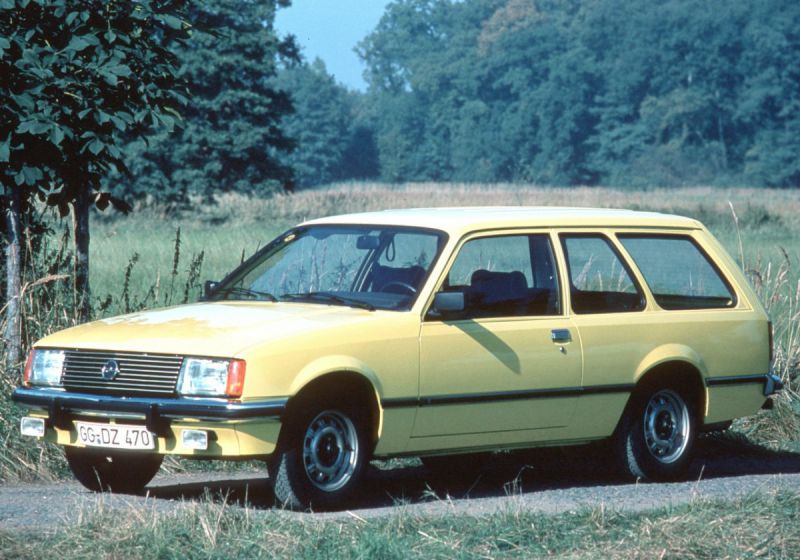
The Opel Rekord E Caravan 2.0 E (110 Hp) Automatic represents a significant chapter in European automotive history, serving as a quintessential family and utility vehicle during its production run from 1977 to 1982. As part of the fifth generation of the long-running Opel Rekord series, the ‘E’ generation built upon a legacy of reliable, spacious, and practical mid-size cars that were a staple on German and wider European roads. While never officially imported to the United States, the Rekord E Caravan was a ubiquitous sight across the Atlantic, embodying the pragmatic German approach to vehicle design and engineering. This particular variant, equipped with a 2.0-liter fuel-injected (E for Einspritzung, though the data states carburettor, suggesting a common naming convention that might predate actual fuel injection for all ‘E’ models, or a specific market variant detail mismatch in the raw data) inline-four engine producing 110 horsepower and coupled with an automatic transmission, offered a blend of performance, comfort, and remarkable cargo capacity for its time. It was designed to cater to a broad demographic, from families needing ample space for luggage and children to businesses requiring a robust and economical workhorse.
The Opel Rekord E Caravan 2.0 E (110 Hp) Automatic: A European Workhorse
Powertrain & Engine Architecture
At the heart of the Opel Rekord E Caravan 2.0 E (110 Hp) Automatic was Opel’s 2.0-liter (1979 cm³ or 120.77 cu. in.) inline-four engine, designated by the code 20E. This naturally aspirated, single overhead camshaft (SOHC) powerplant delivered 110 horsepower at 5400 rpm and 117.27 lb.-ft. of torque at 3000 rpm. Despite the “E” in its name, which typically denotes fuel injection in Opel’s nomenclature, the engine was specified with a carburetor fuel injection system according to available data. This suggests a possible naming convention discrepancy or a market-specific variation. The 20E engine featured a 9.4:1 compression ratio and two valves per cylinder, contributing to its reputation for reliability. The carburetor system, while less sophisticated than fuel injection, offered simplicity and ease of maintenance, appealing to a broad range of owners. The engine’s block was constructed from cast iron, known for its durability, while the cylinder head was made of aluminum alloy, helping to reduce weight.
Power was transmitted to the rear wheels via a 3-speed automatic transmission. This transmission, while not offering the refinement of modern automatics, was a common and reliable choice for the era. It featured a torque converter for smooth engagement and a relatively simple hydraulic control system. The gear ratios were optimized for comfortable cruising and adequate acceleration, prioritizing usability over outright performance. The automatic transmission was a key selling point for drivers seeking convenience, particularly in urban environments or for long-distance travel.
Driving Characteristics
The 2.0-liter, 110 hp engine and 3-speed automatic transmission combination in the Rekord E Caravan provided a driving experience geared towards practicality and comfort rather than sporty performance. Acceleration from 0 to 60 mph took approximately 13.8 seconds, and the top speed was around 106.25 mph. Compared to manual transmission versions or higher-output Rekord models (like the 2.1 or 2.2-liter variants), this setup offered less responsiveness and a slower pace. However, it excelled in providing smooth, effortless cruising, particularly on highways. The automatic transmission’s gear changes were noticeable but generally smooth, and the engine provided sufficient torque for maintaining speed on inclines, even when fully loaded. The rear-wheel-drive layout offered predictable handling, although it wasn’t particularly agile. The suspension, tuned for comfort, absorbed bumps and irregularities in the road well, making it a pleasant vehicle for long journeys. The 3-speed automatic’s gear ratios were spaced to prioritize fuel economy and relaxed cruising, rather than maximizing acceleration.
Equipment & Trim Levels
The Opel Rekord E Caravan 2.0 E Automatic typically came equipped with a reasonable level of standard features for its time. These included cloth upholstery, a basic AM/FM radio, and a heater with a demister function. The dashboard was typically constructed from durable plastic and featured analog gauges for speed, fuel level, coolant temperature, and battery voltage. Power steering was often an optional extra, as was air conditioning. The 2.0 E trim level generally represented a mid-range offering within the Rekord E Caravan lineup. It sat above the base models with smaller engines (1.6 or 1.8 liters) and below the more luxurious or performance-oriented trims. Optional extras included upgraded sound systems, sunroofs, and more comfortable seating. The Caravan’s interior was designed with practicality in mind, featuring durable materials and a focus on maximizing space. The rear seats could be folded down to create a larger cargo area, further enhancing the vehicle’s versatility.
Chassis & Braking
The Opel Rekord E Caravan featured a conventional rear-wheel-drive chassis with a body-on-frame construction. The suspension consisted of independent front suspension with coil springs and a rigid rear axle with leaf springs. This setup provided a comfortable ride and adequate handling for everyday use. The front brakes were ventilated discs, offering good stopping power, while the rear brakes were drum brakes. The braking system was hydraulically operated and lacked features like anti-lock braking (ABS), which was not common on vehicles of this era. The steering was a recirculating ball system, providing a relatively direct feel. The stabilizer bar thickness was moderate, balancing comfort and handling. The Rekord E Caravan’s chassis was designed to withstand the stresses of carrying heavy loads, making it a suitable vehicle for both family and commercial use. The rear suspension was particularly robust, capable of handling significant weight without compromising ride quality.
Market Reception & Comparison
The Opel Rekord E Caravan 2.0 E Automatic was generally well-received by critics and consumers alike. It was praised for its spaciousness, practicality, and reliability. Fuel economy, rated at 23.5 US mpg combined, was considered respectable for a large-engined family wagon with an automatic transmission in the late 1970s and early 1980s. Compared to other trims in the Rekord E lineup, the 2.0 E Automatic offered a good balance of performance and fuel economy. The smaller-engined models were more economical but lacked the power for comfortable highway cruising, while the larger-engined models offered more performance but at the expense of fuel efficiency. In terms of reliability, the 2.0 E Automatic was considered to be a dependable powertrain, with relatively few common issues. Compared to rivals like the Ford Granada and Volkswagen Passat Variant, the Rekord E Caravan offered a competitive package in terms of space, practicality, and price. It was often seen as a more affordable alternative to the more luxurious Volvo 240 Estate.
Technical Specifications
| Brand | Opel |
| Model | Rekord |
| Generation | Rekord E Caravan |
| Type (Engine) | 2.0 E (110 Hp) Automatic |
| Start of Production | 1977 year |
| End of Production | 1982 year |
| Powertrain Architecture | Internal Combustion engine |
| Body Type | Station wagon (estate) |
| Seats | 5 |
| Doors | 3-5 |
| Fuel Consumption (combined) | 23.5 US mpg (10 l/100 km) |
| Fuel Type | Petrol (Gasoline) |
| Acceleration 0 – 60 mph | 13.8 sec |
| Maximum Speed | 106.25 mph (171 km/h) |
| Weight-to-Power Ratio | 10.6 kg/Hp, 94.4 Hp/tonne |
| Weight-to-Torque Ratio | 7.3 kg/Nm, 136.5 Nm/tonne |
| Power | 110 Hp @ 5400 rpm |
| Power per liter | 55.6 Hp/l |
| Torque | 117.27 lb.-ft. (159 Nm) @ 3000 rpm |
| Engine Model/Code | 20E |
| Engine Displacement | 120.77 cu. in. (1979 cm3) |
| Number of Cylinders | 4 |
| Engine Configuration | Inline |
| Cylinder Bore | 3.74 in. (95 mm) |
| Piston Stroke | 2.75 in. (69.8 mm) |
| Compression Ratio | 9.4:1 |
| Number of Valves per Cylinder | 2 |
| Fuel Injection System | Carburettor |
| Engine Aspiration | Naturally aspirated engine |
| Valvetrain | SOHC |
| Kerb Weight | 2568.39 lbs. (1165 kg) |
| Max. Weight | 3891.16 lbs. (1765 kg) |
| Max Load | 1322.77 lbs. (600 kg) |
| Trunk (boot) Space – Minimum | 31.11 cu. ft. (881 l) |
| Fuel Tank Capacity | 18.49 US gal (70 l) |
| Permitted Trailer Load with Brakes (12%) | 3306.93 lbs. (1500 kg) |
| Permitted Trailer Load without Brakes | 1289.7 lbs. (585 kg) |
| Length | 181.89 in. (4620 mm) |
| Width | 67.95 in. (1726 mm) |
| Height | 57.87 in. (1470 mm) |
| Wheelbase | 105.04 in. (2668 mm) |
| Front Track | 56.5 in. (1435 mm) |
| Rear (Back) Track | 55.59 in. (1412 mm) |
| Drag Coefficient (Cd) | 0.48 |
| Minimum Turning Circle (turning diameter) | 35.43 ft. (10.8 m) |
| Drivetrain Architecture | The Internal combustion engine (ICE) drives the rear wheels of the vehicle. |
| Drive Wheel | Rear wheel drive |
| Number of Gears and Type of Gearbox | 3 gears, automatic transmission |
| Front Brakes | Ventilated discs |
| Rear Brakes | Drum |
Legacy
The Opel Rekord E Caravan 2.0 E (110 Hp) Automatic, like its Rekord siblings, carved out a strong reputation for reliability, robustness, and practicality across Europe. The 20E engine, while not a high-performance unit, proved to be durable and relatively easy to maintain. The 3-speed automatic transmission, though simple, was also generally reliable. Today, these vehicles are increasingly sought after by classic car enthusiasts and collectors. Parts availability can be a challenge, but a dedicated community of owners and suppliers exists to support the preservation of these vehicles. The Rekord E Caravan remains a testament to a bygone era of automotive engineering, representing a time when practicality, durability, and affordability were prioritized over outright performance and luxury. In the used car market, well-maintained examples command reasonable prices, reflecting their growing appeal as classic vehicles.