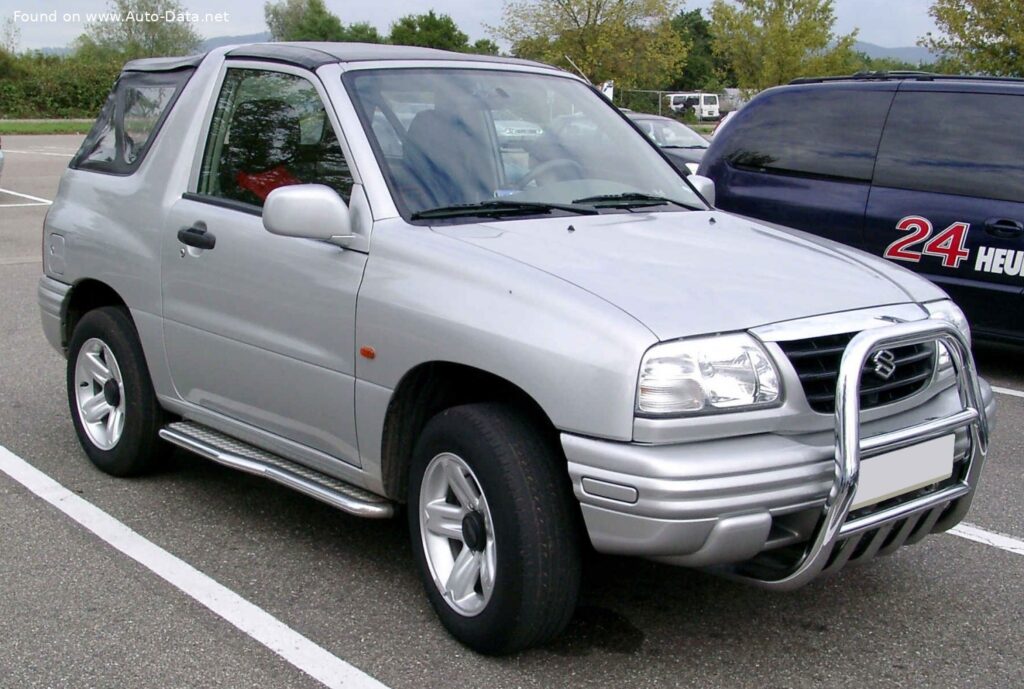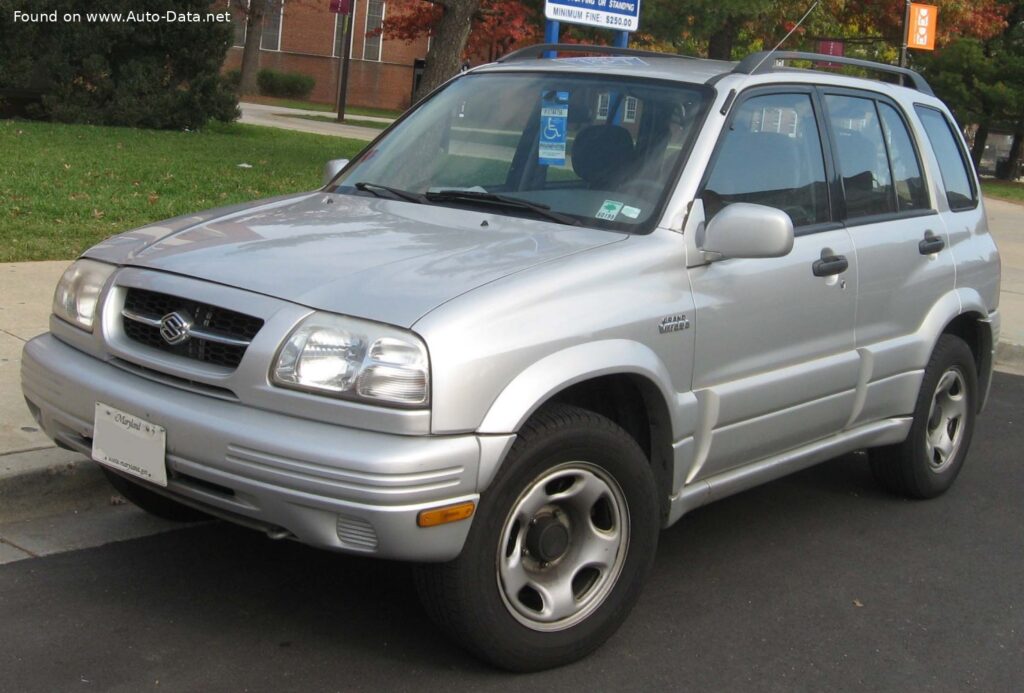
The Suzuki Grand Vitara (FT,GT) 1.6 i 16V (5 dr) (107 Hp) represents a pivotal moment in the evolution of the compact sport utility vehicle (SUV) segment. Introduced in 1997, this first-generation Grand Vitara, known internally by its FT or GT chassis codes, built upon Suzuki’s long-standing reputation for producing capable, rugged, and affordable four-wheel-drive vehicles. While the Grand Vitara nameplate was globally recognized, this specific 1.6-liter, five-door variant was particularly popular in markets outside of North America, where smaller, more fuel-efficient engines were often preferred due to taxation and fuel costs. In the United States, larger engine options were more common for the Grand Vitara, but the spirit of a compact, body-on-frame SUV with genuine off-road credentials remained consistent across the model line.
Positioned as a more refined and comfortable successor to the popular Suzuki Sidekick (known as Vitara in many markets), the Grand Vitara aimed to blend the practicality of a family vehicle with the adventurous spirit of a true off-roader. Its production run from 1997 to 2005 saw it compete in an increasingly crowded market, where it distinguished itself with its traditional SUV architecture, including a ladder frame chassis and a robust all-wheel-drive system, at a time when many competitors were shifting towards car-based unibody designs. This particular five-door configuration provided enhanced passenger and cargo capacity, making it a versatile choice for a wide range of consumers seeking a compact yet capable vehicle.
Powertrain & Engine Architecture of the 1.6L Grand Vitara
At the heart of the Suzuki Grand Vitara (FT,GT) 1.6 i 16V (5 dr) (107 Hp) lies a naturally aspirated 1.6-liter (1590 cm3 or 97.03 cubic inches) inline-four gasoline engine, designated by the G16B code. This powerplant, featuring a single overhead camshaft (OHC) valvetrain with four valves per cylinder, was engineered for reliability and adequate performance within its class. With a compression ratio of 9.5:1 and a multi-port manifold injection system, the engine delivered a respectable 107 horsepower at 6000 rpm. Torque output peaked at 106.21 lb.-ft. (144 Nm) at 4500 rpm, providing sufficient pulling power for daily driving and light off-road excursions. The engine’s layout was front, longitudinal, optimizing weight distribution and allowing for the robust drivetrain components.
Power was transmitted to all four wheels via a conventional 4-speed automatic transmission, a common choice for SUVs of this era, balancing ease of use with durability. The permanent all-wheel-drive (4×4) system underscored the Grand Vitara’s commitment to genuine off-road capability, distinguishing it from many front-wheel-drive-based crossovers that were beginning to dominate the segment. This drivetrain architecture, combined with a kerb weight of 2799.87 lbs (1270 kg), resulted in a weight-to-power ratio of 11.9 kg/Hp (84.3 Hp/tonne) and a weight-to-torque ratio of 8.8 kg/Nm (113.4 Nm/tonne). The 4-speed automatic, while not offering the efficiency of modern transmissions, was known for its robustness and relatively simple maintenance requirements.
Transmission Details & Gear Ratios
The 4-speed automatic transmission used in the 1.6L Grand Vitara was a standard unit for its time, prioritizing durability over advanced features. Specific gear ratios varied slightly depending on the market, but generally followed a pattern designed for a balance of acceleration and fuel economy. First gear was geared relatively low for off-road crawling and initial acceleration, while fourth gear provided a comfortable cruising speed. The transmission lacked overdrive, which contributed to slightly higher engine speeds at highway speeds compared to later models. This configuration, while not the most efficient, proved reliable and well-suited to the vehicle’s intended use.
Driving Characteristics
In real-world conditions, the 1.6-liter Grand Vitara with the automatic transmission offered a comfortable and capable driving experience, albeit one that prioritized utility over outright performance. Acceleration was adequate for everyday driving, but not particularly brisk. The automatic transmission, while smooth, lacked the responsiveness of a manual gearbox, and downshifts could be slow when needing to quickly overtake or climb hills. Compared to the higher-output 2.0-liter or V6 versions of the Grand Vitara, the 1.6L felt noticeably less powerful, especially when fully loaded with passengers and cargo.
However, the 1.6L’s lower weight and simpler engine design contributed to better fuel economy and a more forgiving driving experience. The permanent all-wheel-drive system provided excellent traction on slippery surfaces, making it a confident performer in inclement weather or on unpaved roads. The suspension, while not overly sophisticated, offered a reasonable balance between ride comfort and off-road articulation. Overall, the 1.6L automatic Grand Vitara was a practical and dependable vehicle that excelled in situations where ruggedness and reliability were more important than speed and agility.
Equipment & Trim Levels
The Suzuki Grand Vitara (FT,GT) 1.6 i 16V (5 dr) typically came equipped with a modest level of standard features, reflecting its position as an entry-level or mid-range trim. Standard equipment generally included power steering, air conditioning, and basic instrumentation. Interior upholstery was typically cloth, with a durable and functional design. Depending on the market, features like power windows and door locks were often optional extras.
Optional extras available for this trim included alloy wheels, a CD player, and upgraded interior trim. Some markets also offered options like a sunroof and a rear wiper. The dashboard configuration was relatively simple and straightforward, with easy-to-read gauges and logically placed controls. The focus was on practicality and durability rather than luxury or advanced technology.
Chassis & Braking
The chassis of the Grand Vitara (FT,GT) was a traditional body-on-frame construction, providing a robust and durable platform for off-road driving. The front suspension utilized a spring strut setup, while the rear featured coil springs. This combination provided a good balance between on-road comfort and off-road articulation. Braking duties were handled by ventilated discs at the front and drum brakes at the rear, augmented by an Anti-lock Braking System (ABS) for enhanced safety during emergency stops. The steering system was a hydraulic rack and pinion setup, offering direct feedback and ease of maneuverability, particularly with the assistance of power steering. The vehicle rode on 16-inch wheel rims fitted with 215/65 R16 tires, a common size that offered a good blend of grip and durability for mixed driving conditions.
Market Reception & Comparison
Critics generally viewed the 1.6L automatic Grand Vitara as a competent and affordable SUV, but noted its lack of outright performance compared to larger-engined rivals. Fuel economy was praised, particularly in markets where gasoline prices were high. Reliability was also a strong point, with the G16B engine and 4-speed automatic transmission proving to be durable and relatively trouble-free. Compared to the 2.0L and V6 versions of the Grand Vitara, the 1.6L offered a more economical option, but at the expense of acceleration and towing capacity. Against competitors like the Honda CR-V and Toyota RAV4, the Grand Vitara distinguished itself with its body-on-frame construction and more rugged off-road capabilities, but lacked the refinement and fuel efficiency of those car-based crossovers.
Technical Specifications
| Category | Specification |
| Brand | Suzuki |
| Model | Grand Vitara |
| Generation | Grand Vitara (FT,GT) |
| Type (Engine) | 1.6 i 16V (5 dr) (107 Hp) |
| Start of Production | 1997 year |
| End of Production | 2005 year |
| Powertrain Architecture | Internal Combustion Engine |
| Body type | SUV |
| Seats | 5 |
| Doors | 5 |
| Fuel Consumption (Urban) | 19.6 US mpg (12 l/100 km) |
| Fuel Consumption (Extra Urban) | 33.6 US mpg (7 l/100 km) |
| Fuel Type | Petrol (Gasoline) |
| Maximum Speed | 86.99 mph (140 km/h) |
| Weight-to-Power Ratio | 11.9 kg/Hp, 84.3 Hp/tonne |
| Weight-to-Torque Ratio | 8.8 kg/Nm, 113.4 Nm/tonne |
| Power | 107 Hp @ 6000 rpm |
| Power per Liter | 67.3 Hp/l |
| Torque | 106.21 lb.-ft. (144 Nm) @ 4500 rpm |
| Engine Layout | Front, Longitudinal |
| Engine Model/Code | G16B |
| Engine Displacement | 1.6 l (1590 cm3 / 97.03 cu. in.) |
| Number of Cylinders | 4 |
| Engine Configuration | Inline |
| Cylinder Bore | 2.95 in (75 mm) |
| Piston Stroke | 3.54 in (90 mm) |
| Compression Ratio | 9.5:1 |
| Number of Valves per Cylinder | 4 |
| Fuel Injection System | Multi-port manifold injection |
| Engine Aspiration | Naturally aspirated engine |
| Valvetrain | OHC |
| Kerb Weight | 2799.87 lbs (1270 kg) |
| Trunk (Boot) Space – Minimum | 9.11 cu. ft. (258 l) |
| Trunk (Boot) Space – Maximum | 38.14 cu. ft. (1080 l) |
| Fuel Tank Capacity | 14.79 US gal (56 l) |
| Length | 161.02 in (4090 mm) |
| Width | 66.93 in (1700 mm) |
| Height | 66.54 in (1690 mm) |
| Wheelbase | 97.64 in (2480 mm) |
| Drive Wheel | All-wheel drive (4×4) |
| Number of Gears and Type of Gearbox | 4 gears, automatic transmission |
Legacy
The Suzuki Grand Vitara (FT,GT) 1.6 i 16V (5 dr) has proven to be a surprisingly durable and reliable vehicle in the used car market. The G16B engine is known for its longevity, and the 4-speed automatic transmission, while not the most sophisticated, is generally robust. Parts availability remains good, and maintenance costs are relatively low. While not as sought-after as the higher-output versions, the 1.6L Grand Vitara offers a practical and affordable entry point into the world of compact SUVs, particularly for buyers who prioritize fuel economy and reliability over outright performance. Its enduring appeal lies in its simple design, rugged construction, and its ability to provide dependable transportation for years to come.