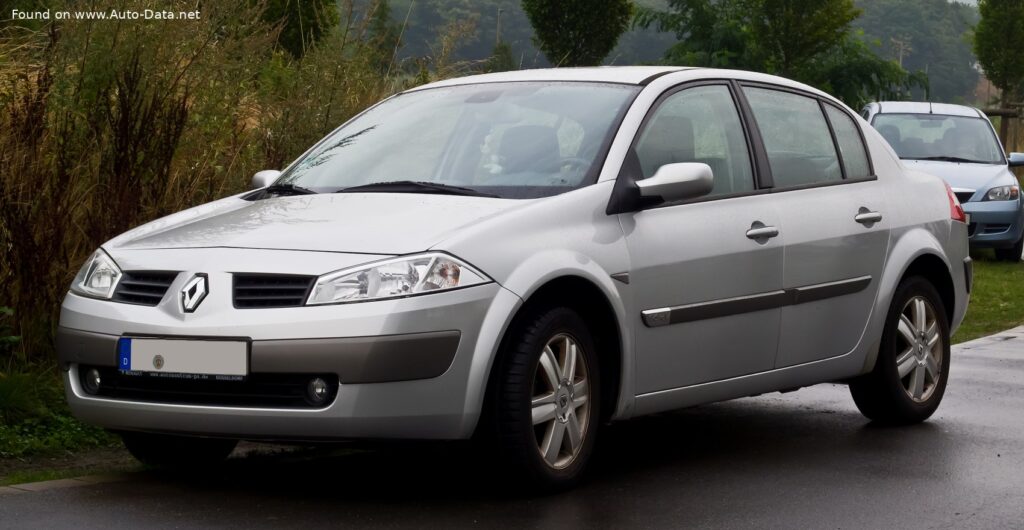
The Renault Megane II Classic 1.6 16V (112 Hp) Automatic represents a specific variant of the second-generation Renault Megane, a popular compact car primarily sold in European and other international markets. Launched in 2005, this particular model year served as a refinement of the Megane II platform, which had debuted in 2002. The “Classic” designation typically referred to the sedan body style, distinguishing it from the more common hatchback, coupé, and wagon variants. This generation of Megane was renowned for its distinctive styling, safety innovations, and a focus on comfort and practicality, aiming to capture a significant share of the highly competitive European C-segment.
Renault Megane II Classic: Positioning and Overview
The Megane II Classic, with its conventional three-box sedan silhouette, offered a more traditional appeal compared to the avant-garde rear styling of the hatchback. It was designed to cater to families and individuals seeking greater trunk capacity and a more formal appearance. The 1.6-liter 16-valve engine, paired with an automatic transmission, positioned this variant as a comfortable and accessible option for daily commuting and longer journeys, balancing adequate performance with reasonable fuel economy for its time. This trim level generally sat in the mid-range of the Megane II Classic lineup, offering a step up from the base models in terms of features and refinement, but remaining more affordable than the higher-powered or more luxuriously equipped versions.
Powertrain & Engine Architecture
Powering the 2005 Renault Megane II Classic 1.6 16V Automatic was Renault’s widely used K4M engine, a naturally aspirated 1.6-liter (1598 cm³, or 97.52 cubic inches) inline four-cylinder unit. This engine featured a double overhead camshaft (DOHC) design with four valves per cylinder, a configuration common for achieving a good balance of power and efficiency in compact vehicles. It delivered a respectable 112 horsepower at 6000 rpm, with a power per liter rating of 70.1 Hp/l. Torque output stood at 152 Nm, or approximately 112.11 lb-ft, peaking at 4200 rpm, providing sufficient pulling power for a vehicle of its class.
The engine utilized a multi-port fuel injection system, delivering fuel directly into the intake ports just before the intake valves. This system, while not as advanced as direct injection, was reliable and effective for its time. The K4M engine was known for its relatively simple design and ease of maintenance. The power was channeled to the front wheels via a 4-speed automatic transmission. While modern vehicles often feature more gears, a 4-speed automatic was a common offering in the mid-2000s for compact cars, prioritizing smooth shifts and ease of driving over ultimate performance or fuel efficiency. This transmission was electronically controlled, offering adaptive shift patterns based on driving conditions.
Driving Characteristics
The Megane II Classic 1.6 16V Automatic offered a comfortable and predictable driving experience. Acceleration from 0 to 60 mph took approximately 12.4 seconds (0-100 km/h in 13.1 seconds), reaching a maximum speed of 113.09 mph (182 km/h). Compared to the manual transmission version of the same engine, the automatic resulted in a slight performance decrease due to the inherent power losses within the torque converter and transmission. However, the convenience of the automatic transmission was a significant draw for many buyers. Compared to higher-output versions like the 2.0L engine, the 1.6L Automatic lacked the punch for spirited driving, but it provided adequate power for everyday commuting and highway cruising. The 4-speed automatic transmission’s gear ratios were optimized for fuel efficiency and smooth operation, rather than aggressive acceleration. The shift points were generally well-chosen, providing a seamless driving experience.
Equipment & Trim Levels
The Renault Megane II Classic 1.6 16V Automatic typically came equipped with a range of standard features, including power windows, central locking, air conditioning, and an audio system with CD player. Safety features included ABS brakes, front airbags, and seatbelt pretensioners. Interior upholstery was typically cloth, with a dark color scheme. Higher trim levels offered options such as alloy wheels, a sunroof, automatic climate control, and upgraded audio systems. Optional extras also included rear parking sensors, leather upholstery, and a trip computer. The dashboard configuration was functional and ergonomically designed, with easy-to-read gauges and intuitive controls. The overall interior ambiance was comfortable and well-built for its price point.
Chassis & Braking
The Megane II Classic featured an independent McPherson strut front suspension, a common and effective setup for front-wheel-drive vehicles, providing a good balance of comfort and handling. The rear utilized a torsion beam suspension, a compact and cost-effective solution for this segment. Braking was handled by ventilated discs at the front and solid discs at the rear, complemented by an Anti-lock Braking System (ABS) as a standard safety feature, enhancing stopping performance and control in adverse conditions. The steering system was a rack-and-pinion type with electric power steering, offering light and precise control, particularly beneficial for urban maneuvering and parking, with a minimum turning circle of 35.1 feet (10.7 meters). The car was typically fitted with 15-inch, 16-inch, or even 17-inch wheels, depending on the trim level, with tire sizes ranging from 195/65 R15 to 205/50 R17.
Market Reception & Comparison
Critics generally viewed the Megane II Classic 1.6 16V Automatic as a competent and practical family car. It was praised for its comfortable ride, spacious interior, and generous trunk capacity. However, some reviewers noted that the 1.6-liter engine could feel underpowered when fully loaded or when tackling steep hills. Fuel economy was considered competitive for its segment, achieving a combined rating of 7.7 liters per 100 kilometers (approximately 30.5 US mpg). Compared to the 2.0L versions, the 1.6L Automatic offered better fuel economy but less performance. Reliability was generally good, with the K4M engine proving to be a durable and long-lasting unit. The automatic transmission, while not the most sophisticated, was generally reliable with proper maintenance. The Megane II Classic offered a compelling alternative to rivals like the Volkswagen Golf and Ford Focus, particularly for buyers prioritizing comfort and practicality over sporty handling.
Technical Specifications
| Category | Specification |
| Brand | Renault |
| Model | Megane II Classic |
| Type (Engine) | 1.6 16V (112 Hp) Automatic |
| Start of Production | 2005 |
| End of Production | 2005 |
| Powertrain Architecture | Internal Combustion Engine (ICE) |
| Body Type | Sedan |
| Seats | 5 |
| Doors | 4 |
| Fuel Consumption (Urban) | 10.7 l/100 km |
| Fuel Consumption (Extra Urban) | 6 l/100 km |
| Fuel Consumption (Combined) | 7.7 l/100 km |
| CO2 Emissions | 184 g/km |
| Fuel Type | Petrol (Gasoline) |
| Acceleration 0-60 mph | 12.4 sec |
| Acceleration 0-100 km/h | 13.1 sec |
| Maximum Speed | 182 km/h |
| Emission Standard | Euro 4 |
| Weight-to-Power Ratio | 11.2 kg/Hp |
| Engine Specs | |
| Power | 112 Hp @ 6000 rpm |
| Power per Liter | 70.1 Hp/l |
| Torque | 152 Nm @ 4200 rpm |
| Engine Layout | Front, Transverse |
| Engine Model/Code | K4M |
| Engine Displacement | 1598 cm³ |
| Number of Cylinders | 4 |
| Engine Configuration | Inline |
| Cylinder Bore | 79.5 mm |
| Piston Stroke | 80.5 mm |
| Compression Ratio | 10:1 |
| Number of Valves per Cylinder | 4 |
| Fuel Injection System | Multi-port manifold injection |
| Engine Aspiration | Naturally aspirated |
| Valvetrain | DOHC |
| Curb Weight | 1250 kg |
| Trunk (Boot) Space – Minimum | 520 l |
| Fuel Tank Capacity | 60 l |
| Minimum Turning Circle (Diameter) | 10.7 m |
Legacy
The Renault Megane II Classic, including the 1.6 16V Automatic variant, has proven to be a relatively reliable and durable vehicle in the used car market. The K4M engine is known for its longevity, and the automatic transmission, while not cutting-edge, is generally dependable with regular maintenance. Today, these cars can be found at affordable prices, making them attractive options for budget-conscious buyers seeking a practical and comfortable sedan. Common issues include wear and tear on suspension components and potential for electrical glitches as the vehicles age. However, parts availability is generally good, and maintenance costs are relatively low. The Megane II Classic remains a testament to Renault’s ability to produce well-rounded and dependable vehicles that offer a good balance of value, comfort, and practicality.