
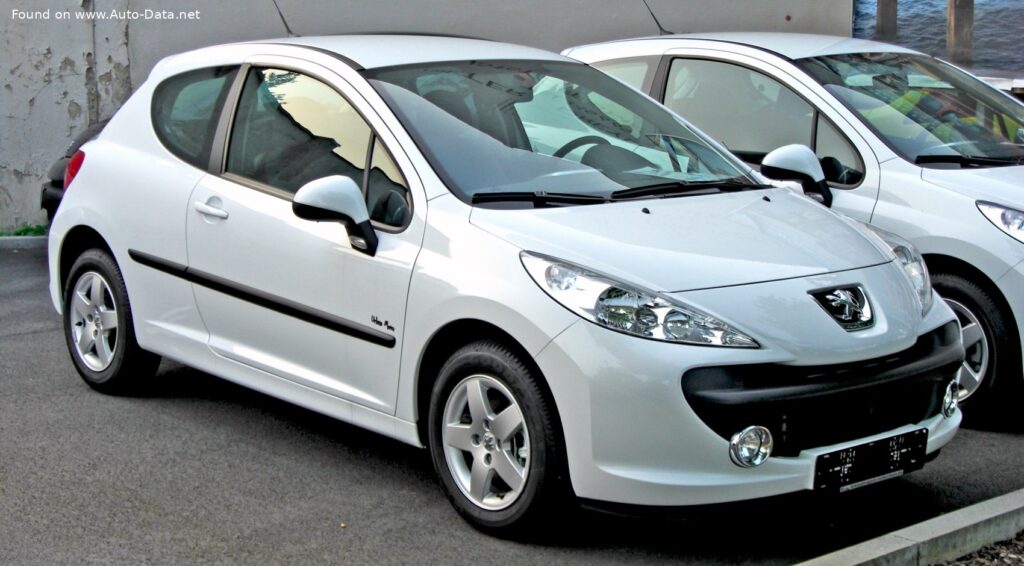
The Peugeot 207 1.6 HDi (90 Hp) represents a significant entry in the highly competitive European supermini segment, produced by the French automaker Peugeot. Launched in 2006 as the successor to the immensely popular Peugeot 206, the 207 aimed to elevate standards in terms of size, refinement, safety, and technology within its class. This particular variant, featuring the 1.6-liter HDi diesel engine with 90 horsepower, was a cornerstone of the 207 lineup, especially appealing to European consumers prioritizing fuel efficiency, low running costs, and a respectable balance of performance for daily driving. Though never officially sold in the United States, the Peugeot 207 played a crucial role in Europe, Asia, and other global markets, embodying the typical characteristics of a modern subcompact car of its era: compact dimensions for urban maneuverability, practical seating for five, and a focus on economical powertrains. This generation of the 207 was produced from 2006 to 2009 for this specific engine configuration, marking its presence as a strong contender against rivals like the Ford Fiesta, Renault Clio, and Volkswagen Polo.
Peugeot 207 1.6 HDi Powertrain & Engine Architecture
At the heart of this particular Peugeot 207 variant is the robust and efficient 1.6-liter HDi diesel engine, a testament to Peugeot’s expertise in diesel technology. This powertrain architecture is based on an internal combustion engine driving the front wheels, configured as a front, transverse layout. The engine, identified by the code 9HV DV6ATED4, is an inline four-cylinder unit with a displacement of 1560 cm3, or approximately 95.2 cubic inches. It features a Double Overhead Camshaft (DOHC) valvetrain with four valves per cylinder, optimizing airflow and combustion efficiency.
Performance-wise, the 1.6 HDi engine delivers 90 horsepower (Hp) at 4000 rpm, providing adequate power for city driving and comfortable cruising on highways. More significantly, it generates a substantial 215 Nm (or 158.58 lb.-ft.) of torque at a remarkably low 1750 rpm. This characteristic low-end torque is a hallmark of modern diesel engines, offering strong pulling power from low engine speeds, which translates into responsive acceleration and reduced need for frequent gear changes, particularly beneficial in urban environments or when carrying a full load.
Fuel delivery is handled by a sophisticated Commonrail diesel injection system, ensuring precise fuel atomization and combustion. The engine is further boosted by a turbocharger and an intercooler, which enhances power output by increasing the density of the air entering the engine, while the intercooler helps keep intake air temperatures down for optimal performance and efficiency. The 207 1.6 HDi typically came equipped with a 5-speed manual transmission, although an automated manual transmission (often referred to as a 2-Tronic) was also available as an option. The 2-Tronic, while offering convenience, was often criticized for its slow and jerky shifts compared to traditional automatic transmissions or the standard manual gearbox.
Driving Characteristics
The Peugeot 207 1.6 HDi (90 Hp) offered a driving experience geared towards practicality and efficiency rather than outright performance. The 90 horsepower output, while sufficient for everyday driving, wasn’t particularly exhilarating. Acceleration from 0 to 60 mph took around 10.9 seconds, making it slower than some of its gasoline-powered counterparts and even some of the more powerful diesel variants within the 207 range. However, the abundant low-end torque of the 1.6 HDi engine meant that it felt more responsive in real-world driving situations, particularly when overtaking or navigating city traffic.
Compared to the higher-output 110 hp version of the 1.6 HDi, the 90 hp model felt noticeably less punchy, especially at higher engine speeds. The 5-speed manual transmission was well-matched to the engine’s characteristics, with gear ratios optimized for fuel economy and relaxed cruising. The 2-Tronic automated manual, while offering convenience, often resulted in a less engaging driving experience due to its slower shift times and occasional hesitation. The suspension provided a comfortable ride, absorbing bumps and imperfections in the road reasonably well, although it wasn’t particularly sporty or engaging. Overall, the driving experience was best described as refined and competent, prioritizing comfort and efficiency over dynamic thrills.
Equipment & Trim Levels
The Peugeot 207 1.6 HDi (90 Hp) was typically offered in several trim levels, varying depending on the specific market. Entry-level models, often designated as “Access” or similar, included basic features such as power steering, central locking, electric front windows, and an ABS braking system. Mid-range trims, such as “Comfort” or “Sport,” added features like air conditioning, a CD player, alloy wheels, and remote central locking. Top-of-the-line trims, like “Sportium” or “Exclusive,” offered even more luxurious appointments, including automatic headlights and rain sensors, a multi-function steering wheel, and upgraded interior trim.
Interior upholstery typically consisted of cloth seats, with higher trims offering options for partial leather or full leather upholstery. The dashboard layout was functional and ergonomically designed, with a clear instrument cluster and easy-to-use controls. Optional extras available for this trim included a panoramic sunroof, a navigation system, and parking sensors. Safety features, beyond the standard ABS, often included driver and passenger airbags, and side airbags depending on the trim level.
Chassis & Braking
The Peugeot 207 1.6 HDi (90 Hp) utilized a McPherson strut suspension system at the front, providing independent wheel control and a comfortable ride. The rear suspension employed a semi-independent torsion beam setup, which was cost-effective and provided adequate handling characteristics for its intended purpose. The front brakes were typically ventilated discs, offering good stopping power, while the rear brakes were drum brakes on most models, a cost-saving measure common in this class of vehicle. Higher trim levels sometimes featured rear disc brakes.
The steering system was a hydraulic rack and pinion setup, providing a responsive and precise feel. Stabilizer bars were fitted to both the front and rear axles to reduce body roll during cornering. Tire size was typically 195/55 R16, offering a good balance between grip and ride comfort. The chassis was designed to provide a stable and predictable driving experience, prioritizing safety and comfort over outright sportiness.
Market Reception & Comparison
The Peugeot 207 1.6 HDi (90 Hp) received generally positive reviews from automotive critics, particularly for its fuel efficiency and low running costs. It was praised for its comfortable ride, practical interior, and stylish design. However, some critics noted that the 90 hp engine felt underpowered compared to some of its rivals, and the 2-Tronic automated manual transmission was often criticized for its sluggish performance.
Compared to other trims in the 207 lineup, the 1.6 HDi (90 Hp) offered the best fuel economy, making it an attractive option for drivers who prioritized efficiency. The 1.6 HDi 110 hp version offered more performance but at the expense of fuel economy. Gasoline-powered versions of the 207 were generally less fuel-efficient but offered a more responsive driving experience. Against its competitors, such as the Ford Fiesta and Renault Clio, the 207 1.6 HDi (90 Hp) held its own, offering a compelling package of features, fuel economy, and value for money.
Technical Specifications
| Category | Specification |
| Brand | Peugeot |
| Model | 207 |
| Type (Engine) | 1.6 HDi (90 Hp) |
| Start of Production | 2006 |
| End of Production | 2009 |
| Powertrain Architecture | Internal Combustion engine |
| Body type | Hatchback |
| Seats | 5 |
| Doors | 3-5 |
| Fuel Consumption (Urban) | 39.2 US mpg (6 l/100 km) |
| Fuel Consumption (Extra Urban) | 57.4 US mpg (4.1 l/100 km) |
| Fuel Consumption (Combined) | 50 US mpg (4.7 l/100 km) |
| CO2 Emissions | 124 g/km |
| Fuel Type | Diesel |
| Acceleration 0 – 60 mph | 10.9 sec |
| Maximum Speed | 113.09 mph (182 km/h) |
| Emission Standard | Euro 4 |
| Engine Power | 90 Hp @ 4000 rpm |
| Engine Torque | 158.58 lb.-ft. @ 1750 rpm. (215 Nm) |
| Engine Displacement | 95.2 cu. in. (1560 cm3) |
| Engine Code | 9HV DV6ATED4 |
| Kerb Weight | 2874.83 – 2901.28 lbs. (1304-1316 kg) |
Legacy
The Peugeot 207 1.6 HDi (90 Hp) has proven to be a relatively reliable powertrain in the long term. The 1.6 HDi engine is known for its durability and longevity, provided it is properly maintained. Common issues include diesel particulate filter (DPF) clogging, particularly on vehicles that are primarily used for short journeys, and occasional problems with the turbocharger. The 5-speed manual transmission is generally robust and requires minimal maintenance. The 2-Tronic automated manual, however, has a reputation for being less reliable and more prone to issues.
In the used car market today, the Peugeot 207 1.6 HDi (90 Hp) remains an affordable and practical option for buyers seeking a fuel-efficient and reliable supermini. Prices vary depending on mileage, condition, and trim level, but generally fall within a reasonable range. Its reputation for low running costs and good fuel economy continues to make it an attractive choice for budget-conscious buyers. While it may not offer the latest technology or the most exciting driving experience, the 207 1.6 HDi (90 Hp) remains a competent and dependable vehicle that embodies the strengths of Peugeot’s small car heritage.
