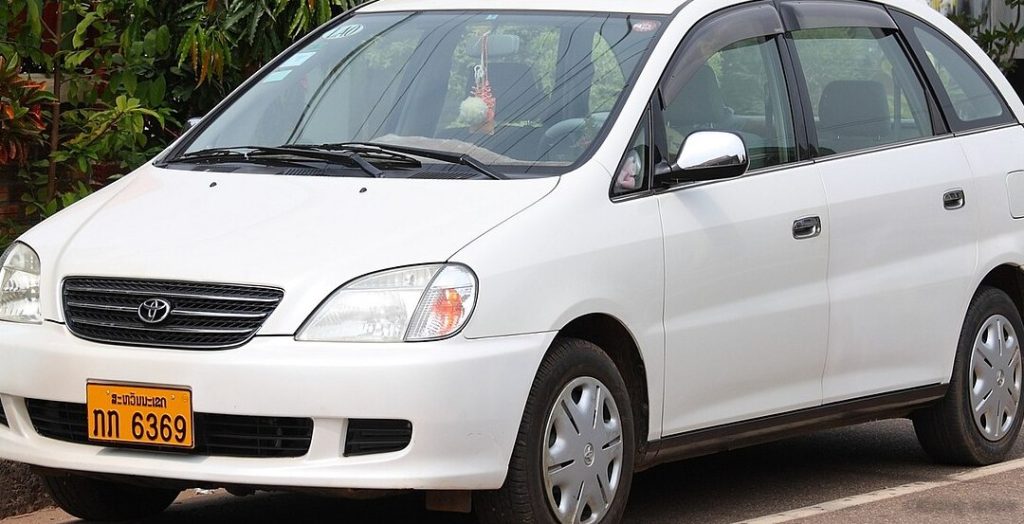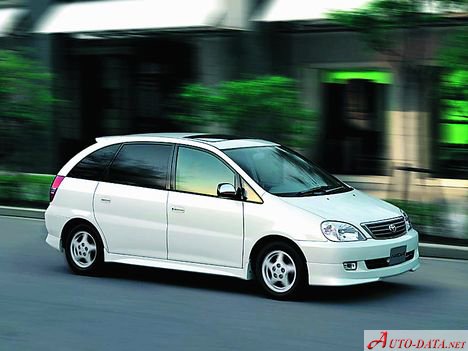
The Toyota Nadia (SXN10) represents a significant chapter in Toyota’s diverse portfolio, specifically tailored for the Japanese domestic market (JDM). Launched in 1998 and produced until 2003, the Nadia was conceived as a compact minivan that blended the practicality of a people mover with the more car-like driving dynamics of a sedan. Positioned within Toyota’s extensive lineup, the Nadia aimed to offer a versatile and comfortable solution for urban families and individuals seeking ample interior space without the bulk of larger traditional minivans. Its design ethos reflected the growing demand in Japan for vehicles that could navigate congested city streets with ease while still accommodating passengers and cargo efficiently.
The Nadia (SXN10) was part of a broader trend in the late 1990s and early 2000s where automakers experimented with various multi-purpose vehicle (MPV) formats. While never officially sold in the United States, its existence highlights a fascinating divergence in automotive preferences and market needs between regions. In its home market, the Nadia carved out a niche by offering a compelling package of Toyota’s renowned reliability, thoughtful interior packaging, and a practical, yet understated, design.
2.0 i 16V Powertrain & Engine Architecture
At the heart of the Toyota Nadia (SXN10) 2.0 i 16V variant was a robust and dependable 2.0-liter inline-four engine. This naturally aspirated, 16-valve unit, designated with a DOHC (Dual Overhead Camshaft) valvetrain, was engineered for a balance of efficiency and smooth power delivery, characteristic of Toyota’s offerings during this period. With a displacement of 1998 cm³ (121.93 cubic inches), the engine featured a square bore and stroke of 86 mm (3.39 inches) each, contributing to its balanced performance characteristics and reliability.
The engine produced a respectable 145 horsepower at 6000 rpm, translating to a power per liter figure of 72.6 horsepower per liter. Torque output was equally competitive for its class, peaking at 144.56 lb-ft (196 Nm) at 4400 rpm. This power was delivered to the front wheels via a 4-speed automatic transmission, a common and reliable setup for compact family vehicles of its era. The front-wheel-drive architecture, combined with a transverse engine layout, optimized interior space and offered predictable handling, making it an ideal choice for everyday driving scenarios.
The 4-speed automatic transmission used in the Nadia (SXN10) was a typical Toyota unit of the period, known for its smooth operation and durability. While not offering the efficiency of more modern transmissions with higher gear counts, it was well-matched to the engine’s torque curve, providing adequate acceleration for everyday driving. Gear ratios were tuned for a balance between fuel economy and responsiveness, prioritizing smooth shifts over outright performance. The transmission featured electronic control, enhancing shift quality and adapting to driving conditions.
Positioning within the Nadia Lineup
The 2.0 i 16V variant with the 4-speed automatic transmission occupied a mid-range position within the Nadia lineup. Toyota offered a 1.8-liter engine option as a more economical entry-level choice, while higher-spec models sometimes featured minor equipment upgrades. The 2.0-liter engine provided a noticeable performance advantage over the 1.8-liter, making it a popular choice for drivers who frequently carried passengers or cargo, or who regularly drove on highways. The automatic transmission appealed to buyers seeking convenience and ease of use, particularly in congested urban environments.
Driving Characteristics
The Toyota Nadia (SXN10) 2.0 i 16V Automatic offered a comfortable and predictable driving experience. While not a performance-oriented vehicle, the 145 hp engine provided adequate power for everyday driving situations. Acceleration from a standstill was reasonable, and the engine felt responsive enough for merging onto highways or overtaking slower traffic. The 4-speed automatic transmission shifted smoothly, although it lacked the responsiveness of more modern transmissions.
Compared to the manual transmission versions (available in some markets), the automatic Nadia sacrificed some level of driver engagement and fuel efficiency. The manual transmission allowed for more precise control over gear selection, resulting in slightly quicker acceleration and improved fuel economy. However, the automatic transmission offered a more relaxed and convenient driving experience, particularly in stop-and-go traffic. Compared to potential higher-output versions (which were not widely available), the 2.0L automatic offered a balance of performance and economy, prioritizing practicality over outright speed.
The Nadia’s suspension was tuned for comfort, providing a smooth ride over most road surfaces. Handling was predictable and stable, although it wasn’t particularly sporty. The front-wheel-drive layout contributed to a slight tendency towards understeer in corners, but this was generally well-controlled. Overall, the Nadia offered a pleasant and undemanding driving experience, making it well-suited for everyday commuting and family transportation.
Equipment & Trim Levels
The Toyota Nadia (SXN10) 2.0 i 16V Automatic typically came equipped with a range of standard features designed to enhance comfort and convenience. These included power windows, power door locks, air conditioning, and a basic audio system. Interior upholstery was typically cloth, with a durable and practical design. The dashboard layout was functional and straightforward, with easy-to-read gauges and controls.
Optional extras available for this trim included alloy wheels, a sunroof, upgraded audio systems, and a rear wiper. Higher-spec models might also have featured woodgrain interior trim and leather upholstery. The level of equipment varied depending on the specific market and the year of manufacture. Toyota offered several trim levels within the Nadia lineup, with the 2.0 i 16V Automatic typically falling into the mid-range category, offering a good balance of features and affordability.
Chassis & Braking
The Nadia (SXN10) utilized a MacPherson strut front suspension and a torsion beam rear suspension. This configuration provided a good balance between ride comfort and handling stability. The front track measured 57.87 inches, with the rear track at 57.09 inches, contributing to a stable stance on the road.
Braking performance was handled by ventilated discs at the front, offering superior heat dissipation and stopping power, complemented by drum brakes at the rear. A crucial safety feature for its time, the Anti-lock Braking System (ABS), was standard, enhancing control during emergency braking situations. The steering system featured a hydraulic rack and pinion setup, delivering responsive and predictable steering feedback. The vehicle rode on 195/65 R14 tires, providing a good balance of grip and ride comfort.
Market Reception & Comparison
The Toyota Nadia (SXN10) received generally positive reviews in the Japanese automotive press. Critics praised its spacious interior, comfortable ride, and Toyota’s renowned reliability. The 2.0-liter engine was considered adequate for its intended purpose, providing sufficient power for everyday driving. The 4-speed automatic transmission was generally well-regarded for its smooth operation, although some reviewers noted that it lacked the responsiveness of more modern transmissions.
Compared to other trims in the Nadia lineup, the 2.0 i 16V Automatic offered a compelling balance of performance and fuel economy. The 1.8-liter engine was more fuel-efficient but lacked the power of the 2.0-liter, while higher-spec models offered more features but came at a higher price. In terms of reliability, the 2.0-liter engine was considered to be as dependable as the 1.8-liter, with both engines benefiting from Toyota’s rigorous quality control standards. Fuel economy was competitive for its class, with the Nadia achieving around 19.6 US mpg in urban driving and 31.4 US mpg on the highway.
Technical Specifications
| Category | Specification |
| Brand | Toyota |
| Model | Nadia |
| Generation | Nadia (SXN10) |
| Engine Type | 2.0 i 16V (145 Hp) |
| Production Start | 1998 year |
| Production End | 2003 year |
| Powertrain Architecture | Internal Combustion engine |
| Body Type | Minivan |
| Seats | 5 |
| Doors | 5 |
| Fuel Consumption (Urban) | 19.6 US mpg |
| Fuel Consumption (Extra Urban) | 31.4 US mpg |
| Fuel Type | Petrol (Gasoline) |
| Maximum Speed | 111.85 mph (180 km/h) |
| Weight-to-Power Ratio | 9.4 kg/Hp |
| Weight-to-Torque Ratio | 7 kg/Nm |
| Power | 145 Hp @ 6000 rpm |
| Power per Liter | 72.6 Hp/l |
| Torque | 144.56 lb.-ft. @ 4400 rpm (196 Nm) |
| Engine Layout | Front, Transverse |
| Engine Displacement | 121.93 cu. in. (1998 cm³) |
| Number of Cylinders | 4 |
| Engine Configuration | Inline |
| Cylinder Bore | 3.39 in. (86 mm) |
| Piston Stroke | 3.39 in. (86 mm) |
| Compression Ratio | 10:1 |
| Valves per Cylinder | 4 |
| Fuel Injection System | Multi-port manifold injection |
| Engine Aspiration | Naturally aspirated engine |
| Valvetrain | DOHC |
| Kerb Weight | 3020.33 lbs (1370 kg) |
| Trunk (Boot) Space – Minimum | 28.6 cu. ft. (810 l) |
| Fuel Tank Capacity | 15.85 US gal (60 l) |
| Length | 174.61 in. (4435 mm) |
| Width | 66.73 in. (1695 mm) |
| Height | 63.98 in. (1625 mm) |
| Wheelbase | 107.68 in. (2735 mm) |
| Front Track | 57.87 in. (1470 mm) |
| Rear Track | 57.09 in. (1450 mm) |
| Drivetrain Architecture | Front wheel drive (ICE drives front wheels) |
| Drive Wheel | Front wheel drive |
| Gearbox | 4 gears, automatic transmission |
| Front Suspension | Wishbone |
| Rear Suspension | Coil spring |
| Front Brakes | Ventilated discs |
| Rear Brakes | Drum |
| Assisting Systems | ABS (Anti-lock braking system) |
| Steering Type | Steering rack and pinion |
| Power Steering | Hydraulic Steering |
| Tires Size | 195/65 R14 |
Legacy
The Toyota Nadia (SXN10) 2.0 i 16V Automatic powertrain has proven to be remarkably reliable over the long term. Toyota’s reputation for building durable engines and transmissions has held true with this combination. Common issues are relatively minor, typically involving routine maintenance items such as timing belt replacement, spark plug changes, and fluid flushes. The 4-speed automatic transmission, while not the most advanced, is known for its robustness and ability to withstand high mileage.
In the used car market today, the Nadia (SXN10) remains a popular choice among buyers seeking an affordable and dependable family vehicle, particularly in Japan and countries with a strong JDM import scene. Its spacious interior, comfortable ride, and Toyota’s legendary reliability continue to appeal to a wide range of buyers. While its age means that finding well-maintained examples can be challenging, the Nadia remains a testament to Toyota’s engineering prowess and its ability to create vehicles that stand the test of time.