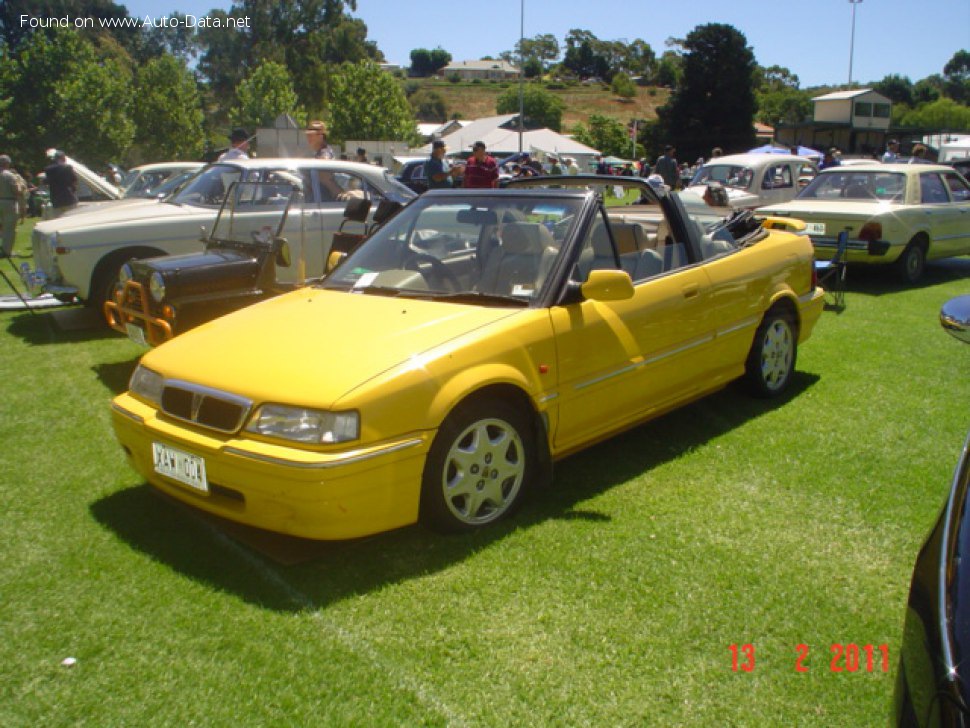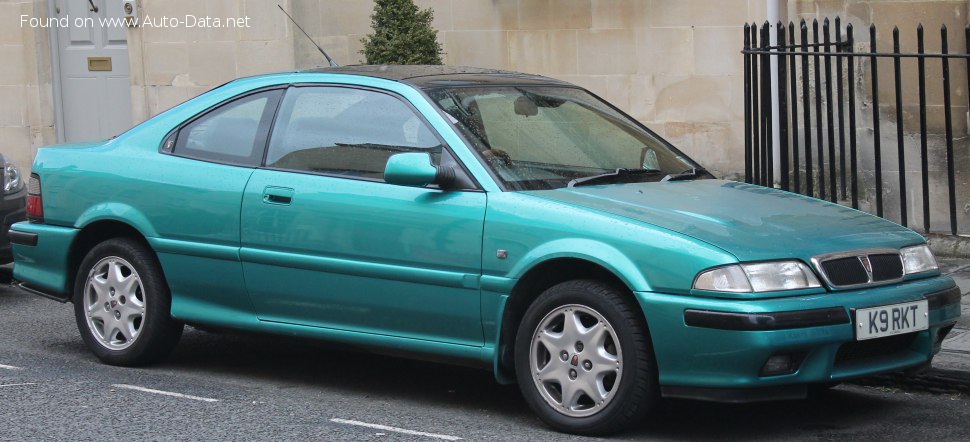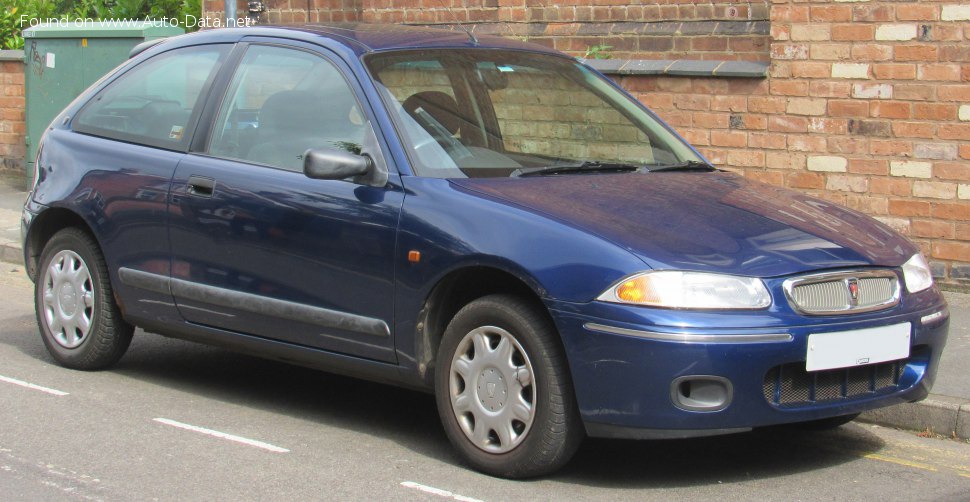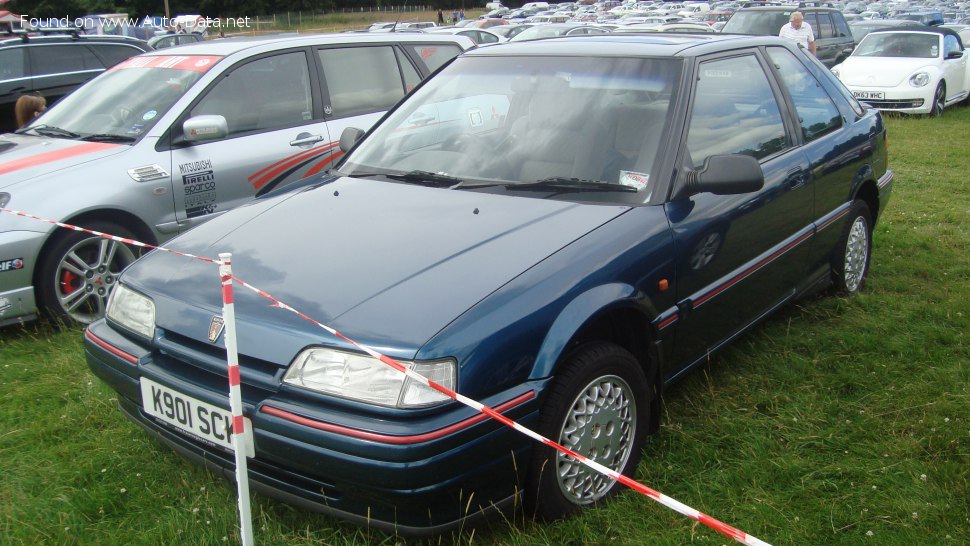
The Rover 200 (XW) 220 GTi (140 Hp) represents a significant chapter in the history of the British automotive manufacturer, Rover. Launched in 1991, this particular iteration of the second-generation Rover 200 series, codenamed XW, was a performance-oriented 3-door hatchback designed to compete in the highly contested European ‘hot hatch’ segment. While Rover models were not extensively marketed in the United States during this era, the 200 (XW) played a crucial role in Rover’s strategy to offer a more modern and dynamically capable compact car, benefiting significantly from its collaborative platform shared with Honda. This vehicle embodied a blend of traditional British craftsmanship with Japanese engineering prowess, aiming for a more refined and mature driving experience compared to some of its more boisterous rivals. The 220 GTi variant, with its potent 140 horsepower engine, was positioned as the enthusiast’s choice, offering spirited performance in a practical package.
Powertrain & Engine Architecture
At the heart of the Rover 200 (XW) 220 GTi (140 Hp) was a robust 2.0-liter (1994 cm³ or 121.68 cu. in.) naturally aspirated inline-four gasoline engine. This powerplant was a highlight of the car, featuring a Double Overhead Camshaft (DOHC) valvetrain with four valves per cylinder, a configuration that was becoming standard for performance engines of the period. The engine codes associated with this variant are typically found as M16i, though variations existed depending on specific market requirements. Delivering a respectable 140 horsepower at 6000 rpm, the engine offered a lively performance characteristic, especially when coupled with the car’s relatively low curb weight. Torque output stood at 132.76 lb.-ft. (180 Nm) at 4500 rpm, providing a broad powerband that made for engaging driving dynamics.
Power was efficiently transmitted to the front wheels via a precise 5-speed manual transmission, a common and favored setup for hot hatches, allowing drivers maximum control over the engine’s output. The powertrain architecture, with the engine mounted transversely at the front, was typical for front-wheel-drive vehicles of its class, optimizing interior space and handling. The fuel injection system employed was a multi-port manifold injection system, providing precise fuel delivery for optimal combustion and performance. The engine’s design prioritized reliability and ease of maintenance, reflecting Rover’s commitment to practical engineering.
Driving Characteristics
The Rover 200 (XW) 220 GTi offered a driving experience that leaned towards the refined side of the hot hatch spectrum. Compared to the base model 1.4L or 1.6L variants, the 220 GTi provided a noticeable increase in acceleration and overall responsiveness. While not as brutally quick as some of its rivals, the 2.0-liter engine delivered a smooth and linear power delivery, making it accessible and enjoyable to drive in a variety of conditions. The 5-speed manual transmission was well-matched to the engine’s characteristics, offering precise shifts and allowing drivers to keep the engine in its optimal power band.
The gear ratios were tuned to provide a balance between acceleration and fuel efficiency. First gear offered brisk acceleration from a standstill, while fifth gear was geared for comfortable cruising on the highway. Compared to the later Rover 200 BRM, which featured a slightly more aggressive tune, the 220 GTi prioritized usability and everyday drivability. The power-to-weight ratio of 8.4 kg/Hp (or 118.6 Hp per tonne) translated to a respectable 0-60 mph time of around 8.2 seconds, making it competitive within its class.
Equipment & Trim Levels
The 220 GTi was positioned as the premium trim level within the Rover 200 (XW) range. Standard features included a sporty interior with bolstered seats, often upholstered in a combination of cloth and leatherette. The dashboard featured a distinctive instrument cluster with a prominent tachometer and speedometer. Power steering was standard, providing ease of maneuverability, and an Anti-lock Braking System (ABS) was also included as a key safety feature.
Optional extras available for the 220 GTi included electric windows, central locking, a sunroof, and upgraded audio systems. Some models also featured alloy wheels, adding to the car’s sporty appearance. The interior trim was generally well-appointed for its price point, with a focus on providing a comfortable and refined driving environment. The 220 GTi aimed to appeal to buyers who wanted a performance car with a touch of sophistication.
Chassis & Braking
The Rover 200 (XW) 220 GTi utilized a MacPherson strut front suspension and a coil spring rear suspension. This setup aimed to strike a balance between comfortable ride quality and responsive handling. The suspension was tuned to provide a slightly firmer ride than the lower-spec models, enhancing body control and reducing roll during cornering. A stabilizer bar was fitted to both the front and rear axles, further improving handling stability.
The braking system consisted of ventilated disc brakes at the front and disc brakes at the rear, providing ample stopping power for a vehicle of its weight and performance. The inclusion of ABS as standard equipment significantly enhanced braking safety, particularly in wet or slippery conditions. The 185/55 R15 V-rated tires provided adequate grip for spirited driving, although some enthusiasts opted to upgrade to wider tires for improved handling.
Market Reception & Comparison
Critics generally viewed the Rover 200 (XW) 220 GTi favorably, praising its refined driving experience, comfortable interior, and respectable performance. It was often compared to rivals such as the Volkswagen Golf GTI, Ford Escort XR3i, and Peugeot 309 GTI. While it might not have been as overtly sporty as some of these competitors, the 220 GTi offered a more balanced package, combining performance with comfort and practicality.
Fuel economy was rated at a combined 28.3 US mpg (8.3 l/100 km), which was a reasonable figure for a performance-oriented vehicle from the early 1990s. Reliability was generally good, although some owners reported minor issues with electrical components. Compared to the 1.4L and 1.6L variants, the 220 GTi offered significantly improved performance, but at the cost of slightly higher fuel consumption and insurance costs. The 220 GTi appealed to buyers who wanted a sporty and refined hatchback that was also practical and comfortable for everyday use.
Technical Specifications
| Category | Specification |
| General Information | |
| Brand | Rover |
| Model | 200 |
| Generation | 200 (XW) |
| Type (Engine) | 220 GTi (140 Hp) |
| Production Start | 1991 year |
| Production End | 1995 year |
| Powertrain Architecture | Internal Combustion engine |
| Body Type | Hatchback |
| Seats | 5 |
| Doors | 3 |
| Performance Specs | |
| Fuel Consumption (Combined) | 8.3 l/100 km |
| Fuel Consumption (Combined) | 28.3 US mpg |
| Fuel Type | Petrol (Gasoline) |
| Maximum Speed | 202 km/h |
| Maximum Speed | 125.52 mph |
| Weight-to-Power Ratio | 8.4 kg/Hp |
| Weight-to-Power Ratio | 118.6 Hp/tonne |
| Engine Specs | |
| Power | 140 Hp @ 6000 rpm |
| Power per Liter | 70.2 Hp/l |
| Torque | 180 Nm @ 4500 rpm |
| Torque | 132.76 lb.-ft. @ 4500 rpm |
| Engine Layout | Front, Transverse |
| Engine Displacement | 1994 cm³ |
| Engine Displacement | 2.0 liters / 121.68 cu. in. |
| Number of Cylinders | 4 |
| Engine Configuration | Inline |
| Cylinder Bore | 84.5 mm |
| Cylinder Bore | 3.33 in. |
| Piston Stroke | 89 mm |
| Piston Stroke | 3.5 in. |
| Compression Ratio | 10:1 |
| Valves per Cylinder | 4 |
| Fuel Injection System | Multi-port manifold injection |
| Engine Aspiration | Naturally aspirated engine |
| Valvetrain | DOHC |
| Space, Volume and Weights | |
| Kerb Weight | 1180 kg |
| Kerb Weight | 2601.45 lbs. |
| Max. Weight (GVWR) | 1580 kg |
| Max. Weight (GVWR) | 3483.3 lbs. |
| Max Load | 400 kg |
| Max Load | 881.85 lbs. |
| Trunk Space (Min) | 350 l |
| Trunk Space (Min) | 12.36 cu. ft. |
| Trunk Space (Max) | 1210 l |
| Trunk Space (Max) | 42.73 cu. ft. |
| Fuel Tank Capacity | 55 l |
| Fuel Tank Capacity | 14.53 US gal |
| Dimensions | |
| Length | 4220 mm |
| Length | 166.14 in. |
| Width | 1680 mm |
| Width | 66.14 in. |
| Height | 1390 mm |
| Height | 54.72 in. |
| Wheelbase | 2550 mm |
| Wheelbase | 100.39 in. |
| Front Track | 1475 mm |
| Front Track | 58.07 in. |
| Rear Track | 1470 mm |
| Rear Track | 57.87 in. |
| Drivetrain, Brakes and Suspension | |
| Drivetrain Architecture | Front-wheel drive, Internal Combustion engine |
| Drive Wheel | Front wheel drive |
| Gearbox Type | 5 gears, manual transmission |
| Front Suspension | Wishbone |
| Rear Suspension | Coil spring |
| Front Brakes | Ventilated discs |
| Rear Brakes | Disc |
| Assisting Systems | ABS (Anti-lock braking system) |
| Steering Type | Steering rack and pinion |
| Power Steering | Hydraulic Steering |
| Tires Size | 185/55 R15 V |
Legacy
The Rover 200 (XW) 220 GTi (140 Hp) holds a unique position in the automotive landscape of the early 1990s. While Rover, as a brand, had a limited presence in the United States market during this period, its European impact was considerable. The 200 (XW) generation was a product of a strategic alliance between Rover and Honda, specifically sharing its platform with the Honda Concerto. This partnership was crucial for Rover, enabling them to produce a car with significantly improved build quality, reliability, and dynamic capabilities compared to previous Rover models. The 220 GTi, in particular, benefited from this engineering collaboration, offering a more refined and less raw driving experience than some of its contemporary hot hatch rivals.
In the fiercely competitive European hot hatch market, the Rover 220 GTi faced formidable adversaries such as the Volkswagen Golf GTI, Ford Escort XR3i, Peugeot 309 GTI, and even its platform-mate, the Honda Civic VTi. While it might not have been as overtly aggressive or as sharp-edged as some of its French or German competitors, the 220 GTi carved out its niche as a “gentleman’s hot hatch.” It combined respectable performance with a slightly more upscale interior ambiance and a refined ride quality that appealed to buyers looking for a blend of sportiness and comfort. The availability of ABS as standard was also a strong selling point for safety-conscious consumers.
The 200 (XW) series helped to modernize Rover’s image and was well-received in its primary markets. The 220 GTi variant, with its potent 2.0-liter engine, demonstrated Rover’s capability to produce engaging performance vehicles. Although Rover’s fortunes would eventually decline in the subsequent decades, the 200 (XW) generation, and especially the GTi model, is remembered fondly by enthusiasts for its blend of British style and Japanese engineering integrity. Today, these vehicles are increasingly becoming sought-after modern classics in Europe, appreciated for their unique heritage, robust performance, and the significant role they played in Rover’s efforts to remain competitive in a rapidly evolving automotive world. The engine itself, while not without its quirks, is generally considered durable and relatively easy to maintain, contributing to the continued viability of these cars on the road today.