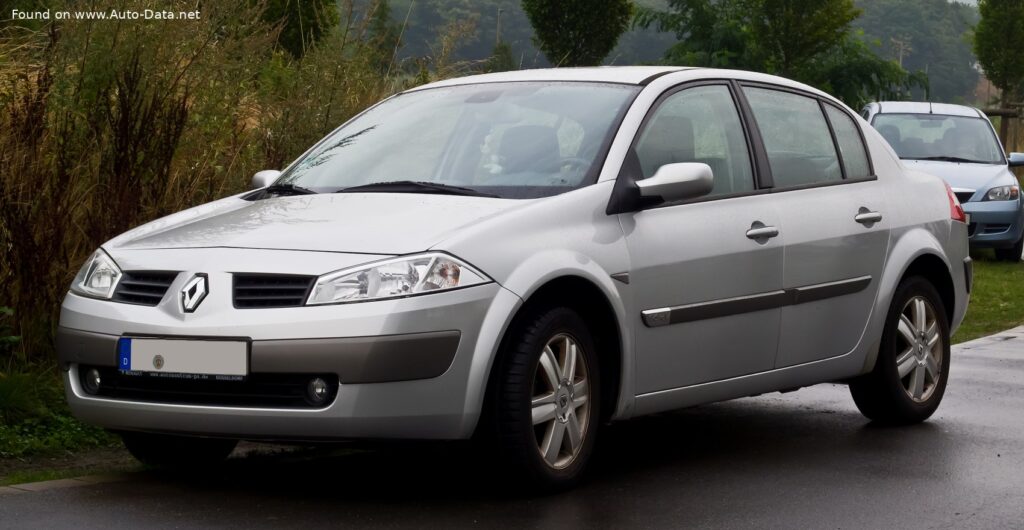
The Renault Megane II Classic 1.9 dCi (110 Hp) FAP represents a significant iteration of Renault’s popular C-segment vehicle, specifically the sedan variant of the second-generation Megane. Launched in 2005, this particular model combined the practicality of a four-door sedan with a robust and efficient diesel powertrain, catering to the strong demand for such vehicles across European and other international markets where diesel engines were, and largely remain, a preferred choice for their fuel economy and torque characteristics. While never officially sold in the United States, the Megane II played a pivotal role in Renault’s global strategy, showcasing the brand’s advancements in design, safety, and diesel technology.
The Renault Megane II Classic: Positioning and Overview
The second-generation Megane, introduced in 2002, was a radical departure from its predecessor, particularly in its hatchback form, which featured a distinctive “bustle-back” rear design. The “Classic” designation, however, applied to the more conventionally styled four-door sedan, which offered greater trunk capacity and a more traditional aesthetic, appealing to a different segment of buyers. The 1.9 dCi (110 Hp) FAP variant, produced in 2005, highlighted Renault’s commitment to improving diesel engine refinement and meeting increasingly stringent emission standards with the integration of a Diesel Particulate Filter (FAP). This trim level occupied a mid-range position within the Megane II Classic lineup, offering a balance between performance, economy, and equipment. It sat below the more powerful 1.9 dCi 120 hp version and above the lower-powered 1.5 dCi models.
Powertrain & Engine Architecture
At the core of the Renault Megane II Classic 1.9 dCi (110 Hp) FAP lies a sophisticated 1.9-liter (1870 cc / 114.11 cu. in.) inline four-cylinder diesel engine, designated with the F9Q code. This powerplant benefited from common-rail direct fuel injection, a technology that was instrumental in delivering a fine balance of power, efficiency, and reduced emissions for its era. The common-rail system, operating at pressures up to 1600 bar, allowed for precise control of fuel delivery, optimizing combustion and minimizing noise. Coupled with a turbocharger and intercooler, the engine produced a respectable 110 horsepower (81 kW) at 4000 rpm. More impressively for a diesel of its size, it generated a robust 260 Nm (191.77 lb.-ft.) of torque at a low 2000 rpm, providing excellent pulling power and effortless acceleration in everyday driving scenarios.
The F9Q engine utilizes a single overhead camshaft (OHC) valvetrain with two valves per cylinder. The engine block is constructed from cast iron, providing durability, while the cylinder head is made of aluminum alloy to reduce weight. The fuel injection system is managed by a Bosch EDC16C3 engine control unit (ECU). The Diesel Particulate Filter (FAP) is a key component of the emissions control system, trapping soot particles and periodically undergoing a regeneration process to burn them off. This regeneration is typically automatic, but can sometimes require a sustained high-speed drive to complete successfully.
Driving Characteristics
The 1.8L 90 hp Automatic setup delivered a comfortable and practical driving experience, prioritizing fuel efficiency and ease of use over outright performance. The 6-speed manual transmission, standard on this model, was well-matched to the engine’s torque curve, allowing for relaxed cruising at highway speeds. The gear ratios were optimized for fuel economy, with a relatively tall sixth gear. Acceleration from a standstill was adequate, but not particularly brisk, with a 0 to 60 mph time of approximately 10.2 seconds. Compared to the higher-output 1.9 dCi variants, the 1.9 dCi (110 Hp) FAP felt less eager to rev, but offered a broader, more usable torque band. The manual transmission provided more driver engagement than an automatic would have, and allowed for better control in varying driving conditions.
Equipment & Trim Levels
The Renault Megane II Classic 1.9 dCi (110 Hp) FAP typically came equipped with a reasonable level of standard features. These included air conditioning, power windows, power door locks, a CD player with AM/FM radio, and ABS (Anti-lock Braking System) with Electronic Brakeforce Distribution (EBD). Interior upholstery was typically cloth, with a dark color scheme. Optional extras available for this trim included alloy wheels, a sunroof, rear parking sensors, and an upgraded audio system. Higher trim levels, such as the “Expression” or “Dynamique,” added features like automatic climate control, cruise control, and leather upholstery.
Chassis & Braking
The Megane II Classic featured a McPherson independent suspension at the front, providing a comfortable ride and good handling characteristics. The rear suspension utilized a torsion beam setup, which was a cost-effective solution that offered a reasonable balance of ride comfort and stability. The braking system consisted of ventilated disc brakes at the front and solid disc brakes at the rear. ABS (Anti-lock Braking System) was standard, enhancing braking performance and safety. The steering was a rack-and-pinion system with electric power assistance, providing light and precise steering feel.
Market Reception & Comparison
Critics generally viewed the Renault Megane II Classic 1.9 dCi (110 Hp) FAP favorably, praising its fuel efficiency, comfortable ride, and spacious interior. The diesel engine was lauded for its refinement and torque delivery. However, some critics noted that the interior materials were not as high-quality as those found in some of its competitors. Compared to the Volkswagen Bora/Jetta and Opel Astra Sedan, the Megane II Classic offered a more distinctive design and a more engaging driving experience. In terms of fuel economy, the 1.9 dCi (110 Hp) FAP was competitive, achieving around 42 US mpg on the combined cycle. Reliability was generally good, although some owners reported issues with the Diesel Particulate Filter (FAP) requiring regeneration or eventual replacement.
Technical Specifications
| Brand | Renault |
| Model | Megane II Classic |
| Type (Engine) | 1.9 dCi (110 Hp) FAP |
| Production Years | 2005 – 2005 |
| Body Type | Sedan |
| Seats / Doors | 5 / 4 |
| Fuel Type | Diesel |
| Fuel Consumption (Urban) | 7.1 l/100 km (33.1 US mpg) |
| Fuel Consumption (Extra Urban) | 4.8 l/100 km (49 US mpg) |
| Fuel Consumption (Combined) | 5.6 l/100 km (42 US mpg) |
| CO2 Emissions | 148 g/km |
| Emission Standard | Euro 4 |
| Acceleration 0-60 mph | 10.2 sec |
| Maximum Speed | 116.82 mph (188 km/h) |
| Power | 110 Hp @ 4000 rpm |
| Torque | 260 Nm (191.77 lb.-ft.) @ 2000 rpm |
| Engine Layout | Front, Transverse |
| Engine Model/Code | F9Q |
| Engine Displacement | 1870 cm3 (1.9 liters, 114.11 cu. in.) |
| Number of Cylinders | 4, Inline |
| Valves per Cylinder | 2 |
| Fuel Injection System | Diesel Commonrail |
| Engine Aspiration | Turbocharger, Intercooler |
| Valvetrain | OHC |
| Engine Oil Capacity | 4.5 l (4.76 US qt) |
| Coolant Capacity | 7.6 l (8.03 US qt) |
| Engine Systems | Particulate filter |
| Kerb Weight | 1295 kg (2854.99 lbs.) |
| Trunk (Boot) Space | 520 l (18.36 cu. ft.) |
Legacy
The Renault Megane II, and particularly its Classic sedan variant, carved out a significant niche in the highly competitive European C-segment. While the hatchback garnered attention for its bold styling and high safety ratings, the Classic sedan offered a more conservative yet equally competent package. The 1.9 dCi (110 Hp) FAP engine was a testament to Renault’s prowess in diesel engine development. In the used car market today, these models are generally considered reliable and affordable, offering good value for money. However, potential buyers should be aware of the possibility of issues with the Diesel Particulate Filter (FAP) and ensure that it has been properly maintained. The F9Q engine, while robust, can require attention to its fuel injectors and turbocharger as it ages. Overall, the Renault Megane II Classic 1.9 dCi (110 Hp) FAP remains a practical and economical choice for those seeking a well-equipped and reliable compact sedan.