
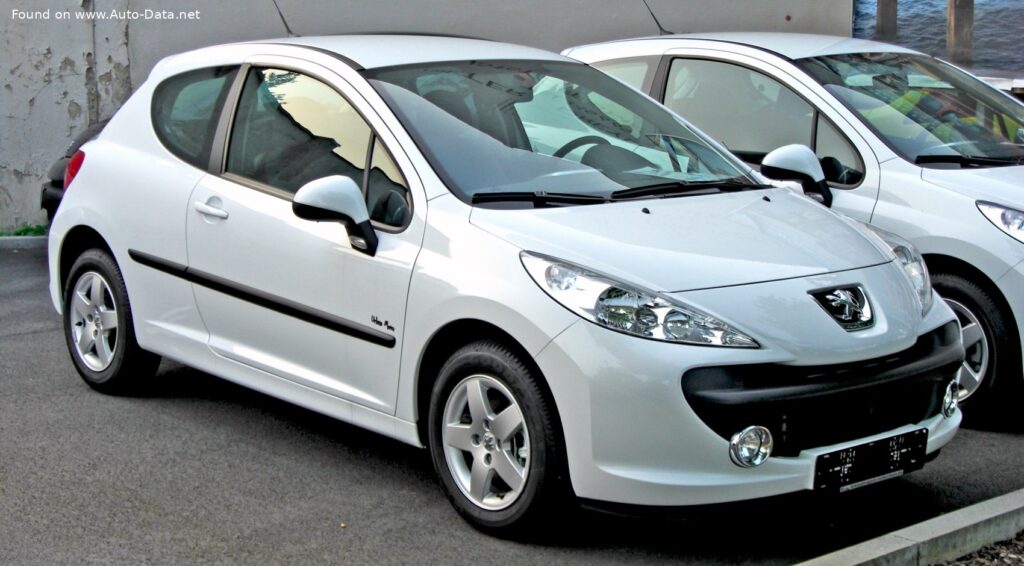
The Peugeot 207 1.6 i 16V (110 Hp), produced between 2006 and 2009, was a key model in Peugeot’s lineup, designed to succeed the popular 206 and compete in the highly contested European B-segment (subcompact car market). Though never officially sold in the United States, the 207 was a common sight across Europe and internationally, appreciated for its modern styling, enjoyable driving experience, and practical hatchback design. This specific version, powered by a 1.6-liter gasoline engine, offered a compelling balance of performance and fuel economy, making it a strong competitor in its class. It occupied a mid-range position within the 207 lineup, offering more performance than the base 1.4-liter models but remaining more accessible than the high-performance GT and GTi variants.
Powertrain & Engine Architecture
The heart of the Peugeot 207 1.6 i 16V (110 Hp) is Peugeot’s NFU (and sometimes ADZ) TU5JP4 engine. This naturally aspirated, 1.6-liter (1587 cc or 96.84 cubic inches) inline four-cylinder engine was engineered for a balance of power and usability. It features a 16-valve cylinder head and multi-point sequential fuel injection, contributing to efficient combustion and smooth power delivery. The engine’s block is constructed from cast iron for durability, while the cylinder head is made of aluminum to reduce weight.
The valvetrain utilizes double overhead camshafts (DOHC) driven by a timing belt, ensuring precise valve control. The engine’s compression ratio is 11:1, which is relatively high for a naturally aspirated engine of this era, contributing to its respectable power output. The engine is transversely mounted at the front of the vehicle, driving the front wheels.
The 1.6-liter engine was typically paired with a five-speed manual transmission, but a four-speed automatic transmission was also available. The automatic transmission, while offering convenience, was generally considered less responsive and slightly less fuel-efficient than the manual counterpart. It employed a traditional torque converter design and electronic control for smoother shifting. The automatic transmission’s gear ratios were optimized for everyday driving, prioritizing comfort and fuel economy over outright performance.
Driving Characteristics
The Peugeot 207 1.6 i 16V (110 Hp) offered a pleasant driving experience, particularly with the five-speed manual transmission. The engine provided a linear power delivery, with usable torque available from relatively low engine speeds. While not a particularly fast car, it felt adequately powered for city driving and highway cruising. The manual transmission allowed drivers to fully exploit the engine’s capabilities, offering precise gear changes and a more engaging driving experience.
The automatic transmission, while convenient, resulted in a noticeable decrease in responsiveness. Acceleration felt slower, and the transmission sometimes hesitated during overtaking maneuvers. The gear ratios were spaced to prioritize fuel efficiency, meaning the engine often operated at higher RPMs during acceleration. Compared to the manual version, the automatic 1.6 i 16V felt less sporty and more geared towards comfortable commuting. The suspension provided a good balance between ride comfort and handling, absorbing bumps effectively while maintaining reasonable body control. Steering was light and precise, making the 207 easy to maneuver in urban environments.
Equipment & Trim Levels
The Peugeot 207 1.6 i 16V (110 Hp) was available in several trim levels, each offering a different level of equipment. Standard features typically included power steering, central locking, electric front windows, and an audio system with CD player. Higher trim levels added features such as air conditioning, alloy wheels, a trip computer, and upgraded interior trim.
Interior upholstery varied depending on the trim level, ranging from basic cloth to more premium materials. The dashboard layout was modern and functional, with a clear instrument cluster and logically placed controls. Optional extras included a panoramic sunroof, parking sensors, and a navigation system. Safety features included dual front airbags, ABS brakes, and electronic brakeforce distribution (EBD). The 3-door and 5-door body styles offered different levels of practicality, with the 5-door version providing easier access to the rear seats.
Chassis & Braking
The Peugeot 207 utilized a McPherson strut front suspension with coil springs and an anti-roll bar, providing good handling and stability. The rear suspension employed a semi-independent torsion beam setup, which was a cost-effective and space-efficient solution. This rear suspension design prioritized packaging and ride comfort over ultimate handling performance.
Braking duties were handled by ventilated disc brakes at the front and drum brakes at the rear. ABS (Anti-lock Braking System) was standard, enhancing safety by preventing wheel lockup during hard braking. The braking system provided adequate stopping power for everyday driving, although it wasn’t as powerful as the systems found on higher-performance models. The 207 typically rode on 15-inch alloy wheels or steel wheels with wheel covers, fitted with 185/65 R15 tires. The chassis was designed to be lightweight and rigid, contributing to the car’s handling and safety.
Market Reception & Comparison
The Peugeot 207 1.6 i 16V (110 Hp) received generally positive reviews from automotive critics. It was praised for its stylish design, comfortable ride, and engaging handling. The 1.6-liter engine was considered a good compromise between performance and fuel economy. However, some critics noted that the interior materials were not as high-quality as those found in some of its rivals.
Compared to other trims in the 207 lineup, the 1.6 i 16V offered a significant performance upgrade over the base 1.4-liter models. It was also more affordable than the sporty GT and GTi variants. In terms of fuel economy, the 1.6 i 16V achieved a combined fuel consumption of around 33.6 US mpg, which was competitive with other cars in its class. Reliability was generally good, although some owners reported minor issues with the electrical system. Compared to rivals like the Renault Clio and Ford Fiesta, the 207 offered a more distinctive design and a more comfortable ride, but it sometimes lacked the overall refinement of the Volkswagen Polo.
Technical Specifications
| Brand | Peugeot |
| Model | 207 |
| Generation | 207 |
| Type (Engine) | 1.6 i 16V (110 Hp) |
| Start of Production | 2006 year |
| End of Production | 2009 year |
| Powertrain Architecture | Internal Combustion engine |
| Body Type | Hatchback |
| Seats | 5 |
| Doors | 3-5 |
| Fuel Consumption (Urban) | 25.3 US mpg (9.3 l/100 km) |
| Fuel Consumption (Extra Urban) | 42 US mpg (5.6 l/100 km) |
| Fuel Consumption (Combined) | 33.6 US mpg (7 l/100 km) |
| Fuel Type | Petrol (Gasoline) |
| Acceleration 0 – 60 mph | 10.1 sec |
| Maximum Speed | 120.55 mph (194 km/h) |
| Weight-to-Power Ratio | 11 kg/Hp, 90.7 Hp/tonne |
| Weight-to-Torque Ratio | 8.3 kg/Nm, 121.2 Nm/tonne |
| Power | 110 Hp @ 5750 rpm |
| Power per Liter | 69.3 Hp/l |
| Torque | 108.42 lb.-ft. (147 Nm) @ 4000 rpm |
| Engine Layout | Front, Transverse |
| Engine Model/Code | NFU TU5JP4 |
| Engine Displacement | 1.6 l (1587 cm3 / 96.84 cu. in.) |
| Number of Cylinders | 4 |
| Engine Configuration | Inline |
| Cylinder Bore | 3.07 in. (78 mm) |
| Piston Stroke | 3.27 in. (83 mm) |
| Compression Ratio | 11:1 |
| Number of Valves per Cylinder | 4 |
| Fuel Injection System | Multi-port manifold injection |
| Engine Aspiration | Naturally aspirated engine |
| Engine Oil Capacity | 3.43 US qt (3.25 l) |
| Coolant Capacity | 7.29 US qt (6.9 l) |
| Kerb Weight | 2674.21 lbs (1213 kg) |
| Max. Weight | 3681.72 lbs (1670 kg) |
| Max Load | 1007.51 lbs (457 kg) |
| Trunk (Boot) Space – Minimum | 9.53 cu. ft. (270 l) |
| Trunk (Boot) Space – Maximum | 32.6 cu. ft. (923 l) |
| Fuel Tank Capacity | 13.21 US gal (50 l) |
| Length | 158.66 in. (4030 mm) |
| Width | 67.72 in. (1720 mm) |
| Width with Mirrors Folded | 71.57 in. (1818 mm) |
| Width Including Mirrors | 77.64 in. (1972 mm) |
| Height | 57.95 in. (1472 mm) |
| Wheelbase | 100 in. (2540 mm) |
| Front Track | 58.07 in. (1475 mm) |
| Rear (Back) Track | 57.72 in. (1466 mm) |
| Drag Coefficient (Cd) | 0.30 |
| Minimum Turning Circle | 34.12 ft. (10.4 m) |
| Drivetrain Architecture | The Internal combustion engine (ICE) drives the front wheels of the vehicle. |
| Drive Wheel | Front wheel drive |
| Number of Gears and Type of Gearbox | 5 gears, manual transmission |
| Front Suspension | Independent, type McPherson with coil spring and anti-roll bar |
| Rear Suspension | Semi-independent, coil spring, Elastic beam |
| Front Brakes | Ventilated discs |
| Rear Brakes | Drum |
| Assisting Systems | ABS (Anti-lock braking system) |
| Steering Type | Steering rack and pinion |
| Tires Size | 185/65 R15 |
Legacy
The Peugeot 207 1.6 i 16V (110 Hp) powertrain has proven to be generally reliable over the long term. The NFU/ADZ engine is known for its durability, and with regular maintenance, it can withstand high mileage. However, like any engine, it is susceptible to wear and tear, and common issues include oil leaks, timing belt failure, and occasional sensor malfunctions.
In the used car market today, the 207 1.6 i 16V (110 Hp) represents an affordable and practical option for buyers seeking a small, fuel-efficient hatchback. Prices vary depending on mileage, condition, and trim level, but well-maintained examples can still offer years of reliable service. While it may not be as technologically advanced as newer cars, its simple design and robust engine make it a relatively easy and inexpensive vehicle to maintain. The 207 remains a popular choice for first-time car buyers, city commuters, and those looking for a dependable and economical runabout.
