
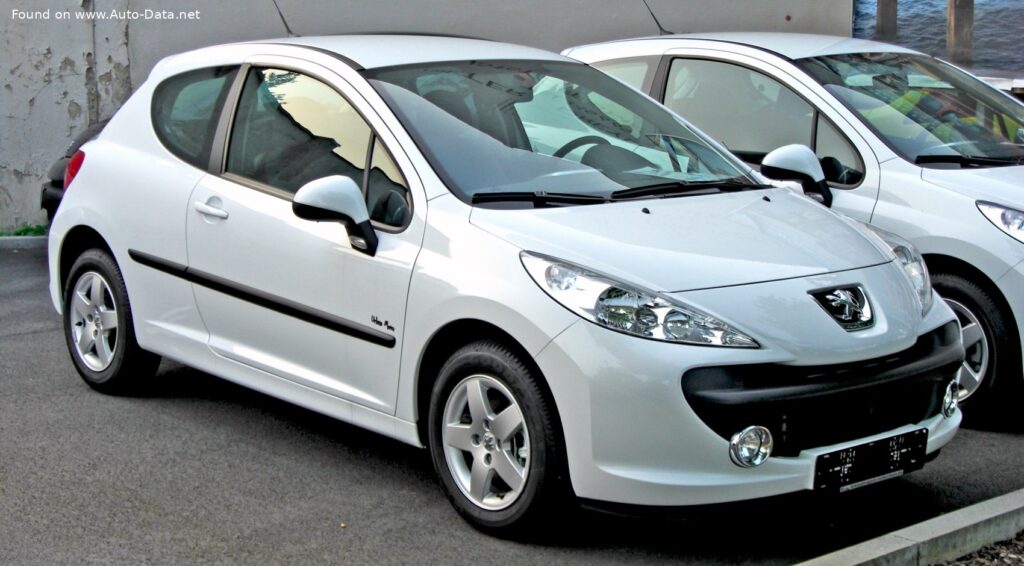
The Peugeot 207 1.6 i 16V (120 Hp) Automatic represents a significant offering from the French automaker in the highly competitive European subcompact (B-segment) market. Launched in 2006 as a successor to the popular 206, the 207 aimed to elevate Peugeot’s presence with a more refined design, improved safety features, and a focus on comfort. This specific variant, produced between 2007 and 2009, combined a 1.6-liter engine with a four-speed automatic transmission, targeting drivers seeking a balance of practicality, ease of use, and reasonable performance. While Peugeot has limited brand recognition in the United States, the 207 was a high-volume seller in Europe, Asia, and other international markets, defining the brand’s compact car presence for nearly a decade. This 1.6L Automatic model was positioned as a mid-range option within the 207 lineup, appealing to daily commuters and small families.
Powertrain & Engine Architecture
The Peugeot 207 1.6 i 16V (120 Hp) Automatic is powered by a naturally aspirated 1.6-liter (1598 cm³) inline four-cylinder gasoline engine, internally designated the 5FW EP6. This engine is a product of a collaborative effort between the PSA Group (Peugeot Société Anonyme) and BMW, known for its efficiency and smooth operation. The engine features a Double Overhead Camshaft (DOHC) valvetrain with 16 valves – four valves per cylinder – and utilizes multi-port fuel injection. This configuration allows the engine to produce 120 horsepower (hp) at 6000 rpm and a maximum torque of 118.01 lb-ft (160 Nm) at 4250 rpm. The 11:1 compression ratio contributes to its fuel efficiency.
Power is transmitted to the front wheels via a four-speed automatic transmission. While a four-speed automatic may seem dated by modern standards, it provided a smooth and convenient driving experience, particularly in urban environments where frequent gear changes with a manual transmission could be cumbersome. This powertrain combination allows the 207 to accelerate from 0 to 60 mph in approximately 10.8 seconds, reaching a top speed of 121.17 mph (195 km/h). The transmission’s gear ratios are optimized for everyday driving, prioritizing smooth acceleration and fuel economy over outright performance.
Driving Characteristics
The driving experience in the Peugeot 207 1.6 i 16V Automatic is characterized by its ease of use and comfortable ride. The automatic transmission eliminates the need for manual gear changes, making it ideal for city driving and stop-and-go traffic. Compared to the manual transmission versions of the 207, the automatic offers less driver engagement but greater convenience. The 120 hp engine provides adequate power for most driving situations, although it doesn’t offer the same level of acceleration as the higher-output variants, such as those equipped with the 1.6 THP turbocharged engine. The four-speed automatic transmission, while smooth, can sometimes feel slightly hesitant during quick acceleration or when overtaking. The gear ratios are spaced to prioritize fuel efficiency, meaning the engine may need to work harder at higher speeds. Compared to the diesel-powered 207 models (like the 1.4 HDi), the 1.6 i 16V offers a more responsive and linear power delivery, but at the expense of fuel economy.
Equipment & Trim Levels
The Peugeot 207 1.6 i 16V Automatic was typically offered in several trim levels, varying by market. Standard equipment generally included power steering (rack and pinion), front power windows, central locking, and a basic audio system with radio and CD player. Higher trim levels added features such as air conditioning, alloy wheels, a multi-function steering wheel, and upgraded interior trim. Interior upholstery typically consisted of cloth seats, with options for more premium materials on higher-spec models. The dashboard layout was functional and ergonomically designed, with a clear instrument cluster and easy-to-reach controls. Optional extras included a panoramic sunroof, parking sensors, and a more advanced audio system with Bluetooth connectivity. Safety features, such as Anti-lock Braking System (ABS) and front airbags, were standard across most trim levels.
Chassis & Braking
The Peugeot 207 1.6 i 16V Automatic utilizes a McPherson strut suspension system with coil springs and an anti-roll bar at the front, providing a comfortable and controlled ride. The rear suspension employs a semi-independent elastic beam with coil springs. This setup strikes a balance between ride comfort and handling dynamics, characteristic of Peugeot’s engineering philosophy. The braking system consists of ventilated disc brakes at the front and drum brakes at the rear. ABS (Anti-lock Braking System) is standard, enhancing braking performance and stability, particularly on slippery surfaces. The steering is a rack and pinion system, providing precise and responsive steering feel. The 195/55 R16 tires offer a good compromise between grip and ride comfort, suitable for a variety of road conditions.
Market Reception & Comparison
The Peugeot 207 1.6 i 16V Automatic received generally positive reviews from automotive critics in Europe. It was praised for its stylish design, comfortable ride, and refined interior. The 1.6-liter engine was considered a good balance of performance and fuel efficiency, although some critics noted that the four-speed automatic transmission could feel slightly dated compared to newer automatic gearboxes with more gears. Compared to other trims in the 207 lineup, the 1.6 i 16V Automatic offered a more accessible price point than the higher-performance models, while still providing a reasonable level of equipment and comfort. Fuel economy was competitive within its segment, averaging around 33.6 US mpg (combined), although the diesel-powered variants offered significantly better fuel efficiency. Reliability was generally considered average for a European car of its class, with some reports of minor electrical issues. Compared to rivals like the Renault Clio and Ford Fiesta, the 207 was often seen as a more stylish and refined option, but potentially less reliable.
Technical Specifications
| Category | Specification |
| General Information | |
| Brand | Peugeot |
| Model | 207 |
| Generation | 207 |
| Type (Engine) | 1.6 i 16V (120 Hp) Automatic |
| Start of Production | 2007 |
| End of Production | 2009 |
| Powertrain Architecture | Internal Combustion engine |
| Body Type | Hatchback |
| Seats | 5 |
| Doors | 3-5 |
| Performance Specs | |
| City Fuel Economy | 9.8 l/100 km (24 US mpg) |
| Highway Fuel Economy | 5.5 l/100 km (42.8 US mpg) |
| Combined Fuel Economy | 7 l/100 km (33.6 US mpg) |
| Fuel Type | Gasoline |
| Acceleration 0 – 60 mph | 10.8 sec |
| Maximum Speed | 195 km/h (121.17 mph) |
| Emission Standard | Euro 4 |
| Weight-to-Power Ratio | 10.9 kg/Hp |
| Weight-to-Torque Ratio | 8.2 kg/Nm |
| Engine Specs | |
| Power | 120 Hp @ 6000 rpm |
| Power per liter | 75.1 Hp/l |
| Torque | 160 Nm @ 4250 rpm (118.01 lb.-ft. @ 4250 rpm) |
| Engine Layout | Front, Transverse |
| Engine Model/Code | 5FW EP6 |
| Engine Displacement | 1598 cm³ (1.6 Liters / 97.52 cu. in.) |
| Number of Cylinders | 4 |
| Engine Configuration | Inline |
| Cylinder Bore | 77 mm (3.03 in.) |
| Piston Stroke | 85.8 mm (3.38 in.) |
| Compression Ratio | 11:1 |
| Number of Valves per Cylinder | 4 |
| Fuel Injection System | Multi-port manifold injection |
| Engine Aspiration | Naturally aspirated engine |
| Valvetrain | DOHC |
| Engine Oil Capacity | 4.25 l (4.49 US qt) |
| Coolant Capacity | 5.4 l (5.71 US qt) |
| Space, Volume and Weights | |
| Curb Weight | 1312 kg (2892.46 lbs.) |
| Max. Weight | 1678 kg (3699.36 lbs.) |
| Max Load | 366 kg (806.89 lbs.) |
| Cargo Volume (min) | 270 l (9.53 cu. ft.) |
| Cargo Volume (max) | 923 l (32.6 cu. ft.) |
| Fuel Tank Capacity | 50 l (13.21 US gal) |
| Dimensions | |
| Length | 4030 mm (158.66 in.) |
| Width | 1720 mm (67.72 in.) |
| Width with mirrors folded | 1818 mm (71.57 in.) |
| Width including mirrors | 1972 mm (77.64 in.) |
| Height | 1472 mm (57.95 in.) |
| Wheelbase | 2540 mm (100 in.) |
| Front Track | 1475 mm (58.07 in.) |
| Rear Track | 1466 mm (57.72 in.) |
| Drag Coefficient (Cd) | 0.30 |
| Minimum Turning Circle | 10.4 m (34.12 ft.) |
| Drivetrain, Brakes and Suspension Specs | |
| Drivetrain Architecture | Front-wheel drive, Internal Combustion engine |
| Drive Wheel | Front wheel drive |
| Number of Gears and Type of Gearbox | 4 gears, automatic transmission |
| Front Suspension | Independent, McPherson with coil spring and anti-roll bar |
| Rear Suspension | Semi-independent, coil spring, Elastic beam |
| Front Brakes | Ventilated discs |
| Rear Brakes | Drum |
| Assisting Systems | ABS (Anti-lock braking system) |
| Steering Type | Steering rack and pinion |
| Tires Size | 195/55 R16 |
Legacy
The Peugeot 207, including the 1.6 i 16V Automatic variant, has established itself as a reliable and affordable used car option. The 5FW EP6 engine, co-developed with BMW, is generally considered durable and relatively easy to maintain. Common issues include occasional problems with the automatic transmission (particularly with fluid changes) and minor electrical faults. However, these are typically not major concerns and can be addressed with routine maintenance. Today, the 207 remains a popular choice for budget-conscious buyers seeking a practical and stylish hatchback. Its relatively low running costs and readily available spare parts contribute to its continued appeal in the used car market. While it may not offer the same level of technology or refinement as more modern vehicles, the 207 1.6 i 16V Automatic represents a solid and dependable option for those seeking a well-rounded and affordable European hatchback.
