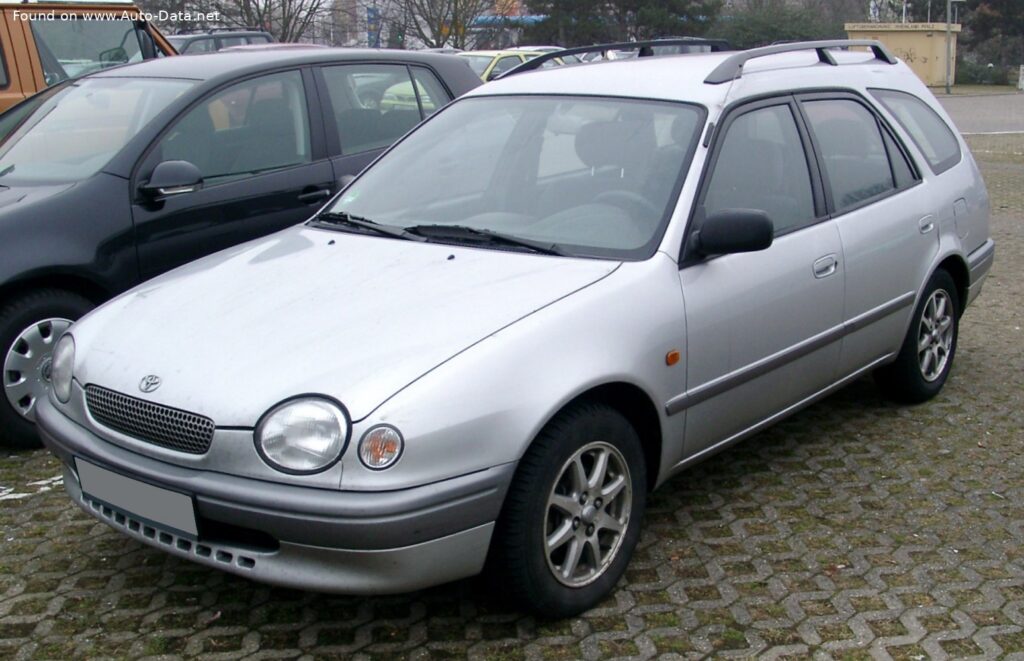
The Toyota Corolla has long been synonymous with reliability, practicality, and efficiency across the globe, and the eighth generation, internally designated E110, continued this esteemed legacy. Produced from 1997 to 2001, the Corolla E110 built upon its predecessors’ reputation for bulletproof engineering and user-friendly design. While the sedan and hatchback variants were ubiquitous in many markets, the Toyota Corolla Wagon VIII (E110) 1.6 i 16V (108 Hp) offered an additional layer of versatility and cargo capacity, catering to families and individuals who required more utility without sacrificing the Corolla’s hallmark dependability. This particular specification, featuring a 1.6-liter naturally aspirated engine, represented a popular choice for its balanced performance and fuel economy in its primary markets, particularly across Europe and parts of Asia where station wagons held significant appeal.
The E110 Corolla Wagon: Positioning and Overview
The E110 generation marked a refinement of Toyota’s compact car philosophy, focusing on improved safety, enhanced driving dynamics, and a more aerodynamic design, all while maintaining cost-effectiveness and the brand’s legendary build quality. The wagon variant, with its extended roofline and generous cargo area, specifically addressed the needs of buyers seeking a practical daily driver capable of handling varied demands, from daily commutes to family road trips. Its unassuming exterior belied a meticulously engineered platform designed for longevity and ease of maintenance, traits that would solidify its status as a global automotive stalwart. Within the E110 Corolla lineup, the 1.6 i 16V wagon occupied a mid-range position. It offered a step up in performance and refinement compared to the base 1.3-liter models, but remained more affordable and fuel-efficient than the higher-specification 1.8-liter variants.
Powertrain & Engine Architecture
At the heart of the Toyota Corolla Wagon VIII (E110) 1.6 i 16V (108 Hp) lies the venerable 4A-FE engine, a powerplant celebrated for its robust construction and smooth operation. This 1.6-liter (1586 cm3 or 96.78 cubic inches) inline-four engine, equipped with 16 valves (four per cylinder) and multi-port fuel injection, was designed for efficiency and durability rather than outright speed. The 4A-FE engine utilizes a single overhead camshaft (SOHC) valvetrain, a design choice that contributed to its simplicity and reliability. The engine’s block is constructed from cast iron, providing excellent strength and thermal stability, while the cylinder head is made of aluminum alloy, reducing weight. Power is delivered to the front wheels via a 4-speed automatic transmission, designated A240E. This transmission is a hydraulically controlled unit known for its smooth shifting and dependability. It features torque converter lock-up for improved fuel efficiency at cruising speeds. The transmission’s gear ratios are optimized for everyday driving, prioritizing acceleration from a standstill and comfortable highway cruising. First gear is relatively short for quick take-offs, while fourth gear is geared for fuel economy at higher speeds.
Fuel Injection and Engine Management
The 4A-FE engine employs a multi-point fuel injection system, delivering fuel directly to each cylinder intake port. This system, controlled by a dedicated Engine Control Unit (ECU), precisely meters fuel based on engine load, speed, and other parameters, optimizing combustion efficiency and minimizing emissions. The ECU also manages ignition timing and other engine functions, ensuring smooth and reliable operation. The engine’s modest compression ratio of 9.5:1 contributed to its long-term reliability and tolerance for varying fuel qualities.
Driving Characteristics
The 1.8L Automatic setup in the Corolla Wagon provided adequate, though not exhilarating, performance. The 108 horsepower and 104 lb.-ft. of torque translated into a 0 to 60 mph sprint in approximately 12 seconds, reaching a top speed of 108.74 mph (175 km/h). Compared to the manual transmission versions of the same engine, the automatic resulted in a slight performance decrease due to the inherent power loss within the torque converter. However, the automatic transmission offered a more relaxed and convenient driving experience, particularly in urban traffic. The gear ratios of the A240E transmission were tuned for smooth acceleration and comfortable cruising. While it lacked the responsiveness of a manual gearbox, the automatic provided predictable and consistent performance. Compared to the higher-output 1.8-liter versions, the 1.6-liter engine felt less strained during acceleration and offered better fuel economy. The 1.6L engine was generally considered a better fit for drivers prioritizing fuel efficiency and ease of use over outright performance.
Equipment & Trim Levels
The Toyota Corolla Wagon VIII (E110) 1.6 i 16V (108 Hp) typically came equipped with a range of standard features designed to enhance comfort and convenience. These included power steering, central locking, electric windows, and an AM/FM radio with cassette player. Interior upholstery was typically cloth, available in a variety of colors and patterns. The dashboard layout was straightforward and functional, with easy-to-read gauges and logically placed controls. Optional extras available for this trim included air conditioning, alloy wheels, a sunroof, and upgraded audio systems. Higher trim levels often featured additional amenities such as woodgrain interior trim and a multi-function display. Safety features included a driver’s airbag and seatbelts for all occupants. ABS (Anti-lock Braking System) was often available as an option, or standard on higher trim levels.
Chassis & Braking
The Corolla Wagon utilized a MacPherson strut front suspension and a torsion beam rear suspension. This setup provided a good balance of ride comfort and handling stability. The torsion beam rear suspension was a cost-effective solution that minimized complexity while still offering acceptable handling characteristics. Braking was handled by ventilated discs at the front and drum brakes at the rear. The drum brakes at the rear were a cost-saving measure, but provided adequate stopping power for the vehicle’s weight and performance. The braking system was typically unassisted, meaning that the driver’s pedal effort directly applied the brakes. ABS (Anti-lock Braking System) was available as an option, enhancing braking performance and stability, particularly on slippery surfaces. The stabilizer bar thickness was moderate, providing a reasonable level of body roll control without compromising ride comfort.
Market Reception & Comparison
Critics generally viewed the 1.8L Automatic combo as a sensible and practical choice. It was praised for its reliability, fuel efficiency, and comfortable ride. However, it was also noted that the performance was not particularly exciting, and the automatic transmission lacked the responsiveness of a manual gearbox. Compared to other trims in the same lineup, the 1.6L Automatic offered a good balance of price, performance, and fuel economy. It was a popular choice for families and individuals who prioritized practicality and dependability over sporty pretensions. Fuel economy was a strong point, achieving an estimated 33.1 US mpg (7.1 l/100 km) on the extra-urban cycle. Reliability was also a key advantage, with the 4A-FE engine and A240E transmission proving to be exceptionally durable.
Technical Specifications
| Brand | Toyota |
| Model | Corolla |
| Generation | Corolla Wagon VIII (E110) |
| Type (Engine) | 1.6 i 16V (108 Hp) |
| Production Years | 1997 – 2001 |
| Powertrain Architecture | Internal Combustion Engine |
| Body Type | Station wagon (estate) |
| Seats | 5 |
| Doors | 5 |
| Fuel Consumption (Urban) | 12.4 l/100 km (19 US mpg) |
| Fuel Consumption (Extra Urban) | 7.1 l/100 km (33.1 US mpg) |
| Fuel Type | Petrol (Gasoline) |
| Acceleration 0 – 60 mph | 12 seconds |
| Maximum Speed | 175 km/h (108.74 mph) |
| Power | 108 Hp @ 6000 rpm |
| Torque | 141 Nm (104 lb.-ft.) @ 4800 rpm |
| Engine Layout | Front, Transverse |
| Engine Model/Code | 4A-FE |
| Engine Displacement | 1586 cm3 (96.78 cu. in.) |
| Number of Cylinders | 4, Inline |
| Cylinder Bore | 81 mm (3.19 in.) |
| Piston Stroke | 77 mm (3.03 in.) |
| Compression Ratio | 9.5:1 |
| Valves per Cylinder | 4 |
| Fuel Injection System | Multi-port manifold injection |
| Engine Aspiration | Naturally aspirated |
| Engine Oil Capacity | 3.2 l (3.38 US qt) |
| Coolant Capacity | 6 l (6.34 US qt) |
| Kerb Weight | 1140 kg (2513.27 lbs.) |
| Max. Weight | 1650 kg (3637.63 lbs.) |
| Max Load | 510 kg (1124.36 lbs.) |
| Trunk Space (Min) | 308 l (10.88 cu. ft.) |
| Trunk Space (Max) | 1218 l (43.01 cu. ft.) |
| Fuel Tank Capacity | 50 l (13.21 US gal) |
| Length | 4320 mm (170.08 in.) |
| Width | 1690 mm (66.54 in.) |
| Height | 1445 mm (56.89 in.) |
| Wheelbase | 2465 mm (97.05 in.) |
| Front Track | 1460 mm (57.48 in.) |
| Rear Track | 1450 mm (57.09 in.) |
| Drivetrain Architecture | Front-wheel drive (ICE drives front wheels) |
| Drive Wheel | Front wheel drive |
| Gearbox Type | 4 gears, automatic transmission |
| Front Suspension | Coil spring |
| Rear Suspension | Coil spring |
| Front Brakes | Ventilated discs |
| Rear Brakes | Drum |
| Assisting Systems | ABS (Anti-lock braking system) |
| Steering Type | Steering rack and pinion |
| Power Steering | Hydraulic Steering |
| Tires Size | 175/65 R14 |
Legacy
The Toyota Corolla Wagon VIII (E110) 1.6 i 16V (108 Hp) played a significant role in reinforcing the Corolla’s global reputation for unmatched reliability and value. In markets where station wagons were a staple, such as Europe, it competed against popular models like the Opel Astra Caravan, Ford Focus Estate, Volkswagen Golf Variant, and Honda Civic Aerodeck. While it may not have possessed the same dynamic flair as some European rivals, the Corolla Wagon consistently outperformed them in terms of long-term dependability and low running costs, which were paramount concerns for many buyers in the compact segment. Its legacy is primarily defined by its incredible durability. Many E110 Corollas, including the wagon variant, are still on the road today, a testament to Toyota’s engineering prowess. The 4A-FE engine, in particular, is often lauded as one of the most dependable four-cylinder engines ever produced, requiring minimal maintenance beyond routine fluid changes. This reputation for being “bulletproof” made it a highly sought-after used car, maintaining strong resale values for years after its production ceased. In the used car market today, well-maintained E110 Corolla Wagons command a reasonable price, reflecting their enduring reputation for reliability and practicality. They are often favored by buyers seeking an affordable and dependable vehicle for daily commuting or family transportation.