
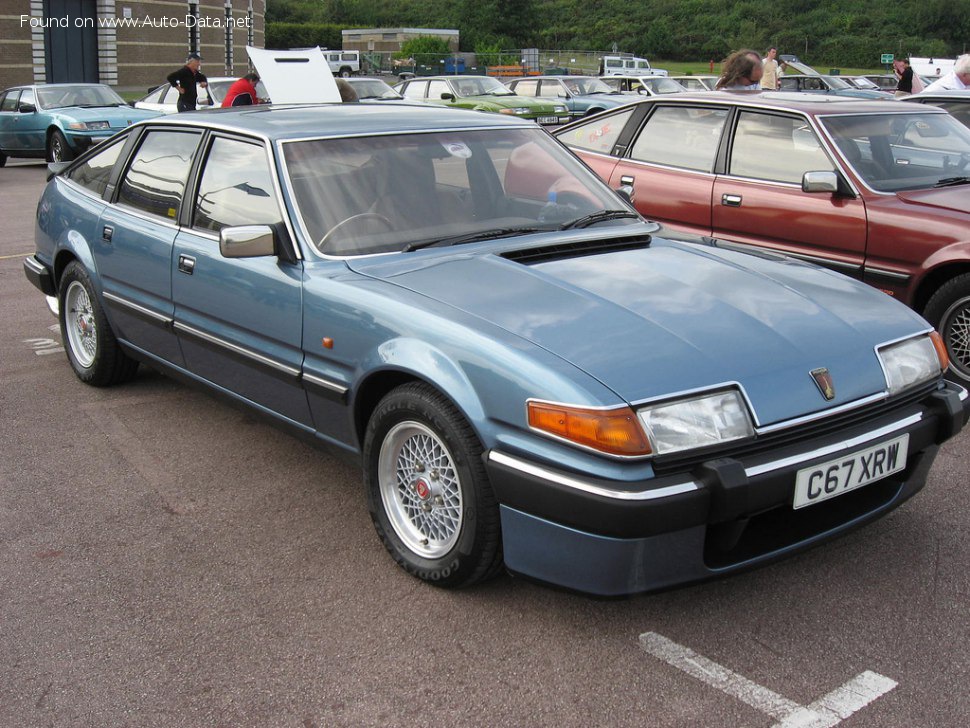
The Rover 2000-3500 Hatchback, widely known by its internal project code SD1 (Specialist Division 1), represents a significant, though often troubled, period in British automotive history. Launched in 1976, the SD1 was a bold undertaking by British Leyland (BL) to replace the aging Rover P6 and Triumph 2000/2500 models. Its goal was to compete directly with established European rivals, offering a combination of innovative design, advanced engineering, and traditional Rover luxury. This specific variant, the Rover 2000-3500 Hatchback (SD1) 2300 (120 Hp), introduced in 1977, served as a key mid-range offering, balancing performance and economy within the broader SD1 lineup.
The SD1 was initially praised, winning the European Car of the Year award in 1977, recognizing its innovative design and forward-thinking concept. It was a five-door hatchback, a departure from the traditional sedan body styles of its predecessors and many competitors in the executive segment. This design, combined with its fastback profile, aimed to blend hatchback practicality with grand tourer aesthetics. While the V8-powered models often received the most attention, the 2300 variant broadened the SD1’s appeal, targeting buyers who desired Rover refinement and style in a more fuel-efficient and accessible package. Produced from 1977 to 1986, the SD1’s lifespan was marked by both critical acclaim and the industrial challenges that frequently plagued British Leyland.
The Rover SD1 2300: Powertrain & Engine Architecture
The Rover 2000-3500 Hatchback (SD1) 2300 (120 Hp) was powered by the PE146 engine, a naturally aspirated inline-six gasoline (petrol) unit. This 2.3-liter engine was a new Rover design, intended to provide a smoother, more refined alternative to four-cylinder engines and a more economical option than the larger V8. Producing 120 horsepower, the 2300 engine delivered respectable performance for its time and class.
The PE146 featured a single overhead camshaft (SOHC) valvetrain, operating two valves per cylinder. Fuel delivery was managed by a Zenith-Stromberg 175CDSE carburetor, a common setup for British engines of the era. This carburetor, while reliable, wasn’t as precise or efficient as fuel injection systems becoming increasingly common in other markets. The engine block was constructed from cast iron, providing durability, while the cylinder head was made of aluminum alloy to reduce weight. The 2300 engine’s linear power delivery was characteristic of many European engines from the late 1970s. It lacked the immediate punch of the V8 models, but offered a level of sophistication and quiet operation valued in the executive car market.
The SD1 2300 was available with either a four-speed manual transmission or a three-speed Borg-Warner automatic transmission. The automatic transmission, while providing convenience, was often criticized for its relatively slow shift times and tendency to hunt for gears, particularly on inclines. The automatic’s gear ratios were geared towards comfortable cruising rather than spirited acceleration. The manual transmission offered a more engaging driving experience and slightly improved fuel economy, but was less popular with the target demographic for this trim level.
Driving Characteristics of the 2300 Automatic
In real-world driving conditions, the Rover SD1 2300 with the automatic transmission offered a comfortable and refined experience. Acceleration from 0 to 60 mph took approximately 11.5 seconds, placing it in the mid-range for executive cars of the period. The engine provided adequate power for highway cruising and overtaking, but required careful planning when attempting more aggressive maneuvers. The automatic transmission, while smooth in normal driving, could feel sluggish when downshifting.
Compared to the manual transmission version, the automatic 2300 felt noticeably less responsive. The manual allowed drivers to better utilize the engine’s torque and maintain control in various driving situations. The V8-powered SD1s, naturally, offered significantly more performance, with substantially quicker acceleration and a more exhilarating driving experience. However, they came at the cost of increased fuel consumption and a higher purchase price. The 2300 Automatic appealed to buyers who prioritized comfort, refinement, and fuel economy over outright performance.
Equipment & Trim Levels
The Rover SD1 2300 typically came equipped with a reasonable level of standard features for its price point. Standard equipment generally included power-assisted steering, reclining front seats, a heated rear window, and a comprehensive instrument panel. Interior upholstery was typically cloth, available in a range of colors. The dashboard layout was modern and driver-focused, with clear instrumentation and logically placed controls.
Optional extras included a sunroof, air conditioning, electric windows, and upgraded audio systems. Higher trim levels, often denoted by additional badging, offered more luxurious interior appointments, such as leather upholstery and wood veneer trim. The SD1 2300 was positioned as a mid-range offering, bridging the gap between the more basic 2000 models and the more luxurious V8-powered variants. It aimed to provide a balance of comfort, style, and affordability.
Chassis & Braking
The Rover SD1 featured independent suspension all around, utilizing coil springs and telescopic shock absorbers. The front suspension employed double wishbones, while the rear suspension utilized a trailing arm design. This suspension setup provided a comfortable ride and good handling characteristics. Stabilizer bars were fitted to both the front and rear axles to reduce body roll during cornering.
Braking systems varied depending on the year and specification. Early models typically featured disc brakes on the front wheels and drum brakes on the rear wheels. Later models often received disc brakes on all four wheels, providing improved stopping power. Power assistance was standard on all SD1 models. The steering was a recirculating ball system, offering a relatively light and precise feel.
Market Reception & Comparison
Critics initially praised the Rover SD1 2300 for its stylish design, comfortable ride, and refined engine. It was seen as a worthy competitor to established European executive cars. However, concerns about build quality and reliability soon emerged, tarnishing its reputation. The automatic transmission was often criticized for its sluggishness, and the carburetor-fed engine wasn’t as fuel-efficient as some of its rivals.
Compared to other trims in the SD1 lineup, the 2300 offered a more affordable entry point into the Rover executive car range. It provided a good balance of performance and economy, appealing to buyers who didn’t require the outright power of the V8 models. The 2000 models, with their smaller engines, were even more fuel-efficient but lacked the refinement of the 2300. The V8-powered models offered superior performance but came at a significantly higher price.
Technical Specifications
| Category | Specification |
| Brand | Rover |
| Model | 2000-3500 Hatchback |
| Generation | 2000-3500 Hatchback (SD1) |
| Type (Engine) | 2300 (120 Hp) |
| Start of Production | 1977 |
| End of Production | 1986 |
| Powertrain Architecture | Internal Combustion engine |
| Body Type | Hatchback |
| Seats | 5 |
| Doors | 5 |
| Fuel Type | Petrol (Gasoline) |
| Acceleration 0 – 60 mph | 11.5 sec |
| Power | 120 Hp |
| Engine Model/Code | PE146 |
| Engine Aspiration | Naturally aspirated engine |
Legacy
The Rover SD1 2300, despite its production issues, remains a fondly remembered classic. The PE146 engine, while not without its flaws, proved to be relatively durable and is still supported by a network of specialist parts suppliers. The automatic transmission, however, remains a potential weak point, and finding a well-maintained example can be challenging.
In the used car market today, the SD1 2300 is sought after by enthusiasts who appreciate its distinctive styling and classic British character. Prices vary depending on condition, but well-preserved examples can command a premium. The SD1’s legacy lies in its innovative design, its attempt to revive the Rover brand, and its enduring appeal to a dedicated following. It serves as a reminder of a time when British Leyland dared to challenge the established order and create a truly unique and memorable automobile.
