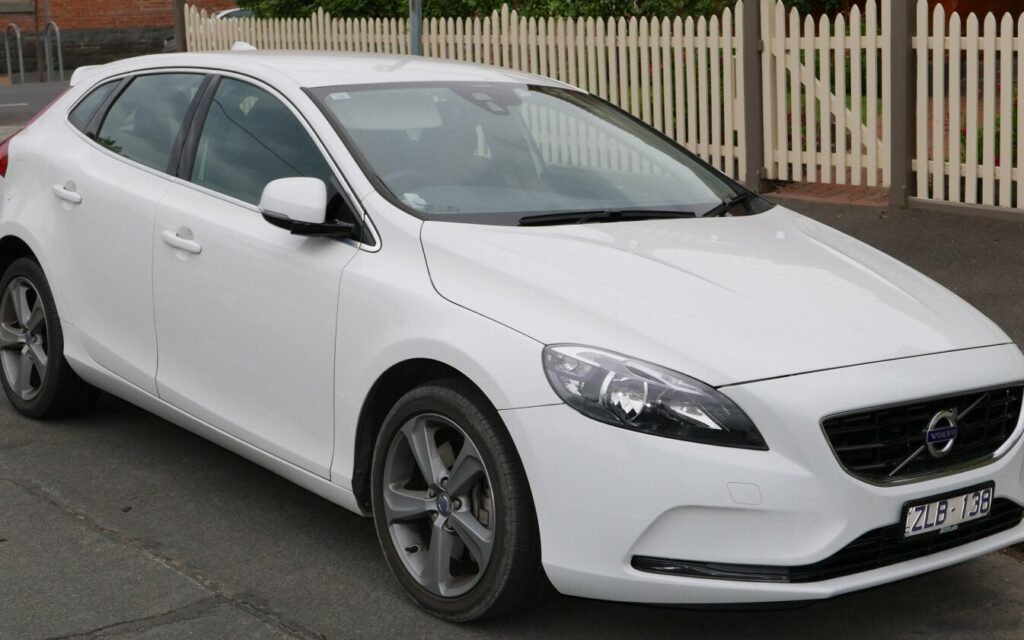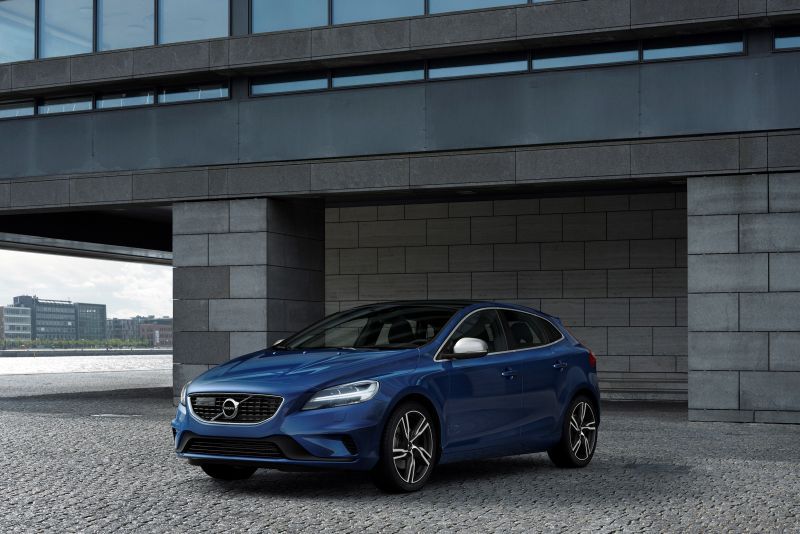
The Volvo V40 (facelift 2016) 2.0 D3 (150 Hp) Geartronic represents Volvo’s offering in the competitive European premium compact hatchback segment. Introduced with the facelift in 2016, this variant showcased Volvo’s dedication to sophisticated design, advanced safety features, and efficient powertrain options. While never officially sold in the United States, the V40 was a key model for Volvo in Europe and international markets, providing a compelling alternative to established German competitors. This specific iteration, produced from 2016 to 2018, combined a robust diesel engine with a smooth automatic transmission, targeting buyers who valued Scandinavian understated luxury, practicality, and a responsible environmental footprint.
Powertrain & Engine Architecture
The Volvo V40 (facelift 2016) 2.0 D3 (150 Hp) Geartronic is powered by a modern 2.0-liter (1969 cm3 or 120.16 cubic inches) inline four-cylinder diesel engine, designated internally as D4204T9. This engine is a product of Volvo’s Drive-E powertrain philosophy, emphasizing efficiency and strong torque delivery. Equipped with a turbocharger and intercooler, the engine produces 150 horsepower at 3750 revolutions per minute (rpm). Crucially for a diesel, it generates a substantial 320 Nm (236.02 lb-ft) of torque, available across a broad and usable range from 1750 to 3000 rpm. This torque profile provides strong acceleration and effortless cruising, particularly beneficial for highway driving and overtaking maneuvers.
The D3 engine is paired with Volvo’s 6-speed Geartronic automatic transmission, a conventional torque converter automatic known for its smooth shifts and reliability. This transmission is designed to provide seamless gear changes and contribute to the overall refined driving experience. The combination allows the V40 to accelerate from 0 to 62 miles per hour (0-100 km/h) in 8.4 seconds, with an estimated 0-60 mph sprint in approximately 8 seconds. The top speed is rated at 130.49 mph (210 km/h), making it capable on European highways. The Geartronic transmission features adaptive shift logic, adjusting shift points based on driving style and conditions.
Fuel economy was a significant selling point for this diesel variant. The V40 2.0 D3 Geartronic achieves a combined fuel consumption of 4.0 liters per 100 kilometers, which translates to approximately 58.8 US miles per gallon. Urban consumption stands at 4.6 l/100 km (51.1 US mpg), while extra-urban driving yields an even more economical 3.7 l/100 km (63.6 US mpg). With CO2 emissions of just 104 g/km, the vehicle met the stringent Euro 6 emission standard, highlighting its environmental consciousness. The engine also features a diesel particulate filter (DPF), crucial for reducing harmful emissions.
Driving Characteristics
The 150 hp diesel engine paired with the 6-speed automatic transmission delivers a comfortable and refined driving experience. While not a performance-oriented setup, the V40 D3 Geartronic provides ample power for everyday driving and highway cruising. The broad torque band ensures responsive acceleration, even when fully loaded. Compared to the higher-output D4 or petrol variants, the D3 offers a more relaxed driving style, prioritizing fuel efficiency and smoothness over outright speed. The automatic transmission contributes to this relaxed feel, eliminating the need for constant gear changes. The gear ratios are tuned for optimal fuel economy and drivability, with a focus on maximizing torque in the lower gears for strong pull-away acceleration. Compared to a manual transmission, the Geartronic offers convenience, particularly in urban traffic, but may result in a slight reduction in fuel economy in some driving conditions.
Equipment & Trim Levels
The Volvo V40 (facelift 2016) 2.0 D3 Geartronic typically came equipped with a generous level of standard features. Interior upholstery generally consisted of premium cloth or leatherette, depending on the specific trim level. The dashboard featured a user-friendly Sensus Connect infotainment system with a color display, offering navigation, Bluetooth connectivity, and audio controls. Standard safety equipment included ABS (Anti-lock Braking System), Electronic Stability Control (ESC), multiple airbags, and City Safety, Volvo’s autonomous emergency braking system. Optional extras available for this trim included leather upholstery, a sunroof, parking sensors, a rear-view camera, and upgraded audio systems. Higher trim levels often included features like automatic climate control, heated seats, and rain-sensing wipers. The V40’s interior design emphasized Scandinavian minimalism, with clean lines and high-quality materials creating a comfortable and inviting cabin.
Chassis & Braking
The V40’s chassis was designed to provide a balanced ride and handling. The front suspension utilized an independent McPherson strut setup with coil springs and an anti-roll bar, while the rear featured an independent multi-link coil spring design. This configuration contributed to a comfortable ride quality and predictable handling characteristics. Braking was handled by ventilated discs at the front and solid discs at the rear, providing adequate stopping power for the vehicle’s weight class. The V40’s steering system was typically an electric power steering (EPS) system, offering light and precise steering feel. Stabilizer bars were fitted to both the front and rear axles to reduce body roll during cornering. The chassis was engineered to prioritize safety and stability, providing a secure and confident driving experience.
Market Reception & Comparison
Critics generally viewed the Volvo V40 (facelift 2016) 2.0 D3 Geartronic favorably, praising its stylish design, comfortable interior, and strong safety credentials. The diesel engine was commended for its fuel efficiency and strong torque delivery, making it well-suited for long-distance driving. However, some critics noted that the V40’s infotainment system was not as advanced as those found in some of its German rivals. Compared to the petrol-powered V40 variants, the D3 offered significantly better fuel economy, but slightly less outright performance. Compared to the higher-output D4 diesel, the D3 provided a more affordable entry point into the V40 range, albeit with a modest reduction in power. In terms of reliability, the V40 generally proved to be a dependable vehicle, with the diesel engine and Geartronic transmission being relatively robust. However, like all modern vehicles, it was susceptible to occasional issues with electronic components.
Technical Specifications
| Category | Specification |
| General Information | |
| Brand | Volvo |
| Model | V40 |
| Generation | V40 (facelift 2016) |
| Type (Engine) | 2.0 D3 (150 Hp) Geartronic |
| Start of production | 2016 year |
| End of production | 2018 year |
| Powertrain Architecture | Internal Combustion engine |
| Body type | Hatchback |
| Seats | 5 |
| Doors | 5 |
| Performance Specs | |
| Fuel consumption (economy) – urban | 4.6 l/100 km (51.1 US mpg) |
| Fuel consumption (economy) – extra urban | 3.7 l/100 km (63.6 US mpg) |
| Fuel consumption (economy) – combined | 4.0 l/100 km (58.8 US mpg) |
| CO2 emissions | 104 g/km |
| Fuel Type | Diesel |
| Acceleration 0 – 60 mph | 8 seconds |
| Acceleration 0 – 62 mph (0-100 km/h) | 8.4 seconds |
| Maximum speed | 210 km/h (130.49 mph) |
| Emission standard | Euro 6 |
| Weight-to-power ratio | 9.9 kg/Hp |
| Weight-to-torque ratio | 4.6 kg/Nm |
| Engine Specs | |
| Power | 150 Hp @ 3750 rpm |
| Power per liter | 76.2 Hp/l |
| Torque | 320 Nm (236.02 lb.-ft.) @ 1750-3000 rpm |
| Engine layout | Front, Transverse |
| Engine Model/Code | D4204T9 |
| Engine displacement | 1969 cm3 (2.0 liters / 120.16 cu. in.) |
| Number of cylinders | 4 |
| Engine configuration | Inline |
| Cylinder Bore | 82 mm (3.23 in.) |
| Piston Stroke | 93.2 mm (3.67 in.) |
| Compression ratio | 16:1 |
| Number of valves per cylinder | 4 |
| Fuel injection system | Diesel Commonrail |
| Engine aspiration | Turbocharger, Intercooler |
| Engine oil capacity | 5.2 l (5.49 US qt) |
| Coolant capacity | 8 l (8.45 US qt) |
| Engine systems | Particulate filter |
| Space, Volume and Weights | |
| Kerb Weight | 1486 kg (3276.07 lbs.) |
| Max. weight | 1980 kg (4365.15 lbs.) |
| Max load | 494 kg (1089.08 lbs.) |
| Trunk (boot) space – minimum | 335 l (11.83 cu. ft.) |
| Trunk (boot) space – maximum | 1500 l (52.97 cu. ft.) |
| Fuel tank capacity | 62 l (16.38 US gal) |
| Max. roof load | 75 kg (165.35 lbs.) |
| Permitted trailer load with brakes (12%) | 1500 kg (3306.93 lbs.) |
| Dimensions | |
| Length | 4369 mm (172.01 in.) |
| Width | 1783 mm (70.2 in.) |
| Width including mirrors | 2041 mm (80.35 in.) |
| Height | 1439 mm (56.65 in.) |
| Wheelbase | 2647 mm (104.21 in.) |
| Front track | 1559 mm (61.38 in.) |
| Rear (Back) track | 1546 mm (60.87 in.) |
| Ride height (ground clearance) | 133-144 mm (5.24 – 5.67 in.) |
| Drag coefficient (Cd) | 0.32 |
| Minimum turning circle (turning diameter) | 10.8 m (35.43 ft.) |
| Drivetrain, Brakes and Suspension Specs | |
| Drivetrain Architecture | The Internal combustion engine (ICE) drives the front wheels of the vehicle. |
| Drive wheel | Front wheel drive |
| Number of gears and type of gearbox | 6 gears, automatic transmission Geartronic |
| Front suspension | Independent, type McPherson with coil spring and anti-roll bar |
| Rear suspension | Independent coil spring |
| Front brakes | Ventilated discs |
| Rear brakes | Disc |
| Assisting systems | ABS (Anti-lock braking system) |
| Steering type | Steering rack and pinion |
| Power steering | Electric Steering |
Legacy
The Volvo V40 (facelift 2016) 2.0 D3 Geartronic continues to be a popular choice in the used car market, particularly for buyers seeking a safe, comfortable, and fuel-efficient compact hatchback. The D4204T9 diesel engine, when properly maintained, is known for its durability and reliability. The Geartronic automatic transmission also has a good reputation for longevity. Common maintenance items include regular oil changes, filter replacements, and DPF maintenance. While older examples may require attention to suspension components and electronic systems, the V40 generally holds up well over time. Its enduring appeal lies in its blend of Scandinavian design, robust build quality, and Volvo’s unwavering commitment to safety, making it a compelling option for those seeking a premium compact car with a proven track record.