
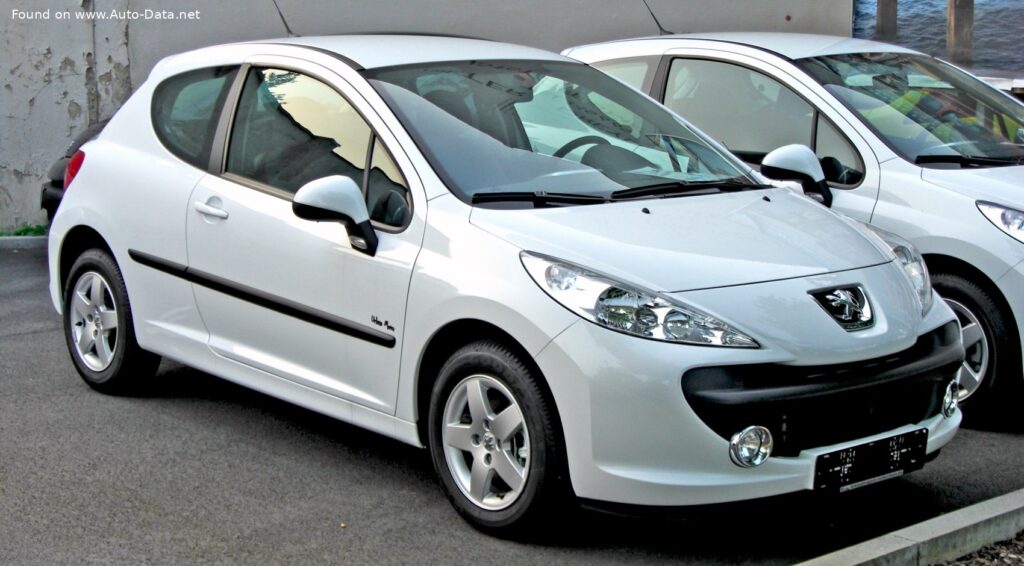
The Peugeot 207 1.6 THP (150 Hp) represents a notable iteration within the European B-segment, or supermini, market. Produced by Peugeot from 2006 to 2009 for this specific powertrain configuration, the 207 was designed as a successor to the highly successful Peugeot 206. While never officially sold in the United States, the 207 played a key role in Peugeot’s global strategy, particularly in Europe and Asia, where it competed with popular compact cars. The 1.6 THP variant, with its 150 horsepower output, positioned the 207 as a sporty and engaging option, offering a balance of performance, efficiency, and practicality in a hatchback package. It was available in both 3-door and 5-door body styles.
Peugeot 207 1.6 THP (150 Hp): Overview and Positioning
Launched in 2006, the Peugeot 207 was larger and more refined than the 206, featuring improved safety, enhanced driving dynamics, and a modern design. The 1.6 THP (Turbo High Pressure) engine variant occupied a mid-range position within the 207 lineup. It sat above the base models powered by smaller displacement, naturally aspirated engines (like the 1.4L) and below the more focused diesel options (such as the 1.6 HDi). This trim level targeted drivers seeking a more spirited driving experience without the higher price tag associated with the top-of-the-line models or the fuel economy focus of the diesel variants. It appealed to those who wanted a stylish, well-equipped, and relatively powerful supermini for everyday use.
Powertrain & Engine Architecture
The heart of the Peugeot 207 1.6 THP (150 Hp) is the 1.6-liter (1598 cm3 or 97.52 cu. in.) inline-four gasoline engine, designated as the 5FX EP6DT. This engine was the result of a collaborative effort between PSA Peugeot Citroën and BMW, forming the “Prince” engine family. The engine utilizes a single-scroll turbocharger with an intercooler to boost power output across the rev range. Key features include direct fuel injection, ensuring precise fuel delivery and improved combustion efficiency, and a DOHC-VVT (Double Overhead Camshaft with Variable Valve Timing) valvetrain, optimizing engine performance and responsiveness.
The engine produces 150 horsepower at 6000 rpm, resulting in a power-per-liter output of 93.9 Hp/l. It generates 177.01 lb.-ft. of torque, available from a low 1400 rpm and sustained up to 3500 rpm. This broad torque band contributes to the car’s agile feel and excellent drivability. The engine is front-mounted and transverse, driving the front wheels. The 207 1.6 THP was typically paired with a 5-speed manual transmission, although a 4-speed automatic transmission was also available, albeit less common. The automatic transmission, while offering convenience, slightly impacted performance and fuel economy compared to the manual version.
Driving Characteristics
The Peugeot 207 1.6 THP (150 Hp) delivers a noticeably more engaging driving experience than the base engine options. The turbocharger provides a surge of power in the mid-range, making overtaking and merging onto highways effortless. The broad torque band minimizes the need for frequent downshifts, contributing to relaxed cruising. Compared to the manual transmission version, the automatic transmission offers smoother gear changes but at the expense of some responsiveness. The 0-60 mph acceleration time of approximately 7.7 seconds (0-100 km/h in 8.1 seconds) is respectable for a supermini. The steering is precise and well-weighted, providing good feedback to the driver. While not as overtly sporty as some rivals, the 207 1.6 THP offers a comfortable and confident ride, making it well-suited for both city driving and longer journeys.
Equipment & Trim Levels
The 1.6 THP variant of the Peugeot 207 typically came with a higher level of standard equipment compared to the base models. This often included features such as air conditioning, power windows, power door locks, a CD player with MP3 compatibility, and alloy wheels. Sport trim levels added features like sport seats, leather-wrapped steering wheel, and upgraded interior trim. Optional extras included a panoramic sunroof, automatic climate control, parking sensors, and a premium audio system. Interior upholstery typically consisted of cloth seats, with leather options available on higher trim levels. The dashboard layout was modern and functional, with a clear instrument cluster and logically placed controls.
Chassis & Braking
The Peugeot 207 1.6 THP utilizes an independent McPherson strut front suspension with coil springs and an anti-roll bar, providing responsive handling and good ride comfort. The rear suspension employs a semi-independent setup with coil springs and an elastic beam. This configuration strikes a balance between comfort and handling, making the 207 enjoyable to drive on a variety of road surfaces. Braking duties are handled by ventilated discs at the front and solid discs at the rear, complemented by an Anti-lock Braking System (ABS) for enhanced safety. The car typically rides on 17-inch wheel rims fitted with 205/45 R17 tires, contributing to its sporty appearance and improved grip. The turning circle is relatively tight at 34.12 feet (10.4 meters), making it easy to maneuver in urban environments.
Market Reception & Comparison
The Peugeot 207 1.6 THP (150 Hp) received generally positive reviews from automotive critics. It was praised for its stylish design, comfortable ride, and engaging driving experience. The 1.6 THP engine was particularly well-regarded for its power and efficiency. Compared to other trims in the 207 lineup, the 1.6 THP offered a significant performance advantage. Fuel economy was respectable, with a combined rating of 33.6 US mpg (7 l/100 km), although slightly lower than the diesel variants. Reliability was generally good, although some owners reported minor issues with the turbocharger and fuel injection system. Compared to rivals like the Renault Clio and Ford Fiesta, the 207 1.6 THP offered a more refined and sophisticated driving experience, but at a slightly higher price point.
Technical Specifications
| Category | Specification |
| Brand | Peugeot |
| Model | 207 |
| Generation | 207 |
| Type (Engine) | 1.6 THP (150 Hp) |
| Start of Production | 2006 year |
| End of Production | 2009 year |
| Powertrain Architecture | Internal Combustion engine |
| Body type | Hatchback |
| Seats | 5 |
| Doors | 3-5 |
| Fuel consumption (economy) – urban | 9.3 l/100 km (25.3 US mpg) |
| Fuel consumption (economy) – extra urban | 5.6 l/100 km (42 US mpg) |
| Fuel consumption (economy) – combined | 7 l/100 km (33.6 US mpg) |
| CO2 emissions | 166 g/km |
| Fuel Type | Petrol (Gasoline) |
| Acceleration 0 – 60 mph (Calculated) | 7.7 sec |
| Acceleration 0 – 100 km/h | 8.1 sec |
| Maximum speed | 210 km/h (130.49 mph) |
| Emission standard | Euro 4 |
| Weight-to-power ratio | 8.5 kg/Hp (117.1 Hp/tonne) |
| Engine Specs | |
| Power | 150 Hp @ 6000 rpm |
| Power per liter | 93.9 Hp/l |
| Torque | 240 Nm @ 1400-3500 rpm (177.01 lb.-ft.) |
| Engine layout | Front, Transverse |
| Engine Model/Code | 5FX EP6DT |
| Engine displacement | 1598 cm3 (97.52 cu. in.) |
| Number of cylinders | 4 |
| Engine configuration | Inline |
| Cylinder Bore | 77 mm (3.03 in.) |
| Piston Stroke | 85.8 mm (3.38 in.) |
| Compression ratio | 10.5:1 |
| Number of valves per cylinder | 4 |
| Fuel injection system | Direct injection |
| Engine aspiration | Turbocharger, Intercooler |
| Valvetrain | DOHC-VVT |
| Kerb Weight | 1281 kg (2824.12 lbs.) |
Legacy
The Peugeot 207 1.6 THP (150 Hp) has proven to be a relatively reliable powertrain in the long term, although regular maintenance is crucial. The “Prince” engine family, while initially experiencing some issues with carbon buildup on the intake valves, has generally proven durable when properly maintained. In the used car market, the 207 1.6 THP remains a popular choice for buyers seeking a stylish, well-equipped, and relatively affordable supermini. Its combination of performance, efficiency, and practicality continues to appeal to a wide range of drivers. While newer models like the Peugeot 208 have surpassed it in terms of technology and refinement, the 207 1.6 THP remains a significant and fondly remembered model in Peugeot’s history.
