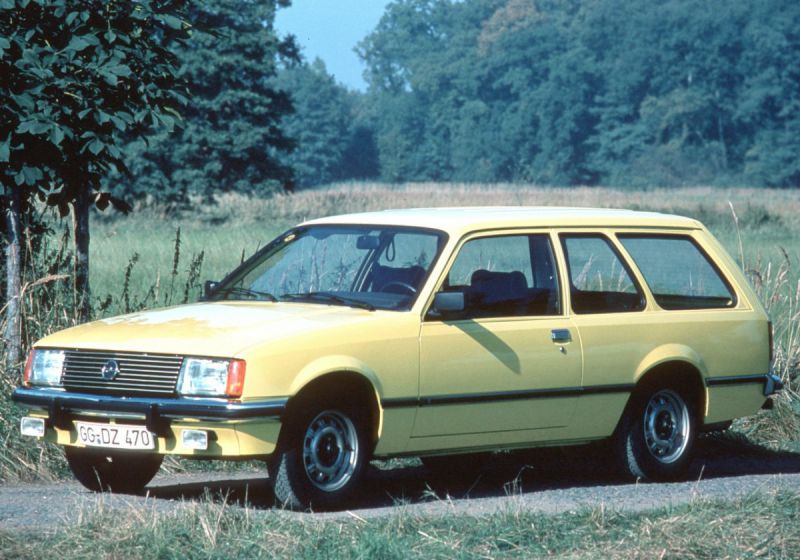
The Opel Rekord E Caravan 2.3 D (65 Hp) Automatic represents a significant chapter in European automotive history, embodying the practical, reliable, and family-oriented transportation needs of its era. Launched in 1978 as part of the Rekord E generation, this particular variant combined a robust diesel powertrain with the versatile station wagon (estate) body style, making it an indispensable vehicle across the continent for both private owners and fleets. While never officially sold in the United States, the Rekord E Caravan played a crucial role in Opel’s lineup, serving as a mid-size segment leader and a testament to German engineering for durability and utility. Its production run from 1978 to 1982 saw it become a familiar sight on European roads, prized for its spacious interior, ample cargo capacity, and economical diesel operation.
The Rekord E Caravan: Positioning and Overview
The Rekord E, which succeeded the Rekord D, was a thoroughly modernized design for its time, featuring improved aerodynamics and a more contemporary aesthetic. The Caravan (station wagon) version, in particular, was designed with practicality at its core, offering significant hauling capabilities that were essential for families and businesses alike. The 2.3 D (65 Hp) Automatic model, with its diesel engine and convenient automatic transmission, offered a compelling package of fuel efficiency and ease of driving, albeit with a performance profile typical of diesel vehicles from that period. This variant occupied a middle ground within the Rekord E lineup. It was positioned above the base gasoline-powered models in terms of price and perceived durability, but below the more powerful and luxurious gasoline variants. It targeted buyers who prioritized fuel economy, load-carrying capacity, and ease of use over outright performance.
Powertrain & Engine Architecture
At the heart of the Opel Rekord E Caravan 2.3 D (65 Hp) Automatic was Opel’s naturally aspirated 2.3-liter (2260 cm3 or 137.91 cu. in.) inline-four diesel engine, designated with the model code 23D. This powerplant was engineered for reliability and fuel economy, priorities that were paramount for European buyers in the late 1970s and early 1980s, especially in the wake of the oil crises. The engine produced a modest 65 horsepower at 4200 rpm, delivering its peak torque of 93.67 lb.-ft. (127 Nm) at a relatively low 2500 rpm. This low-end torque characteristic was ideal for a utility-focused vehicle like the Caravan, aiding in pulling power and making it feel less strained under load.
The engine featured a SOHC (Single Overhead Camshaft) valvetrain with two valves per cylinder, a common and robust design for the era. Its precombustion chamber injection system was typical for naturally aspirated diesels of the period, contributing to its renowned durability and ability to run on various qualities of diesel fuel. With a high compression ratio of 22:1, the engine was designed for efficient combustion. The 23D engine was known for its simplicity and relatively easy maintenance, although diesel engines of this era generally required more frequent valve adjustments than their gasoline counterparts.
Power was transmitted to the rear wheels via a 3-speed automatic transmission. This transmission, while not technologically advanced by modern standards, was known for its robustness and smooth operation. It featured a conventional torque converter and planetary gearsets. The gear ratios were optimized for fuel efficiency and low-speed torque, rather than rapid acceleration. The automatic transmission eliminated the need for manual gear changes, making it particularly appealing to drivers who frequently navigated congested city streets or long highway journeys.
Driving Characteristics
The driving experience in the Opel Rekord E Caravan 2.3 D (65 Hp) Automatic was characterized by its relaxed and unhurried nature. Acceleration from 0 to 60 mph took approximately 27.6 seconds, and its top speed was around 82 mph (132 km/h). These numbers might seem sluggish by today’s standards, but for a family station wagon with a diesel engine in the late 70s, they were perfectly adequate for cruising on European highways and navigating city traffic. The 3-speed automatic transmission contributed to a smooth, if not particularly sporty, driving experience. The gear changes were noticeable but generally well-timed. The engine’s low-end torque provided sufficient power for everyday driving, but overtaking maneuvers required careful planning. Compared to the gasoline-powered Rekord E variants, the diesel automatic offered significantly better fuel economy but considerably less performance. The manual transmission versions of the 2.3 D offered slightly improved acceleration and responsiveness, while the larger gasoline engines provided a much more spirited driving experience.
Equipment & Trim Levels
The Rekord E Caravan 2.3 D (65 Hp) Automatic typically came with a fairly standard level of equipment, reflecting its position as a mid-range model. Standard features included cloth upholstery, a basic AM/FM radio, and manual windows and door locks. The dashboard was functional and straightforward, with clearly labeled gauges and controls. Optional extras included a sunroof, upgraded audio systems, and power windows. The interior trim was generally durable and designed to withstand the rigors of family life. The seats were comfortable and supportive, providing adequate cushioning for long journeys. The Caravan’s spacious interior and large cargo area were its primary selling points, making it a practical and versatile vehicle for families and businesses.
Chassis & Braking
The Rekord E Caravan featured a conventional body-on-frame construction, providing a robust and durable chassis. The suspension consisted of independent front suspension with MacPherson struts and a rigid rear axle with leaf springs. This setup provided a comfortable ride, although it was not particularly sporty. The steering was power-assisted, making it relatively easy to maneuver, even at low speeds. Braking was handled by ventilated discs at the front and drum brakes at the rear, a common setup for cars of this class and period, offering adequate stopping power. The rear drum brakes were a cost-saving measure and were less effective than disc brakes, particularly under heavy braking. The vehicle’s stabilizer bar thickness was moderate, providing a reasonable balance between ride comfort and handling stability.
Market Reception & Comparison
Critics generally viewed the Opel Rekord E Caravan 2.3 D (65 Hp) Automatic as a practical and reliable family car. Its fuel economy was praised, particularly in light of the rising cost of gasoline during the late 1970s and early 1980s. However, its performance was often criticized as being sluggish, especially compared to its gasoline-powered counterparts. The automatic transmission was appreciated for its convenience, but some reviewers noted that it could feel somewhat unresponsive at times. Compared to other trims in the Rekord E lineup, the 2.3 D Automatic offered the best fuel economy but the lowest performance. It was a popular choice for buyers who prioritized practicality and affordability over outright speed and luxury. In terms of reliability, the 23D diesel engine was generally considered to be very durable, although it required regular maintenance to prevent issues with the fuel injection system and valve train.
Technical Specifications
| General Information | |
| Brand | Opel |
| Model | Rekord E Caravan |
| Type (Engine) | 2.3 D (65 Hp) Automatic |
| Start of Production | 1978 year |
| End of Production | 1982 year |
| Powertrain Architecture | Internal Combustion engine |
| Body Type | Station wagon (estate) |
| Seats | 5 |
| Doors | 3-5 |
| Performance Specifications | |
| Fuel Consumption (combined) | 9.4 l/100 km (25 US mpg, 30.1 UK mpg) |
| Fuel Type | Diesel |
| Acceleration 0 – 60 mph | 27.6 sec |
| Acceleration 0 – 62 mph (0 – 100 km/h) | 29 sec |
| Maximum Speed | 82.02 mph (132 km/h) |
| Weight-to-power ratio | 19.8 kg/Hp, 50.4 Hp/tonne |
| Weight-to-torque ratio | 10.2 kg/Nm, 98.4 Nm/tonne |
| Engine Specifications | |
| Power | 65 Hp @ 4200 rpm |
| Power per liter | 28.8 Hp/l |
| Torque | 93.67 lb.-ft. (127 Nm) @ 2500 rpm |
| Engine Model/Code | 23D |
| Engine Displacement | 2260 cm3 (2.3 Liters, 137.91 cu. in.) |
| Number of Cylinders | 4 |
| Engine Configuration | Inline |
| Cylinder Bore | 3.62 in. (92 mm) |
| Piston Stroke | 3.35 in. (85 mm) |
| Compression Ratio | 22:1 |
| Number of Valves per Cylinder | 2 |
| Fuel Injection System | Precombustion chamber injection |
| Engine Aspiration | Naturally aspirated engine |
| Valvetrain | SOHC |
| Space, Volume and Weights | |
| Kerb Weight | 2843.96 lbs (1290 kg) |
| Max. Weight | 4166.74 lbs (1890 kg) |
| Max Load | 1322.77 lbs (600 kg) |
| Trunk (boot) Space – Minimum | 31.11 cu. ft. (881 l) |
| Fuel Tank Capacity | 18.49 US gal (70 l) |
| Permitted Trailer Load with Brakes (12%) | 2755.78 lbs (1250 kg) |
| Permitted Trailer Load without Brakes | 1444.03 lbs (655 kg) |
| Dimensions | |
| Length | 181.89 in. (4620 mm) |
| Width | 67.95 in. (1726 mm) |
| Height | 57.87 in. (1470 mm) |
| Wheelbase | 105.04 in. (2668 mm) |
| Front Track | 56.5 in. (1435 mm) |
| Rear (Back) Track | 55.59 in. (1412 mm) |
| Drag Coefficient (Cd) | 0.48 |
| Minimum Turning Circle | 36.75 ft. (11.2 m) |
| Drivetrain, Brakes and Suspension | |
| Drivetrain Architecture | The Internal combustion engine (ICE) drives the rear wheels of the vehicle. |
| Drive Wheel | Rear wheel drive |
| Number of Gears and Type of Gearbox | 3 gears, automatic transmission |
| Front Brakes | Ventilated discs |
| Rear Brakes | Drum |
Legacy
The Opel Rekord E Caravan 2.3 D (65 Hp) Automatic, like its Rekord predecessors, solidified Opel’s reputation as a manufacturer of dependable, practical, and affordable family cars in Europe. The 23D diesel engine, while not known for its high performance, proved to be remarkably durable, with many examples exceeding 200,000 miles (320,000 km) with proper maintenance. Today, the Rekord E Caravan is a relatively rare sight on the road, but it remains a popular choice among classic car enthusiasts who appreciate its simplicity, reliability, and spaciousness. Parts availability can be a challenge, but many components are still available through specialist suppliers. The Rekord E Caravan 2.3 D Automatic represents a significant piece of European automotive history, a testament to a time when practicality and durability were valued above all else.