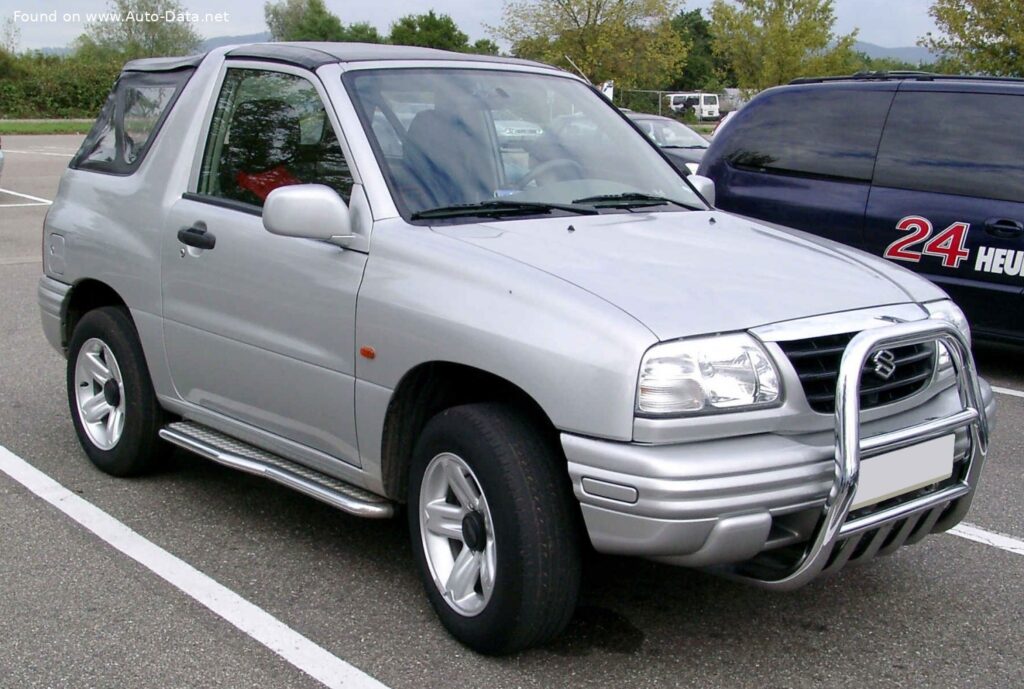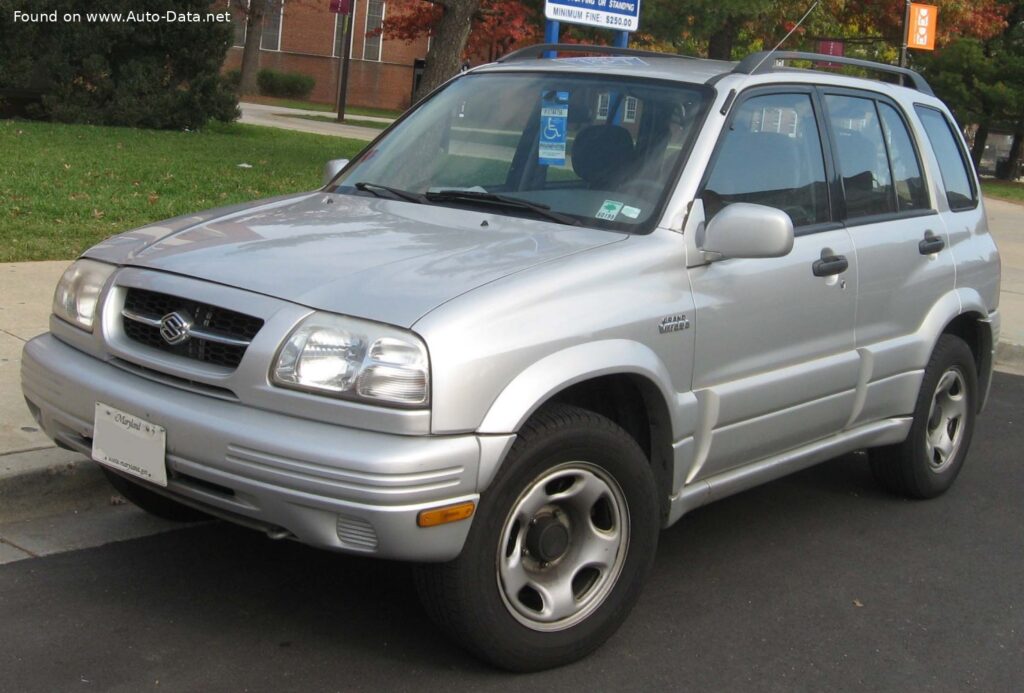
The Suzuki Grand Vitara (FT,GT) 2.0 TD (3 dr) (87 Hp) represents a significant chapter in Suzuki’s expansion into the compact SUV market, produced between 1998 and 2003. Building upon the foundation laid by the earlier Vitara (known as the Sidekick in North America), the Grand Vitara offered a more refined driving experience, improved on-road manners, and retained the robust off-road capability for which Suzuki was becoming renowned. While a range of gasoline engines were available globally, the 2.0 TD variant, equipped with a turbocharged diesel engine, was particularly important in European and Asian markets where diesel powertrains were favored for their fuel efficiency, torque, and durability. This three-door configuration emphasized agility and a more adventurous character, positioning it as a versatile vehicle suitable for both urban commuting and challenging off-road excursions.
Powertrain & Engine Architecture
The Suzuki Grand Vitara (FT,GT) 2.0 TD (3 dr) (87 Hp) was powered by a 2.0-liter (1998 cm³ or 121.93 cubic inches) inline four-cylinder turbocharged diesel engine, internally designated as the RFM. This engine was engineered with a focus on reliability and torque production, delivering 87 horsepower at 4000 rpm. While the horsepower figure may seem modest by modern standards, the engine’s strength lay in its torque output of 216 Nm (159.31 lb.-ft.) available at a low 2000 rpm. This low-end torque was critical for off-road driving, towing, and general utility, enabling strong pulling power from a standstill or at low speeds without frequent gear changes.
The RFM engine utilized a precombustion chamber injection system, a common diesel technology of the era. This system promoted smoother combustion and reduced engine noise compared to direct injection systems, although at a slight trade-off in efficiency. A turbocharger further enhanced performance, boosting both power and torque across the engine’s operating range. The engine featured a high compression ratio of 20.9:1, typical for diesel engines, designed for efficient fuel consumption. Power was transmitted to all four wheels through a robust all-wheel-drive (4×4) system coupled with a 5-speed manual transmission. This combination provided the driver with direct control over power delivery, essential for navigating difficult terrain. The manual gearbox was well-matched to the engine’s torque characteristics, allowing the driver to maintain the engine within its optimal power band.
Performance Characteristics
The Grand Vitara 2.0 TD prioritized utility and off-road capability over outright speed. Acceleration from 0 to 60 mph took approximately 14.4 seconds, while 0 to 100 km/h was achieved in 15.2 seconds. The top speed was rated at 142 km/h (88.23 mph). These figures indicate adequate performance for highway cruising and overtaking, but the vehicle truly excelled in challenging conditions. The kerb weight of 1310 kg (2888.06 lbs) resulted in a weight-to-power ratio of 15.1 kg/Hp, or 66.4 Hp/tonne, highlighting its utilitarian design. The weight-to-torque ratio was 6.1 kg/Nm, or 164.9 Nm/tonne, further emphasizing the engine’s strong low-end pull.
Equipment & Trim Levels
The Suzuki Grand Vitara (FT,GT) 2.0 TD (3 dr) (87 Hp) was generally positioned as a mid-range offering within the Grand Vitara lineup, bridging the gap between the more basic gasoline-powered models and the potentially more luxurious or higher-performance variants available in certain markets. Standard equipment typically included power steering, central locking, and basic instrumentation. Interior upholstery was typically a durable cloth material, designed to withstand the rigors of outdoor use. The dashboard layout was functional and straightforward, prioritizing ease of use over aesthetic flair. Optional extras varied by market but could include air conditioning, power windows, and upgraded audio systems. The three-door body style inherently limited rear passenger space compared to the five-door model, but the rear seats were still reasonably comfortable for shorter journeys.
Chassis & Braking
The Grand Vitara (FT,GT) employed a traditional body-on-frame construction, a hallmark of true off-road vehicles, providing superior rigidity and durability compared to unibody designs, particularly when traversing rough terrain. The suspension system featured spring struts at the front and coil springs at the rear, a robust combination offering both on-road comfort and off-road articulation. Braking was handled by ventilated discs at the front and drum brakes at the rear, a common setup for compact SUVs of that era. An Anti-lock Braking System (ABS) was included as a safety feature, preventing wheel lock-up during hard braking. The steering system utilized a rack and pinion setup with hydraulic power steering, providing direct feedback and ease of maneuverability. The vehicle was equipped with 195/80 R15 tires mounted on 15-inch wheels, a practical size for both on- and off-road conditions.
Market Reception & Comparison
Critics generally viewed the Suzuki Grand Vitara (FT,GT) 2.0 TD (3 dr) (87 Hp) favorably, praising its robust construction, capable 4×4 system, and fuel-efficient diesel engine. The three-door model was particularly appreciated for its agility and maneuverability, making it well-suited for navigating narrow trails and urban environments. Compared to the gasoline-powered Grand Vitara variants, the 2.0 TD offered superior torque and fuel economy, making it a more practical choice for those who frequently towed or drove long distances. However, the diesel engine was generally considered to be noisier and less refined than the gasoline alternatives. Reliability was generally good, with the RFM diesel engine proving to be durable and long-lasting when properly maintained. Fuel economy was a strong point, typically ranging from 35 to 45 mpg depending on driving conditions. Compared to competitors like the Land Rover Freelander and Mitsubishi Pajero Pinin, the Grand Vitara offered a more affordable price point and a more straightforward, utilitarian approach to off-road capability.
Technical Specifications: Suzuki Grand Vitara (FT,GT) 2.0 TD (3 dr) (87 Hp)
| Category | Specification |
| General Information | |
| Brand | Suzuki |
| Model | Grand Vitara |
| Generation | Grand Vitara (FT,GT) |
| Type (Engine) | 2.0 TD (3 dr) (87 Hp) |
| Production Start | 1998 year |
| Production End | 2003 year |
| Powertrain Architecture | Internal Combustion Engine |
| Body Type | SUV, 3 Doors, 4 Seats |
| Seats | 4 |
| Doors | 3 |
| Performance Specs | |
| Fuel Type | Diesel |
| Acceleration 0-60 mph | 14.4 sec |
| Acceleration 0-100 km/h | 15.2 sec |
| Maximum Speed | 142 km/h (88.23 mph) |
| Weight-to-Power Ratio | 15.1 kg/Hp (66.4 Hp/tonne) |
| Weight-to-Torque Ratio | 6.1 kg/Nm (164.9 Nm/tonne) |
| Engine Specs | |
| Power | 87 Hp @ 4000 rpm |
| Power per Liter | 43.5 Hp/l |
| Torque | 216 Nm @ 2000 rpm (159.31 lb.-ft. @ 2000 rpm) |
| Engine Layout | Front, Longitudinal |
| Engine Model/Code | RFM |
| Engine Displacement | 1998 cm³ (2.0 Liters / 121.93 cu. in.) |
| Number of Cylinders | 4 |
| Engine Configuration | Inline |
| Cylinder Bore | 86 mm (3.39 in.) |
| Piston Stroke | 86 mm (3.39 in.) |
| Compression Ratio | 20.9:1 |
| Valves per Cylinder | 2 |
| Fuel Injection System | Precombustion Chamber Injection |
| Engine Aspiration | Turbocharger |
| Engine Oil Capacity | 5.5 l (5.81 US qt) |
| Coolant Capacity | 6.5 l (6.87 US qt) |
| Space, Volume and Weights | |
| Kerb Weight | 1310 kg (2888.06 lbs) |
| Max. Weight | 1810 kg (3990.37 lbs) |
| Max Load | 500 kg (1102.31 lbs) |
| Trunk (Boot) Space – Minimum | 210 l (7.42 cu. ft.) |
| Trunk (Boot) Space – Maximum | 828 l (29.24 cu. ft.) |
| Fuel Tank Capacity | 56 l (14.79 US gal) |
| Dimensions | |
| Length | 3865 mm (152.17 in.) |
| Width | 1695 mm (66.73 in.) |
| Height | 1685 mm (66.34 in.) |
| Wheelbase | 2200 mm (86.61 in.) |
| Front Track | 1460 mm (57.48 in.) |
| Rear Track | 1460 mm (57.48 in.) |
| Minimum Turning Circle | 9.4 m (30.84 ft.) |
| Drivetrain, Brakes and Suspension Specs | |
| Drive Wheel | All Wheel Drive (4×4) |
| Gearbox | 5 gears, Manual Transmission |
| Front Suspension | Spring Strut |
| Rear Suspension | Coil Spring |
| Front Brakes | Ventilated Discs |
| Rear Brakes | Drum |
| Assisting Systems | ABS (Anti-lock Braking System) |
| Steering Type | Steering Rack and Pinion |
| Power Steering | Hydraulic Steering |
| Tires Size | 195/80 R15 |
| Wheel Rims Size | 15 inches |
Legacy
The Suzuki Grand Vitara (FT,GT) series, and specifically the 3-door 2.0 TD (87 Hp) model, established a strong reputation for practicality, affordability, and genuine off-road capability. It helped solidify Suzuki’s position as a significant player in the compact SUV market, demonstrating that a vehicle could be compact and efficient without sacrificing ruggedness or the ability to venture off-road. The RFM diesel engine, while not particularly powerful, proved to be durable and reliable when properly maintained. Today, these vehicles are sought after in the used car market by enthusiasts and those seeking a dependable and straightforward 4×4. While age and mileage inevitably require maintenance, the Grand Vitara’s robust construction and relatively simple mechanicals make it a viable option for those seeking a classic and capable SUV. Its enduring appeal is a testament to its well-engineered design and its ability to deliver on its promise of versatility and durability.