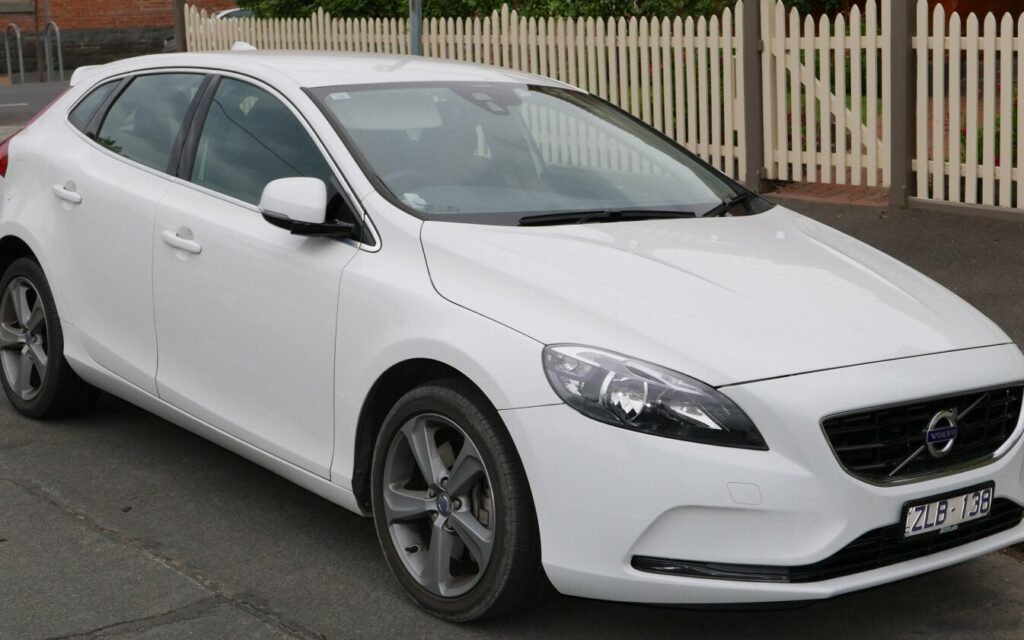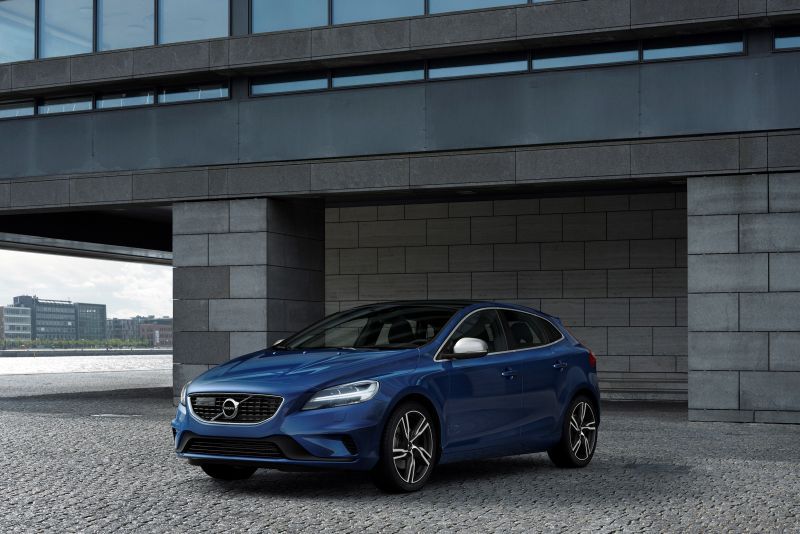
The Volvo V40 (facelift 2016) represents a significant chapter in Volvo’s modern history, serving as its entry into the fiercely competitive European premium compact hatchback segment. Introduced in 2012 and receiving a notable facelift in 2016, the V40 aimed to combine Volvo’s renowned safety credentials with dynamic styling and a refined driving experience. While never officially sold in the United States, the V40 played a crucial role in Volvo’s global strategy, particularly in Europe and Asia, where compact and efficient vehicles are highly sought after. This particular variant, the 2.0 D3 with 150 horsepower and a Geartronic automatic transmission, epitomized the blend of performance and economy that defined the V40’s appeal during its production run from 2016 to 2018.
The 2.0 D3 Powertrain
Under the hood, the Volvo V40 (facelift 2016) 2.0 D3 featured Volvo’s D4204T9 engine, a 2.0-liter (120.16 cubic inches) inline four-cylinder diesel unit. This engine was a testament to Volvo’s commitment to efficiency and robust performance, especially within the European market where diesel powertrains held a strong position for their fuel economy and torque characteristics. The D3 variant delivered a respectable 150 horsepower at 3750 rpm, providing ample power for daily driving and highway cruising. More impressively, it generated a substantial 236.02 lb-ft of torque across a broad range from 1750 to 3000 rpm, ensuring strong acceleration and flexible power delivery.
Power was sent to the front wheels via Volvo’s smooth 6-speed Geartronic automatic transmission. This combination allowed the V40 D3 to achieve a 0-60 mph acceleration time of approximately 8 seconds, making it a sprightly performer in its class. Its maximum speed topped out at 130.49 mph. Beyond outright speed, the V40 D3 truly excelled in fuel efficiency. The official combined fuel consumption rating was an impressive 60.3 US mpg, with extra-urban figures reaching 65.3 US mpg. This exceptional economy, coupled with CO2 emissions of just 101 g/km, ensured that the V40 D3 met stringent Euro 6 emission standards and offered a compelling package for cost-conscious yet performance-aware drivers. The engine also featured a common rail fuel injection system, a turbocharger, and an intercooler, all contributing to its refined operation and efficient power generation. A particulate filter was standard, further reducing emissions.
Engine Architecture and Fuel System
The D4204T9 engine utilizes a common rail direct injection system, delivering fuel directly into the combustion chamber at extremely high pressure. This optimizes combustion efficiency and reduces emissions. The engine also features a variable geometry turbocharger (VGT) which adjusts the turbine vanes to optimize boost pressure across the engine’s operating range, enhancing both low-end torque and high-end power. The valvetrain employs four valves per cylinder (DOHC – Double Overhead Camshaft), contributing to improved breathing and overall engine performance. The Geartronic automatic transmission is a conventional torque converter automatic, known for its smooth shifting characteristics. It features adaptive shift logic, learning the driver’s style to optimize gear selection for performance or fuel economy.
Design and Features of the Volvo V40 (facelift 2016)
The V40’s design, even after the 2016 facelift, maintained Volvo’s characteristic blend of Scandinavian elegance and understated sportiness. As a 5-door hatchback with seating for five, it offered practical versatility within a compact footprint. The facelift introduced Volvo’s signature “Thor’s Hammer” LED daytime running lights, first seen on the larger XC90, which brought a fresh and modern face to the V40, aligning it with the brand’s evolving design language. The overall silhouette was sleek, with a distinctive rising beltline and a tapering roofline that gave it a dynamic stance.
Inside, the V40 continued Volvo’s tradition of ergonomic and high-quality interiors. While not as overtly luxurious as some German rivals, the cabin was characterized by premium materials, excellent build quality, and a user-friendly layout. Features typical of a modern premium compact included a sophisticated infotainment system, comfortable seating, and a focus on driver assistance technologies. Safety, as always with Volvo, was paramount. The V40 came equipped with a comprehensive suite of safety features, including ABS (Anti-lock Braking System), multiple airbags, and Volvo’s pioneering City Safety system, which could automatically brake the car to avoid or mitigate low-speed collisions. The car’s dimensions, with a length of 172.01 inches, a width of 70.2 inches (80.35 inches including mirrors), and a height of 56.65 inches, made it agile in urban environments while maintaining a stable presence on the highway. The trunk offered a practical 11.83 cubic feet of space, expanding to 52.97 cubic feet with the rear seats folded, demonstrating its utility as a versatile family or individual vehicle.
Trim Levels and Equipment
The V40 D3 Automatic was typically offered in several trim levels, including Kinetic, Momentum, and Inscription. The Kinetic trim served as the entry-level option, featuring standard equipment such as alloy wheels, air conditioning, a basic infotainment system, and a comprehensive suite of safety features. The Momentum trim added features like leather upholstery, upgraded infotainment with a larger screen, and parking sensors. The Inscription trim represented the premium offering, with features such as premium leather, wood trim, a panoramic sunroof, and advanced driver assistance systems. Optional extras included navigation, a premium sound system, and adaptive cruise control.
Chassis & Braking
The V40 D3 utilized a McPherson strut front suspension and a multi-link rear suspension, providing a comfortable ride and responsive handling. The suspension was tuned to prioritize comfort, but still offered a reasonable level of control in corners. The front brakes were ventilated discs, while the rear brakes were solid discs. ABS (Anti-lock Braking System) was standard, along with Electronic Brake-force Distribution (EBD). The steering was electrically assisted, providing light and precise steering feel. Stabilizer bars were fitted to both the front and rear axles to reduce body roll during cornering.
Market Reception & Comparison
Critics generally praised the V40 D3 Automatic for its fuel efficiency, comfortable ride, and comprehensive safety features. However, some reviewers noted that its interior, while well-built, lacked the outright luxury of some of its German rivals. Compared to the higher-output V40 T5 (powered by a 2.5-liter five-cylinder gasoline engine), the D3 offered significantly less power but superior fuel economy. The D3 was also more affordable than the T5, making it an attractive option for budget-conscious buyers. Compared to the V40 D2 (a lower-powered diesel variant), the D3 provided a noticeable improvement in performance, making it a more enjoyable driving experience. The V40 D3’s fuel economy was competitive with other diesel-powered compact hatchbacks in its class, such as the Volkswagen Golf TDI and the Audi A3 TDI.
Technical Specifications
| Category | Specification |
| General Information | |
| Brand | Volvo |
| Model | V40 |
| Generation | V40 (facelift 2016) |
| Type (Engine) | 2.0 D3 (150 Hp) Geartronic |
| Start of production | 2016 year |
| End of production | 2018 year |
| Powertrain Architecture | Internal Combustion engine |
| Body type | Hatchback |
| Seats | 5 |
| Doors | 5 |
| Performance Specs | |
| Fuel consumption (economy) – urban | 4.5 l/100 km (52.3 US mpg) |
| Fuel consumption (economy) – extra urban | 3.6 l/100 km (65.3 US mpg) |
| Fuel consumption (economy) – combined | 3.9 l/100 km (60.3 US mpg) |
| CO2 emissions | 101 g/km |
| Fuel Type | Diesel |
| Acceleration 0 – 60 mph | 8 sec |
| Maximum speed | 210 km/h (130.49 mph) |
| Emission standard | Euro 6 |
| Engine Specs | |
| Power | 150 Hp @ 3750 rpm |
| Power per liter | 76.2 Hp/l |
| Torque | 320 Nm @ 1750-3000 rpm (236.02 lb.-ft.) |
| Engine layout | Front, Transverse |
| Engine Model/Code | D4204T9 |
| Engine displacement | 1969 cm3 (120.16 cu. in.) |
| Number of cylinders | 4 |
| Engine configuration | Inline |
| Cylinder Bore | 82 mm (3.23 in.) |
| Piston Stroke | 93.2 mm (3.67 in.) |
| Compression ratio | 16:1 |
| Number of valves per cylinder | 4 |
| Fuel injection system | Diesel Commonrail |
| Engine aspiration | Turbocharger, Intercooler |
| Engine oil capacity | 5.2 l (5.49 US qt) |
| Coolant | 8 l (8.45 US qt) |
| Engine systems | Particulate filter |
| Space, Volume and Weights | |
| Trunk (boot) space – minimum | 335 l (11.83 cu. ft.) |
| Trunk (boot) space – maximum | 1500 l (52.97 cu. ft.) |
| Fuel tank capacity | 40 l (10.57 US gal) |
| Max. roof load | 75 kg (165.35 lbs.) |
| Permitted trailer load with brakes (12%) | 1500 kg (3306.93 lbs.) |
| Dimensions | |
| Length | 4369 mm (172.01 in.) |
| Width | 1783 mm (70.2 in.) |
| Width including mirrors | 2041 mm (80.35 in.) |
| Height | 1439 mm (56.65 in.) |
| Wheelbase | 2647 mm (104.21 in.) |
| Front track | 1559 mm (61.38 in.) |
| Rear (Back) track | 1546 mm (60.87 in.) |
| Ride height (ground clearance) | 133-144 mm (5.24 – 5.67 in.) |
| Drag coefficient (Cd) | 0.32 |
| Minimum turning circle (turning diameter) | 10.8 m (35.43 ft.) |
| Drivetrain, Brakes and Suspension Specs | |
| Drivetrain Architecture | The Internal combustion engine (ICE) drives the front wheels of the vehicle. |
| Drive wheel | Front wheel drive |
| Number of gears and type of gearbox | 6 gears, automatic transmission Geartronic |
| Front suspension | Independent, type McPherson with coil spring and anti-roll bar |
| Rear suspension | Independent coil spring |
| Front brakes | Ventilated discs |
| Rear brakes | Disc |
| Assisting systems | ABS (Anti-lock braking system) |
| Steering type | Steering rack and pinion |
| Power steering | Electric Steering |
Legacy
The Volvo V40 (facelift 2016) occupied a critical niche in Volvo’s lineup. It was positioned as a premium compact alternative to established players like the Audi A3, BMW 1 Series, and Mercedes-Benz A-Class in Europe. While it might not have matched the ultimate dynamic prowess of some of its German rivals, the V40 carved out its own reputation based on distinctive Scandinavian design, exceptional safety features, and a comfortable, refined driving experience. Its strong diesel engine options, like the D3, offered a compelling blend of performance and outstanding fuel economy, which was a major selling point in its primary markets. The D4204T9 engine, when properly maintained, has proven to be a reliable unit. Common issues are typically related to the diesel particulate filter (DPF) if the vehicle is primarily used for short trips, and the occasional injector failure. The Geartronic transmission is also generally reliable, but regular fluid changes are essential for longevity. In the used car market today, the V40 D3 Automatic remains a popular choice for those seeking a stylish, safe, and fuel-efficient compact hatchback. Its relatively low running costs and proven reliability make it an attractive option for both private buyers and fleet operators.