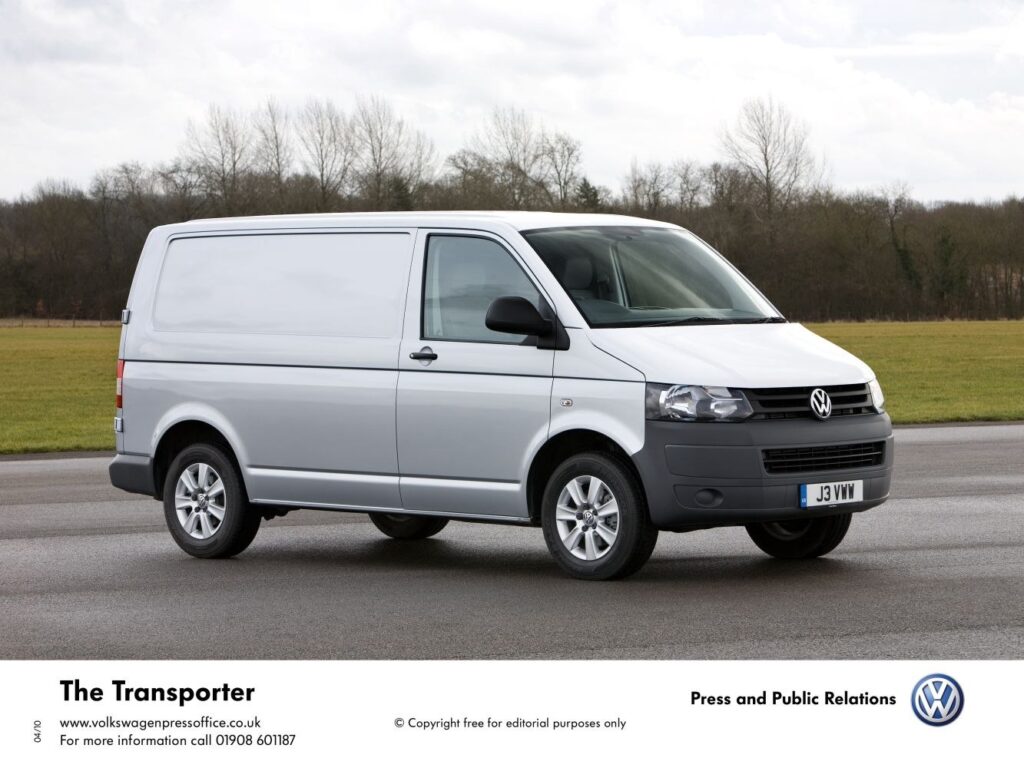
The Volkswagen Transporter, a name synonymous with versatility, durability, and practicality, represents a cornerstone of the light commercial vehicle segment globally, particularly in Europe. The fifth generation, known as the T5, received a significant facelift in 2009, ushering in a host of technological and aesthetic enhancements that solidified its position as a market leader. This article delves into the specifics of a particularly potent variant from this era: the Volkswagen Transporter (T5, facelift 2009) Panel Van 2.0 TDI (180 Hp) L1H2. While this specific panel van configuration was not primarily marketed in the United States, its influence and engineering prowess reflect Volkswagen’s global automotive expertise. In its primary European markets, the T5 facelift was celebrated for blending car-like driving dynamics with robust cargo-carrying capabilities, making it an indispensable tool for businesses and tradespeople alike. Produced from 2009 to 2015, this model continued the Transporter’s storied legacy, adapting to modern demands for efficiency and performance.
Powertrain & Engine Architecture
At the heart of the Volkswagen Transporter (T5, facelift 2009) Panel Van 2.0 TDI (180 Hp) L1H2 lies a sophisticated 2.0-liter (1968 cm3 / 120.09 cu. in.) inline four-cylinder diesel engine, designated with the code EA189 / CFCA. This powertrain is a testament to Volkswagen’s commitment to efficient and powerful diesel technology. Generating a substantial 180 horsepower at 4000 rpm, it delivers impressive thrust for a commercial vehicle. More critically for a van designed to haul loads, the engine produces a robust 295.02 lb.-ft. (400 Nm) of torque, available across a broad and usable range from 1500 to 2000 rpm. This low-end torque is crucial for effortless acceleration, especially when the van is fully loaded, and for navigating urban environments or challenging terrain.
A key technological highlight of this engine is its BiTurbo aspiration system combined with an intercooler. This twin-turbo setup ensures strong power delivery across the entire rev range, mitigating turbo lag and providing a more responsive driving experience. The common rail direct fuel injection system further enhances efficiency and refinement, contributing to cleaner combustion and reduced noise levels. With a compression ratio of 16.5:1 and a DOHC valvetrain with four valves per cylinder, the engine is engineered for optimal performance and fuel economy.
Mated to a precise 6-speed manual transmission, the engine routes its power to the front wheels, a common and efficient drivetrain architecture for this class of vehicle. This setup offers a good balance of traction and maneuverability. Despite its commercial utility, the Transporter L1H2 variant demonstrates surprising agility, capable of accelerating from 0 to 60 mph in a respectable 9.5 seconds and reaching a maximum speed of 114.33 mph (184 km/h).
Fuel efficiency, a critical factor for commercial operators, is well managed. The NEDC combined fuel consumption figures range from 7.5-7.8 liters per 100 km, which translates to an impressive 31.4 – 30.2 US mpg. Urban consumption is rated at 24.8 – 24 US mpg, while extra-urban driving sees figures of 36.8 – 35.1 US mpg. These figures, coupled with an 80-liter (21.13 US gal) fuel tank, provide a substantial operating range, minimizing downtime for refueling. Furthermore, the engine complies with Euro 5 emission standards, incorporating a particulate filter to reduce harmful emissions, reflecting Volkswagen’s commitment to environmental responsibility even in its commercial offerings.
Driving Characteristics
The 2.0 TDI 180 hp engine, when paired with the 6-speed manual transmission in the T5 Transporter, offered a noticeably more spirited driving experience compared to lower-powered variants. The broad torque curve meant that frequent downshifting wasn’t necessary, even when fully loaded. The BiTurbo setup minimized turbo lag, providing a responsive feel across the rev range. While not a sports van, the 180 hp model felt confident on highways and capable of overtaking maneuvers without significant hesitation. Compared to the 140 hp TDI, the 180 hp version offered a substantial performance boost, making it a preferred choice for drivers who frequently carried heavy loads or drove long distances. The gear ratios were well-chosen to maximize fuel efficiency while still providing ample power for acceleration. The manual transmission allowed for greater driver control, particularly in challenging conditions, compared to the available automatic options.
Equipment & Trim Levels
The Volkswagen Transporter (T5, facelift 2009) Panel Van 2.0 TDI (180 Hp) L1H2 was typically equipped with a functional, yet durable interior. Standard features included a driver’s airbag, ABS brakes, power steering, and a basic audio system. The cabin typically featured hard-wearing plastic trim and durable cloth upholstery. The driver’s seat was often adjustable for height and lumbar support. Optional extras included air conditioning, a more advanced audio system with Bluetooth connectivity, parking sensors, cruise control, and upgraded seating with more supportive cushioning. Higher trim levels might have included features like a multi-function steering wheel, electrically adjustable mirrors, and upgraded interior lighting. The focus remained on practicality and durability, with options geared towards enhancing driver comfort and convenience rather than luxury.
Chassis & Braking
The T5 Transporter’s chassis was designed to provide a comfortable ride and stable handling, even when carrying heavy loads. The front suspension featured an independent McPherson strut setup with coil springs and an anti-roll bar, while the rear employed an independent coil spring system with a transverse stabilizer and trailing arms. This sophisticated suspension ensured a comfortable ride even when unladen, and stable handling even with a full payload. Stopping power was provided by large ventilated disc brakes on both the front (340×32.5 mm) and rear (294×22 mm) axles, complemented by an Anti-lock Braking System (ABS) for enhanced safety and control in diverse driving conditions. The hydraulic power steering system, with its rack and pinion setup, offered precise control and good feedback, essential for maneuvering a large van in tight urban spaces. The vehicle’s turning circle of 39.04 ft (11.9 m) was commendable for its size, further aiding maneuverability.
Market Reception & Comparison
Critics generally praised the Volkswagen Transporter (T5, facelift 2009) for its robust build quality, refined driving dynamics, and efficient diesel engines. The 2.0 TDI 180 hp variant was particularly well-regarded for its strong performance and good fuel economy. Compared to other trims in the lineup, the 180 hp model offered a noticeable performance advantage, making it a popular choice for drivers who frequently carried heavy loads or drove long distances. Fuel economy was competitive with other diesel-powered vans in its class, and the T5’s reliability was generally considered to be above average. However, some critics noted that the T5 could be more expensive than some of its rivals, particularly when equipped with optional extras. The T5’s strong resale value helped to offset the higher initial cost for many buyers.
Technical Specifications
| Category | Specification |
| General Information | |
| Brand | Volkswagen |
| Model | Transporter |
| Generation | Transporter (T5, facelift 2009) Panel Van |
| Type (Engine) | 2.0 TDI (180 Hp) L1H2 |
| Start of Production | 2009 year |
| End of Production | 2015 year |
| Powertrain Architecture | Internal Combustion engine |
| Body Type | Van |
| Seats | 2-3 |
| Doors | 4-5 |
| Performance Specs | |
| Fuel consumption (urban, NEDC) | 9.5-9.8 l/100 km |
| Fuel consumption (extra urban, NEDC) | 6.4-6.7 l/100 km |
| Fuel consumption (combined, NEDC) | 7.5-7.8 l/100 km |
| CO2 emissions (NEDC) | 197-205 g/km |
| Fuel Type | Diesel |
| Acceleration 0 – 60 mph | 9.5 sec |
| Maximum Speed | 184 km/h |
| Emission Standard | Euro 5 |
| Engine Specs | |
| Power | 180 Hp @ 4000 rpm |
| Torque | 400 Nm @ 1500-2000 rpm |
| Engine Layout | Front, Transverse |
| Engine Model/Code | EA189 / CFCA |
| Engine Displacement | 1968 cm3 |
| Number of Cylinders | 4 |
| Engine Configuration | Inline |
| Compression Ratio | 16.5:1 |
| Fuel Injection System | Diesel Commonrail |
| Engine Aspiration | BiTurbo, Intercooler |
| Valvetrain | DOHC |
| Space, Volume and Weights | |
| Kerb Weight | 1769-2158 kg |
| Max. Weight (GVWR) | 2800-3200 kg |
| Max Load (Payload) | 1031-1042 kg |
| Trunk (boot) Space – Maximum | 6700 l |
| Fuel Tank Capacity | 80 l |
| Dimensions | |
| Length | 4892 mm |
| Width | 1904 mm |
| Height | 2176 mm |
| Wheelbase | 3000 mm |
Legacy
The Volkswagen Transporter, particularly the T5 generation and its facelifted iteration, holds a formidable position in the global automotive landscape, especially in European and other international markets where robust commercial vehicles are essential. The Volkswagen Transporter (T5, facelift 2009) Panel Van 2.0 TDI (180 Hp) L1H2 exemplifies the qualities that have made the Transporter line a legend: unwavering reliability, exceptional durability, and unparalleled versatility. The EA189 engine, while later subject to scrutiny regarding emissions compliance, proved to be a robust and long-lasting unit when properly maintained. Today, well-maintained T5 Transporters with the 2.0 TDI 180 hp engine continue to be sought after in the used car market, commanding relatively high prices due to their reputation for reliability and performance. They remain a popular choice for businesses and individuals who require a practical and dependable van for a variety of applications.