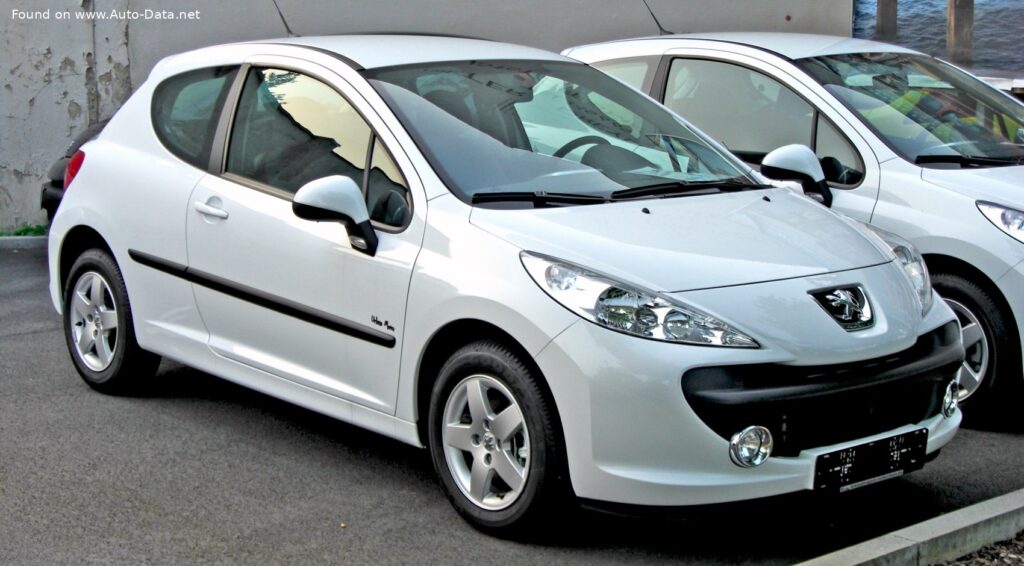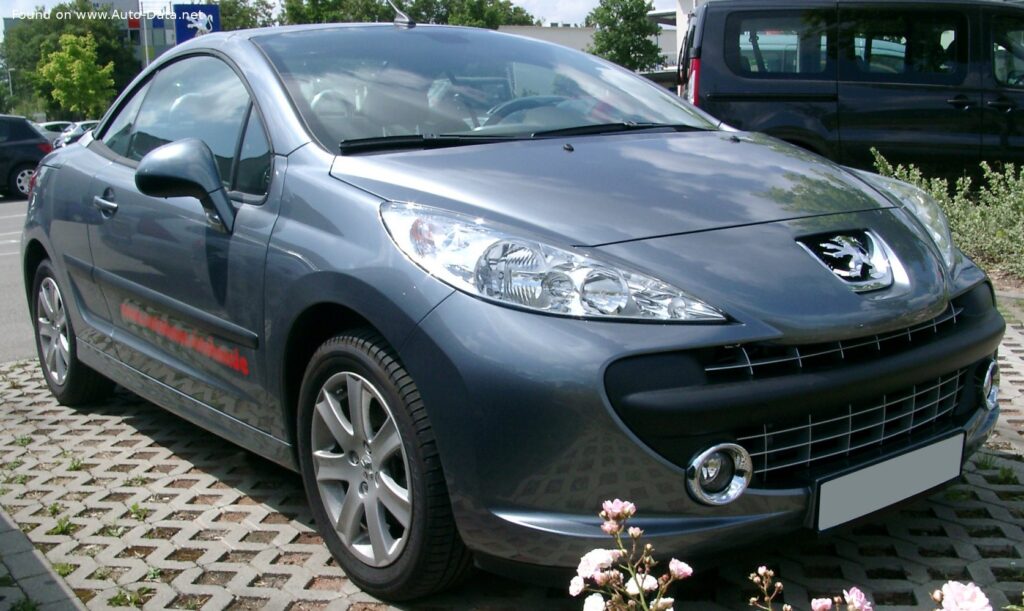
The Peugeot 207 CC 1.6 HDi (109 Hp) represented a compelling offering in the European compact coupe-cabriolet segment from 2006 to 2009. As a successor to the popular 206 CC, it continued Peugeot’s tradition of providing an affordable, stylish, and practical convertible experience with a retractable hardtop. Though never officially sold in the United States, the 207 CC found a substantial market in Europe, appealing to buyers seeking the versatility of a coupe and the open-air enjoyment of a convertible in a compact package. The 1.6 HDi diesel engine variant, a reflection of European automotive preferences, offered a strong combination of fuel efficiency and usable torque, making it well-suited for both daily commutes and longer journeys.
Evolution of the Peugeot 207 CC
Building on the success of the 206 CC, the Peugeot 207 CC debuted with a more refined design, improved safety features, and enhanced driving dynamics. The “CC” designation, standing for “Coupe-Cabriolet,” emphasized its key feature: a fully automatic, two-piece retractable hardtop roof capable of transforming the car from a coupe to a convertible in seconds. This innovation, first introduced by Peugeot in the compact segment, provided advantages over traditional soft-top convertibles, including increased security, improved sound and thermal insulation, and a more rigid body structure. The 207 CC was part of the broader 207 range, which included hatchback and station wagon models, but the CC variant distinguished itself with its lifestyle-oriented appeal.
Powertrain & Engine Architecture: The 1.6 HDi Engine
The Peugeot 207 CC 1.6 HDi (109 Hp) was powered by a 1.6-liter (1560 cm³ or 95.2 cu. in.) inline four-cylinder diesel engine. This engine, designated as the 9HZ DV6TED4, was widely used across various Peugeot and Citroën models of the period, known for its reliability and efficiency. The engine featured a double overhead camshaft (DOHC) valvetrain with four valves per cylinder and employed a common rail direct fuel injection system, coupled with a turbocharger and intercooler, to optimize power delivery and fuel economy. This configuration allowed for precise fuel metering and efficient combustion, contributing to the engine’s overall performance and reduced emissions.
The 1.6 HDi engine produced 109 horsepower (Hp) at 4000 rpm and a significant 240 Nm (177.01 lb.-ft.) of torque at a low 1750 rpm. This substantial low-end torque was a defining characteristic of diesel engines, providing responsive acceleration and relaxed cruising. The engine was paired with a 5-speed manual transmission, directing power to the front wheels. This combination resulted in a 0 to 60 mph acceleration time of approximately 10.4 seconds and a top speed of around 120 mph (193 km/h). The transmission was chosen for its durability and suitability for the engine’s torque characteristics, offering smooth gear changes and efficient power transfer.
Driving Characteristics
The 207 CC 1.6 HDi offered a driving experience focused on usability and efficiency rather than outright performance. Compared to higher-output gasoline versions of the 207, or even the later 1.6 THP turbocharged petrol engine, the 1.6 HDi prioritized torque over peak horsepower. This translated to strong acceleration from low speeds and effortless cruising on highways. The 5-speed manual transmission was well-matched to the engine’s characteristics, with gear ratios optimized for maximizing fuel economy and providing adequate acceleration in everyday driving situations. While not a sports car, the 207 CC 1.6 HDi provided a comfortable and enjoyable driving experience, particularly for those prioritizing fuel efficiency and low running costs.
Equipment & Trim Levels
The Peugeot 207 CC 1.6 HDi typically came equipped with a reasonable level of standard features for its price point and era. These included power windows, air conditioning, a CD stereo system, and central locking. Safety features such as an Anti-lock Braking System (ABS) and front airbags were also standard. The interior typically featured cloth upholstery, although leather options were available as upgrades. Optional extras included alloy wheels, a panoramic sunroof (in addition to the retractable hardtop), parking sensors, and upgraded audio systems. The dashboard layout was similar to other 207 models, with a functional and user-friendly design. Trim levels varied slightly depending on the market, but generally offered a progression of features and cosmetic enhancements.
Chassis & Braking
The 207 CC utilized a McPherson strut front suspension and a semi-independent coil spring rear suspension. This setup provided a good balance between ride comfort and handling. The front suspension offered precise steering and good control, while the rear suspension helped to absorb bumps and maintain stability. Braking was handled by ventilated discs at the front and disc brakes at the rear, providing adequate stopping power for the car’s weight and performance. The car’s relatively low weight, compared to some of its competitors, contributed to its nimble handling and efficient braking. A stabilizer bar was included at the front to reduce body roll during cornering, further enhancing handling stability.
Market Reception & Comparison
The Peugeot 207 CC 1.6 HDi was generally well-received by European automotive critics. It was praised for its stylish design, practical retractable hardtop, and excellent fuel economy. The 1.6 HDi engine was particularly lauded for its torque and efficiency, making it a popular choice for drivers covering long distances. Compared to other trims in the 207 CC lineup, the 1.6 HDi offered a more economical and practical option, appealing to a broader range of buyers. While the gasoline-powered versions offered more outright performance, they typically came with higher fuel consumption and running costs. The 207 CC 1.6 HDi competed with other compact convertibles such as the Opel Tigra TwinTop and Nissan Micra C+C, often offering a more refined driving experience and a more efficient engine.
Technical Specifications
| Category | Specification |
| General Information | |
| Brand | Peugeot |
| Model | 207 CC |
| Type (Engine) | 1.6 HDi (109 Hp) |
| Start of production | 2006 |
| End of production | 2009 |
| Powertrain Architecture | Internal Combustion engine, Front-wheel drive |
| Body type | Coupe – Cabriolet, 2 Doors, 4 Seats |
| Performance Specifications | |
| Fuel consumption (economy) – urban | 6.6 l/100 km (35.6 US mpg) |
| Fuel consumption (economy) – extra urban | 4.4 l/100 km (53.5 US mpg) |
| Fuel consumption (economy) – combined | 5.2 l/100 km (45.2 US mpg) |
| CO2 emissions | 136 g/km (Euro 4 standard) |
| Fuel Type | Diesel |
| Acceleration 0 – 60 mph | 10.4 sec |
| Maximum speed | 193 km/h (119.92 mph) |
| Engine Specifications | |
| Power | 109 Hp @ 4000 rpm |
| Torque | 240 Nm @ 1750 rpm (177.01 lb.-ft. @ 1750 rpm) |
| Engine layout | Front, Transverse |
| Engine Model/Code | 9HZ DV6TED4 |
| Engine displacement | 1560 cm³ (95.2 cu. in. / 1.6 Liters) |
| Number of cylinders | 4 (Inline configuration) |
| Cylinder Bore | 75 mm (2.95 in.) |
| Piston Stroke | 88.3 mm (3.48 in.) |
| Compression ratio | 17.6:1 |
| Number of valves per cylinder | 4 |
| Fuel injection system | Diesel Commonrail |
| Engine aspiration | Turbocharger, Intercooler |
| Valvetrain | DOHC |
| Space, Volume and Weights | |
| Kerb Weight | 1413 kg (3115.13 lbs.) |
| Max. weight | 1785 kg (3935.25 lbs.) |
| Trunk (boot) space – minimum | 187 l (6.6 cu. ft. – roof down) |
| Trunk (boot) space – maximum | 449 l (15.86 cu. ft. – roof up) |
| Fuel tank capacity | 50 l (13.21 US gal) |
| Dimensions | |
| Length | 4037 mm (158.94 in.) |
| Width | 1748 mm (68.82 in.) |
| Height | 1397 mm (55 in.) |
| Wheelbase | 2540 mm (100 in.) |
Legacy
The Peugeot 207 CC 1.6 HDi, while no longer in production, maintains a reasonable reputation for reliability, particularly the 9HZ DV6TED4 engine itself. These engines, when properly maintained, are known to be durable and capable of high mileage. In the used car market, the 207 CC 1.6 HDi represents an affordable entry point into the coupe-cabriolet segment. However, potential buyers should be aware of the typical maintenance requirements for a car of this age, including regular servicing of the diesel particulate filter (DPF) and careful inspection of the retractable hardtop mechanism. Overall, the 207 CC 1.6 HDi remains a stylish and practical option for those seeking a compact and fuel-efficient convertible.