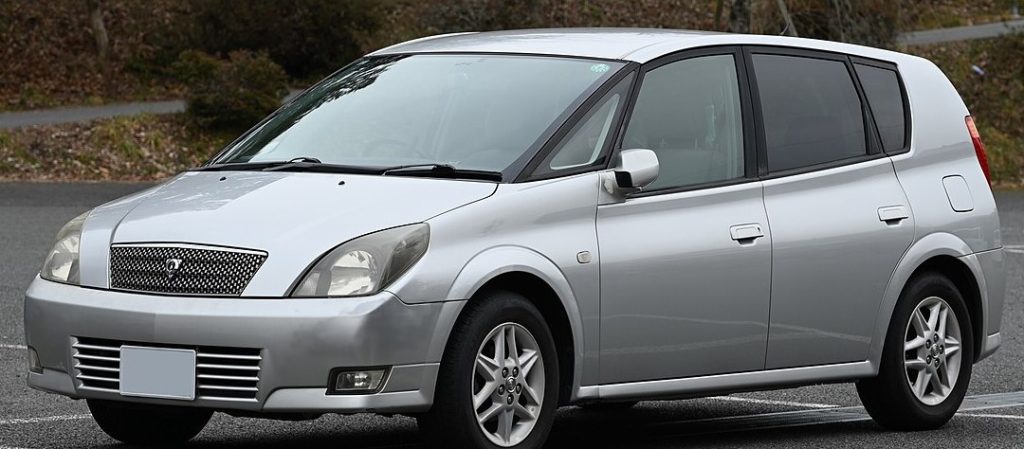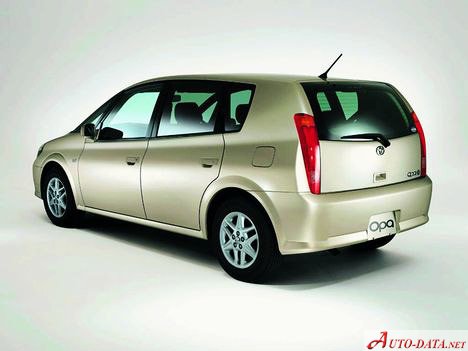
The Toyota Opa, a distinctive and innovative vehicle, emerged in the Japanese domestic market (JDM) in 2000, representing Toyota’s foray into a unique segment that blended the practicality of a station wagon with the enhanced interior space of a compact minivan. Produced until 2005, the Opa (a name derived from Portuguese, meaning “Oh, wow!” or “Surprise!”) was designed to offer exceptional versatility and user-friendliness in a compact footprint, tailored specifically for the urban landscapes and varied needs of Japanese consumers. This article delves into the specifics of the Toyota Opa 1.8 i 16V (136 Hp), examining its engineering, design, and market impact, providing context for a vehicle that remained a curious and highly functional offering outside of North American markets.
The Toyota Opa 1.8 i 16V (136 Hp): Positioning and Overview
Positioned as a “tall wagon” or a compact multi-purpose vehicle (MPV), the Opa aimed to provide an alternative to traditional sedans and wagons without the larger dimensions of full-sized minivans. It shared its platform with other successful Toyota models of the era, such as the first-generation Toyota Wish and the Toyota Allion/Premio, ensuring a foundation of proven reliability and engineering. The 1.8 i 16V variant, with its 136 horsepower engine, represented a popular choice within the Opa lineup, balancing performance with fuel efficiency, a critical factor for its target audience. This trim level generally sat in the mid-range of the Opa offerings, providing a step up from the base models in terms of power and features, but remaining more accessible than the higher-specification trims.
Powertrain & Engine Architecture
At the heart of the Toyota Opa 1.8 i 16V (136 Hp) lies the 1ZZ-FE engine, a 1.8-liter (1794 cm³ or 109.48 cu. in.) inline four-cylinder powerplant. This engine, renowned for its robustness and efficiency, was a staple across many Toyota models globally during its production era. Featuring a DOHC (Double Overhead Camshaft) valvetrain with four valves per cylinder, it was designed for smooth operation and responsive power delivery. The naturally aspirated engine utilized a multi-port fuel injection system, a common and reliable fuel delivery method for its time, contributing to its consistent performance characteristics.
The 1ZZ-FE in the Opa delivered a respectable 136 horsepower at 6000 rpm, providing ample power for urban commuting and highway cruising. Torque output stood at 126.12 lb.-ft. (171 Nm) at 4200 rpm, ensuring decent pulling power across the mid-range. Power was routed to the front wheels via a 4-speed automatic transmission, a common and durable setup for vehicles in this class, prioritizing smooth shifts and ease of driving over outright sportiness. This transmission, while not offering the most advanced gear ratios, was known for its reliability and ease of maintenance. The gear ratios were tuned for fuel efficiency and comfortable acceleration rather than aggressive performance. The final drive ratio contributed to a balance between highway cruising and city driving.
Driving Characteristics
The Toyota Opa 1.8 i 16V (136 Hp) with the automatic transmission offered a comfortable and predictable driving experience. Compared to the manual transmission versions, the automatic sacrificed some responsiveness and driver engagement. Acceleration was adequate for everyday driving, with a 0-60 mph time estimated around 11-12 seconds. While not a sporty vehicle, the 1.8L engine provided sufficient power for merging onto highways and overtaking slower traffic. The automatic transmission’s shift points were calibrated for smooth transitions and fuel economy, rather than aggressive downshifts. Compared to higher-output versions (which were not commonly available on the Opa), this variant prioritized fuel efficiency and ease of use over outright performance. The relatively light curb weight of the vehicle helped to mitigate the power deficit.
Equipment & Trim Levels
The Opa 1.8 i 16V typically came equipped with standard features common for its class and price point in the Japanese market. These included power windows, power door locks, air conditioning, and an AM/FM radio with a CD player. Interior upholstery was typically cloth, with options for upgraded materials available on higher trim levels. The dashboard configuration was functional and user-friendly, with logically placed controls. Optional extras available for this trim included alloy wheels, a sunroof, upgraded audio systems, and rear parking sensors. Safety features included dual front airbags and ABS (Anti-lock Braking System) as standard equipment.
Chassis & Braking
The Opa’s chassis was designed to provide a comfortable ride and stable handling. The front suspension utilized a Spring Strut system, a common and effective setup for front-wheel-drive vehicles, offering a good balance of ride comfort and handling. The rear featured a suspension with traction connecting levers, designed to maintain stability and ride quality. Braking duties were handled by ventilated discs at the front and drum brakes at the rear, augmented by an Anti-lock Braking System (ABS) for enhanced safety during emergency stops. Steering was a rack-and-pinion type with hydraulic power steering, providing a direct and assisted feel to the driver. The use of rear drum brakes was a cost-saving measure common in this segment, and while adequate for normal driving, they didn’t offer the same stopping power as rear disc brakes.
Market Reception & Comparison
Critics in Japan generally viewed the Toyota Opa 1.8 i 16V as a practical and well-rounded vehicle. Its unique styling and spacious interior were praised, while its fuel economy and reliability were considered strong points. Compared to other trims in the Opa lineup, the 1.8L Automatic offered a good balance of performance and affordability. Fuel economy was comparable to other 1.8L vehicles in its class, averaging around 19.6 US mpg in urban conditions and 33.6 US mpg on the highway. Reliability was typical of Toyota products, with few reported issues. Compared to the Honda Stream, the Opa offered a slightly more spacious interior, while the Nissan Wingroad focused more on affordability. The Toyota Wish, being a slightly larger vehicle, offered more seating capacity but at a higher price point.
Technical Specifications: Toyota Opa 1.8 i 16V (136 Hp)
| Category | Specification |
| General Information | |
| Brand | Toyota |
| Model | Opa |
| Generation | Opa |
| Type (Engine) | 1.8 i 16V (136 Hp) |
| Start of Production | 2000 year |
| End of Production | 2005 year |
| Powertrain Architecture | Internal Combustion engine |
| Body type | Station wagon (estate) |
| Seats | 5 |
| Doors | 5 |
| Performance Specifications | |
| Fuel consumption (economy) – urban | 19.6 US mpg |
| Fuel consumption (economy) – extra urban | 33.6 US mpg |
| Fuel Type | Petrol (Gasoline) |
| Maximum speed | 118.06 mph (190 km/h) |
| Weight-to-power ratio | 8.9 kg/Hp, 112.4 Hp/tonne |
| Weight-to-torque ratio | 7.1 kg/Nm, 141.3 Nm/tonne |
| Engine Specifications | |
| Power | 136 Hp @ 6000 rpm |
| Power per liter | 75.8 Hp/l |
| Torque | 126.12 lb.-ft. (171 Nm) @ 4200 rpm |
| Engine layout | Front, Transverse |
| Engine Model/Code | 1ZZ-FE |
| Engine displacement | 1.8 l (1794 cm³ / 109.48 cu. in.) |
| Number of cylinders | 4 |
| Engine configuration | Inline |
| Cylinder Bore | 3.11 in. (79 mm) |
| Piston Stroke | 3.6 in. (91.5 mm) |
| Compression ratio | 10:1 |
| Number of valves per cylinder | 4 |
| Fuel injection system | Multi-port manifold injection |
| Engine aspiration | Naturally aspirated engine |
| Valvetrain | DOHC |
| Engine oil capacity | 3.91 US qt (3.7 l) |
| Coolant | 6.45 US qt (6.1 l) |
| Space, Volume and Weights | |
| Kerb Weight | 2667.59 lbs. (1210 kg) |
| Fuel tank capacity | 15.85 US gal (60 l) |
| Dimensions | |
| Length | 167.32 in. (4250 mm) |
| Width | 66.73 in. (1695 mm) |
| Height | 60.24 in. (1530 mm) |
| Wheelbase | 106.3 in. (2700 mm) |
| Front track | 58.07 in. (1475 mm) |
| Rear (Back) track | 57.48 in. (1460 mm) |
| Drivetrain, Brakes and Suspension Specifications | |
| Drivetrain Architecture | The Internal combustion engine (ICE) drives the front wheels of the vehicle. |
| Drive wheel | Front wheel drive |
| Number of gears and type of gearbox | 4 gears, automatic transmission |
| Front suspension | Spring Strut |
| Rear suspension | Suspension with traction connecting levers |
| Front brakes | Ventilated discs |
| Rear brakes | Drum Brakes |
| Assisting systems | ABS (Anti-lock braking system) |
| Steering type | Steering rack and pinion |
| Power steering | Hydraulic Steering |
| Tires size | 195/65 R15 |
Legacy
The Toyota Opa, particularly the Toyota Opa 1.8 i 16V (136 Hp) model, carved out a distinct niche in the highly competitive Japanese automotive market during its production run from 2000 to 2005. It was a clear example of Toyota’s strategy to offer a diverse range of vehicles tailored to specific consumer demands, even if those demands were unique to Japan. The 1ZZ-FE engine, while known for occasional oil consumption issues in some applications, generally proved to be a reliable powerplant when properly maintained. The 4-speed automatic transmission also enjoyed a good reputation for durability. In the used car market today, the Opa is a relatively affordable and practical option for those seeking a unique and spacious vehicle. Its relatively low production numbers and limited export market contribute to its collectibility among JDM enthusiasts. While not a high-performance vehicle, the Opa 1.8 i 16V remains a testament to Toyota’s engineering prowess and its ability to create innovative and functional vehicles for a specific audience.