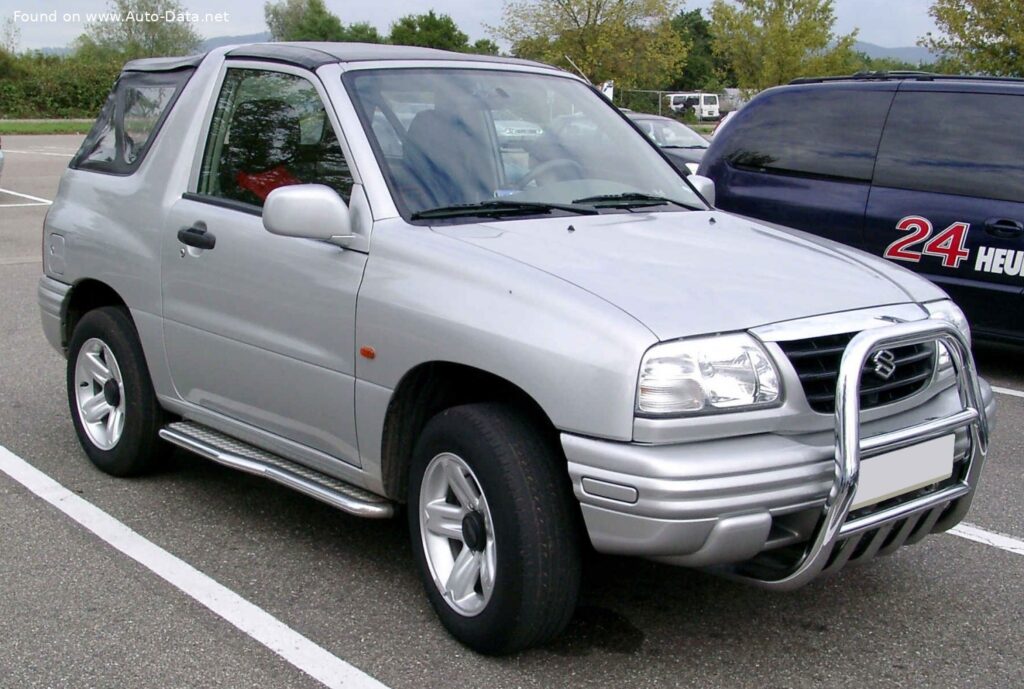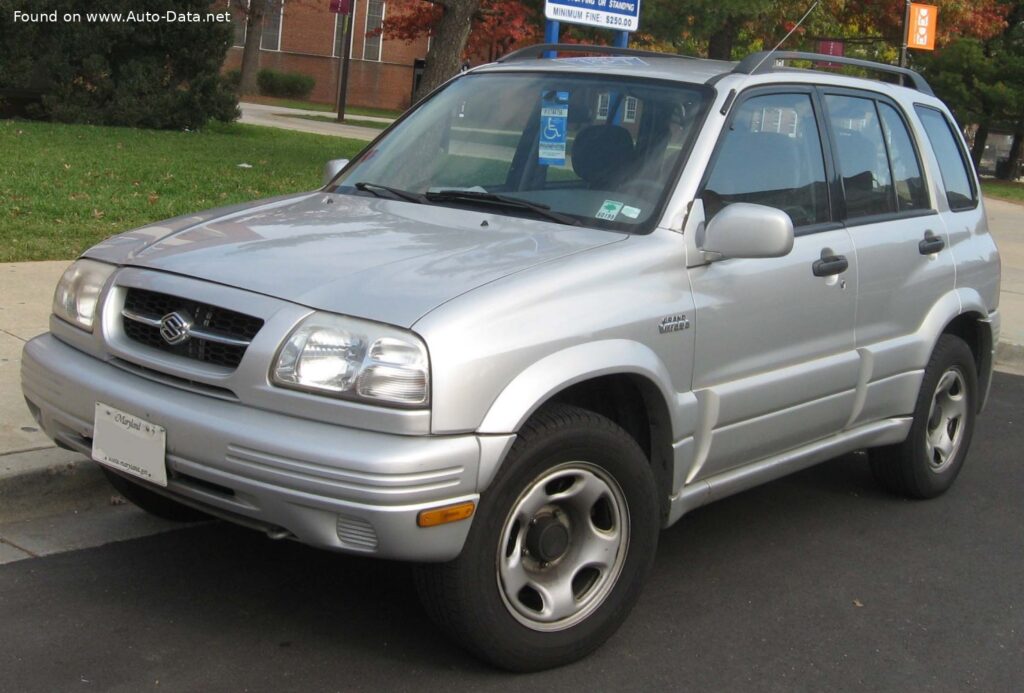
The Suzuki Grand Vitara (FT,GT) 2.0 TD (5 dr) (87 Hp), produced from 1998 to 2003, represents a significant step forward for Suzuki in the increasingly popular compact SUV segment. Building upon the foundation laid by the earlier Suzuki Vitara (Sidekick in North America), the Grand Vitara offered a more spacious, refined, and capable vehicle. While gasoline engines were prevalent globally, the 2.0 TD variant, specifically the five-door model generating 87 horsepower, found considerable success in European and Asian markets. These regions favored diesel power for its combination of fuel efficiency and readily available low-end torque, making it suitable for both urban commutes and light off-road adventures. The FT/GT chassis code designates this first generation, which established a reputation for rugged dependability and genuine four-wheel-drive capability in a market increasingly dominated by “soft-roaders.”
Powertrain & Engine Architecture
The core of the Grand Vitara (FT,GT) 2.0 TD is its 2.0-liter (1998 cm³ or 121.93 cubic inches) RFM-code turbocharged diesel engine. This inline four-cylinder powerplant is longitudinally mounted in the front of the vehicle and prioritized durability and torque delivery over outright speed. It produces 87 horsepower at 4000 rpm, but its defining characteristic is its torque output of 159.31 lb-ft (216 Nm) at a low 2000 rpm. This low-end torque is particularly valuable for off-road driving, providing the necessary power to overcome obstacles and maintain momentum on uneven terrain.
The engine employs a precombustion chamber injection system, a common diesel technology of the era, and is equipped with a turbocharger to enhance both power and efficiency. A high compression ratio of 20.9:1, typical for diesel engines, contributes to efficient fuel combustion. Power is transferred to the all-wheel-drive (4×4) system through a robust 5-speed manual transmission, offering the driver direct control, especially important for off-road driving. While not designed for rapid acceleration, the Grand Vitara 2.0 TD can reach 60 mph in approximately 18.8 seconds and achieve a top speed of 88.23 mph (142 km/h). These figures, while modest by contemporary standards, were adequate for its intended purpose as a utility-focused SUV.
Driving Characteristics
The 2.0 TD engine, paired with the 5-speed manual transmission, delivers a driving experience focused on usability rather than performance. The low-end torque provides ample power for everyday driving and tackling moderate off-road conditions. The gear ratios are optimized for maximizing torque and fuel efficiency, rather than achieving quick acceleration. Compared to potential gasoline variants (which were not widely available in all markets), the diesel engine offers significantly better fuel economy but sacrifices some responsiveness. The manual transmission allows for precise control, particularly when navigating challenging terrain, a feature that appeals to drivers who prioritize off-road capability. The 4×4 system, typically selectable between 2WD, 4H (high range), and 4L (low range), further enhances its off-road prowess.
Equipment & Trim Levels
The Suzuki Grand Vitara (FT,GT) 2.0 TD, in its base configuration, was generally equipped with practical features geared towards utility and durability. Standard equipment typically included power steering, air conditioning (depending on the market), and a basic audio system. Interior upholstery was typically cloth, with a focus on hard-wearing materials. The dashboard layout was functional and straightforward, prioritizing ease of use over aesthetic flair. Optional extras varied by market but could include features such as alloy wheels, upgraded audio systems, electric windows, and central locking. The 5-door configuration provided seating for five passengers and a reasonable amount of cargo space.
Chassis & Braking
The Grand Vitara (FT,GT) distinguishes itself from many contemporary SUVs with its traditional body-on-frame construction, contributing to its robustness and off-road capability. The front suspension utilizes a spring strut setup, while the rear employs coil springs. This configuration aims to balance on-road comfort with off-road articulation. Braking is handled by ventilated discs at the front and drum brakes at the rear, supplemented by an Anti-lock Braking System (ABS) for improved safety during emergency stops. The hydraulic power-assisted rack and pinion steering provides predictable handling and feedback. The vehicle typically rides on 195/80 R15 tires mounted on 15-inch steel or alloy wheels, offering a compromise between on-road grip and off-road traction.
Market Reception & Comparison
The Suzuki Grand Vitara (FT,GT) 2.0 TD received generally positive reviews, particularly in markets where diesel engines were popular. Critics praised its rugged construction, genuine off-road capability, and fuel efficiency. Compared to gasoline-powered versions, the diesel variant offered superior fuel economy, making it a cost-effective choice for drivers covering long distances. However, it was often noted that the diesel engine lacked the responsiveness of its gasoline counterparts. In comparison to rivals like the Toyota RAV4 and Honda CR-V, the Grand Vitara stood out with its body-on-frame construction and more robust four-wheel-drive system, appealing to buyers who prioritized off-road performance. Its reliability was also a key selling point, contributing to its strong reputation in the used car market.
Technical Specifications: Suzuki Grand Vitara (FT,GT) 2.0 TD (5 dr) (87 Hp)
| Category | Specification |
| General Information | |
| Brand | Suzuki |
| Model | Grand Vitara |
| Generation | Grand Vitara (FT,GT) |
| Engine Type | 2.0 TD (5 dr) (87 Hp) |
| Production Start | 1998 year |
| Production End | 2003 year |
| Powertrain Architecture | Internal Combustion engine |
| Body Type | SUV |
| Seats | 5 |
| Doors | 5 |
| Performance Specs | |
| Fuel Consumption (Urban) | 9.4 l/100 km (25 US mpg) |
| Fuel Consumption (Extra Urban) | 6.9 l/100 km (34.1 US mpg) |
| Fuel Type | Diesel |
| Acceleration 0-60 mph | 18.8 seconds |
| Maximum Speed | 88.23 mph (142 km/h) |
| Weight-to-Power Ratio | 16 kg/Hp, 62.4 Hp/tonne |
| Weight-to-Torque Ratio | 6.5 kg/Nm, 154.8 Nm/tonne |
| Engine Specs | |
| Power | 87 Hp @ 4000 rpm |
| Power per Liter | 43.5 Hp/l |
| Torque | 159.31 lb.-ft. (216 Nm) @ 2000 rpm |
| Engine Layout | Front, Longitudinal |
| Engine Model/Code | RFM |
| Engine Displacement | 1998 cm³ (121.93 cu. in.) |
| Number of Cylinders | 4 |
| Engine Configuration | Inline |
| Cylinder Bore | 86 mm (3.39 in.) |
| Piston Stroke | 86 mm (3.39 in.) |
| Compression Ratio | 20.9:1 |
| Valves per Cylinder | 2 |
| Fuel Injection System | Precombustion chamber injection |
| Engine Aspiration | Turbocharger |
| Engine Oil Capacity | 5.5 l (5.81 US qt) |
| Space, Volume & Weights | |
| Kerb Weight | 3075.45 lbs. (1395 kg) |
| Maximum Weight | 4299.01 lbs. (1950 kg) |
| Maximum Load | 1223.57 lbs. (555 kg) |
| Trunk Space (Minimum) | 9.11 cu. ft. (258 l) |
| Trunk Space (Maximum) | 38.14 cu. ft. (1080 l) |
| Fuel Tank Capacity | 17.44 US gal (66 l) |
| Dimensions | |
| Length | 165.16 in. (4195 mm) |
| Width | 70.08 in. (1780 mm) |
| Height | 66.34 in. (1685 mm) |
| Wheelbase | 97.64 in. (2480 mm) |
| Drivetrain, Brakes & Suspension | |
| Drive Wheel | All-wheel drive (4×4) |
| Gearbox | 5 gears, manual transmission |
| Front Suspension | Spring Strut |
| Rear Suspension | Coil spring |
| Front Brakes | Ventilated discs |
| Rear Brakes | Drum |
| Assisting Systems | ABS (Anti-lock braking system) |
Legacy
The Suzuki Grand Vitara (FT,GT) 2.0 TD has proven to be a remarkably durable vehicle. The RFM diesel engine, while not known for its refinement, is generally considered reliable when properly maintained. In the used car market, these models are often sought after for their affordability, off-road capability, and relatively simple mechanical design. While age and mileage inevitably lead to wear and tear, the Grand Vitara’s robust construction and readily available parts contribute to its longevity. It remains a viable option for those seeking a capable and dependable 4×4 without breaking the bank, solidifying its place as a significant vehicle in the history of compact SUVs.