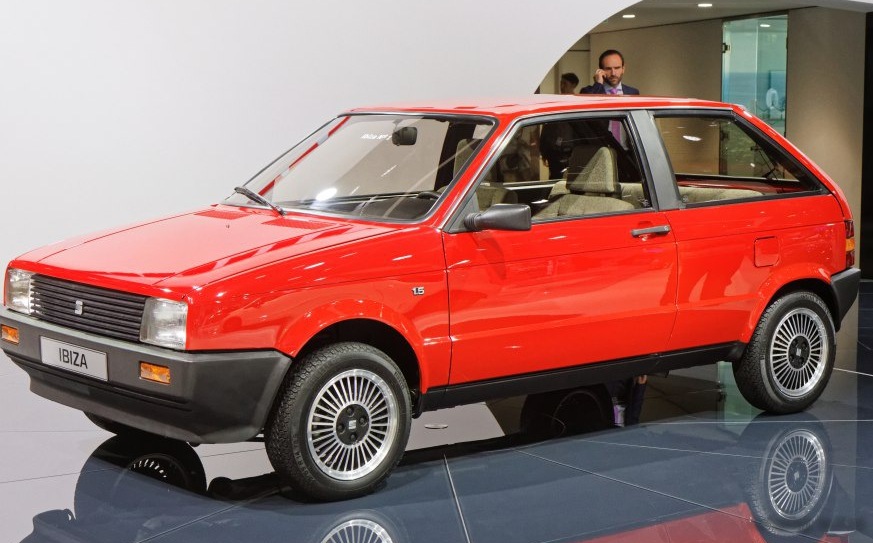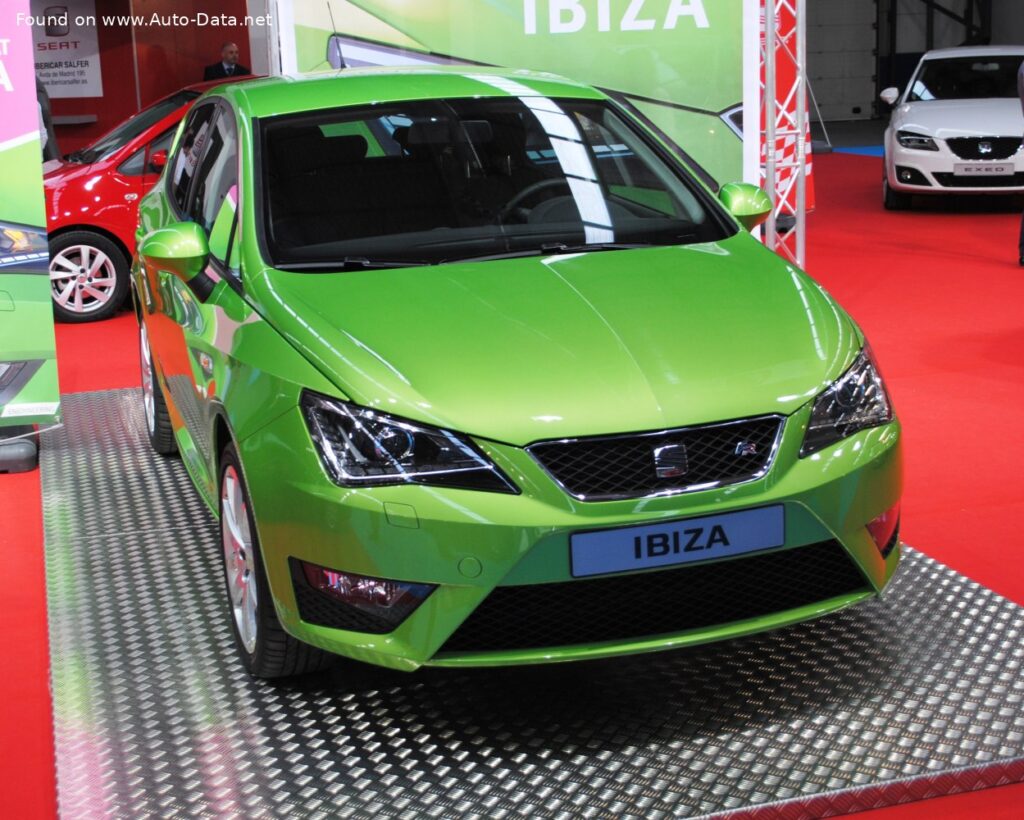
The Seat Ibiza IV (facelift 2012) 1.4 (85 Hp) represents a significant evolution of Seat’s popular subcompact car, a model series that has been a cornerstone of the Spanish automaker’s lineup since its introduction in 1984. As a brand within the Volkswagen Group, Seat primarily caters to European and select international markets, and the Ibiza has consistently been one of its best-selling vehicles. This particular generation, the fourth (6J) series, received a comprehensive facelift in 2012, bringing refreshed styling, updated technology, and refined powertrains to maintain its competitive edge in the fiercely contested B-segment. Production of this specific 1.4 85hp variant ran from 2012 to 2015.
The 1.4 85 Hp Ibiza: Positioning in the Lineup
The 1.4 (85 Hp) variant occupied the entry-level to mid-range position within the Ibiza IV facelift lineup. It served as the gateway to the model range, offering a more affordable option compared to the more powerful 1.6-liter gasoline engines and the diesel-powered TDI variants. While not offering the outright performance of its siblings, it provided a sensible and economical choice for buyers prioritizing fuel efficiency and everyday usability. It was aimed at younger drivers, city commuters, and those seeking a practical and affordable hatchback for general transportation.
Powertrain & Engine Architecture
At the heart of the Seat Ibiza IV (facelift 2012) 1.4 (85 Hp) lies a naturally aspirated 1.4-liter (1390 cm3 or 84.82 cu. in.) inline four-cylinder gasoline engine. This powerplant, identified by the engine code CGGB, is a member of Volkswagen Group’s EA111 engine family, known for its reliability and efficiency. The engine is transversely mounted at the front of the vehicle. It produces 85 horsepower (hp) at 5000 revolutions per minute (rpm) and 132 Nm (97.36 lb-ft) of torque peaking at 3800 rpm.
The CGGB engine utilizes multi-point fuel injection, delivering fuel directly into the intake ports. The valvetrain features two valves per cylinder (two intake, two exhaust) operated by a single overhead camshaft. This configuration contributes to the engine’s simplicity and reliability. The engine’s relatively low compression ratio of 10.5:1 helps to ensure smooth operation on a variety of fuel grades. Power is typically transmitted to the front wheels via a standard 5-speed manual transmission, although a 6-speed automatic transmission was also available as an option, albeit less common.
The Automatic Transmission
The optional automatic transmission used in conjunction with the 1.4 85hp engine is a conventional torque converter automatic. While not known for its sportiness or fuel efficiency compared to modern dual-clutch transmissions, it provided a comfortable and convenient driving experience, particularly in urban environments. The gear ratios were optimized for fuel economy and smooth acceleration, prioritizing usability over performance. The automatic transmission’s shift points were calibrated to keep the engine operating within its optimal torque range, maximizing efficiency and minimizing noise.
Driving Characteristics
The 1.4 (85 Hp) / Automatic combination in the Ibiza IV facelift delivers a driving experience focused on practicality and ease of use. Acceleration from 0 to 60 mph is calculated at approximately 11.8 seconds, with a top speed of around 109.98 mph (177 km/h). While these figures are not particularly impressive, they are adequate for everyday driving conditions. The engine feels responsive enough for city driving and maintaining highway speeds, but it requires downshifting for overtaking maneuvers. The automatic transmission contributes to a relaxed driving experience, eliminating the need for constant gear changes. Compared to the manual transmission version, the automatic offers slightly reduced fuel economy and a less engaging driving experience. However, it provides greater convenience, especially in stop-and-go traffic.
The Ibiza’s relatively light curb weight of 2369.97 lbs (1075 kg) helps to mitigate the engine’s modest power output. The suspension, tuned for comfort, provides a reasonably smooth ride, absorbing bumps and imperfections in the road surface. The steering is light and precise, making it easy to maneuver in tight spaces.
Equipment & Trim Levels
The standard equipment level for the 1.4 (85 Hp) Ibiza IV facelift varied depending on the specific market and trim level. However, typical features included air conditioning, power windows, central locking, an audio system with MP3 compatibility, and Anti-lock Braking System (ABS). Higher trim levels, such as “Style” or “Sport,” added features like alloy wheels, fog lights, a multi-function steering wheel, and upgraded interior trim. Optional extras included a sunroof, parking sensors, and a navigation system. Interior upholstery typically consisted of cloth seats, with the option of leather upholstery on higher trims. The dashboard layout was functional and ergonomic, with a clear instrument cluster and easy-to-use controls.
Chassis & Braking
The Ibiza IV facelift utilizes a McPherson strut suspension setup at the front, providing independent wheel control and a comfortable ride. The rear suspension employs a semi-independent torsion beam arrangement, which is cost-effective and space-efficient. The front brakes are ventilated discs, offering good stopping power and heat dissipation. The rear brakes are typically drum brakes, although some higher trim levels may have been equipped with rear discs. The steering system is a power-assisted rack and pinion setup, providing precise and responsive steering feel. Stabilizer bars are fitted to both the front and rear axles to reduce body roll during cornering.
Market Reception & Comparison
Critics generally viewed the Seat Ibiza IV (facelift 2012) 1.4 (85 Hp) as a sensible and well-rounded subcompact car. It was praised for its fuel efficiency, comfortable ride, and stylish design. However, some critics noted that the engine’s performance was somewhat underwhelming, particularly when compared to more powerful rivals. In terms of fuel economy, the 1.4 (85 Hp) Ibiza achieved a combined cycle rating of 39.9 US mpg (5.9 l/100 km), which was competitive with other subcompacts in its class. Reliability was generally good, with the CGGB engine proving to be a durable and dependable unit. Compared to the 1.6-liter gasoline and TDI diesel variants, the 1.4 (85 Hp) offered lower running costs but less performance. It represented a good compromise for buyers prioritizing affordability and efficiency.
Technical Specifications
| Category | Specification |
| General Information | |
| Brand | Seat |
| Model | Ibiza |
| Generation | Ibiza IV (facelift 2012) |
| Type (Engine) | 1.4 (85 Hp) |
| Start of Production | 2012 year |
| End of Production | 2015 year |
| Powertrain Architecture | Internal Combustion engine |
| Body type | Hatchback |
| Seats | 5 |
| Doors | 5 |
| Performance Specs | |
| Fuel consumption (economy) – urban | 8 l/100 km |
| Fuel consumption (economy) – extra urban | 4.7 l/100 km |
| Fuel consumption (economy) – combined | 5.9 l/100 km |
| CO2 emissions | 139 g/km |
| Fuel Type | Petrol (Gasoline) |
| Acceleration 0 – 62 mph (0-100 km/h) | 11.8 sec |
| Acceleration 0 – 60 mph (Calculated) | 11.2 sec |
| Maximum speed | 177 km/h |
| Weight-to-power ratio | 12.6 kg/Hp |
| Weight-to-torque ratio | 8.1 kg/Nm |
| Engine Specs | |
| Power | 85 Hp @ 5000 rpm |
| Power per liter | 61.2 Hp/l |
| Torque | 132 Nm @ 3800 rpm |
| Engine layout | Front, Transverse |
| Engine Model/Code | CGGB |
| Engine displacement | 1390 cm3 |
| Number of cylinders | 4 |
| Engine configuration | Inline |
| Cylinder Bore | 76.5 mm |
| Piston Stroke | 75.6 mm |
| Compression ratio | 10.5:1 |
| Number of valves per cylinder | 4 |
| Fuel injection system | Multi-port manifold injection |
| Engine aspiration | Naturally aspirated engine |
| Engine oil capacity | 3.2 l |
| Coolant | 5.6 l |
| Space, Volume and Weights | |
| Kerb Weight | 1075 kg |
| Max. weight | 1526 kg |
| Max load | 451 kg |
| Trunk (boot) space – minimum | 292 l |
| Fuel tank capacity | 45 l |
| Dimensions | |
| Length | 4061 mm |
| Width | 1693 mm |
| Height | 1445 mm |
| Wheelbase | 2469 mm |
| Front track | 1465 mm |
| Rear (Back) track | 1457 mm |
| Minimum turning circle (turning diameter) | 10.48 m |
| Drivetrain, Brakes and Suspension Specs | |
| Drivetrain Architecture | The Internal combustion engine (ICE) drives the front wheels of the vehicle. |
| Drive wheel | Front wheel drive |
| Number of gears and type of gearbox | 5 gears, manual transmission |
| Front suspension | Independent, type McPherson with coil spring and anti-roll bar |
| Rear suspension | Semi-independent, coil spring |
| Front brakes | Ventilated discs |
| Rear brakes | Drum |
| Assisting systems | ABS (Anti-lock braking system) |
| Steering type | Steering rack and pinion |
| Tires size | 175/70 R14; 185/60 R15; 215/45 R16; 215/40 R17 |
| Wheel rims size | 5.0J x 14; 6.0J x 15; 7.0J x 16; 7.0J x 17 |
Legacy
The Seat Ibiza IV (facelift 2012) 1.4 (85 Hp) has proven to be a reliable and durable vehicle in the used car market. The CGGB engine is known for its longevity, and with regular maintenance, it can provide many years of trouble-free service. The availability of spare parts is good, thanks to the Ibiza’s widespread popularity and its shared components with other Volkswagen Group vehicles. While not a particularly sought-after variant due to its modest performance, the 1.4 (85 Hp) Ibiza represents a sensible and affordable option for buyers seeking a practical and economical subcompact car. Its enduring appeal lies in its blend of reliability, fuel efficiency, and stylish design, solidifying its place as a popular choice in the European used car market.