
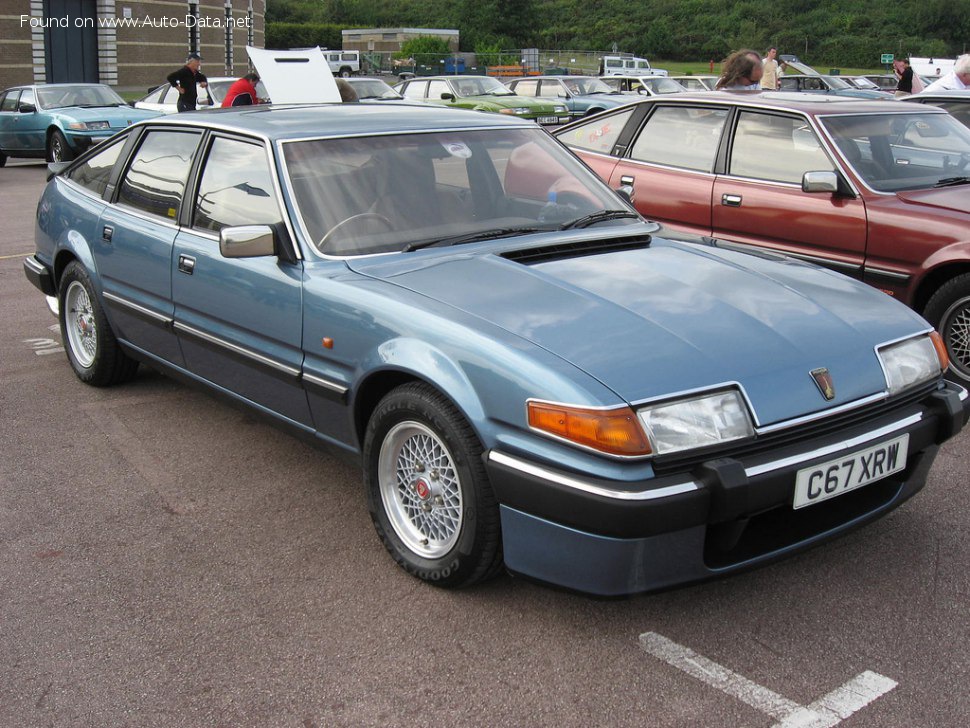
The Rover 2000-3500 Hatchback (SD1), officially known as the Rover 2000-3500 Hatchback, represents a significant chapter in British automotive history, embodying a bold attempt by British Leyland to redefine the executive car segment in Europe during the late 1970s and early 1980s. Launched in 1976, the SD1 (Specialist Division 1) was lauded for its striking, aerodynamic design, which drew inspiration from contemporary Italian sports cars, most notably the Ferrari Daytona. It aimed to merge the traditional luxury and comfort associated with the Rover brand with modern engineering and a more practical body style. While the SD1 was never officially imported into the United States in significant numbers, its impact was primarily felt across Europe and other Commonwealth markets. This article focuses specifically on the Rover 2000-3500 Hatchback (SD1) 2600 (135 Hp) variant, produced between 1977 and 1982, which offered a compelling blend of performance and refinement within the SD1 lineup.
The Rover SD1: A Bold Statement in European Automotive Design
The design of the Rover SD1 was a radical departure for the conservative Rover marque. Penned by David Bache, the car’s exterior was characterized by its sleek, wedge-shaped profile, a large glass area, and a distinctive five-door hatchback configuration. This body style was highly unconventional for an executive car of its era, offering enhanced practicality without compromising its elegant lines. The absence of a traditional grille, instead featuring a smooth, integrated front end, contributed to its modern aesthetic and improved aerodynamic efficiency, a concept that was gaining traction in automotive design during the late 1970s.
Inside, the SD1 continued its theme of innovation. The dashboard, in particular, was forward-thinking, featuring a driver-oriented layout with instruments grouped logically for ease of access and minimal distraction. As an executive class vehicle, the cabin was typically appointed with comfortable seating, often in durable velour or luxurious leather, and a strong emphasis was placed on ride comfort and sound insulation to provide a serene driving environment. The five-door hatchback design, while initially surprising for the segment, proved to be remarkably versatile, allowing the SD1 to function effectively as both a sophisticated executive cruiser and a practical family vehicle, capable of carrying substantial luggage or cargo.
Safety features for a car of this vintage were standard for the time, likely including three-point seatbelts for front occupants, a robust chassis designed with crumple zones, and powerful disc brakes on all four wheels, which was a premium feature for executive cars. The SD1’s unitary body construction provided a strong safety cell, and its overall design aimed for a balance of aesthetic appeal and occupant protection, reflective of late 1970s automotive engineering standards before the advent of widespread airbags and advanced driver-assistance systems.
Powertrain & Engine Architecture of the 2600 Variant
Under the hood of the Rover 2000-3500 Hatchback (SD1) 2600 (135 Hp) lay a naturally aspirated, 2.6-liter (specifically 2,597 cc) inline-six gasoline engine, designated with the model code PE166. This engine was a key component in the SD1’s diverse powertrain offerings, strategically positioned as a mid-range option between the entry-level four-cylinder models and the more powerful, iconic V8 versions. Delivering a respectable 135 horsepower (Hp), the 2.6-liter unit provided a smooth, linear, and refined driving experience, characteristic of a well-balanced inline-six powerplant, which was highly regarded for its inherent smoothness and torque delivery.
The PE166 engine featured a single overhead camshaft (SOHC) valvetrain, operating two valves per cylinder. Fuel delivery was managed by a Zenith-Stromberg 175CDSE carburetor, a common setup for British engines of the era. While not as precise as fuel injection, the carburetor provided adequate performance and reliability for the intended market. The engine block was constructed from cast iron, providing durability, while the cylinder head was made of aluminum alloy to reduce weight. The engine’s lubrication system was a conventional wet sump design, and cooling was achieved through a water-cooled radiator with a thermostatically controlled fan.
The 2600 variant was typically paired with either a four-speed manual transmission or a three-speed automatic transmission, the latter being a Borg-Warner unit. The automatic transmission, while offering convenience, was often criticized for its relatively slow shift times and tendency to hunt for gears, particularly under heavy load. The manual transmission provided a more engaging driving experience and allowed for better control over the engine’s power. The rear-wheel drive configuration was standard, contributing to the SD1’s balanced handling characteristics.
Driving Characteristics of the 2600 Automatic
The Rover SD1 2600 with the automatic transmission offered a comfortable and refined driving experience, geared towards drivers prioritizing ease of use over outright performance. Acceleration from 0 to 60 mph took approximately 10.7 seconds, which was adequate for the time but noticeably slower than the manual transmission version or the V8-powered models. The three-speed automatic transmission had relatively wide gear ratios, resulting in a noticeable drop in engine speed during upshifts. This could sometimes feel sluggish, especially when overtaking or climbing hills.
The power delivery was smooth and linear, typical of an inline-six engine. However, the automatic transmission’s torque converter robbed some of the engine’s power, resulting in a less responsive feel compared to the manual version. The SD1 2600 Automatic was best suited for relaxed cruising on highways and city streets, where its comfortable ride and quiet cabin were most appreciated. It wasn’t designed for aggressive driving or spirited performance, but it provided a pleasant and refined experience for drivers seeking a comfortable and stylish executive car.
Equipment & Trim Levels
The Rover SD1 2600 typically came equipped with a respectable level of standard features for an executive car of the late 1970s. These included power-assisted steering, central locking, electric windows, and a high-quality sound system. Interior upholstery was typically velour, although leather options were available at an extra cost. The dashboard featured wood veneer trim, adding to the car’s luxurious ambiance.
Optional extras included a sunroof, air conditioning, and upgraded audio systems. Higher trim levels offered more luxurious interior appointments, such as leather seats, walnut wood trim, and additional sound insulation. The SD1 2600 occupied a mid-range position in the SD1 lineup, offering a good balance of features and affordability. It was positioned above the base four-cylinder models but below the more expensive and powerful V8 variants.
Chassis & Braking
The Rover SD1 featured independent suspension all around, with MacPherson struts at the front and a trailing arm setup at the rear. This suspension configuration provided a comfortable ride and good handling characteristics. The 2600 variant typically came equipped with disc brakes on all four wheels, providing ample stopping power. Power steering was standard, making the car easy to maneuver at low speeds. The chassis was a unitary body construction, providing a strong and rigid platform. Rear drum brakes were sometimes fitted on lower trim levels, but the 2600 generally featured all-round discs. Stabilizer bars were fitted to both the front and rear axles to reduce body roll during cornering.
Market Reception & Comparison
Critics generally praised the Rover SD1 2600 for its stylish design, comfortable ride, and refined engine. However, the automatic transmission was often criticized for its sluggishness, and concerns about British Leyland’s build quality and reliability were frequently raised. Compared to its German rivals, the SD1 2600 offered a more distinctive and stylish design, but it lacked the same level of engineering precision and long-term reliability. Fuel economy was comparable to other executive cars of the era, averaging around 20-25 mpg. The 2600 variant offered a good balance of performance and fuel efficiency, making it a popular choice for drivers who wanted a comfortable and stylish car without the expense of the V8 models.
Technical Specifications
| Brand | Rover |
| Model | 2000-3500 Hatchback |
| Generation | 2000-3500 Hatchback (SD1) |
| Type (Engine) | 2600 (135 Hp) |
| Start of Production | 1977 year |
| End of Production | 1982 year |
| Powertrain Architecture | Internal Combustion engine |
| Body Type | Hatchback |
| Seats | 5 |
| Doors | 5 |
| Fuel Type | Petrol (Gasoline) |
| Acceleration 0 – 60 mph | 10.7 sec |
| Maximum Speed | 192 km/h (119.3 mph) |
| Power | 135 Hp |
| Engine Model/Code | PE166 |
| Engine Aspiration | Naturally aspirated engine |
Legacy
The Rover SD1 2600, while not without its flaws, remains a cherished classic car today. Its smooth inline-six engine and comfortable ride make it a pleasant and enjoyable car to drive. The 2600 variant is generally considered to be more reliable than the V8 models, making it a popular choice for enthusiasts. However, like all classic British cars, it requires regular maintenance and attention to detail. Parts availability can be a challenge, but a dedicated network of Rover enthusiasts and specialists exists to support owners. In the used car market, well-maintained SD1 2600s command a premium price, reflecting their rarity and desirability. The SD1 2600 represents a unique and stylish chapter in British automotive history, a testament to the ambition and innovation of the Rover marque.
