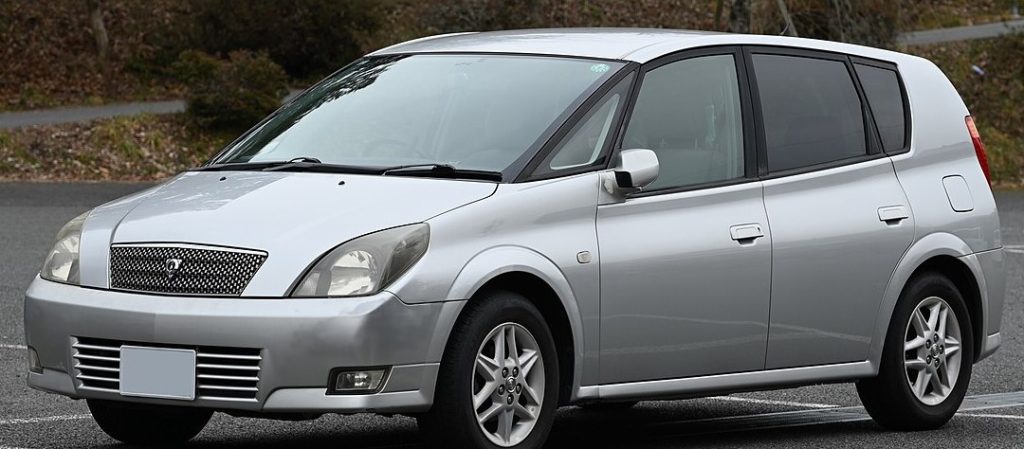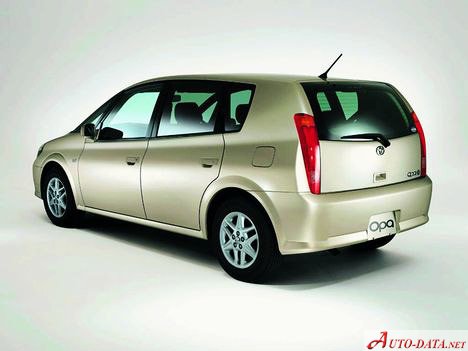
The Toyota Opa, a distinctive compact station wagon, represents a fascinating chapter in Toyota’s history of catering to the specific needs of the Japanese domestic market (JDM). Launched in 2000, the Opa was designed as a versatile family vehicle, blending the practicality of a minivan with the driving dynamics and footprint of a compact car. Its name, derived from the Portuguese word for “surprise” or “oh-la-la,” hinted at its unconventional styling and thoughtful interior packaging. Positioned to offer superior space and utility in a relatively small package, the Opa was part of a trend in Japan for vehicles that maximized interior volume without becoming full-sized minivans. It shared its platform with the first-generation Toyota Wish and the popular Corolla, indicating a focus on reliability, efficiency, and car-like handling. The model discussed here, the 2.0 i 16V D-4 (152 Hp) variant, was a particularly advanced offering, featuring Toyota’s innovative direct injection engine technology, a hallmark of its commitment to efficiency and performance at the turn of the millennium. Production of the Opa continued until 2005, making it a unique, single-generation model that carved out its niche in the competitive JDM landscape.
Powertrain & Engine Architecture
Under the hood, the Toyota Opa 2.0 i 16V D-4 was powered by the 1AZ-FSE engine, a 1,998 cubic centimeter (2.0-liter) inline four-cylinder unit. This engine was a significant piece of technology for its time, featuring Toyota’s D-4 direct injection system. Unlike conventional port fuel injection, direct injection sprays fuel directly into the combustion chamber, allowing for more precise fuel delivery and better control over the air-fuel mixture. This technology contributed to improved fuel efficiency and increased power output, especially noticeable in a naturally aspirated engine.
The 1AZ-FSE engine generated a respectable 152 horsepower at 6000 rpm, providing ample power for daily driving and highway cruising. Torque output stood at 200 Nm, or approximately 147.51 lb.-ft., peaking at 4000 rpm. This broad torque band ensured responsive acceleration and good pulling power, whether navigating urban streets or tackling steeper inclines. Power was sent to the front wheels via a smooth-shifting 4-speed automatic transmission, a common and reliable setup for compact family vehicles of this era. The Aisin-Warner TF-60E automatic transmission, frequently used by Toyota, was known for its durability and relatively smooth operation. It featured electronically controlled torque converter lock-up for improved fuel efficiency at highway speeds.
The engine’s design, with a square bore and stroke of 86 mm (3.39 inches) and a compression ratio of 9.8:1, was optimized for efficiency and durability. The dual overhead camshaft (DOHC) valvetrain with four valves per cylinder ensured optimal airflow and combustion. With an engine oil capacity of 4.2 liters (4.44 US quarts) and a coolant capacity of 5.8 liters (6.13 US quarts), maintenance was straightforward, contributing to the Opa’s reputation for long-term reliability.
Driving Characteristics
The Toyota Opa 2.0 i 16V D-4, with its 152 hp and 4-speed automatic transmission, offered a comfortable and predictable driving experience. Compared to the base models with smaller engines, the 2.0-liter variant provided noticeably more power for merging onto highways and overtaking slower traffic. However, it wasn’t designed for sporty performance. The automatic transmission prioritized smooth shifts and fuel efficiency over aggressive acceleration. The gear ratios were tuned for everyday usability, with a focus on maximizing fuel economy during normal driving conditions.
Compared to a manual transmission equipped Opa, the automatic version sacrificed some driver engagement and responsiveness. The manual transmission allowed for more precise control over gear selection and engine speed, resulting in slightly quicker acceleration and a more connected feel. However, the automatic transmission appealed to a broader range of drivers, particularly those seeking a hassle-free driving experience in urban environments. The D-4 engine’s direct injection system helped to mitigate some of the power loss typically associated with automatic transmissions, providing a reasonably lively driving experience.
Equipment & Trim Levels
The Toyota Opa 2.0 i 16V D-4 typically came equipped with a range of standard features designed to enhance comfort and convenience. These included power windows, power door locks, air conditioning, and a basic audio system. Interior upholstery was typically cloth, with a focus on durability and practicality. The dashboard layout was functional and ergonomic, with controls logically arranged for ease of use.
Optional extras available for this trim level often included alloy wheels, a more advanced audio system with a CD player, and a sunroof. Some models also featured optional safety equipment, such as side airbags. The Opa was not positioned as a luxury vehicle, so the available options were generally focused on enhancing convenience and comfort rather than adding high-end features. The trim level sat in the mid-range of the Opa lineup, offering a balance between affordability and features.
Chassis & Braking
The Toyota Opa utilized a unibody construction, providing a good balance between rigidity and weight. The front suspension consisted of a MacPherson strut setup, while the rear suspension employed a torsion beam arrangement. This configuration provided a comfortable ride quality, suitable for everyday driving conditions. The suspension was tuned for compliance rather than sporty handling, prioritizing passenger comfort over aggressive cornering.
The braking system featured ventilated disc brakes on the front wheels and drum brakes on the rear wheels. This configuration was common for vehicles in this class during the early 2000s. An Anti-lock Braking System (ABS) was standard, enhancing braking control in emergency situations. The steering system was a hydraulic rack and pinion setup, providing direct and communicative feedback to the driver while offering light effort for parking and low-speed maneuvers. The vehicle rode on 195/65 R15 tires, providing a comfortable ride and adequate grip for its intended purpose.
Market Reception & Comparison
Critics generally viewed the Toyota Opa 2.0 i 16V D-4 favorably, praising its spacious interior, fuel efficiency, and reliable powertrain. The D-4 engine was particularly well-regarded for its ability to deliver both decent performance and excellent fuel economy. However, some critics noted that the styling was somewhat bland and that the driving experience wasn’t particularly engaging.
Compared to other trims in the Opa lineup, the 2.0-liter variant offered a significant performance advantage over the base models with smaller engines. However, it was also more expensive to purchase and operate. Fuel economy was comparable to other trims, thanks to the D-4 engine’s efficiency. In terms of reliability, the 1AZ-FSE engine proved to be a durable and dependable unit, with relatively few reported issues. Compared to competitors like the Honda Stream and Nissan Wingroad, the Opa offered a similar level of practicality and fuel efficiency, but its styling and driving experience were often considered less appealing.
Technical Specifications
| Category | Specification |
| Brand | Toyota |
| Model | Opa |
| Generation | Opa |
| Type (Engine) | 2.0 i 16V D-4 (152 Hp) |
| Start of Production | 2000 year |
| End of Production | 2005 year |
| Powertrain Architecture | Internal Combustion engine |
| Body Type | Station wagon (estate) |
| Seats | 5 |
| Doors | 5 |
| Fuel Consumption (Economy) – Urban | 12 l/100 km (19.6 US mpg) |
| Fuel Consumption (Economy) – Extra Urban | 7 l/100 km (33.6 US mpg) |
| Fuel Type | Petrol (Gasoline) |
| Acceleration 0 – 60 mph | 9.5 sec |
| Maximum Speed | 200 km/h (124.27 mph) |
| Weight-to-Power Ratio | 8.4 kg/Hp (119.7 Hp/tonne) |
| Weight-to-Torque Ratio | 6.4 kg/Nm (157.5 Nm/tonne) |
| Power | 152 Hp @ 6000 rpm |
| Power per Liter | 76.1 Hp/l |
| Torque | 200 Nm @ 4000 rpm (147.51 lb.-ft. @ 4000 rpm) |
| Engine Layout | Front, Transverse |
| Engine Model/Code | 1AZ-FSE |
| Engine Displacement | 1998 cm³ (2.0 Liters / 121.93 cu. in.) |
| Number of Cylinders | 4 |
| Engine Configuration | Inline |
| Cylinder Bore | 86 mm (3.39 in.) |
| Piston Stroke | 86 mm (3.39 in.) |
| Compression Ratio | 9.8:1 |
| Number of Valves per Cylinder | 4 |
| Fuel Injection System | Direct injection |
| Engine Aspiration | Naturally aspirated engine |
| Valvetrain | DOHC |
| Engine Oil Capacity | 4.2 l (4.44 US qt) |
| Coolant Capacity | 5.8 l (6.13 US qt) |
| Kerb Weight | 1270 kg (2799.87 lbs.) |
| Fuel Tank Capacity | 60 l (15.85 US gal) |
| Length | 4250 mm (167.32 in.) |
| Width | 1695 mm (66.73 in.) |
| Height | 1530 mm (60.24 in.) |
| Wheelbase | 2700 mm (106.3 in.) |
| Front Track | 1475 mm (58.07 in.) |
| Rear (Back) Track | 1460 mm (57.48 in.) |
| Drivetrain Architecture | The Internal combustion engine (ICE) drives the front wheels of the vehicle. |
| Drive Wheel | Front wheel drive |
| Number of Gears and Type of Gearbox | 4 gears, automatic transmission |
| Front Suspension | Spring Strut |
| Rear Suspension | Trailing arm |
| Front Brakes | Ventilated discs |
| Rear Brakes | Drum |
| Assisting Systems | ABS (Anti-lock braking system) |
| Steering Type | Steering rack and pinion |
| Power Steering | Hydraulic Steering |
| Tires Size | 195/65 R15 |
Legacy
The Toyota Opa, despite its relatively short production run from 2000 to 2005, left a distinct mark on the Japanese domestic market. Its reputation was largely built on Toyota’s core strengths: unwavering reliability, practical design, and efficient powertrains. For many Japanese families, the Opa represented a sensible and dependable choice, offering significant utility without the larger footprint or higher cost of a traditional minivan. The 1AZ-FSE engine, while not without its potential for carbon buildup with age (a common issue with direct injection engines), proved to be generally durable when properly maintained.
In the used car market today, the Opa remains a relatively affordable and practical option for those seeking a spacious and reliable wagon. Its age means that maintenance costs may be higher than newer vehicles, but its inherent durability and readily available parts supply make it a viable choice for budget-conscious buyers. The 2.0 i 16V D-4 variant is generally considered the most desirable trim level, due to its superior performance and fuel efficiency. While it may not appeal to enthusiasts seeking a sporty driving experience, the Toyota Opa remains a testament to Toyota’s ability to create practical and dependable vehicles that meet the specific needs of its customers.