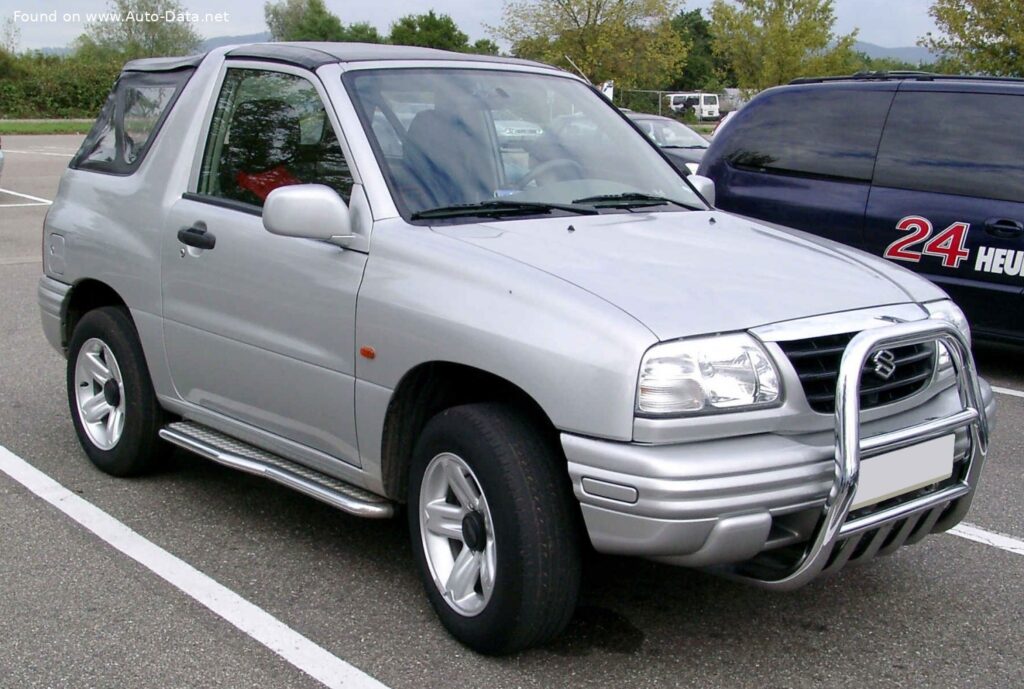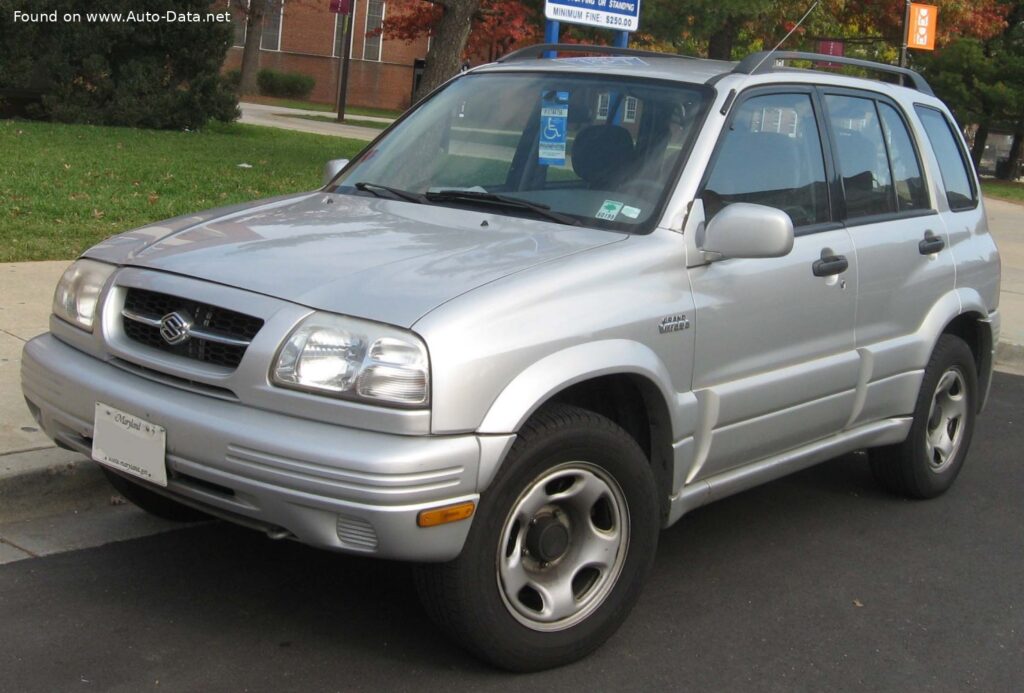
The Suzuki Grand Vitara (FT,GT) 2.0 TD Intercooler (3 dr) (92 Hp) represents a significant chapter in the history of compact SUVs, particularly for markets outside of North America where diesel powertrains and smaller, more agile off-roaders held considerable appeal. Launched in 1998 as a direct successor to the popular Vitara/Sidekick, the first-generation Grand Vitara, internally designated FT or GT, aimed to blend the traditional ruggedness and off-road capability Suzuki was renowned for with enhanced comfort, safety, and on-road refinement. This specific 3-door diesel variant, produced from 1998 to 2005, carved a niche for itself as a practical and economical four-wheel-drive vehicle in Europe, Asia, and other international markets where fuel efficiency and robust construction were paramount. While gasoline-powered Grand Vitaras were available in the United States, this diesel iteration was a staple for consumers seeking a durable, go-anywhere utility vehicle with lower running costs.
The Grand Vitara (FT,GT) and its Market Positioning
The Grand Vitara (FT,GT) marked a strategic evolution for Suzuki, moving beyond the bare-bones utility of its predecessors. It retained a body-on-frame chassis, a testament to its serious off-road intentions, but introduced a more contemporary design and a broader range of engine options. The 3-door configuration, with its shorter wheelbase, emphasized agility and a sportier aesthetic, appealing to a demographic that valued both urban maneuverability and weekend adventure capability. Within the Grand Vitara lineup, this 2.0 TD Intercooler model occupied a middle ground. It wasn’t the base-level offering – that was typically a smaller gasoline engine – but it wasn’t the premium version either. It targeted buyers who prioritized fuel economy and off-road capability over outright performance, offering a more affordable alternative to the larger displacement gasoline engines and, later, the more sophisticated 2.7-liter V6.
Powertrain & Engine Architecture
At the heart of this particular Suzuki Grand Vitara (FT,GT) 2.0 TD Intercooler (3 dr) (92 Hp) model lies a robust 2.0-liter (1998 cm3 or 121.93 cu. in.) inline-four diesel engine, identified by the engine code RHZ. This powerplant was designed for durability and efficiency, key attributes for the markets it served. The RHZ engine utilizes precombustion chamber injection, a system common in diesel engines of this era. This system involves a small precombustion chamber connected to the main cylinder, where fuel is initially injected and ignited, then transferred to the main chamber for complete combustion. This design promotes more complete fuel burning and reduces engine noise. The engine is equipped with a turbocharger and an intercooler, the latter cooling the compressed air from the turbocharger to increase air density and improve combustion efficiency. This setup generated a respectable 92 horsepower at 4000 rpm, which, while not a figure to win drag races, was more than adequate for its intended purpose. More critically, it produced a healthy 166.69 lb-ft (226 Nm) of torque at a low 2000 rpm. This strong low-end torque was crucial for off-road performance, allowing the vehicle to climb steep inclines and navigate challenging terrain with confidence, minimizing the need for constant gear changes.
Power was delivered to all four wheels via a durable 5-speed manual transmission, a common and preferred choice in many international markets for its direct engagement and reliability. The powertrain architecture featured a front, longitudinal engine layout, optimizing weight distribution and allowing for a robust all-wheel-drive (4×4) system. This setup provided genuine off-road capability, distinguishing the Grand Vitara from many car-based crossover SUVs that were beginning to emerge. The transmission itself is a conventional manual gearbox, known for its robustness and relatively simple maintenance requirements.
Driving Characteristics
The driving experience in the 2.0 TD Intercooler Grand Vitara was characterized by its strong low-end torque and utilitarian focus. While not a particularly fast vehicle, it offered ample power for everyday driving and off-road excursions. The 5-speed manual transmission allowed for precise control over the engine’s powerband, and the gear ratios were well-suited to both on-road cruising and low-speed off-road maneuvering. Compared to the gasoline-powered versions, the diesel offered significantly more torque at lower RPMs, making it easier to climb hills and navigate challenging terrain without constantly downshifting. However, the gasoline engines generally provided quicker acceleration and a higher top speed. The diesel’s power delivery was linear and predictable, making it easy to modulate the throttle and maintain control in slippery conditions. The relatively high gear ratios in the transmission contributed to good fuel economy, but also meant that the engine could feel strained at higher speeds.
Equipment & Trim Levels
The Grand Vitara (FT,GT) 2.0 TD Intercooler (3 dr) was typically equipped with a fairly basic level of standard features, reflecting its positioning as a practical and affordable SUV. Standard equipment generally included power steering, manual air conditioning, and a basic audio system. Interior upholstery was typically cloth, and the dashboard featured a functional, no-frills design. Optional extras varied depending on the market, but commonly included alloy wheels, a sunroof, and upgraded audio systems. Safety features were relatively limited by modern standards, but typically included Anti-lock Braking System (ABS). The interior trim was designed for durability rather than luxury, with hard-wearing plastics and simple controls. The 3-door configuration meant that rear seat access was somewhat limited, and rear passenger space was relatively tight.
Chassis & Braking
The Grand Vitara (FT,GT) utilized a traditional body-on-frame construction, providing a robust and durable platform for off-road driving. The front suspension utilized spring struts, while the rear featured coil springs, providing a balance between on-road comfort and off-road articulation. The suspension was tuned for a comfortable ride on paved roads, while still offering sufficient travel to absorb bumps and irregularities on rough terrain. Braking duties were handled by ventilated discs at the front and drum brakes at the rear, supplemented by an Anti-lock Braking System (ABS), which was a significant safety feature for vehicles of this era. The drum brakes on the rear were a cost-saving measure, but provided adequate stopping power for the vehicle’s weight and performance. Steering was a rack and pinion system with hydraulic power steering, offering a direct feel and ease of maneuverability. Stabilizer bars were fitted to both the front and rear axles to reduce body roll during cornering.
Market Reception & Comparison
Critics generally viewed the Suzuki Grand Vitara (FT,GT) 2.0 TD Intercooler (3 dr) favorably, praising its off-road capability, fuel efficiency, and robust construction. It was often compared to other compact SUVs such as the Toyota RAV4 and Honda CR-V, but the Grand Vitara distinguished itself with its body-on-frame chassis and genuine 4×4 system. The diesel engine was particularly well-regarded for its low-end torque and fuel economy, making it an attractive option for buyers who prioritized practicality and affordability. However, some critics noted that the interior was somewhat basic and lacked the refinement of some of its rivals. In terms of fuel economy, the 2.0 TD Intercooler model consistently outperformed the gasoline-powered versions, offering significantly better mileage in both urban and extra-urban driving conditions. Reliability was generally good, with the RHZ diesel engine proving to be a durable and long-lasting powerplant.
Technical Specifications: Suzuki Grand Vitara (FT,GT) 2.0 TD Intercooler (3 dr) (92 Hp)
| Category | Specification |
| General Information | Brand: Suzuki |
| Model: Grand Vitara | |
| Generation: Grand Vitara (FT,GT) | |
| Engine Type: 2.0 TD Intercooler (3 dr) (92 Hp) | |
| Production Start: 1998 year | |
| Production End: 2005 year | |
| Powertrain Architecture: Internal Combustion Engine | |
| Body Type: SUV | |
| Seats: 4 | |
| Doors: 3 | |
| Performance Specs | Fuel Consumption (Urban): 23.5 US mpg (10 l/100 km) |
| Fuel Consumption (Extra Urban): 39.2 US mpg (6 l/100 km) | |
| Fuel Type: Diesel | |
| Maximum Speed: 93.21 mph (150 km/h) | |
| Weight-to-Power Ratio: 13 kg/Hp, 76.7 Hp/tonne | |
| Weight-to-Torque Ratio: 5.3 kg/Nm, 188.3 Nm/tonne | |
| Engine Specs | Power: 92 Hp @ 4000 rpm |
| Power per Liter: 46 Hp/l | |
| Torque: 166.69 lb-ft (226 Nm) @ 2000 rpm | |
| Engine Layout: Front, Longitudinal | |
| Engine Model/Code: RHZ | |
| Engine Displacement: 2.0 l (1998 cm3 / 121.93 cu. in.) | |
| Number of Cylinders: 4 | |
| Engine Configuration: Inline | |
| Cylinder Bore: 3.39 in (86 mm) | |
| Piston Stroke: 3.39 in (86 mm) | |
| Compression Ratio: 20.9:1 | |
| Valves per Cylinder: 2 | |
| Fuel Injection System: Precombustion chamber injection | |
| Engine Aspiration: Turbocharger, Intercooler | |
| Valvetrain: OHC | |
| Engine Oil Capacity: 4.76 US qt (4.5 l) | |
| Coolant Capacity: 9.72 US qt (9.2 l) | |
| Space, Volume & Weights | Kerb Weight: 2645.55 lbs (1200 kg) |
| Trunk (boot) Space – Minimum: 9.11 cu. ft. (258 l) | |
| Trunk (boot) Space – Maximum: 29.24 cu. ft. (828 l) | |
| Fuel Tank Capacity: 14.79 US gal (56 l) | |
| Dimensions | Length: 150 in (3810 mm) |
| Width: 66.93 in (1700 mm) | |
| Height: 66.54 in (1690 mm) | |
| Wheelbase: 86.61 in (2200 mm) | |
| Front Track: 57.48 in (1460 mm) | |
| Rear Track: 57.48 in (1460 mm) | |
| Minimum Turning Circle: 30.84 ft (9.4 m) | |
| Drivetrain, Brakes & Suspension | Drive Wheel: All-wheel drive (4×4) |
| Gearbox Type: 5 gears, manual transmission | |
| Front Suspension: Spring Strut | |
| Rear Suspension: Coil spring | |
| Front Brakes: Ventilated discs | |
| Rear Brakes: Drum | |
| Assisting Systems: ABS (Anti-lock Braking System) | |
| Steering Type: Steering rack and pinion | |
| Power Steering: Hydraulic Steering |
Legacy
The Suzuki Grand Vitara (FT,GT) 2.0 TD Intercooler (3 dr) (92 Hp) left a notable legacy, particularly in the European and Asian markets where it was primarily sold. It solidified Suzuki’s reputation as a manufacturer of capable, reliable, and affordable four-wheel-drive vehicles. In the used car market today, these Grand Vitaras are often sought after by enthusiasts and those looking for a durable and economical off-road vehicle. The RHZ diesel engine is known for its longevity, and well-maintained examples can still provide years of reliable service. However, potential buyers should be aware of the age-related issues common to vehicles of this era, such as rust and wear and tear on suspension components. Overall, the Grand Vitara (FT,GT) 2.0 TD Intercooler remains a popular and respected choice for those who value practicality, durability, and off-road capability.