
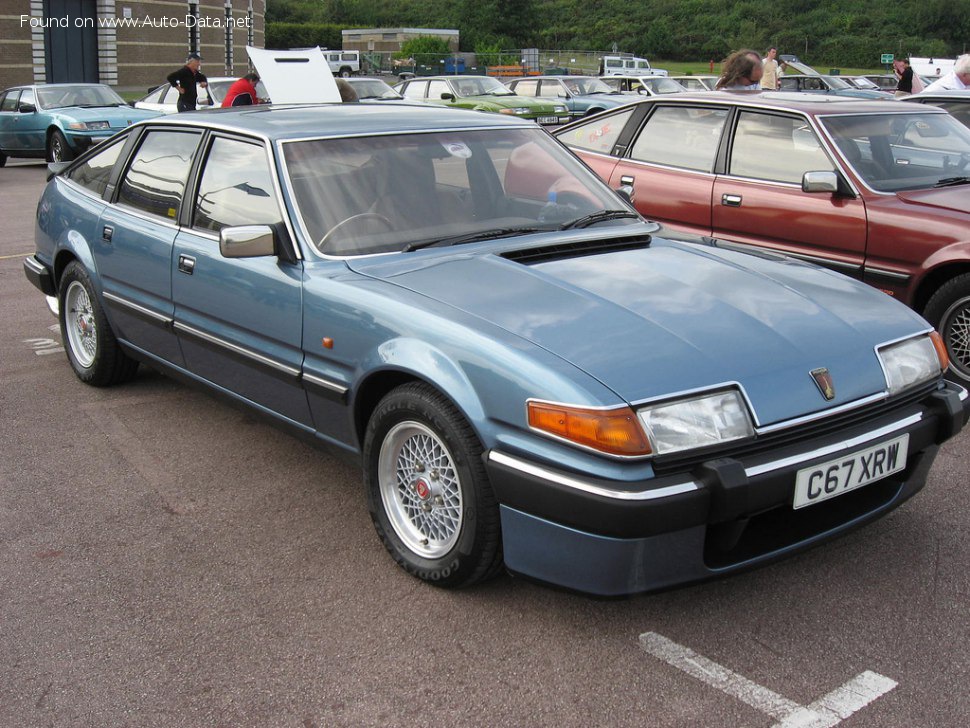
The Rover 2000-3500 Hatchback (SD1) 2600 S (126 Hp) represents a pivotal, though often challenging, period in British automotive history. Introduced in 1976, the SD1 was a bold attempt to modernize Rover’s image and compete with established European executive cars like BMW and Audi. The 2600 S variant, produced from 1982 to 1986, was a refined iteration of the original design, positioned as a mid-range offering within the SD1 lineup. While briefly sold in the United States, this 2.6-liter inline-six model found its primary market and popularity in Europe, where it distinguished itself with its unique styling and a blend of performance and practicality. It was a significant statement from British Leyland, aiming to merge Italian design aesthetics with traditional British engineering within an innovative five-door hatchback body.
Powertrain & Engine Architecture
The Rover 2000-3500 Hatchback (SD1) 2600 S (126 Hp) is powered by a naturally aspirated 2.6-liter (2638 cc) inline-six gasoline engine. This engine was a development of Rover’s established six-cylinder architecture, designed as a more economical alternative to the potent 3.5-liter V8 also available in the SD1 range. The engine code is typically identified as either the ‘2638’ or variations thereof, depending on specific market and minor revisions. It utilized a single Zenith-Stromberg 175CD carburetor for fuel delivery, a common setup for British Leyland engines of the era. The engine featured a single overhead camshaft (SOHC) valvetrain, operating two valves per cylinder. This configuration contributed to the engine’s smooth operation and relatively broad torque curve.
The 2600 S was exclusively offered with a three-speed automatic transmission, a Borg-Warner Type 35 unit. This transmission was chosen to provide a more comfortable and accessible driving experience, appealing to buyers who prioritized ease of use over outright performance. The automatic transmission featured torque converter technology, providing smooth gear changes and aiding in low-speed maneuverability. While not known for its responsiveness or fuel efficiency by modern standards, the Borg-Warner 35 was a robust and reliable unit when properly maintained.
Driving Characteristics
The 2600 S, with its 126 horsepower and 151 lb-ft of torque, offered a comfortable and refined driving experience. Acceleration from 0 to 60 mph took approximately 10.5 seconds, and it could achieve a top speed of around 114 mph. Compared to the V8-powered SD1 models, the 2600 S offered less raw power, but its inline-six engine delivered a smoother, more linear power delivery. The automatic transmission, while convenient, did detract from the overall performance, resulting in slower acceleration times compared to the manual transmission options available with other SD1 engines.
The gear ratios of the Borg-Warner automatic were optimized for cruising comfort rather than outright acceleration. First gear was relatively short, providing adequate launch power, while second and third gears were geared for comfortable highway speeds. The automatic transmission’s shift points were calibrated to balance fuel economy and drivability. The 2600 S felt most at home on long highway journeys, where its smooth engine and comfortable ride could be fully appreciated. It lacked the sporting character of the V8 models but provided a more relaxed and refined driving experience.
Equipment & Trim Levels
The “S” designation in the 2600 S indicated a higher trim level compared to the base models. Standard equipment typically included cloth upholstery, a wood-trimmed dashboard, and a comprehensive instrument panel. Alloy wheels were often standard, though variations existed depending on the market. Power-assisted steering was also a common feature. Optional extras included a sunroof, upgraded stereo systems, and leather upholstery. The interior design aimed for a luxurious feel, with attention paid to detail and comfort.
The dashboard layout was a distinctive feature of the SD1, with a curved instrument panel that wrapped around the driver. This design placed controls within easy reach and created a driver-focused cockpit. The seats were generally comfortable and supportive, providing adequate cushioning for long journeys. The 2600 S offered a good balance of comfort and convenience features, making it a well-equipped executive car for its time.
Chassis & Braking
The Rover SD1 utilized a monocoque chassis construction, providing a good balance of strength and rigidity. The front suspension featured independent double wishbones with coil springs and anti-roll bar, while the rear suspension employed a live axle with trailing arms, coil springs, and a Panhard rod. The 2600 S typically featured rear drum brakes, although some later models and higher-spec versions were equipped with rear disc brakes. Front brakes were ventilated discs.
The braking system was hydraulically assisted, providing adequate stopping power for the car’s weight and performance. The steering was power-assisted, making it relatively easy to maneuver at low speeds. The suspension setup was tuned for comfort, providing a smooth and compliant ride. However, the live rear axle could sometimes exhibit a degree of axle tramp under hard acceleration or braking.
Market Reception & Comparison
Critics generally praised the SD1’s styling and comfortable ride, but concerns about build quality and reliability were frequently raised. The 2600 S was seen as a good compromise between performance and economy, offering a more refined driving experience than the four-cylinder models without the higher running costs of the V8. Compared to its rivals, such as the BMW 5 Series and Mercedes-Benz W123, the SD1 offered a more distinctive design and a more spacious interior, thanks to its hatchback body style.
However, the SD1’s reputation for unreliability and rust issues hampered its sales success. Fuel economy was also a concern, although the 2600 S was more economical than the V8 models. The automatic transmission, while convenient, detracted from the overall performance. Despite its flaws, the 2600 S remained a popular choice for buyers who appreciated its unique character and comfortable ride.
Technical Specifications
| Brand | Rover |
| Model | 2000-3500 Hatchback |
| Generation | 2000-3500 Hatchback (SD1) |
| Type (Engine) | 2600 S (126 Hp) |
| Start of Production | 1982 |
| End of Production | 1986 |
| Powertrain Architecture | Internal Combustion engine |
| Body Type | Hatchback |
| Seats | 5 |
| Doors | 5 |
| Fuel Consumption (Urban) | 14.9 l/100 km (15.8 US mpg) |
| Fuel Consumption (Extra Urban) | 6.9 l/100 km (34.1 US mpg) |
| Fuel Type | Petrol (Gasoline) |
| Acceleration 0 – 60 mph | 10.5 sec |
| Maximum Speed | 183 km/h (113.71 mph) |
| Power | 126 Hp |
| Engine Aspiration | Naturally aspirated engine |
| Fuel Tank Capacity | 66 l (17.44 US gal) |
Legacy
The Rover SD1, and the 2600 S variant, holds a complex legacy. While plagued by reliability issues, it remains a fondly remembered classic, celebrated for its distinctive styling and innovative hatchback design. The 2.6-liter inline-six engine, when properly maintained, proved to be a durable and reliable powerplant. Today, the 2600 S is a sought-after classic car, appealing to enthusiasts who appreciate its unique character and historical significance.
In the used car market, well-maintained examples of the 2600 S command a premium price. However, potential buyers should be aware of the common issues associated with the SD1, such as rust, electrical problems, and carburetor issues. Parts availability can be challenging, but a dedicated network of Rover enthusiasts and specialist suppliers exists to support owners. The 2600 S represents a unique chapter in British automotive history, a testament to the ambition and creativity of Rover engineers and designers.
