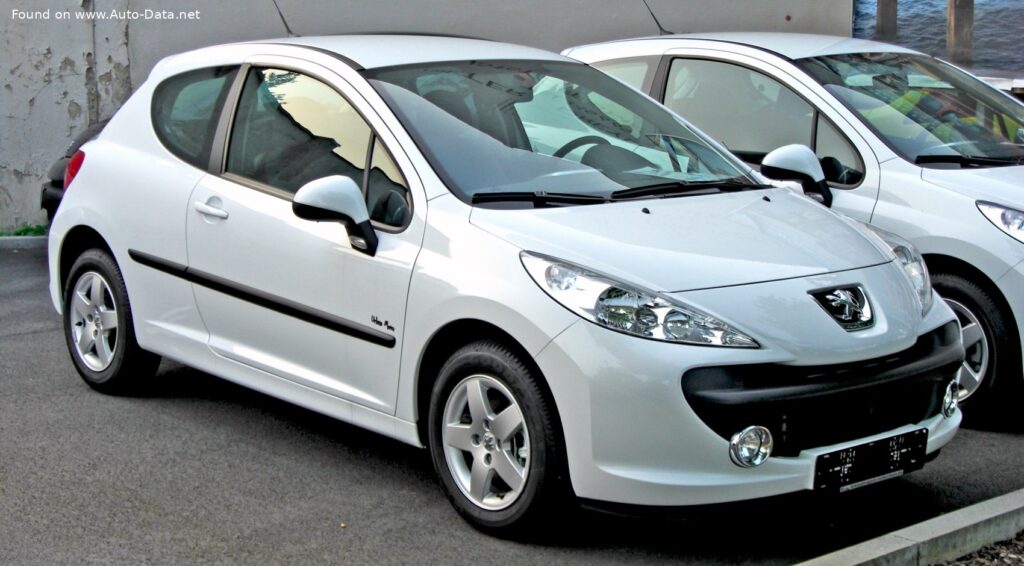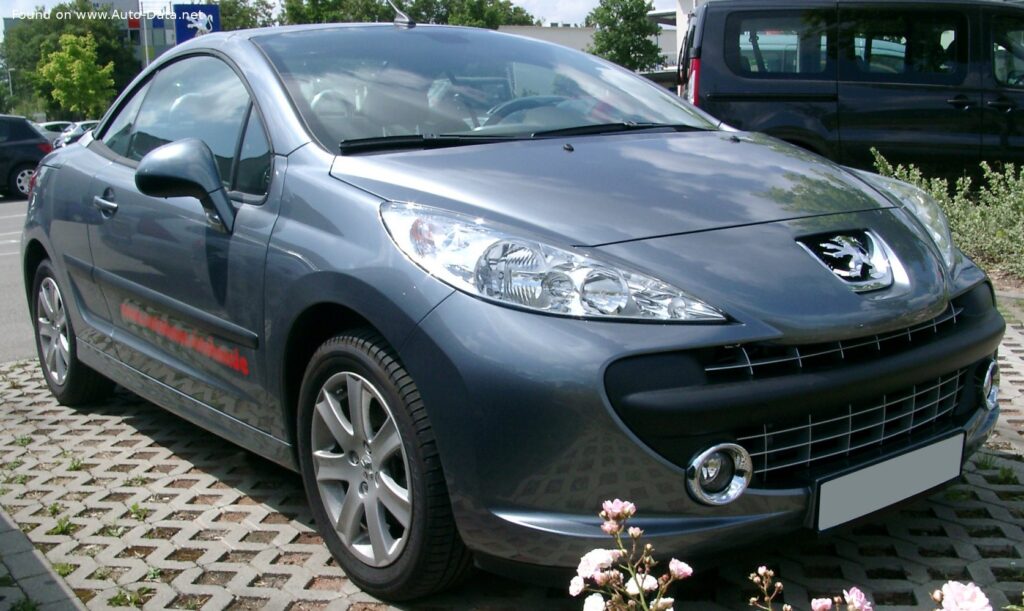
The Peugeot 207 CC 1.6 VTi (120 Hp) represents a significant offering from the French automaker in the compact coupe-cabriolet segment. Launched in 2006 as a successor to the highly successful 206 CC, the 207 CC continued Peugeot’s tradition of bringing affordable, stylish open-top motoring to the masses. This generation, produced from 2006 to 2009, was a staple in the European market, where its blend of everyday practicality, fuel efficiency, and the undeniable appeal of a retractable hardtop made it a popular choice for buyers seeking a versatile and engaging driving experience. While never officially sold in the United States, the 207 CC exemplifies a distinct European automotive trend, offering a unique combination of body styles in a single vehicle, transforming from a snug coupe to an airy convertible with the press of a button. Its 1.6-liter VTi engine, developed in collaboration with BMW, was a modern powertrain for its time, providing a balanced mix of performance and economy for its intended urban and touring roles.
Engine and Performance: Powering the Peugeot 207 CC 1.6 VTi (120 Hp)
Under the hood, the Peugeot 207 CC 1.6 VTi (120 Hp) featured a 1.6-liter (1598 cm3 or 97.52 cubic inches) naturally aspirated inline four-cylinder engine. This powerplant, designated with the engine code 5FW EP6, was a product of the PSA Group and BMW collaboration, known as the Prince engine family. It incorporated DOHC (Double Overhead Camshaft) with VVT (Variable Valve Timing), contributing to its efficiency and responsiveness. The engine was configured for multi-port manifold injection, a common and reliable fuel delivery system for its era.
With a compression ratio of 11:1, the engine delivered a respectable 120 horsepower at 6000 rpm, translating to a power-per-liter output of 75.1 HP/l. Torque figures stood at 118.01 lb.-ft. (160 Nm) peaking at 4250 rpm. This power was channeled to the front wheels via a 5-speed manual transmission, a common setup for compact cars in Europe prioritizing driver engagement and efficiency.
In terms of performance, the 207 CC 1.6 VTi was capable of accelerating from 0 to 60 mph in a reasonable 10.2 seconds (0-100 km/h in 10.7 seconds), reaching a top speed of 124.27 mph (200 km/h). While not a performance-oriented sports car, these figures were more than adequate for its segment, allowing for comfortable highway cruising and agile urban maneuverability. Fuel efficiency was a strong suit for the 1.6 VTi, with a combined fuel consumption rating of 35.6 US mpg (6.6 l/100 km). Urban driving yielded 26.7 US mpg (8.8 l/100 km), while extra-urban conditions saw an impressive 44.4 US mpg (5.3 l/100 km). With CO2 emissions of 155 g/km, it met the Euro 4 emission standard, reflecting its relatively clean operation for the mid-2000s.
Design and Features: The Convertible Experience
The defining characteristic of the Peugeot 207 CC was its coupe-cabriolet body type, featuring a sophisticated two-piece retractable hardtop. This design allowed owners to enjoy the security and refinement of a fixed-roof coupe and the exhilaration of an open-air convertible, all in one vehicle. The transformation process was fully automatic, a key selling point that offered convenience and technological appeal.
Measuring 158.94 inches (4037 mm) in length, 68.82 inches (1748 mm) in width, and 55 inches (1397 mm) in height, the 207 CC maintained a compact footprint ideal for crowded European city streets. Its wheelbase of 100 inches (2540 mm) contributed to a stable ride quality. The design language was distinctly Peugeot, with a bold front grille, swept-back headlights, and a sleek profile that was accentuated whether the roof was up or down.
Inside, the 207 CC offered a 2+2 seating configuration, meaning two comfortable front seats and two smaller rear seats suitable primarily for children or short trips. Trunk space varied significantly depending on the roof’s position: a minimum of 6.6 cubic feet (187 liters) with the roof stowed, expanding to a generous 15.86 cubic feet (449 liters) when the roof was up, making it surprisingly practical for a convertible. Safety features for its time included ABS (Anti-lock Braking System), and the car was built with structural reinforcements to compensate for the lack of a fixed roof, aiming to provide occupant protection in the event of a rollover. The car rode on 195/55 R16 tires with 16-inch wheel rims, providing a good balance of grip and ride comfort.
207 CC 1.6 VTi: Variant Positioning and Trim Levels
The 1.6 VTi (120 Hp) variant of the Peugeot 207 CC occupied the mid-range position within the model lineup. It served as the entry point into the CC experience, offering a balance between affordability and features. Above it sat the more powerful 1.6 THP (Turbo High Pressure) models, which provided a noticeable performance boost but came at a higher price point. The 1.6 VTi was aimed at buyers who prioritized fuel efficiency, everyday usability, and the enjoyment of open-top motoring without the expense of a higher-performance variant.
Standard equipment on the 1.6 VTi typically included air conditioning, electric front windows, a CD stereo system, and alloy wheels. Optional extras included leather upholstery, automatic climate control, parking sensors, and a panoramic sunroof. Trim levels varied slightly depending on the market, but generally offered progressive upgrades in terms of interior appointments and convenience features. The interior typically featured a dark color scheme with cloth upholstery, and the dashboard layout was functional and driver-focused.
Chassis and Braking
The Peugeot 207 CC 1.6 VTi utilized a McPherson strut front suspension and a semi-independent coil spring rear suspension. This setup provided a good balance between ride comfort and handling, suitable for both city driving and longer journeys. The front suspension featured an anti-roll bar to reduce body roll during cornering. The car was equipped with ventilated disc brakes at the front and disc brakes at the rear, providing adequate stopping power for its weight and performance. ABS (Anti-lock Braking System) was standard, enhancing safety by preventing wheel lockup during emergency braking.
Market Reception & Comparison
Critics generally viewed the Peugeot 207 CC 1.6 VTi favorably, praising its stylish design, comfortable ride, and the convenience of its retractable hardtop. The 1.6 VTi engine was considered adequate for its intended purpose, providing sufficient power for everyday driving without being overly sporty. Fuel economy was a strong point, and the car was generally regarded as reliable. Compared to the higher-output 1.6 THP models, the 1.6 VTi offered a more economical and accessible entry point into the 207 CC range. However, it lacked the performance and responsiveness of its turbocharged sibling. In terms of reliability, the 1.6 VTi engine proved to be generally robust, although owners should be mindful of regular maintenance, particularly oil changes and timing belt replacement. Compared to rivals like the Opel Tigra TwinTop, the 207 CC was often praised for its more refined interior and smoother roof operation.
Technical Specifications: Peugeot 207 CC 1.6 VTi (120 Hp)
| Category | Specification |
| General Information | |
| Brand | Peugeot |
| Model | 207 |
| Generation | 207 CC |
| Type (Engine) | 1.6 VTi (120 Hp) |
| Production Start | 2006 |
| Production End | 2009 |
| Powertrain Architecture | Internal Combustion Engine |
| Body Type | Coupe – Cabriolet |
| Seats | 4 |
| Doors | 2 |
| Performance Specs | |
| Fuel Consumption (Urban) | 8.8 l/100 km (26.7 US mpg) |
| Fuel Consumption (Extra Urban) | 5.3 l/100 km (44.4 US mpg) |
| Fuel Consumption (Combined) | 6.6 l/100 km (35.6 US mpg) |
| CO2 Emissions | 155 g/km |
| Fuel Type | Petrol (Gasoline) |
| Acceleration 0-60 mph | 10.2 sec |
| Acceleration 0-100 km/h | 10.7 sec |
| Maximum Speed | 124.27 mph (200 km/h) |
| Emission Standard | Euro 4 |
| Weight-to-Power Ratio | 11.3 kg/Hp (88.8 Hp/tonne) |
| Weight-to-Torque Ratio | 8.5 kg/Nm (118.3 Nm/tonne) |
| Engine Specs | |
| Power | 120 Hp @ 6000 rpm |
| Power Per Liter | 75.1 Hp/l |
| Torque | 118.01 lb.-ft. (160 Nm) @ 4250 rpm |
| Engine Layout | Front, Transverse |
| Engine Model/Code | 5FW EP6 |
| Engine Displacement | 1598 cm3 (97.52 cu. in.) |
| Number of Cylinders | 4 |
| Engine Configuration | Inline |
| Cylinder Bore | 3.03 in. (77 mm) |
| Piston Stroke | 3.38 in. (85.8 mm) |
| Compression Ratio | 11:1 |
| Valves Per Cylinder | 4 |
| Fuel Injection System | Multi-port manifold injection |
| Engine Aspiration | Naturally aspirated engine |
| Valvetrain | DOHC-VVT |
| Engine Oil Capacity | 4.25 l (4.49 US qt) |
| Coolant Capacity | 5.4 l (5.71 US qt) |
| Space, Volume and Weights | |
| Kerb Weight | 2980.65 lbs. (1352 kg) |
| Max. Weight | 3791.95 lbs. (1720 kg) |
| Max Load | 811.3 lbs. (368 kg) |
| Trunk Space (Minimum) | 6.6 cu. ft. (187 l) |
| Trunk Space (Maximum) | 15.86 cu. ft. (449 l) |
| Fuel Tank Capacity | 13.21 US gal (50 l) |
| Permitted Trailer Load with Brakes (12%) | 2292.81 lbs. (1040 kg) |
| Permitted Trailer Load without Brakes | 1322.77 lbs. (600 kg) |
| Dimensions | |
| Length | 158.94 in. (4037 mm) |
| Width | 68.82 in. (1748 mm) |
| Width with Mirrors Folded | 71.57 in. (1818 mm) |
| Width Including Mirrors | 77.64 in. (1972 mm) |
| Height | 55 in. (1397 mm) |
| Wheelbase | 100 in. (2540 mm) |
| Front Track | 57.83 in. (1469 mm) |
| Rear Track | 57.87 in. (1470 mm) |
| Drag Coefficient (Cd) | 0.31 |
| Minimum Turning Circle | 35.43 ft. (10.8 m) |
| Drivetrain, Brakes and Suspension | |
| Drivetrain Architecture | Front-wheel drive, Internal Combustion Engine |
| Drive Wheel | Front wheel drive |
| Number of Gears / Gearbox Type | 5 gears, manual transmission |
| Front Suspension | Independent type McPherson |
| Rear Suspension | Semi-independent, coil spring |
| Front Brakes | Ventilated discs |
| Rear Brakes | Disc |
| Assisting Systems | ABS (Anti-lock braking system) |
| Steering Type | Steering rack and pinion |
| Tire Size | 195/55 R16 |
| Wheel Rims Size | 16 inches |
Legacy
The Peugeot 207 CC 1.6 VTi (120 Hp) powertrain has proven to be generally reliable in the long term, provided regular maintenance is performed. The Prince engine family, co-developed with BMW, is known for its durability and efficiency. Common issues, such as oil leaks and timing belt wear, are relatively straightforward to address. In the used car market today, the 207 CC 1.6 VTi remains an affordable and appealing option for buyers seeking a stylish and practical convertible. Its compact size, fuel efficiency, and relatively low running costs make it a sensible choice for urban driving and weekend getaways. While it may not offer the performance of more powerful variants, its balanced characteristics and charming design continue to attract enthusiasts and those seeking a taste of open-top motoring without breaking the bank.