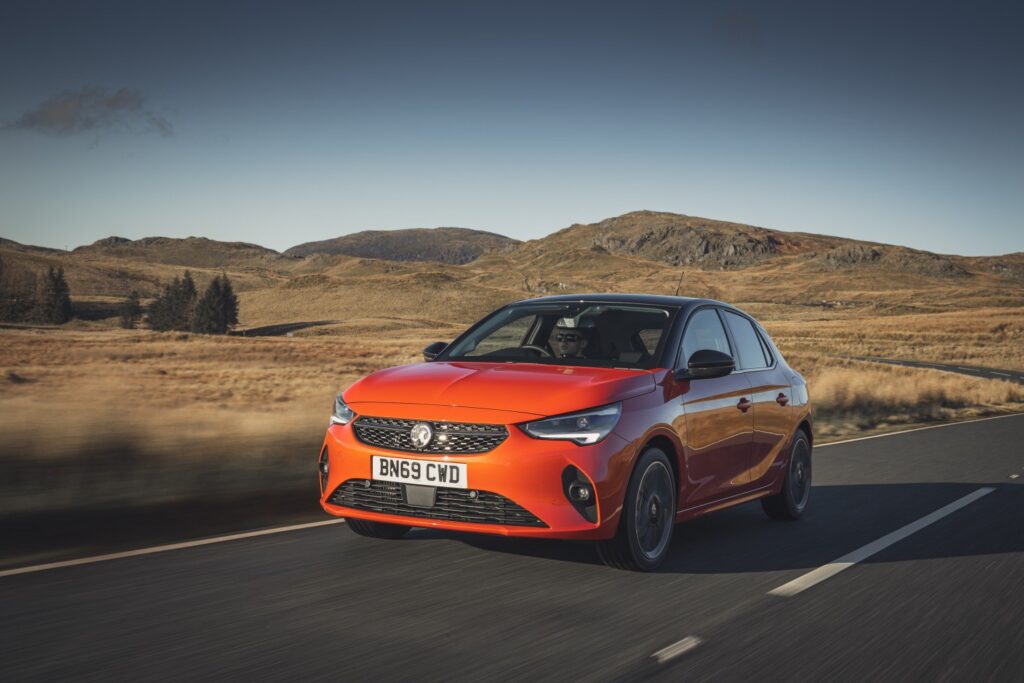
The Vauxhall Corsa F e 50 kWh (136 Hp) represents a significant milestone in the storied history of the Vauxhall Corsa, marking the model’s first foray into the fully electric vehicle (BEV) market. Launched in June 2019 as part of the sixth-generation Corsa (Corsa F), this electric variant quickly established itself as a key player in the competitive European B-segment, or supermini class. While Vauxhall is a British brand, historically a subsidiary of General Motors and more recently part of the PSA Group (now Stellantis), the Corsa F shares its fundamental platform and electric powertrain with its European sibling, the Opel Corsa-e, and other Stellantis electric models like the Peugeot e-208.
The Corsa has long been a staple on European roads, renowned for its compact dimensions, practicality, and affordability. With the Corsa F e, Vauxhall aimed to retain these core attributes while embracing the burgeoning demand for zero-emission transportation. This electric hatchback offered consumers a familiar package with a modern twist, providing a compelling blend of everyday usability, respectable range, and spirited performance, all wrapped in a contemporary design. Produced until July 2023, the Corsa F e played a crucial role in Vauxhall’s electrification strategy, democratizing electric mobility for a wider audience in its primary markets.
The Vauxhall Corsa F e 50 kWh (136 Hp): Powertrain and Performance
At the heart of the Vauxhall Corsa F e 50 kWh (136 Hp) lies a robust and efficient all-electric powertrain architecture (BEV). This setup features a single electric motor strategically placed on the front axle, driving the front wheels. This synchronous electric motor delivers a potent 136 horsepower (Hp) and an impressive 191.77 lb.-ft. of instant torque. The immediate availability of this torque is a hallmark of electric vehicles, providing brisk acceleration and a responsive driving experience, particularly beneficial in urban environments.
Powering this motor is a sophisticated Lithium-ion (Li-Ion) battery pack with a gross capacity of 50 kWh, of which 46 kWh is usable. This battery operates at a voltage of 394.2 V and weighs a substantial 771.62 lbs., strategically positioned below the floor and under the rear and front seats to optimize weight distribution and maintain a low center of gravity. This placement not only contributes to the vehicle’s stable handling characteristics but also maximizes interior passenger and cargo space.
Performance figures for the Corsa F e are quite respectable for its class. The vehicle can accelerate from 0 to 60 mph in a swift 7.6 seconds, making it feel agile and capable in daily driving scenarios. Its maximum speed is electronically limited to 93.21 mph, a common practice for electric vehicles to optimize efficiency and range. Speaking of range, the Corsa F e boasts an all-electric range (WLTP) of 208.78 miles, making it suitable for both daily commutes and longer journeys without frequent recharging anxieties. The single-gear automatic transmission ensures a smooth and seamless power delivery, characteristic of modern electric vehicles, further enhancing the driving comfort and simplicity.
Engine and Transmission Details
The Corsa F e utilizes a permanent magnet synchronous motor, known for its efficiency and power density. The 50 kWh battery pack employs a liquid thermal management system to maintain optimal operating temperatures, crucial for longevity and performance. The single-speed automatic transmission is a direct-drive system, eliminating the need for traditional gears and contributing to the vehicle’s smooth acceleration. Regenerative braking is also incorporated, capturing kinetic energy during deceleration and converting it back into electricity, further extending the vehicle’s range.
Driving Characteristics
The Corsa F e 50 kWh delivers a driving experience markedly different from its gasoline-powered counterparts. The instant torque provides brisk acceleration, particularly noticeable in city driving. While not a performance-oriented vehicle, the 136 hp motor offers sufficient power for confident overtaking maneuvers. The low center of gravity, thanks to the battery pack’s placement, contributes to stable handling and reduced body roll. Compared to the 1.2-liter gasoline versions of the Corsa F, the electric variant offers significantly quicker acceleration and a quieter, more refined driving experience. The regenerative braking system takes some getting used to, but allows for “one-pedal driving” in certain conditions, simplifying the driving process.
Compared to other trims in the Corsa F lineup, such as the 1.5-liter diesel, the electric version prioritizes responsiveness over outright fuel efficiency (or rather, energy efficiency). While the diesel offered superior range on a single fill-up, the Corsa F e provides a more engaging and environmentally friendly driving experience. The lack of engine noise and vibrations further enhances the sense of refinement.
Equipment & Trim Levels
The Corsa F e was typically offered in several trim levels, each building upon the base model with additional features. Standard equipment generally included air conditioning, a 7-inch touchscreen infotainment system with Apple CarPlay and Android Auto compatibility, digital instrument cluster, and a suite of safety features such as automatic emergency braking and lane departure warning. Higher trim levels added features like a larger touchscreen, heated seats and steering wheel, parking sensors, and adaptive cruise control. Interior upholstery ranged from cloth to more premium leatherette options. Optional extras included a panoramic sunroof, premium audio system, and various styling packages.
Chassis & Braking
The Corsa F e utilizes a MacPherson strut front suspension and a torsion beam rear suspension. This setup provides a good balance of ride comfort and handling. The battery pack’s low placement contributes to a lower center of gravity, enhancing stability. The braking system consists of ventilated disc brakes at the front and disc brakes at the rear, providing adequate stopping power. The electric power steering offers light and precise control, making it easy to maneuver in tight spaces. The vehicle’s tires are typically 195/55 R16 or 205/45 R17, depending on the trim level.
Market Reception & Comparison
The Vauxhall Corsa F e was generally well-received by critics, who praised its practicality, affordability, and respectable range. It was seen as a compelling entry-level electric vehicle, offering a good balance of features and performance. Compared to other electric superminis like the Renault Zoe and Peugeot e-208, the Corsa F e was often considered to be a more mainstream and less quirky option. Fuel economy (or rather, energy consumption) was a key selling point, with the Corsa F e offering significantly lower running costs than its gasoline-powered counterparts. Reliability reports have been generally positive, with few major issues reported. However, as with all electric vehicles, battery degradation over time is a potential concern.
Technical Specifications
| Category | Specification |
| General Information | |
| Brand | Vauxhall |
| Model | Corsa |
| Generation | Corsa F |
| Type (Engine) | e 50 kWh (136 Hp) |
| Start of Production | June, 2019 |
| End of Production | July, 2023 |
| Powertrain Architecture | BEV (Electric Vehicle) |
| Body Type | Hatchback |
| Seats | 5 |
| Doors | 5 |
| Performance Specifications | |
| Fuel Type | Electricity |
| Acceleration 0 – 60 mph | 7.6 sec |
| Maximum Speed | 93.21 mph (150 km/h) |
| Electric Cars and Hybrids Specifications | |
| Gross Battery Capacity | 50 kWh |
| Net (Usable) Battery Capacity | 46 kWh |
| Battery Voltage | 394.2 V |
| Battery Technology | Lithium-ion (Li-Ion) |
| Battery Weight | 771.62 lbs. (350 kg) |
| Battery Location | Below the floor, under the rear seats, under the front seats |
| All-electric Range (WLTP) | 208.78 mi (336 km) |
| Electric Motor Power | 136 Hp |
| Electric Motor Torque | 191.77 lb.-ft. (260 Nm) |
| Electric Motor Location | Front axle, Transverse |
| Electric Motor Type | Synchronous |
| System Power | 136 Hp |
| System Torque | 191.77 lb.-ft. (260 Nm) |
| Space, Volume and Weights | |
| Trunk (boot) Space – Minimum | 10.91 cu. ft. (309 l) |
| Trunk (boot) Space – Maximum | 39.48 cu. ft. (1118 l) |
| Dimensions | |
| Length | 159.84 in. (4060 mm) |
| Width | 69.49 in. (1765 mm) |
| Width Including Mirrors | 77.17 in. (1960 mm) |
| Height | 56.42 in. (1433 mm) |
| Wheelbase | 99.92 in. (2538 mm) |
| Front Overhang | 32.72 in. (831 mm) |
| Rear Overhang | 27.2 in. (691 mm) |
| Minimum Turning Circle (Turning Diameter) | 35.1 ft. (10.7 m) |
| Drivetrain, Brakes and Suspension Specifications | |
| Drivetrain Architecture | One electric motor drives the front wheels. |
| Drive Wheel | Front wheel drive |
| Number of Gears and Type of Gearbox | 1 gear, automatic transmission |
| Front Brakes | Ventilated discs |
| Rear Brakes | Disc |
| Assisting Systems | ABS (Anti-lock braking system) |
| Steering Type | Steering rack and pinion |
| Power Steering | Electric Steering |
| Tires Size | 195/55 R16; 205/45 R17 |
| Wheel Rims Size | 6.5J x 16; 7J x 17 |
Legacy
The Vauxhall Corsa F e 50 kWh (136 Hp) holds a significant place in the brand’s history as its first mass-market electric vehicle. It demonstrated Vauxhall’s commitment to electrification and helped to pave the way for future EV models. On the used car market, the Corsa F e remains a relatively affordable option for those seeking an electric supermini. Battery health is a key consideration for potential buyers, and regular servicing is essential to ensure long-term reliability. The Corsa F e’s legacy is one of successful transition, proving that a popular and established model could be adapted to meet the demands of a changing automotive landscape.