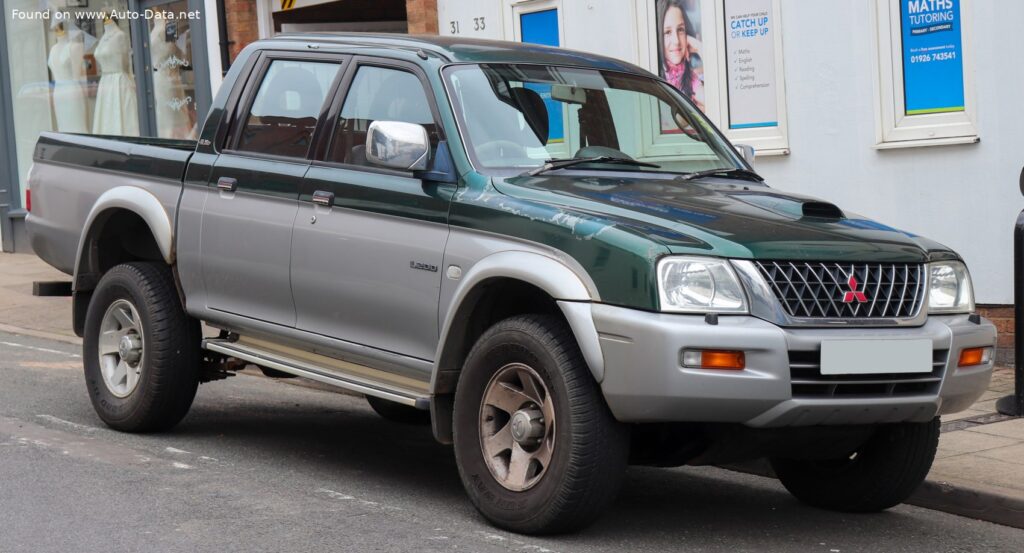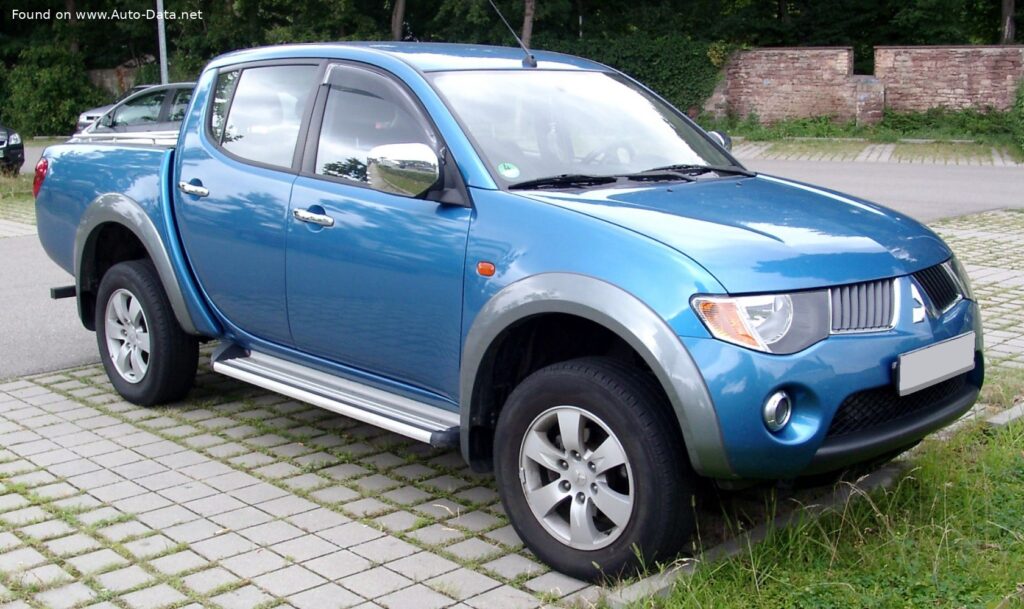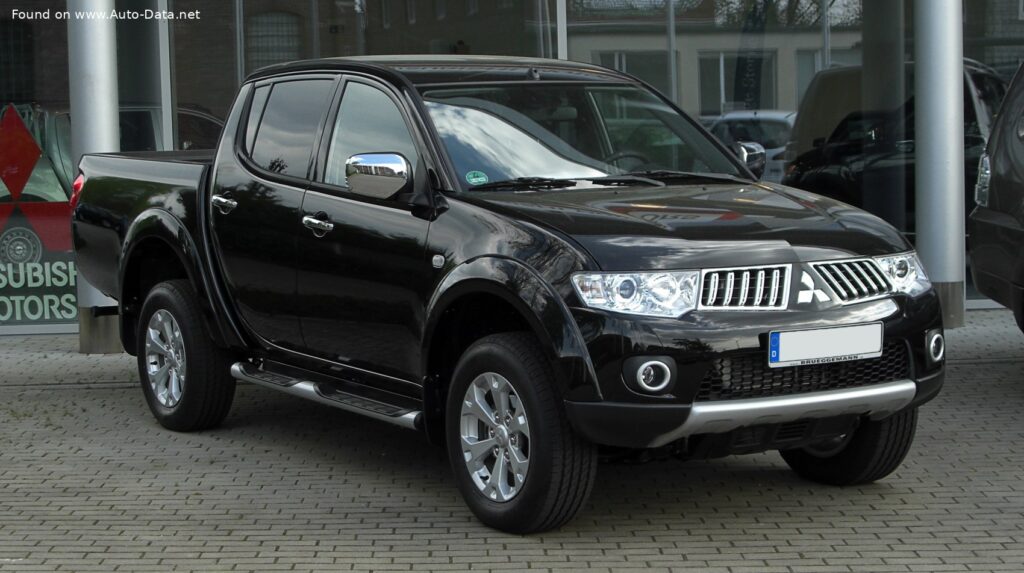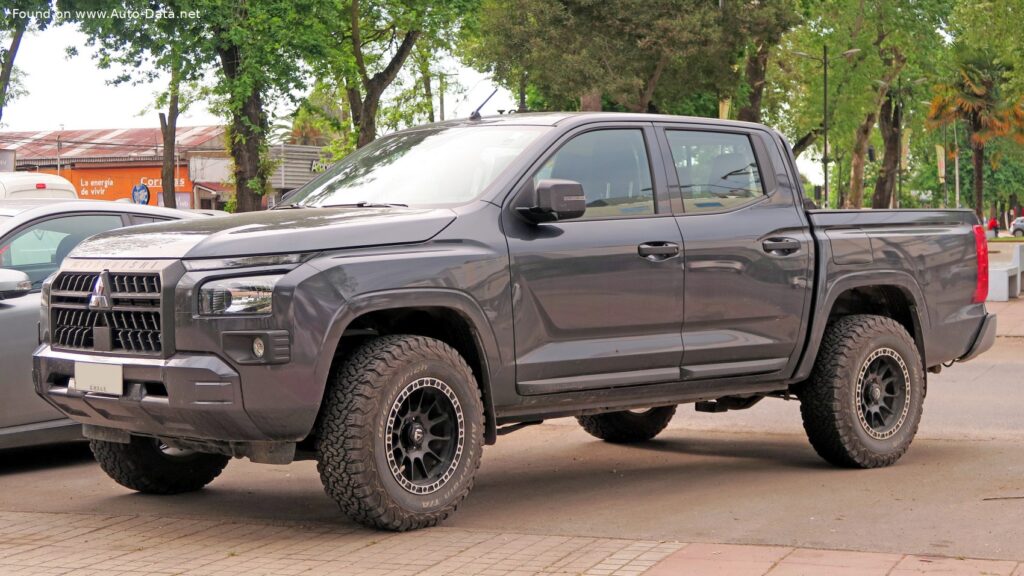
The Mitsubishi L200 VI Double Cab 2.4 MIVEC (201 Hp) 4WD, launched in 2023, represents the sixth generation of Mitsubishi’s globally recognized pick-up truck, known as the Triton in many markets. This particular variant embodies Mitsubishi’s commitment to blending robust utility with modern efficiency and driving dynamics. While not sold in the United States, the Mitsubishi L200 VI Double Cab is a crucial model in numerous international markets, including Europe, Asia, Oceania, and Africa, where mid-size pick-up trucks are essential for both commercial and recreational purposes. Designed to handle challenging terrains and substantial loads, this double cab model offers the practicality of a five-seater cabin combined with a capable cargo bed, making it a popular choice for a diverse range of users, from tradespeople to outdoor enthusiasts. The Mitsubishi L200 VI Double Cab is positioned as a mid-range offering, balancing capability with affordability and comfort.
Powertrain & Engine Architecture
The heart of the 2023 Mitsubishi L200 VI Double Cab 2.4 MIVEC (201 Hp) 4WD is a 2.4-liter (2442 cm³) 4N16 inline-four diesel engine. This powerplant incorporates Mitsubishi’s MIVEC (Mitsubishi Innovative Valve timing Electronic Control) technology, optimizing valve timing to enhance power output and fuel efficiency. A BiTurbo setup, coupled with an intercooler, further boosts performance, delivering 201 horsepower at 3500 rpm. This results in a power-per-liter ratio of 82.3 Hp/l, a respectable figure for a diesel engine. The engine utilizes a commonrail direct injection system, delivering fuel directly into the cylinders at extremely high pressure for improved combustion and efficiency.
Valvetrain and Fuel Injection
The 4N16 engine features a double overhead camshaft (DOHC) valvetrain with four valves per cylinder, contributing to its efficient breathing and power delivery. The commonrail diesel injection system employs piezoelectric injectors for precise fuel metering and atomization. This system is capable of multiple injection events per combustion cycle, optimizing both power and emissions. The BiTurbo configuration utilizes two turbochargers – a small turbocharger for quick response at low engine speeds and a larger turbocharger for increased power at higher speeds. This setup minimizes turbo lag and provides a broad, usable powerband.
Transmission
Power is transmitted to the wheels through a durable 6-speed automatic transmission. This transmission is designed to handle the engine’s substantial torque output and provide smooth, responsive shifting. The automatic transmission features a torque converter for smooth engagement and multiplication of engine torque. Gear ratios are optimized for both on-road cruising and off-road crawling, providing a balance of performance and efficiency. The transmission also includes a manual shift mode, allowing the driver to select gears for greater control in challenging conditions.
Driving Characteristics
The 2.4 MIVEC engine, paired with the 6-speed automatic transmission, delivers a refined driving experience compared to earlier L200 generations. The BiTurbo setup provides strong low-end torque, making it capable of hauling heavy loads and navigating challenging terrain. While not as overtly powerful as some competitors, the L200 VI offers a smooth and predictable power delivery. The automatic transmission shifts smoothly and efficiently, contributing to a comfortable ride. Compared to manual transmission versions, the automatic offers greater convenience, particularly in urban driving. Compared to higher-output variants (where available in other markets), this 201 hp version prioritizes fuel efficiency and a more relaxed driving experience over outright performance.
Equipment & Trim Levels
The Mitsubishi L200 VI Double Cab 2.4 MIVEC (201 Hp) 4WD typically comes standard with a comprehensive suite of features. These include air conditioning, power windows and locks, a touchscreen infotainment system with Bluetooth connectivity, and a rearview camera. Interior upholstery is typically cloth, with higher trim levels offering leather options. Standard safety features include ABS, electronic stability control, and multiple airbags. Optional extras often include a navigation system, premium audio system, heated seats, and a sunroof. The dashboard configuration is modern and functional, with clearly labeled controls and a user-friendly interface. Trim levels vary by market, but generally offer increasing levels of comfort and convenience features.
Chassis & Braking
The L200 VI Double Cab features a robust chassis designed to withstand demanding use. The front suspension utilizes an independent double wishbone setup with coil springs and a transverse stabilizer bar, providing a comfortable ride and good handling. The rear suspension employs a rigid axle with leaf springs, offering excellent load-carrying capacity and durability. Braking is handled by ventilated discs at the front (290 mm) and drum brakes at the rear (295 mm). An Anti-lock Braking System (ABS) with Electronic Brakeforce Distribution (EBD) is standard, enhancing safety and control. Electric power steering provides light and precise steering feel, making it easier to maneuver in tight spaces. The vehicle’s ground clearance of 228 mm (8.98 in.) allows it to tackle rough terrain with confidence.
Market Reception & Comparison
The Mitsubishi L200 VI Double Cab 2.4 MIVEC (201 Hp) 4WD has been generally well-received by automotive critics in its target markets. It is praised for its robust construction, comfortable ride, and capable off-road performance. Fuel economy figures are competitive for a vehicle of its size and capability, ranging from 7.8-8.1 l/100 km (30.2 – 29 US mpg) combined. Compared to other trims in the L200 lineup, this 2.4 MIVEC version offers a good balance of performance and efficiency. It is generally more fuel-efficient than higher-output variants, but may not offer the same level of outright power. Compared to competitors like the Ford Ranger and Toyota Hilux, the L200 VI offers a compelling combination of features, performance, and value. Reliability is generally considered to be good, although long-term data is still emerging.
Technical Specifications: Mitsubishi L200 VI Double Cab 2.4 MIVEC (201 Hp) 4WD (2023)
| Category | Specification |
| General Information | |
| Brand | Mitsubishi |
| Model | L200 |
| Generation | L200 VI Double Cab |
| Type (Engine) | 2.4 MIVEC (201 Hp) 4WD |
| Start of Production | 2023 year |
| Powertrain Architecture | Internal Combustion engine |
| Body type | Pick-up |
| Seats | 5 |
| Doors | 4 |
| Performance Specs | |
| Fuel Consumption (Urban) | 9.9-10.2 l/100 km (23.8 – 23.1 US mpg) |
| Fuel Consumption (Extra Urban) | 6.6 l/100 km (35.6 US mpg) |
| Fuel Consumption (Combined) | 7.8-8.1 l/100 km (30.2 – 29 US mpg) |
| Fuel Type | Diesel |
| Maximum Speed | 180 km/h (111.85 mph) |
| Emission Standard | Euro 6 |
| Weight-to-Power Ratio | 10 kg/Hp (100 Hp/tonne) |
| Weight-to-Torque Ratio | 4.3 kg/Nm (233.8 Nm/tonne) |
| Engine Specs | |
| Power | 201 Hp @ 3500 rpm |
| Power per liter | 82.3 Hp/l |
| Torque | 470 Nm @ 1500-2750 rpm (346.65 lb.-ft.) |
| Engine Layout | Front, Longitudinal |
| Engine Model/Code | 4N16 |
| Engine Displacement | 2442 cm³ (149.02 cu. in.) |
| Number of Cylinders | 4 |
| Engine Configuration | Inline |
| Cylinder Bore | 86 mm (3.39 in.) |
| Piston Stroke | 105.1 mm (4.14 in.) |
| Compression Ratio | 15.2:1 |
| Valves per Cylinder | 4 |
| Fuel Injection System | Diesel Commonrail |
| Engine Aspiration | BiTurbo, Intercooler |
| Valvetrain | DOHC |
| Engine Oil Capacity | 6.7 l (7.08 US qt) |
| Engine Oil Specification | (Information not provided) |
| Coolant Capacity | 7.7 l (8.14 US qt) |
| Engine Systems | |
| Start & Stop System | Yes |
| Particulate Filter | Yes |
| Space, Volume and Weights | |
| Kerb Weight | 2010-2138 kg (4431.29 – 4713.48 lbs.) |
| Max. Weight (GVWR) | 3010-3020 kg (6635.91 – 6657.96 lbs.) |
| Max Load (Payload) | 882-1000 kg (1944.48 – 2204.62 lbs.) |
| Fuel Tank Capacity | 75 l (19.81 US gal) |
| AdBlue Tank Capacity | 17 l (4.49 US gal) |
| Permitted Trailer Load (with brakes, 12%) | 3500 kg (7716.18 lbs.) |
| Permitted Trailer Load (without brakes) | 750 kg (1653.47 lbs.) |
| Dimensions | |
| Length | 5320 mm (209.45 in.) |
| Width | 1865 mm (73.43 in.) |
| Height | 1795 mm (70.67 in.) |
| Wheelbase | 3130 mm (123.23 in.) |
| Front Track | 1570 mm (61.81 in.) |
| Rear Track | 1565 mm (61.61 in.) |
| Front Overhang | 890 mm (35.04 in.) |
| Rear Overhang | 1300 mm (51.18 in.) |
| Ride Height (Ground Clearance) | 228 mm (8.98 in.) |
| Minimum Turning Circle | 12.4 m (40.68 ft.) |
| Approach Angle | 30.4° |
| Departure Angle | 22.8° |
| Ramp-over (Brakeover) Angle | 23.4° |
| Drivetrain, Brakes and Suspension Specs | |
| Drivetrain Architecture | ICE drives rear wheels permanently; front wheels driven via electrically/mechanically operated clutch if necessary. |
| Drive Wheel | All-wheel drive (4×4) |
| Number of Gears & Gearbox Type | 6 gears, automatic transmission |
| Front Suspension | Double wishbone, Independent coil spring, Transverse stabilizer |
| Rear Suspension | Rigid axle suspension, Leaf spring |
| Front Brakes | Ventilated discs, 290 mm |
| Rear Brakes | Drum, 295 mm |
| Assisting Systems | ABS (Anti-lock braking system) |
| Steering Type | Steering rack and pinion |
| Power Steering | Electric Steering |
| Tire Size | 265/70 R16; 265/60 R18 |
| Wheel Rims Size | 7.5J x 16; 7.5J x 18 |
Legacy
The Mitsubishi L200, or Triton, has a long and established history dating back to 1978. Over generations, it has earned a reputation for being a rugged, reliable, and capable pick-up truck. The L200 VI Double Cab continues this tradition, adapting to modern demands for improved efficiency, comfort, and safety without sacrificing its core utility. In the used car market, earlier L200 models are known for their durability and relatively low running costs. The 4N16 engine, while relatively new, is expected to offer similar reliability. The 2023 model reinforces Mitsubishi’s commitment to delivering vehicles that excel in reliability, performance, and value, solidifying the L200’s position as a true global workhorse.