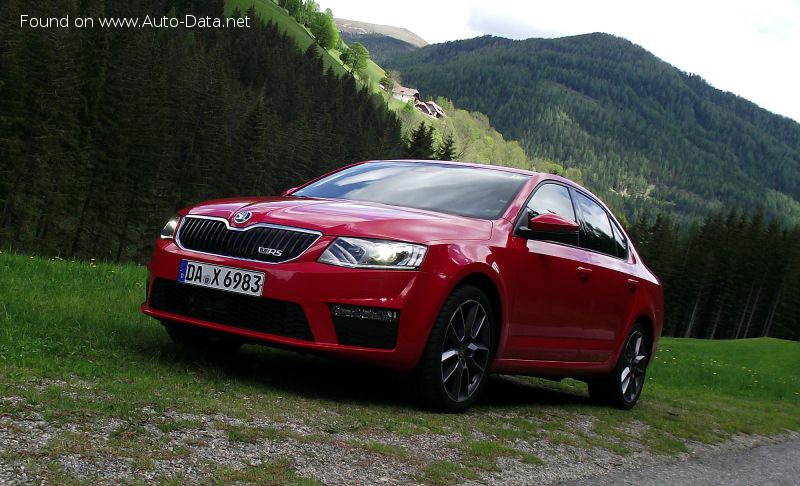
The Skoda Octavia III, launched in 2013, marked a significant step forward for Skoda’s popular compact family car. As a core model within the Volkswagen Group, the third-generation Octavia continued the tradition of practicality, value, and solid engineering established by its predecessors. The specific variant examined here, the Skoda Octavia III 2.0 TDI (150 hp), was a popular choice for European buyers seeking a balance of strong performance and excellent fuel economy from a diesel engine. Produced from 2013 to 2017, this model reinforced the Octavia’s position as a strong competitor in the C-segment, often blurring the lines between compact and mid-size cars due to its generous interior space and cargo capacity. Although not officially sold in the United States, the Octavia is a cornerstone of the European automotive market, recognized for its intelligent design and compelling overall package.
Powertrain & Engine Architecture
The Skoda Octavia III 2.0 TDI (150 hp) is powered by a 2.0-liter (1968 cc) turbocharged diesel engine, belonging to the Volkswagen Group’s EA288 engine family. Common engine codes for this variant include CKFC, CRMB, and CYKA. This inline four-cylinder engine features a Double Overhead Camshaft (DOHC) valvetrain with four valves per cylinder, optimizing airflow for efficient combustion. The engine is mounted transversely at the front of the vehicle, driving the front wheels – a common and efficient configuration for this class of car.
This engine produces 150 horsepower between 3500 and 4000 rpm. Crucially for a diesel, torque output is substantial, peaking at 236 lb-ft (320 Nm) across a broad range of 1750 to 3000 rpm. This wide torque band contributes to the car’s responsive acceleration and flexible driving characteristics, making it well-suited for both highway cruising and overtaking. The fuel injection system utilizes Common Rail technology, precisely controlling fuel delivery for optimal combustion. A turbocharger and intercooler further enhance power and efficiency. The engine is typically paired with a 6-speed manual transmission, although a 6-speed Direct-Shift Gearbox (DSG) automatic transmission was also available as an option.
Transmission Details
The 6-speed manual transmission offered precise gear changes and allowed drivers to fully utilize the engine’s capabilities. The optional 6-speed DSG automatic transmission provided smooth and rapid gearshifts, enhancing both performance and convenience. The DSG transmission utilizes a dual-clutch system, allowing for near-seamless gear changes and contributing to improved fuel efficiency compared to traditional automatic transmissions. Gear ratios were optimized to balance acceleration and fuel economy, with a relatively tall sixth gear for efficient highway cruising.
Driving Characteristics
The Octavia III 2.0 TDI (150 hp) delivers a refined driving experience. The substantial torque available from low engine speeds provides strong acceleration in everyday driving situations. While not a sports car, the 150 hp engine offers sufficient power for confident overtaking and merging onto highways. Acceleration from 0 to 60 mph takes approximately 8.1 seconds, and the top speed is around 136 mph. Compared to the lower-powered 1.6 TDI variants, the 2.0 TDI offers a noticeable improvement in performance, particularly when fully loaded or driving uphill. Compared to higher-output versions like the 2.0 TDI (184 hp), the 150 hp version provides a more balanced driving experience, prioritizing fuel economy without sacrificing too much performance.
The suspension is tuned for comfort, providing a smooth ride over most road surfaces. The steering is precise and responsive, offering good feedback to the driver. The car feels stable and planted at highway speeds, thanks to its relatively long wheelbase and well-tuned chassis. The DSG automatic transmission, when equipped, further enhances the driving experience with its smooth and quick gear changes.
Equipment & Trim Levels
The Skoda Octavia III 2.0 TDI (150 hp) typically came equipped with a generous level of standard features. These included air conditioning, power windows, power mirrors, a multi-function steering wheel, and an infotainment system with a touchscreen display. Safety features such as ABS, Electronic Stability Control (ESC), and multiple airbags were also standard. Interior upholstery was typically cloth, although leather options were available. Trim levels varied depending on the market, but generally included ‘S’, ‘SE’, and ‘Elegance’ designations. The ‘Elegance’ trim offered more luxurious features such as leather upholstery, alloy wheels, and a more advanced infotainment system. Optional extras included a sunroof, parking sensors, a navigation system, and adaptive cruise control.
Chassis & Braking
The Octavia III utilizes the Volkswagen Group’s MQB platform, which provides a solid foundation for its chassis. The front suspension features an independent McPherson strut setup with coil springs and an anti-roll bar. The rear suspension employs a torsion beam setup, which is cost-effective and provides a comfortable ride. Braking is handled by ventilated disc brakes at the front and solid disc brakes at the rear. ABS (Anti-lock Braking System) and ESC (Electronic Stability Control) are standard features, enhancing safety and stability. Wheel sizes typically ranged from 16 to 17 inches, depending on the trim level.
Market Reception & Comparison
The Skoda Octavia III 2.0 TDI (150 hp) received positive reviews from automotive critics. It was praised for its spacious interior, practical design, comfortable ride, and excellent fuel economy. The 2.0 TDI engine was considered a good balance of performance and efficiency. Compared to other trims in the Octavia lineup, the 2.0 TDI (150 hp) offered a noticeable performance advantage over the lower-powered 1.6 TDI variants, while remaining more affordable than the higher-output 2.0 TDI (184 hp) models. Fuel economy was comparable to other diesel-powered cars in its class, typically achieving around 57 mpg on the combined cycle. Reliability was generally good, although some owners reported issues with the DSG transmission. Overall, the Octavia III 2.0 TDI (150 hp) was considered a compelling value proposition in the C-segment.
Technical Specifications
| Category | Specification |
| Brand | Skoda |
| Model | Octavia |
| Generation | Octavia III |
| Type (Engine) | 2.0 TDI (150 hp) |
| Production Start | 2013 |
| Production End | 2017 |
| Powertrain Architecture | Internal Combustion Engine |
| Body Type | Hatchback |
| Seats | 5 |
| Doors | 5 |
| Fuel Consumption (Urban, NEDC) | 47 US mpg (5 l/100 km) |
| Fuel Consumption (Extra Urban, NEDC) | 65.3 US mpg (3.6 l/100 km) |
| Fuel Consumption (Combined, NEDC) | 57.4 US mpg (4.1 l/100 km) |
| CO2 Emissions (NEDC) | 106 g/km |
| Fuel Type | Diesel |
| Acceleration 0 – 60 mph | 8.1 sec |
| Acceleration 0 – 100 km/h | 8.5 sec |
| Maximum Speed | 136 mph (219 km/h) |
| Emission Standard | Euro 5 |
| Power | 150 hp @ 3500-4000 rpm |
| Torque | 236 lb-ft (320 Nm) @ 1750-3000 rpm |
| Engine Displacement | 2.0 L (1968 cc) |
| Engine Layout | Inline-4 |
| Valves per Cylinder | 4 |
| Fuel Injection System | Diesel Common Rail |
| Kerb Weight | 2767 lbs (1255 kg) |
| Trunk Space (minimum) | 20.8 cu ft (590 L) |
| Trunk Space (maximum) | 55.8 cu ft (1580 L) |
Legacy
The Skoda Octavia III 2.0 TDI (150 hp) powertrain has proven to be generally reliable, although the DSG automatic transmission can be prone to issues if not properly maintained. In the used car market, these Octavias are sought after for their practicality, fuel efficiency, and relatively low running costs. They represent a good value proposition for buyers looking for a spacious and well-equipped family car. The EA288 engine family is known for its durability, and with regular servicing, these engines can continue to provide reliable performance for many years. The Octavia III 2.0 TDI (150 hp) remains a popular choice in the European used car market, demonstrating its enduring appeal and solid reputation.