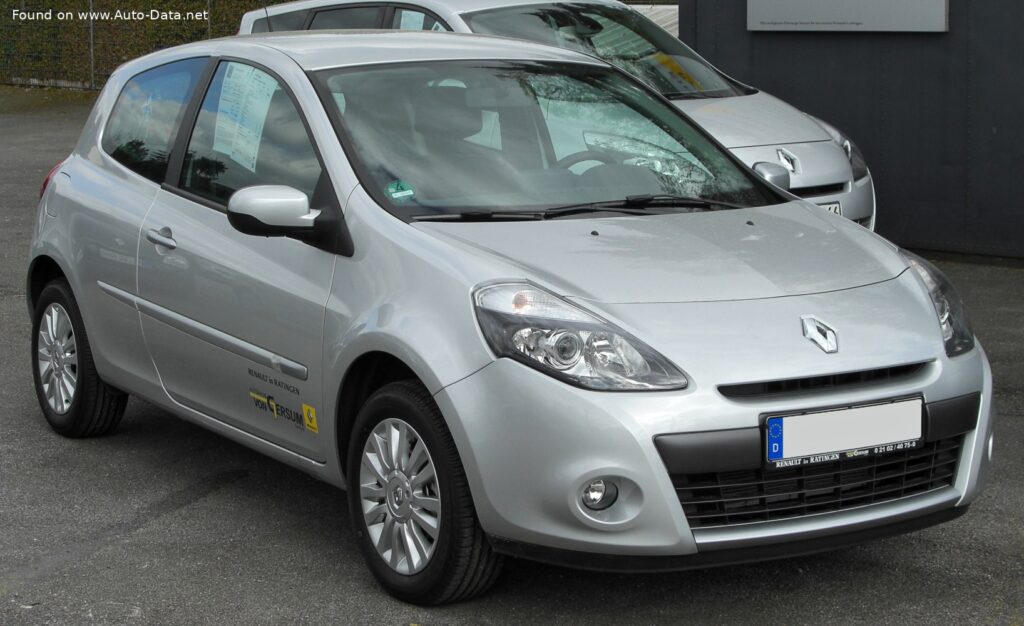
The Renault Clio III (Phase II, 2009) 3-door 1.5 dCi (105 Hp) represents a significant iteration of Renault’s highly successful supermini, a segment critically important to the European automotive landscape. Launched in May 2009 as a facelifted version of the third-generation Clio, this particular variant, with its 3-door hatchback body and efficient 1.5-liter dCi diesel engine, was designed to appeal to buyers seeking a blend of urban agility, practical utility, and impressive fuel economy. Although never officially imported into the United States market, the Clio has been a perennial bestseller across Europe, consistently lauded for its sophisticated design, comfortable ride, and engaging driving dynamics, setting benchmarks within its competitive class. The Phase II update brought subtle but impactful changes, refining the vehicle’s aesthetics and enhancing its technological offerings to maintain its competitive edge against rivals.
Powertrain & Engine Architecture
At the heart of this Renault Clio III (Phase II, 2009) 3-door 1.5 dCi (105 Hp) model lies the renowned K9K 772 engine, a 1.5-liter (1461 cm³ or 89.16 cu. in.) inline four-cylinder diesel powerplant. This engine, a staple in Renault’s and Nissan’s compact lineup for its balance of power and parsimony, utilizes a common-rail fuel injection system, a turbocharger, and an intercooler to optimize combustion and efficiency. It delivers a respectable 105 horsepower at 4000 rpm, translating to 71.9 horsepower per liter, which is a strong output for a diesel engine of its size. More importantly for real-world driving, it generates a robust 240 Nm (177.01 lb.-ft.) of torque, available at a low 2000 rpm. This ample torque at lower engine speeds provides excellent responsiveness and effortless acceleration, particularly beneficial in city traffic and for highway overtaking maneuvers.
The K9K engine family is known for its robust construction and relatively simple design, contributing to its longevity. The common-rail direct injection system, supplied by Bosch, precisely meters fuel into the cylinders, maximizing efficiency and minimizing emissions. The turbocharger, a variable geometry unit, provides boost across a wide range of engine speeds, enhancing both power and torque. The engine features a Single Overhead Camshaft (SOHC) valvetrain, operating two valves per cylinder. Power is channeled to the front wheels through a precise 6-speed manual transmission, offering drivers greater control and contributing to the vehicle’s impressive fuel economy. This transmission was chosen for its balance of efficiency and driver engagement, a key characteristic of the Clio range.
Driving Characteristics
The 1.5 dCi (105 Hp) powertrain in the Clio III delivers a driving experience geared towards efficiency and usability rather than outright performance. While not a sports-oriented variant, the 105 horsepower and 177 lb-ft of torque provide adequate acceleration for everyday driving. The low-end torque is particularly noticeable, making it easy to navigate city streets and execute overtaking maneuvers without needing to downshift frequently. Acceleration from 0 to 60 mph is achieved in approximately 10.5 seconds (0-100 km/h in 11.1 seconds), which is competitive within its class.
Compared to other Clio III variants, such as the 1.6 16V gasoline engine, the 1.5 dCi offers significantly better fuel economy but less peak power. The gasoline engine provides a more responsive and rev-happy experience, but at the cost of increased fuel consumption. Compared to the higher-output 1.5 dCi variants (e.g., 110 hp), the 105 hp version offers a slightly more relaxed driving experience, prioritizing fuel efficiency over outright performance. The 6-speed manual transmission is well-matched to the engine’s characteristics, providing smooth gear changes and allowing the driver to keep the engine in its optimal torque band.
Equipment & Trim Levels
The Renault Clio III (Phase II, 2009) 3-door 1.5 dCi (105 Hp) typically occupied a mid-range position within the Clio lineup. Standard equipment generally included power windows, central locking, an audio system (often with CD player and auxiliary input), and ABS brakes. Safety features such as driver and passenger airbags were also standard. The interior upholstery was typically cloth, with a dark color scheme. The dashboard layout was functional and ergonomically designed, with easy-to-read instrumentation.
Optional extras available for this trim level included air conditioning, alloy wheels, a trip computer, and upgraded audio systems. Higher trim levels, such as the Dynamique or Privilège, offered additional features like automatic headlights and rain sensors, leather upholstery, and a more comprehensive infotainment system. The 3-door body style itself was often considered a more sporty and youthful option compared to the 5-door variant.
Chassis & Braking
The Clio III utilized an independent McPherson strut front suspension with coil springs and an anti-roll bar, paired with a torsion beam rear suspension with coil springs. This setup provided a well-judged balance between ride comfort and agile handling, a hallmark of French superminis. The torsion beam rear suspension, while simpler than a fully independent setup, was effective in providing a stable and predictable ride. Braking duties were handled by ventilated discs measuring 260×22 mm at the front and solid discs measuring 240×8 mm at the rear, complemented by an Anti-lock Braking System (ABS) for enhanced safety.
The electric power steering with a rack and pinion system offered light and precise control, particularly beneficial for urban driving and parking maneuvers. The standard tire sizes included 185/60 R15 or 195/50 R16, mounted on 6J x 15 or 6.5J x 16 wheel rims, respectively. The suspension tuning was generally geared towards comfort, but the Clio III still offered a reasonably engaging driving experience, with minimal body roll in corners.
Market Reception & Comparison
Critics generally viewed the Renault Clio III (Phase II, 2009) 3-door 1.5 dCi (105 Hp) favorably, praising its fuel efficiency, comfortable ride, and stylish design. The 1.5 dCi engine was particularly well-regarded for its balance of power and economy. However, some critics noted that the interior materials were not as premium as those found in some of its rivals, such as the Volkswagen Polo. Fuel economy was a major selling point, with the NEDC combined cycle consumption of 4.6 l/100 km (51.1 US mpg) being highly competitive.
Compared to other trims in the Clio lineup, the 1.5 dCi offered the best fuel economy and a strong torque output, making it ideal for drivers who prioritize practicality and running costs. The gasoline-powered variants offered more responsive performance, but at the expense of fuel efficiency. In terms of reliability, the K9K engine proved to be generally robust, although regular maintenance was essential to ensure its longevity. The Clio III consistently scored well in reliability surveys, although some owners reported minor issues with electrical components.
Technical Specifications
| General Information | |
| Brand | Renault |
| Model | Clio |
| Generation | Clio III (Phase II, 2009) 3-door |
| Type (Engine) | 1.5 dCi (105 Hp) |
| Start of Production | May, 2009 |
| End of Production | October, 2010 |
| Powertrain Architecture | Internal Combustion engine |
| Body type | Hatchback |
| Seats | 5 |
| Doors | 3 |
| Performance Specifications | |
| Fuel Consumption (economy) – Urban (NEDC) | 5.7 l/100 km (41.3 US mpg) |
| Fuel Consumption (economy) – Extra Urban (NEDC) | 4.1 l/100 km (57.4 US mpg) |
| Fuel Consumption (economy) – Combined (NEDC) | 4.6 l/100 km (51.1 US mpg) |
| CO2 emissions (NEDC) | 123 g/km |
| Fuel Type | Diesel |
| Acceleration 0 – 60 mph (Calculated) | 10.5 sec |
| Acceleration 0 – 100 km/h | 11.1 sec |
| Maximum Speed | 190 km/h (118.06 mph) |
| Emission Standard | Euro 4 |
| Weight-to-power ratio | 11.4 kg/Hp (87.5 Hp/tonne) |
| Weight-to-torque ratio | 5 kg/Nm (200 Nm/tonne) |
| Engine Specifications | |
| Power | 105 Hp @ 4000 rpm |
| Power per liter | 71.9 Hp/l |
| Torque | 240 Nm @ 2000 rpm (177.01 lb.-ft. @ 2000 rpm) |
| Engine Layout | Front, Transverse |
| Engine Model/Code | K9K 772 |
| Engine Displacement | 1461 cm³ (89.16 cu. in.) |
| Number of Cylinders | 4 |
| Engine Configuration | Inline |
| Cylinder Bore | 76 mm (2.99 in.) |
| Piston Stroke | 80.5 mm (3.17 in.) |
| Compression Ratio | 15.6:1 |
| Number of Valves per Cylinder | 2 |
| Fuel Injection System | Diesel Commonrail |
| Engine Aspiration | Turbocharger, Intercooler |
| Valvetrain | SOHC |
| Engine Oil Capacity | 4.5 l (4.76 US qt) |
| Coolant Capacity | 6.5 l (6.87 US qt) |
| Space, Volume and Weights | |
| Kerb Weight | 1200 kg (2645.55 lbs.) |
| Max. Weight | 1690 kg (3725.81 lbs.) |
| Max Load | 490 kg (1080.27 lbs.) |
| Trunk (boot) space – Minimum | 288 l (10.17 cu. ft.) |
| Trunk (boot) space – Maximum | 1038 l (36.66 cu. ft.) |
| Fuel Tank Capacity | 55 l (14.53 US gal) |
| Max. Roof Load | 80 kg (176.37 lbs.) |
| Permitted Trailer Load with Brakes (12%) | 1200 kg (2645.55 lbs.) |
| Permitted Trailer Load without Brakes | 535 kg (1179.47 lbs.) |
| Permitted Towbar Download | 75 kg (165.35 lbs.) |
| Dimensions | |
| Length | 4032 mm (158.74 in.) |
| Width | 1720 mm (67.72 in.) |
| Width including mirrors | 2025 mm (79.72 in.) |
| Height | 1497 mm (58.94 in.) |
| Wheelbase | 2575 mm (101.38 in.) |
| Front Track | 1458-1472 mm (57.4 – 57.95 in.) |
| Rear (Back) Track | 1450-1471 mm (57.09 – 57.91 in.) |
| Front Overhang | 830 mm (32.68 in.) |
| Rear Overhang | 626 mm (24.65 in.) |
| Ride Height (Ground Clearance) | 120 mm (4.72 in.) |
| Minimum Turning Circle (Turning Diameter) | 10.7-11.3 m (35.1 – 37.07 ft.) |
Legacy
The Renault Clio III, and particularly its Phase II iteration from 2009, cemented the model’s reputation as a formidable contender in the highly competitive European supermini segment. Competing directly with stalwarts like the Ford Fiesta, Volkswagen Polo, Peugeot 207, and Opel Corsa, the Clio III stood out for its distinctive styling, comfortable cabin, and, crucially, its range of efficient powertrains, with the 1.5 dCi diesel being a particular highlight.
In its primary European markets, the Clio III was a sales success, frequently appearing at the top of national sales charts. Its appeal lay in its ability to blend practicality with an engaging driving experience. The 1.5 dCi engine, in particular, was instrumental in its success, offering a compelling proposition of low running costs, impressive range from its 55-liter (14.53 US gallon) fuel tank, and reduced environmental impact, which resonated strongly with European consumers facing rising fuel prices and stricter emission regulations. The Renault Clio III (Phase II, 2009) 3-door 1.5 dCi (105 Hp) represented Renault’s commitment to delivering advanced diesel technology in an accessible package. Its reliability and durability were generally well-regarded, contributing to strong resale values for its class. The model also received critical acclaim for its safety features, building on the Clio II’s pioneering five-star Euro NCAP rating. While not a high-performance variant, the 105 HP dCi offered a spirited driving experience for a diesel supermini, making it a popular choice for both urban commuters and those undertaking longer journeys. The Clio III’s production run from 2005 to 2012, with the Phase II facelift extending from 2009 to 2012, demonstrated its enduring popularity before being succeeded by the equally successful Clio IV. Its legacy is one of a well-rounded, efficient, and stylish compact car that successfully navigated the demands of a discerning European market.