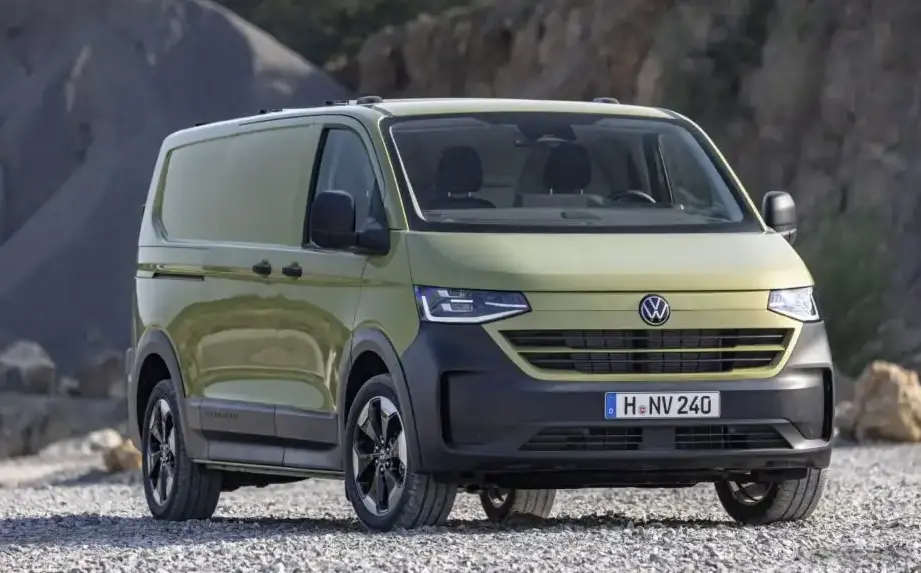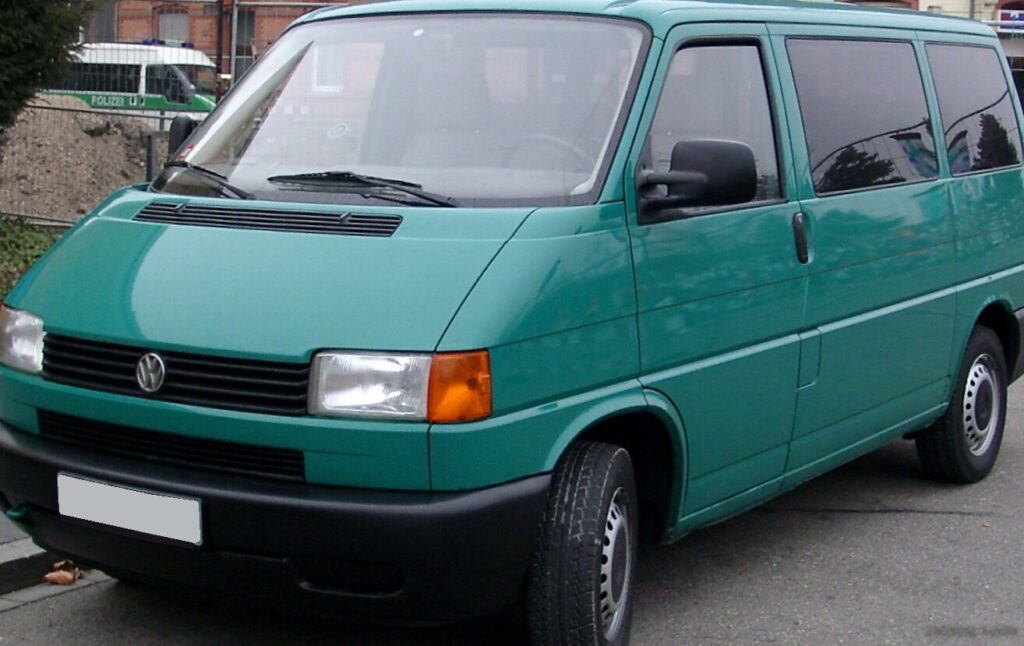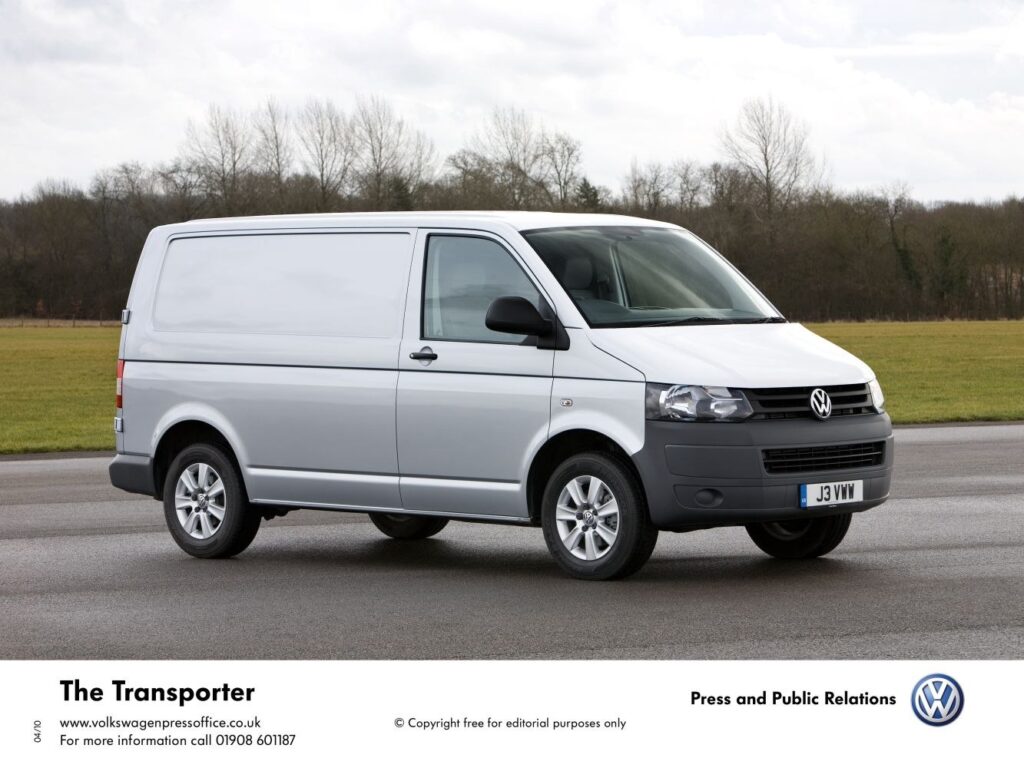
The Volkswagen Transporter, a name synonymous with versatility and reliability in the light commercial vehicle (LCV) segment, has a storied history dating back to the iconic Type 2 “Bus.” The T5 generation, introduced in 2003, continued this legacy, evolving into a sophisticated and highly capable workhorse. The specific model under review, the Volkswagen Transporter (T5, facelift 2009) Panel Van 2.0 TDI (84 Hp) L1H1, represents a crucial mid-cycle refresh that brought significant updates to an already robust platform. This particular variant, with its 2.0-liter TDI engine producing 84 horsepower, and its L1H1 designation (indicating a standard wheelbase and standard roof height), was engineered to serve as a practical and efficient solution for businesses across Europe and other international markets, where it solidified its position as a benchmark for commercial vans.
While the Transporter in its panel van configuration was not widely sold in the United States, its global impact and engineering prowess are undeniable. It embodies Volkswagen’s commitment to delivering durable, functional, and economically viable vehicles for a diverse range of professional applications. The 2009 facelift enhanced its visual appeal, improved its powertrain options, and refined its interior ergonomics, ensuring the T5 remained competitive in a demanding market segment from its production start in 2009 until its discontinuation in 2015.
The Evolution of the T5 Transporter and its 2009 Facelift
The T5 generation of the Volkswagen Transporter debuted in 2003, succeeding the T4 (EuroVan in North America). It represented a significant step forward in terms of design, technology, and driving dynamics, aiming to offer car-like comfort and handling within a commercial vehicle package. By 2009, Volkswagen introduced a comprehensive facelift to the T5 lineup, breathing new life into the popular van and addressing evolving market demands, particularly concerning emissions and fuel efficiency.
The 2009 facelift for the Volkswagen Transporter (T5, facelift 2009) Panel Van brought a host of exterior and interior revisions. Aesthetically, the front fascia received a modernized look, aligning with Volkswagen’s contemporary design language seen in its passenger car range. This included redesigned headlights, a more prominent grille, and updated bumpers, giving the Transporter a fresher and more assertive presence. Inside, the cabin saw improvements in material quality, new instrumentation, and enhanced infotainment options, all designed to make the working environment more comfortable and intuitive for drivers who spend countless hours behind the wheel. Critically, the facelift also introduced a new range of engines, including the more efficient and refined 2.0-liter TDI units, which were central to meeting stricter Euro 5 emission standards. This focus on efficiency and lower emissions was a key selling point in a market increasingly concerned with environmental impact and running costs.
2.0 TDI Powertrain & Engine Architecture
At the heart of the Volkswagen Transporter (T5, facelift 2009) Panel Van 2.0 TDI (84 Hp) L1H1 lies a robust and efficient 2.0-liter TDI (Turbocharged Direct Injection) inline-four diesel engine. Coded EA189 / CAAA, this powerplant was part of Volkswagen’s new generation of diesel engines, designed for improved fuel economy and reduced emissions, complying with the Euro 5 standard. While 84 horsepower (Hp) at 3500 rpm might appear modest on paper, the true strength of this engine for a commercial vehicle lies in its torque delivery. It produces a substantial 220 Newton-meters (162.26 lb.-ft.) of torque across a broad and usable rev range, specifically from 1250 to 2500 rpm. This low-end torque is crucial for a panel van, enabling effortless hauling of heavy loads, confident acceleration from a standstill, and relaxed cruising without constantly shifting gears.
The EA189 engine family utilizes a common rail direct injection system, delivering fuel directly into the combustion chamber at extremely high pressure for optimized combustion. The engine features a single overhead camshaft (SOHC) design operating four valves per cylinder (DOHC), maximizing airflow and contributing to efficient operation. A turbocharger with an intercooler further enhances performance by forcing more air into the engine, increasing power output. The engine also incorporates a diesel particulate filter (DPF) to reduce harmful emissions. Power is transferred to the front wheels via a durable 5-speed manual transmission, a common and reliable choice for commercial vehicles of this era. The front-wheel-drive architecture, combined with the transverse engine layout, optimizes interior space and contributes to predictable handling characteristics.
Transmission Details
The 5-speed manual transmission used in the Transporter 2.0 TDI is a robust unit designed for durability and ease of maintenance. Gear ratios are optimized for maximizing fuel efficiency and providing sufficient torque for hauling loads. First gear is relatively short, providing good acceleration from a standstill, while fifth gear is geared for efficient highway cruising. The transmission’s shift linkage is mechanically operated, offering a direct and positive feel. While an automatic transmission was available on other T5 variants, it was not typically paired with the 84 hp TDI engine, as the added weight and efficiency loss of the automatic would have negated much of the engine’s fuel economy benefits.
Driving Characteristics
The Volkswagen Transporter (T5, facelift 2009) Panel Van 2.0 TDI (84 Hp) L1H1 prioritizes practicality and efficiency over outright performance. Acceleration from 0 to 60 mph is achieved in approximately 18.7 seconds, with a top speed of 90.72 mph (146 km/h). While not built for speed, these figures are entirely adequate for urban deliveries and highway travel, emphasizing utility over outright performance. The engine’s strong low-end torque makes it feel more responsive than the horsepower figure suggests, particularly when loaded. The 5-speed manual transmission allows the driver to keep the engine in its optimal torque band, maximizing efficiency and minimizing gear changes. Compared to the more powerful 140 hp or 180 hp TDI variants, the 84 hp version feels noticeably slower, especially when climbing hills or carrying a full load. However, it offers significantly better fuel economy and lower running costs. The handling is predictable and stable, thanks to the independent suspension and well-weighted steering. The ride quality is generally comfortable, even when unladen, although it can become firmer when carrying a heavy load.
Equipment & Trim Levels
The Transporter Panel Van 2.0 TDI (84 Hp) L1H1 typically served as the entry-level trim in the T5 range. Standard equipment focused on functionality and durability. This included a driver’s airbag, ABS brakes, power steering, and a basic audio system. The interior was typically finished with durable, easy-to-clean plastics and cloth upholstery. The driver’s seat was manually adjustable, and the cabin featured basic ventilation. Optional extras included air conditioning, electric windows, a more advanced audio system with Bluetooth connectivity, and parking sensors. Higher trim levels, such as the Trendline and Highline, offered more luxurious features, including upgraded upholstery, alloy wheels, and more sophisticated infotainment systems. However, the base 84 hp model was generally equipped with the essentials for a practical and cost-effective work vehicle.
Chassis & Braking
The underpinnings of the Volkswagen Transporter (T5) were engineered to provide a balance of comfort, stability, and durability. The front suspension features an independent McPherson strut setup with coil springs and an anti-roll bar, providing good road holding and absorbing road imperfections efficiently. At the rear, the T5 utilizes an independent coil spring suspension with a transverse stabilizer and trailing arms, enhancing ride comfort and load-carrying ability. Braking performance is handled by ventilated discs on both the front (308×29.5 mm) and rear (294×22 mm) axles, providing strong and consistent stopping power. Standard assisting systems include ABS (Anti-lock Braking System). Steering is managed by a hydraulic rack and pinion system, offering direct feedback. The vehicle rides on 215/65 R16 tires mounted on 6.5J x 16 wheel rims.
Market Reception & Comparison
The Volkswagen Transporter (T5) consistently received positive reviews from automotive critics for its build quality, reliability, and driving dynamics. The 2.0 TDI (84 Hp) variant was praised for its fuel efficiency and low running costs, making it an attractive option for businesses operating on tight budgets. However, some critics noted that the engine lacked power, particularly when fully loaded or traveling on steep inclines. Compared to the more powerful TDI variants, the 84 hp version offered a more affordable entry point into the Transporter range, but at the expense of performance. Compared to competitors like the Ford Transit and Mercedes-Benz Vito, the Transporter was often seen as offering a more refined driving experience and a higher level of build quality. Its fuel economy was competitive, and its reliability record was generally excellent.
Technical Specifications: Volkswagen Transporter (T5, facelift 2009) Panel Van 2.0 TDI (84 Hp) L1H1
| Category | Specification |
| General Information | |
| Brand | Volkswagen |
| Model | Transporter |
| Generation | Transporter (T5, facelift 2009) Panel Van |
| Type (Engine) | 2.0 TDI (84 Hp) L1H1 |
| Start of Production | 2009 |
| End of Production | 2015 |
| Powertrain Architecture | Internal Combustion engine |
| Body Type | Van |
| Seats | 2-3 |
| Doors | 4-5 |
| Performance Specifications | |
| Fuel Consumption (Urban, NEDC) | 9.4-9.7 l/100 km |
| Fuel Consumption (Extra Urban, NEDC) | 6-6.3 l/100 km |
| Fuel Consumption (Combined, NEDC) | 7.2-7.5 l/100 km |
| CO2 Emissions (NEDC) | 190-198 g/km |
| Fuel Type | Diesel |
| Acceleration 0 – 60 mph | 18.7 sec |
| Maximum Speed | 146 km/h (90.72 mph) |
| Emission Standard | Euro 5 |
| Engine Specifications | |
| Power | 84 Hp @ 3500 rpm |
| Torque | 220 Nm @ 1250-2500 rpm (162.26 lb.-ft.) |
| Engine Layout | Front, Transverse |
| Engine Model/Code | EA189 / CAAA |
| Engine Displacement | 1968 cm3 (2.0 L) |
| Number of Cylinders | 4 |
| Valves per Cylinder | 4 |
| Fuel Injection System | Diesel Commonrail |
| Weight & Dimensions | |
| Kerb Weight | 1687-2103 kg (3719.2 – 4636.32 lbs.) |
| Max. Weight | 2600-3000 kg (5732.02 – 6613.87 lbs.) |
| Max Load | 897-913 kg (1977.55 – 2012.82 lbs.) |
| Trunk (boot) space – maximum | 5800 l (204.83 cu. ft.) |
Legacy
The Volkswagen Transporter (T5) 2.0 TDI (84 Hp) remains a popular choice in the used commercial vehicle market, particularly for businesses seeking a reliable and fuel-efficient van at an affordable price. The EA189 engine, while subject to some scrutiny regarding emissions in later years, proved to be remarkably durable when properly maintained. Common issues include DPF clogging and injector wear, but these are typically addressable with routine servicing. The T5’s robust construction and relatively simple mechanical design make it a relatively easy vehicle to maintain and repair. Its enduring popularity is a testament to Volkswagen’s engineering prowess and the Transporter’s reputation as a versatile and dependable workhorse.