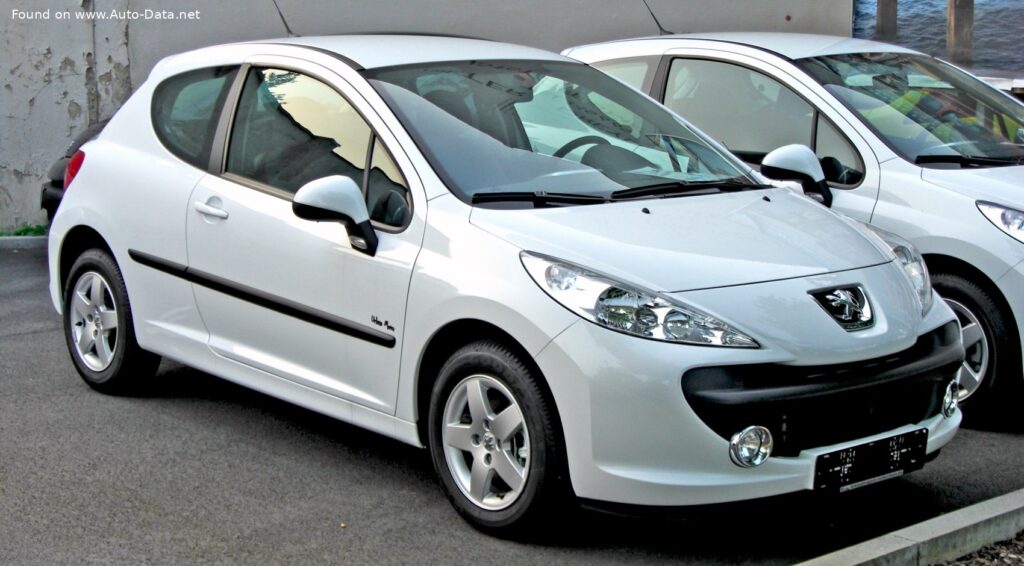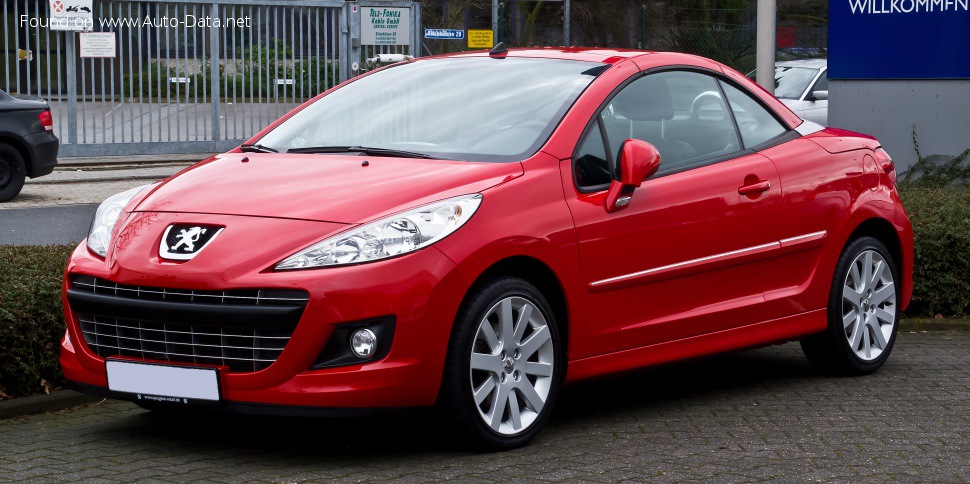
The Peugeot 207 CC (facelift 2009) 1.6 HDi (109 Hp) represents a notable chapter in the French automaker’s history with accessible convertible vehicles. Introduced as a refreshed version of the 207 CC, this model continued the success of the 206 CC. The “CC” designation, standing for “Coupe-Cabriolet,” highlights its key feature: a retractable hardtop roof, offering the security of a coupe with the open-air experience of a convertible.
The 1.6 HDi Variant: Positioning and Role
Positioned within the European B-segment (subcompact) market, the 207 CC aimed to provide a stylish, versatile, and relatively affordable option for consumers. Unlike many European models, the Peugeot 207 CC was never officially sold in the United States. This particular variant, equipped with the 1.6 HDi (109 Hp) diesel engine, catered to European demand for fuel economy and lower emissions. The 2009 facelift brought subtle design updates and minor technical refinements, serving as a bridge before further evolutions in Peugeot’s compact lineup. It maintained a 2-door, 4-seat configuration, suitable for urban environments.
Powertrain & Engine Architecture
The 207 CC (facelift 2009) 1.6 HDi is powered by the 1.6-liter HDi (High-pressure Direct Injection) diesel engine, celebrated for its efficiency and performance. This inline four-cylinder, internally coded 9HZ DV6TED4, features a DOHC (Double Overhead Camshaft) valvetrain with 4 valves per cylinder. Its 1560 cubic centimeters (95.2 cubic inches) are complemented by a common rail fuel injection system for optimal combustion. A turbocharger with an intercooler forces more air into the cylinders, increasing power and torque. The engine produces 109 horsepower at 4000 rpm, resulting in a power-per-liter ratio of 69.9 horsepower per liter.
Torque peaks at 240 Newton meters (177.01 lb.-ft.) at 1750 rpm, providing responsive feel in city driving and comfortable highway cruising. Power is delivered to the front wheels via a 5-speed manual transmission. The drivetrain is a front-engine, front-wheel-drive layout, known for its packaging efficiency and predictable handling.
Driving Characteristics
The 207 CC 1.6 HDi offers a balanced driving experience. While not a performance-oriented model, the abundant low-end torque makes it feel responsive in everyday driving. Compared to higher-output versions or those with a gasoline engine, the 1.6 HDi prioritizes fuel efficiency over outright acceleration. The 5-speed manual transmission provides direct control, but the gear ratios are tuned for economy rather than sporty performance. The 0 to 60 mph sprint takes approximately 10.4 seconds, with a top speed of 119.92 mph (193 km/h). The engine’s torque curve ensures that the car feels lively in typical driving situations, making it well-suited for urban commutes and relaxed highway journeys.
Equipment & Trim Levels
The 207 CC (facelift 2009) 1.6 HDi typically came with standard features like ABS (Anti-lock Braking System), front and rear disc brakes, power steering, and air conditioning. Interior upholstery was generally cloth, with options for upgraded materials. The dashboard featured a modern design typical of Peugeot models of the era, with ergonomic controls and a focus on driver comfort. Optional extras included alloy wheels, a panoramic sunroof, upgraded audio systems, and parking sensors. The trim level often dictated the availability of these features, with higher trims offering more luxurious appointments.
Chassis & Braking
The 207 CC utilized an independent McPherson strut suspension at the front and a semi-independent coil spring suspension at the rear, providing a balance of comfort and handling. Ventilated discs were used on the front brakes, while solid discs were used on the rear. The car’s structure was reinforced to compensate for the lack of a fixed roof, aiming to maintain occupant protection in a rollover. Stabilizer bars were included to reduce body roll during cornering. The chassis was tuned to provide a comfortable ride while still offering reasonable handling characteristics for a small convertible.
Market Reception & Comparison
Critics generally viewed the 207 CC 1.6 HDi favorably, praising its fuel economy, stylish design, and the convenience of its retractable hardtop. It was often compared to rivals like the Opel Tigra TwinTop and Nissan Micra C+C. The 1.6 HDi variant stood out for its efficiency, achieving approximately 47 US miles per gallon in combined driving. While the performance wasn’t as exhilarating as some gasoline-powered alternatives, the diesel engine offered a significant advantage in terms of running costs. Reliability was generally considered good, with the HDi engine proving to be durable and long-lasting. However, some owners reported issues with the electro-hydraulic roof mechanism, which could be costly to repair.
Technical Specifications
| Category | Specification |
| Brand | Peugeot |
| Model | 207 |
| Generation | 207 CC (facelift 2009) |
| Type (Engine) | 1.6 HDi (109 Hp) |
| Start of Production | 2009 |
| End of Production | 2009 |
| Powertrain Architecture | Internal Combustion engine |
| Body Type | Coupe – Cabriolet |
| Seats | 4 |
| Doors | 2 |
| Fuel Consumption (Economy) – Urban | 6.2 l/100 km (37.9 US mpg) |
| Fuel Consumption (Economy) – Extra Urban | 4.3 l/100 km (54.7 US mpg) |
| Fuel Consumption (Economy) – Combined | 5 l/100 km (47 US mpg) |
| CO2 Emissions | 130 g/km |
| Fuel Type | Diesel |
| Acceleration 0 – 60 mph | 10.4 sec |
| Maximum Speed | 193 km/h (119.92 mph) |
| Emission Standard | Euro 4 |
| Power | 109 Hp @ 4000 rpm |
| Torque | 240 Nm @ 1750 rpm (177.01 lb.-ft. @ 1750 rpm) |
| Engine Displacement | 1560 cm3 (1.6 Liters / 95.2 cu. in.) |
| Number of Cylinders | 4 |
| Engine Code | 9HZ DV6TED4 |
| Kerb Weight | 1405 kg (3097.49 lbs.) |
| Fuel Tank Capacity | 50 l (13.21 US gal) |
| Length | 4044 mm (159.21 in.) |
| Width | 1748 mm (68.82 in.) |
| Height | 1393 mm (54.84 in.) |
Legacy
The Peugeot 207 CC 1.6 HDi has proven to be a relatively reliable vehicle in the used car market. The HDi engine is known for its durability, and with proper maintenance, it can provide many years of service. However, potential buyers should be aware of the possibility of issues with the retractable hardtop mechanism, which can be expensive to repair. The 207 CC remains a popular choice for those seeking a stylish and affordable convertible, particularly in Europe. It represents a significant chapter in Peugeot’s history, demonstrating the brand’s ability to innovate and create desirable vehicles in a competitive market. While the trend of small hardtop convertibles has diminished, the 207 CC continues to be appreciated for its unique blend of practicality, style, and fuel efficiency.