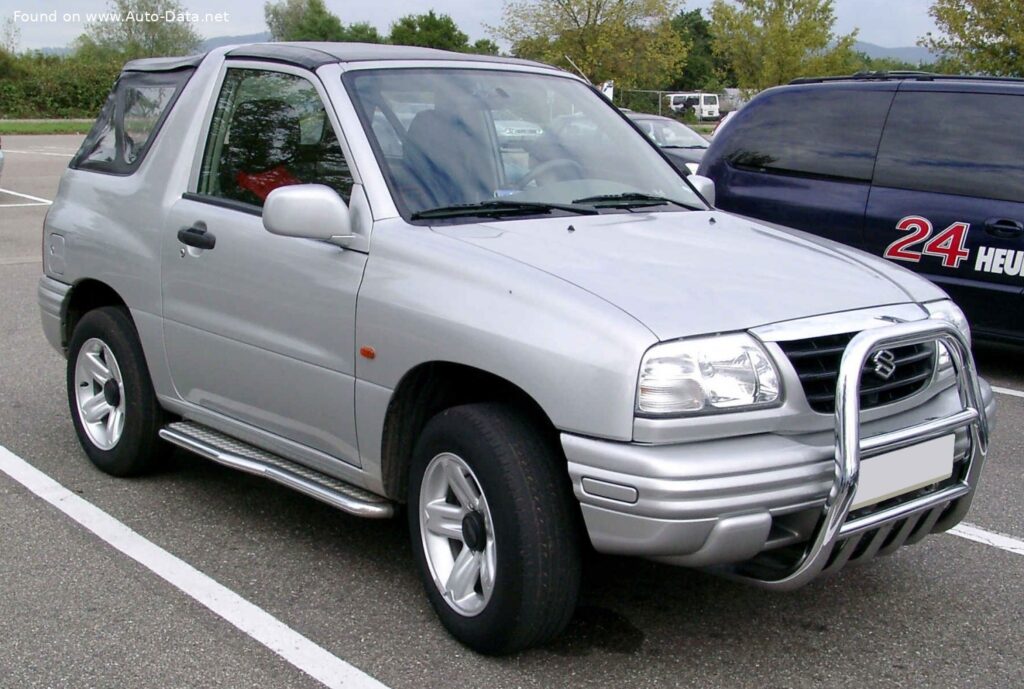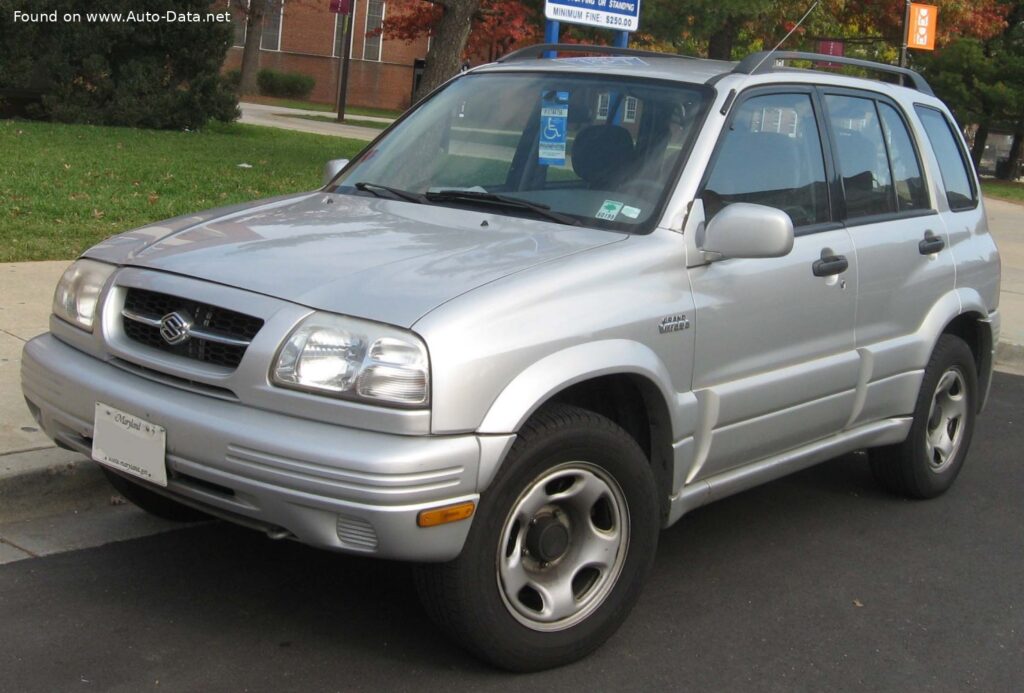
The Suzuki Grand Vitara (FT,GT) represents a significant chapter in the history of compact sport utility vehicles, embodying Suzuki’s long-standing commitment to producing capable and reliable off-road vehicles. This particular iteration, featuring the robust 2.5 i V6 engine, was produced from 2002 to 2005 and carved out a niche for itself as a more traditional, body-on-frame SUV in an increasingly crossover-dominated market. Known for its genuine four-wheel-drive capabilities and sturdy construction, the Grand Vitara (FT,GT) appealed to buyers seeking a blend of urban practicality and adventurous off-road prowess. While many competitors pivoted towards car-like unibody constructions, the Grand Vitara maintained its rugged character, offering a compelling alternative for those who valued durability and genuine all-terrain performance.
Powertrain & Engine Architecture
Under the hood, the Suzuki Grand Vitara (FT,GT) 2.5 i V6 variant was equipped with the H25A engine, a naturally aspirated 2.5-liter (2493 cm3, or 152.13 cu. in.) V6 powerplant. This engine was a key differentiator, providing a level of smoothness and power output that elevated the Grand Vitara’s driving experience. With 158 horsepower delivered at 6200 rpm and a healthy 157.1 lb.-ft. of torque peaking at 3500 rpm, the V6 offered ample motivation for both highway cruising and tackling challenging off-road trails. The engine’s multi-port manifold injection system ensured efficient fuel delivery, while its DOHC (Dual Overhead Camshaft) valvetrain with four valves per cylinder contributed to its responsive nature and respectable power per liter of 63.4 Hp/l.
The H25A engine utilizes a cast iron block and an aluminum cylinder head, a common configuration for balancing durability and weight. The engine management system was a relatively simple setup for the era, relying on sensors to monitor various parameters and adjust fuel delivery and ignition timing accordingly. The automatic transmission paired with this engine was typically a four-speed unit, designed for durability rather than outright performance. This transmission featured electronically controlled torque converter lock-up for improved fuel efficiency at highway speeds. The transmission’s gear ratios were optimized for a balance of off-road crawling ability and on-road drivability. First gear was relatively low, providing ample torque multiplication for navigating difficult terrain, while the higher gears allowed for comfortable cruising at highway speeds.
Driving Characteristics
The 2.5L V6 with the four-speed automatic transmission in the Grand Vitara (FT,GT) offered a driving experience that was distinctly different from its manual transmission counterpart and the smaller engine options available. Compared to the five-speed manual, the automatic traded some responsiveness for ease of use, particularly in urban environments. Acceleration from a standstill was adequate, but not particularly brisk, with a 0 to 60 mph time of around 10.5 seconds. The automatic transmission’s shift points were programmed to prioritize smooth transitions and fuel economy, rather than aggressive acceleration.
On the road, the Grand Vitara felt stable and planted, thanks to its body-on-frame construction and relatively firm suspension. However, it lacked the refined ride quality of unibody crossovers. Off-road, the combination of the V6 engine, four-wheel-drive system, and automatic transmission proved to be quite capable. The low-range transfer case provided ample torque multiplication for climbing steep hills and navigating rocky terrain. The automatic transmission allowed the driver to focus on steering and throttle control, rather than constantly shifting gears. While not as nimble as a manual transmission, the automatic offered a more relaxed and user-friendly off-road experience.
Equipment & Trim Levels
The Grand Vitara (FT,GT) 2.5 i V6 typically represented a mid-range trim level within the Grand Vitara lineup. Standard equipment generally included air conditioning, power windows and locks, a CD player, and basic cloth upholstery. Alloy wheels were often standard on the V6 model, differentiating it from the base trims. Safety features included dual front airbags and ABS (Anti-lock Braking System).
Optional extras varied depending on the market, but commonly included a sunroof, leather upholstery, upgraded audio systems, and a rear cargo organizer. Some models also offered a limited-slip rear differential for enhanced off-road traction. The interior dashboard configuration was relatively straightforward, with clearly labeled controls and a functional layout. The instrument cluster featured analog gauges for speed, tachometer, fuel level, and coolant temperature. The overall interior ambiance was practical and durable, rather than luxurious.
Chassis & Braking
The Grand Vitara (FT,GT) utilized a traditional body-on-frame construction, providing a robust and durable platform for off-road adventures. The front suspension consisted of independent double wishbones with coil springs and stabilizer bar, offering a good balance of ride comfort and handling. The rear suspension typically employed a solid axle with coil springs and a multi-link setup, providing excellent articulation for off-road use. The rear solid axle contributed to the vehicle’s towing capacity and overall durability.
Braking duties were handled by ventilated discs at the front and solid discs at the rear, providing adequate stopping power for most driving conditions. The ABS system helped to prevent wheel lockup during hard braking, enhancing safety and control. Steering was accomplished via a hydraulic rack-and-pinion system, offering precise and responsive steering feel. The standard tire size was 235/60 R16, providing a good compromise between on-road comfort and off-road grip. The stabilizer bar thickness was moderate, balancing body roll control with off-road flexibility.
Market Reception & Comparison
Critics generally praised the Suzuki Grand Vitara (FT,GT) 2.5 i V6 for its genuine off-road capability, robust construction, and affordable price. However, it was also criticized for its relatively basic interior, somewhat dated design, and less-than-stellar fuel economy compared to newer crossovers. Compared to the smaller-engined Grand Vitara models, the V6 offered a significant boost in performance and refinement. It was also more capable of towing trailers and handling challenging terrain.
Compared to competitors like the Honda CR-V and Toyota RAV4, the Grand Vitara offered a more rugged and capable alternative, but lacked the same level of interior comfort and fuel efficiency. The Jeep Liberty was a closer competitor, offering similar off-road capability, but was generally more expensive and less fuel-efficient. The Grand Vitara’s reliability was generally considered to be good, although some owners reported issues with the automatic transmission over the long term. Fuel economy was rated at 17.4 US mpg (urban) and 28.3 US mpg (extra-urban), which was acceptable for a V6-powered, all-wheel-drive SUV of its era.
Technical Specifications
| Brand | Suzuki |
| Model | Grand Vitara |
| Generation | Grand Vitara (FT,GT) |
| Type (Engine) | 2.5 i V6 (158 Hp) |
| Start of Production | 2002 year |
| End of Production | 2005 year |
| Powertrain Architecture | Internal Combustion engine |
| Body Type | SUV |
| Seats | 5 |
| Doors | 5 |
| Fuel Consumption (Urban) | 17.4 US mpg (13.5 l/100 km) |
| Fuel Consumption (Extra Urban) | 28.3 US mpg (8.3 l/100 km) |
| Fuel Type | Petrol (Gasoline) |
| Acceleration 0 – 60 mph | 10.5 sec |
| Acceleration 0 – 100 km/h | 11.1 sec |
| Maximum Speed | 108.74 mph (175 km/h) |
| Weight-to-Power Ratio | 8.9 kg/Hp (112.5 Hp/tonne) |
| Weight-to-Torque Ratio | 6.6 kg/Nm (151.6 Nm/tonne) |
| Power | 158 Hp @ 6200 rpm |
| Power per Liter | 63.4 Hp/l |
| Torque | 157.1 lb.-ft. @ 3500 rpm (213 Nm @ 3500 rpm) |
| Engine Layout | Front, Longitudinal |
| Engine Model/Code | H25A |
| Engine Displacement | 2.5 l (2493 cm3 / 152.13 cu. in.) |
| Number of Cylinders | 6 |
| Engine Configuration | V-engine |
| Cylinder Bore | 3.31 in. (84 mm) |
| Piston Stroke | 2.95 in. (75 mm) |
| Compression Ratio | 9.5:1 |
| Number of Valves per Cylinder | 4 |
| Fuel Injection System | Multi-port manifold injection |
| Engine Aspiration | Naturally aspirated engine |
| Valvetrain | DOHC |
| Engine Oil Capacity | 5.81 US qt (5.5 l) |
| Coolant Capacity | 8.45 US qt (8 l) |
| Kerb Weight | 3097.49 lbs. (1405 kg) |
| Max. Weight | 4299.01 lbs. (1950 kg) |
| Max Load | 1201.52 lbs. (545 kg) |
| Trunk (boot) Space – Minimum | 9.11 cu. ft. (258 l) |
| Trunk (boot) Space – Maximum | 38.14 cu. ft. (1080 l) |
| Fuel Tank Capacity | 17.44 US gal (66 l) |
| Length | 165.94 in. (4215 mm) |
| Width | 70.08 in. (1780 mm) |
| Height | 68.5 in. (1740 mm) |
| Wheelbase | 97.64 in. (2480 mm) |
| Front Track | 59.06 in. (1500 mm) |
| Rear (Back) Track | 59.06 in. (1500 mm) |
| Minimum Turning Circle | 30.84 ft. (9.4 m) |
| Drive Wheel | All wheel drive (4×4) |
| Number of Gears and Type of Gearbox | 5 gears, manual transmission |
| Front Suspension | Spring Strut |
| Rear Suspension | Coil spring |
| Front Brakes | Ventilated discs |
| Rear Brakes | Disc |
| Assisting Systems | ABS (Anti-lock braking system) |
| Steering Type | Steering rack and pinion |
| Power Steering | Hydraulic Steering |
| Tires Size | 235/60 R16 |
| Wheel Rims Size | 16 |
Legacy
The Suzuki Grand Vitara (FT,GT) with its 2.5 i V6 engine left a notable mark on the compact SUV landscape during its production run from 2002 to 2005. In a market increasingly leaning towards car-based crossovers like the Honda CR-V and Toyota RAV4, the Grand Vitara stood out for its unwavering commitment to traditional SUV attributes. It retained a body-on-frame construction (in most markets for this generation), a robust four-wheel-drive system with a low-range transfer case, and a durable suspension, making it a favorite among those who prioritized genuine off-road capability over purely on-road refinement.
Its reputation was built on reliability, affordability, and a surprising degree of capability for its size. While it might not have offered the same level of interior sophistication or fuel efficiency as some of its unibody rivals, it compensated with a rugged charm and the assurance that it could handle more challenging terrain. Suzuki, as a brand, has a rich heritage in building small, capable 4x4s, and the Grand Vitara (FT,GT) was a continuation of this legacy. It served as a bridge between the bare-bones utility of the original Vitara/Sidekick and the more refined, but still capable, SUVs that would follow. While Suzuki eventually withdrew from the U.S. automotive market, models like the Grand Vitara helped solidify the brand’s image as a producer of dependable, adventurous vehicles. Its impact can still be seen in the used car market, where the Grand Vitara (FT,GT) remains a popular choice for those seeking an inexpensive, yet capable, off-road vehicle or a dependable workhorse. It represents an era when compact SUVs were still largely defined by their rugged utility, a characteristic that modern crossovers have largely shed in favor of comfort and fuel economy. The 2.5 i V6 model, in particular, offered a sweet spot of power and capability that remains appreciated by enthusiasts today.